
By Pesach Benson • April 15, 2026
Jerusalem, 15 April, 2026 (TPS-IL) — A new archaeological study from the University of Haifa is challenging long-held assumptions about how ancient political borders functioned, finding that shepherds and farmers moved freely between rival kingdoms even during periods of conflict.
The research, published in the peer-reviewed journal PLOS ONE, examined life along the border between the Kingdom of Israel and the Kingdom of Aram-Damascus during the Iron Age II, roughly the tenth to eighth centuries BCE. Despite frequent wars and shifting territorial lines, everyday economic activity in rural areas continued with little disruption.
The study’s authors argue that these findings offer a new perspective on the nature of ancient borders, portraying them as flexible and negotiated rather than rigid barriers. They also suggest the research could have broader implications for understanding how border regions function in both historical and modern contexts, particularly in rural areas where economic survival often depends on access to shared land and resources.
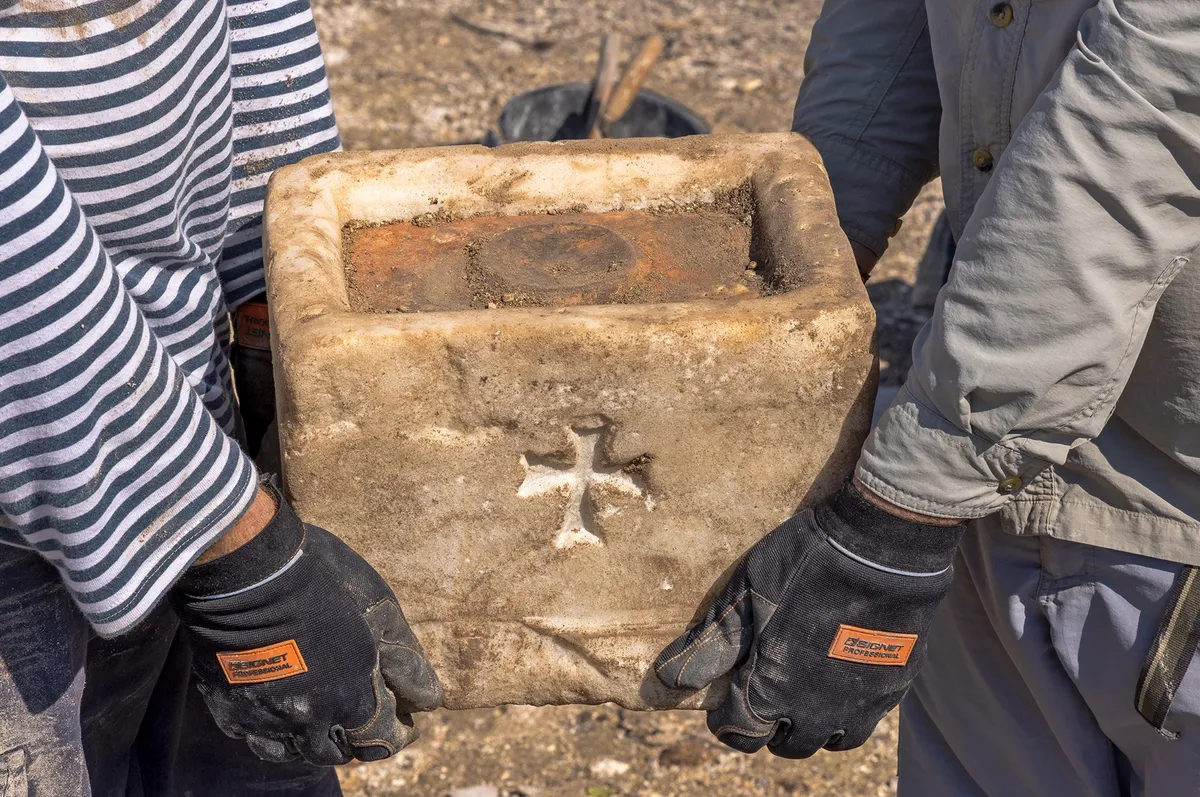
The findings are based on excavations at Tel Hazor, a major archaeological site in northern Israel’s Upper Galilee that once lay at the frontier between the two kingdoms. According to the researchers, the site provides rare insight into how ordinary people lived in a region often defined in historical sources by military campaigns and political rivalry.
“Our findings show that the movement of herds was not restricted even during periods of high military tension,” said Dr. Shlomit Bachar of the University of Haifa, who co-edited the study and directs the excavation at Tel Hazor. “The data changes what we thought about ancient borders and shows that they were permeable and local in nature, allowing ordinary people to continue their daily lives.”
During this period, territorial kingdoms across the southern Levant were consolidating power, building administrative systems and fortifying their borders. While historians have extensively studied cities, religious practices and elite power struggles, less attention has been paid to how these developments affected rural populations whose livelihoods depended on agriculture and herding.
To address that gap, the research team analyzed animal remains uncovered at Tel Hazor, focusing on the teeth of sheep and goats. Using advanced stable isotope analysis, they examined chemical signatures — specifically strontium, oxygen and carbon — to reconstruct where the animals had grazed over time. This method allowed the researchers to determine whether herds stayed close to settlements or moved across wider areas.
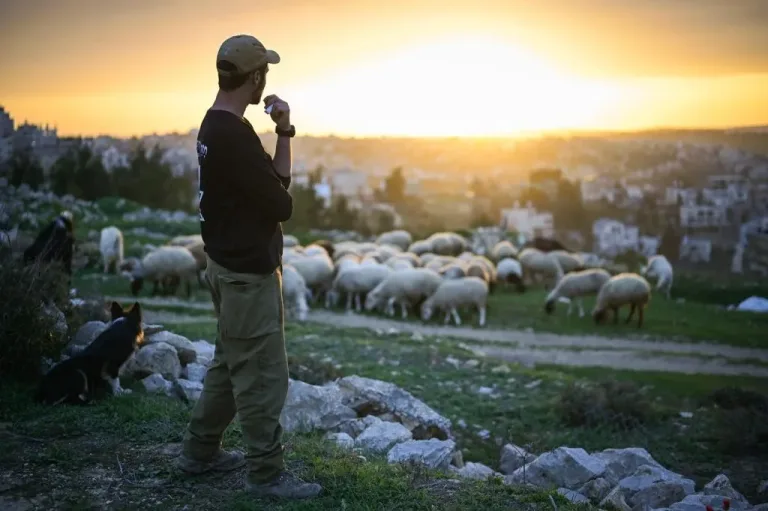
This method allowed the researchers to determine whether herds remained near settlements or ranged across wider regions. The results showed that flocks grazed both near Tel Hazor and in more distant areas, including the Golan Heights, which was considered a contested zone between the two kingdoms. The evidence indicates that access to pastureland remained open, even in areas of political friction. According to the researchers, this suggests that local communities maintained informal arrangements or cooperative practices that allowed them to share resources despite broader hostilities.
“The surprising result is that despite the wars and struggles between the elites, the shepherds and farmers in the area managed to continue to migrate with the herds and maintain an almost normal daily life,” said Prof. Cheryl McCravitsch, one of the study’s authors. “This indicates local agreements, connections between communities, and cooperation that are not always evident in historical sources.”