



















By Pesach Benson and Omer Novoselsky • December 11, 2025
Jerusalem, 11 December, 2025 (TPS-IL) — A new clinical study in Israel is exploring whether newborn jaundice can be accurately monitored using nothing more than a simple smartphone photograph of a baby’s eye — an approach that could sharply reduce the need for blood tests and make bilirubin screening easier for families and clinicians alike. The experimental method aims to deliver a fully non-invasive, contact-free alternative to current tools, potentially transforming how one of the most common newborn conditions is detected and followed.
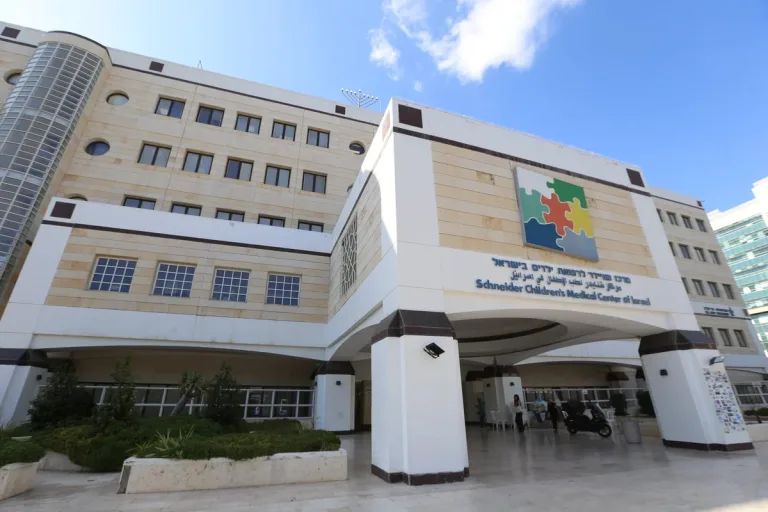
The research is being led by Schneider Children’s Medical Center in Petah Tikva together with the Israeli digital health startup Bilieye. Dr. Shirley Saar, head of the Schneider Innovation Center, told The Press Service of Israel the joint effort focuses on validating a practical, accessible solution suitable for both hospitals and community clinics.
“Bilieye and Schneider’s research is directed to validating a completely non-invasive, smartphone-based solution for monitoring neonatal jaundice,” she told TPS-IL. “Today, diagnosing and monitoring jaundice often requires repeated blood tests or specialized devices that are not always available, especially in community clinics or rural areas. The new technology under research is believed to allow fast, accurate assessment using only a photograph of the newborn’s eye, dramatically simplifying the process. This innovation can potentially reduce unnecessary blood draws in the first days of life, and potentially even support earlier discharge and enable home monitoring.”
The study is underway in the Beilinson Neonatal Department under Dr. Mickey Osowski and is led by Prof. Oded Schuerman, director of Schneider’s Pediatrics Department. Research teams from the Schneider Innovation Center — one of the few medical innovation hubs worldwide dedicated exclusively to pediatrics — are supporting the clinical evaluation.
“Neonatal jaundice is extremely common, it affects about 60% of full-term newborns and up to 80% of premature babies,” Bilieye CEO and co-founder Chen Binyamin told TPS-IL. “In most cases it is harmless and does not require medical intervention, but if bilirubin levels become too high and go unnoticed, it can lead to serious complications, which may cause permanent neurological damage. Early detection is therefore critical.”
Binyamin explained that bilirubin is created when the body breaks down red blood cells. “Newborns, and even more so premature babies or babies with certain risk factors, naturally have higher levels because their livers are still developing and cannot clear it efficiently,” he explained. “When bilirubin builds up, it causes the skin and eyes to turn yellow. Measuring bilirubin is essential because very high levels can be dangerous. With timely monitoring, healthcare teams can intervene early with simple treatments like phototherapy.”
Current non-invasive tools rely on skin-based devices that remain costly, require calibration, and do not always perform consistently across skin tones. Bilieye’s method uses the sclera — the white of the eye — which offers a more uniform surface for detecting bilirubin changes.
“The technology analyzes a high-resolution image of the sclera. Changes in bilirubin levels subtly affect its color, even before it is noticeable to the naked eye,” Binyamin explained. “Bilieye’s AI algorithms examine the image, correct for lighting conditions, isolate the relevant tissue, and translate the color data into an accurate estimation of bilirubin levels. This approach bypasses skin-color variability and provides a reliable, objective measurement in seconds.”
No widely used medical tool currently measures bilirubin from a single eye image taken on a smartphone, Binyamin said. “Bilieye’s technology is first of its kind in terms of using eye-based one image combined with advanced AI to estimate bilirubin levels and overcome lighting condition,” he told TPS-IL.
The study is expected to continue throughout next year, with regulatory preparations planned for 2026.
Related Topics