




















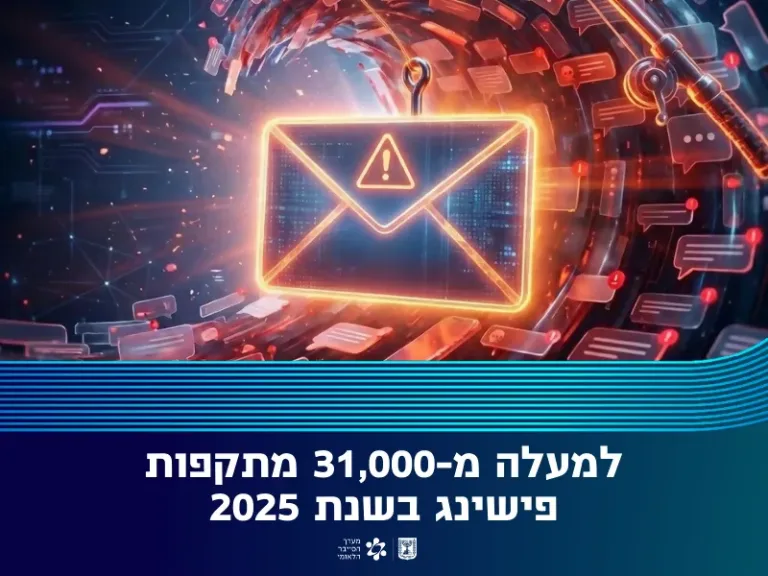
In the past year, the National Cyber Directorate dealt with 31,657 phishing attacks, a sevenfold increase compared to the previous year. Among the entities most impersonated were: Highway 6, the Tax Authority, Israel Post, El Al, banks, and credit card companies.
All malicious links found were blocked by the Directorate, thus posing no risk to citizens – on average within 6 hours. The main objectives of this year’s phishing attacks, according to the data, are: phishing for login credentials, downloading malware, and phishing for credit card details. Furthermore, it is evident that attackers are using artificial intelligence tools to tailor and target messages to different audiences.
The reports of phishing attacks received by the Cyber Directorate come from a variety of sources, including 14,000 citizen reports of phishing attacks to the Directorate’s Center 119, which constitute a significant part of identifying and handling links. Additionally, the Directorate works in collaboration with the Scan My SMS platform, where suspicious links can be checked and malicious ones are automatically forwarded to the Directorate.
As part of its defense efforts, the National Cyber Directorate identifies influence attempts on the open web, manifested in the amplification of attacks, leakage of personal information, and dissemination of misinformation. Data from the Directorate shows that in the past year, 765 files of leaked information related to the Israeli cyber space were identified, 726 attacker posts on social networks boasting about attacks in Israel, and 3,404 reports from the public about awareness and influence attempts were received by the Directorate.
The 5 entities most impersonated in phishing messages in 2025:
• Highway 6 (19.5%)
• Banks and credit card companies (12%)
• Israel Post (10%)
• Tax Authority (3.25%)
• El Al (3%)
Recommendations from the National Cyber Directorate for defense against phishing attacks:
1. Do not click on attached links.
2. Do not enter personal details into links received in messages.
3. Access the official website by searching on Google and check there if there is a promotion, debt, or payment requirement.
4. Check links on the Scan My SMS website.
5. Report to the National Cyber Directorate by dialing 119 directly.
Related Topics