














In Unusual Move, Israel Dispatches Representative for Talks in Lebanon
Israel breaks barriers with Lebanon as representative dispatched for historic talks on economic cooperation amidst ongoing tensions.


Israel breaks barriers with Lebanon as representative dispatched for historic talks on economic cooperation amidst ongoing tensions.
By Pesach Benson • December 3, 2025
Jerusalem, 3 december, 2025 (TPS-IL) — In an unusual announcement, Prime Minister Benjamin Netanyahu instructed the Deputy Head of Israel’s National Security Council to send a representative to a meeting with government officials in Lebanon, his office said Wednesday. The brief statement described the move as “a first attempt to create a basis for a relationship and economic cooperation between Israel and Lebanon.”
The announcement comes one day after Netanyahu met with US President Donald Trump’s envoy for Lebanon affairs, Morgan Ortagus, in Jerusalem.
Under the terms of a year-old ceasefire, the Lebanese government is committed to disarming Hezbollah, but Israeli officials have criticized Beirut’s measures as unsatisfactory. Israel has launched frequent airstrikes on Hezbollah as the Iran-backed terror group tries to rebuild.
Under the terms of the ceasefire that went into effect on November 27, 2024, Hezbollah is required to withdraw its armed forces from southern Lebanon. According to UN Security Council Resolution 1701, which ended the 2006 Second Lebanon War, the group is prohibited from operating south of the Litani River.
Israel and Lebanon do not have diplomatic relations, and Lebanese nationals are prohibited from being in contact with Israelis.
Israel heightens defenses in response to Hezbollah's military chief assassination, fearing retaliation. IDF braces for potential rocket barrages and
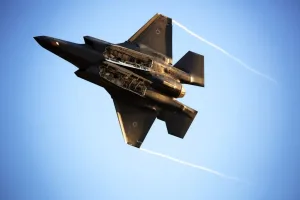
By Pesach Benson • November 24, 2025
Jerusalem, 24 November, 2025 (TPS-IL) — Israel is reinforcing its defenses in the north amid expectations that Hezbollah may attempt to retaliate for Sunday’s assassination of Haytham Ali Tabatabai, the Lebanese group’s military chief of staff. Security officials say Hezbollah could seek to answer the strike with rocket barrages on Israeli communities, cross-border raids into Israel or against IDF positions in southern Lebanon, or by directing the Houthis to carry out attacks on Israel. At the same time, some in the defense establishment believe Hezbollah’s current weakened state may lead it to refrain from responding.
The decision comes as the IDF continues preparations for what it describes as a “weakening round” against Hezbollah, including further “enforcement strikes” in Lebanon aimed at disrupting the organization’s military buildup. Israeli prime minister Benjamin Netanyahu addressed the nation Sunday evening, framing Tabataba’i’s killing as a major achievement in Israel’s ongoing effort to prevent Hezbollah from restoring its capabilities.
“A few hours ago, the IDF eliminated Haytham Ali Tabatabai, the chief of staff of the Hezbollah terror organization,” Netanyahu said. “Tabatabai was a mass murderer. His hands were full of the blood of many Israelis and Americans; it is not for no reason that the United States offered a five-million-dollar prize for his head. Tabataba’i served as a senior commander in the Radwan Force. This is the force that planned to conquer the Galilee and slaughter many of our citizens.”
Netanyahu said Tabatabai had recently been overseeing Hezbollah’s renewed rearmament efforts following the “heavy blows” the group suffered in previous Israeli operations, including the Pager Operation and the elimination of its longtime leader, Hassan Nasrallah. “I thank the IDF and the security forces who conducted a professional, precise, and successful operation today,” he said, adding that Israel’s policy under his leadership “is absolutely clear: Under my leadership, the State of Israel will not allow Hezbollah to rebuild its power, and we will not allow it to pose a threat to the State of Israel again.”
Netanyahu called on Lebanon’s government to uphold its commitments to disarm Hezbollah. “Only in this way can a better future be made possible for every citizen in Lebanon, and only in this way can good and secure neighborly relations be established between Israel and Lebanon,” he said.
In the same address, the Prime Minister also welcomed an American policy decision. “On this occasion, I also want to commend President Trump on his decision to outlaw and designate the ‘Muslim Brotherhood’ organization as a terrorist organization. This is an organization that endangers stability throughout the Middle East and also beyond the Middle East. Therefore, the State of Israel has already outlawed part of the organization, and we are working to complete this action soon.”
Tabatabai, long one of the most senior commanders in Hezbollah’s hierarchy, was designated an international terrorist in 2016. U.S. officials noted at the time that “his actions are part of a major effort to cause instability in the region.” He directed Hezbollah’s special forces in Syria and Yemen, where he coordinated operations with pro-Iranian militias and provided assistance to the Houthis. Israel says he joined Hezbollah in the 1980s and rose through several senior roles, including in the elite Radwan Force. During the recent war, Tabatabai led Hezbollah’s operations division and advanced further as other commanders were eliminated. After the ceasefire, he became Hezbollah’s chief of staff and “worked extensively to restore their readiness for war with Israel,” the IDF said.
On Monday, the IDF conducted what it described as a scheduled training exercise in the Eastern Galilee. The military warned residents to expect visible movement of troops and vehicles, stressing that “there is no fear of a security incident. In the event of a real incident, the residents will be informed by the security forces.” The drill is part of the IDF’s annual 2025 training schedule.
Israel has stepped up its strikes on Hezbollah as the Iran-backed terror group tries to regroup and rebuild.
Under the terms of the ceasefire that went into effect on November 27, 2024, Hezbollah is required to withdraw its armed forces from southern Lebanon. According to UN Security Council Resolution 1701, which ended the 2006 Second Lebanon War, the group is prohibited from operating south of the Litani River.
Israel struck a key figure in Hezbollah’s efforts to smuggle Iranian weapons into Lebanon, the Israel Defense Forces said on Sunday...
Jerusalem, 20 April, 2025 (TPS-IL) — Israel struck a key figure in Hezbollah’s efforts to smuggle Iranian weapons into Lebanon, the Israel Defense Forces said on Sunday.
The IDF said it targeted Hussein Ali Nasser, deputy head of Hezbollah’s Unit 4400 in an airstrike in southern Lebanon on Saturday. Unit 4400 is responsible for smuggling Iranian weapons and money into Lebanon.
The army added that Nasser worked closely with Iranian officials and collaborators at Beirut’s Rafic Hariri International Airport. According to the IDF, Nasser also played a key role coordinating arms deals along the Syria-Lebanon border.
According to United Nations Security Council Resolution 1701, which ended the 2006 Second Lebanon War, the terror group is forbidden from operating in Southern Lebanon south of the Litani River.
The ban on Hezbollah activity in southern Lebanon was reinforced by the ceasefire that took effect on November 27, 2024.
Hezbollah rocket barrages forced thousands of residents of northern Israel to evacuate their homes. Leaders of the Iran-backed terror group vowed to continue the barrages as long as Israeli forces were in Gaza. In September 2024, thousands of booby-trapped Hezbollah pagers and walkie-talkies exploded, followed by wide-ranging airstrikes on Hezbollah’s leadership, missiles, and other assets.
After Israeli forces began a ground operation on Oct. 1, soldiers found evidence that Hezbollah’s elite Radwan Force had been planning to invade the Galilee.