

















Knesset Approves Law Commemorating Israel’s Moroccan Jewish Heritage
Israel's Knesset approves a law honoring Moroccan Jewish heritage, establishing a national day to commemorate the community and 44 Egoz victims.



Israel's Knesset approves a law honoring Moroccan Jewish heritage, establishing a national day to commemorate the community and 44 Egoz victims.
By Pesach Benson • December 31, 2025
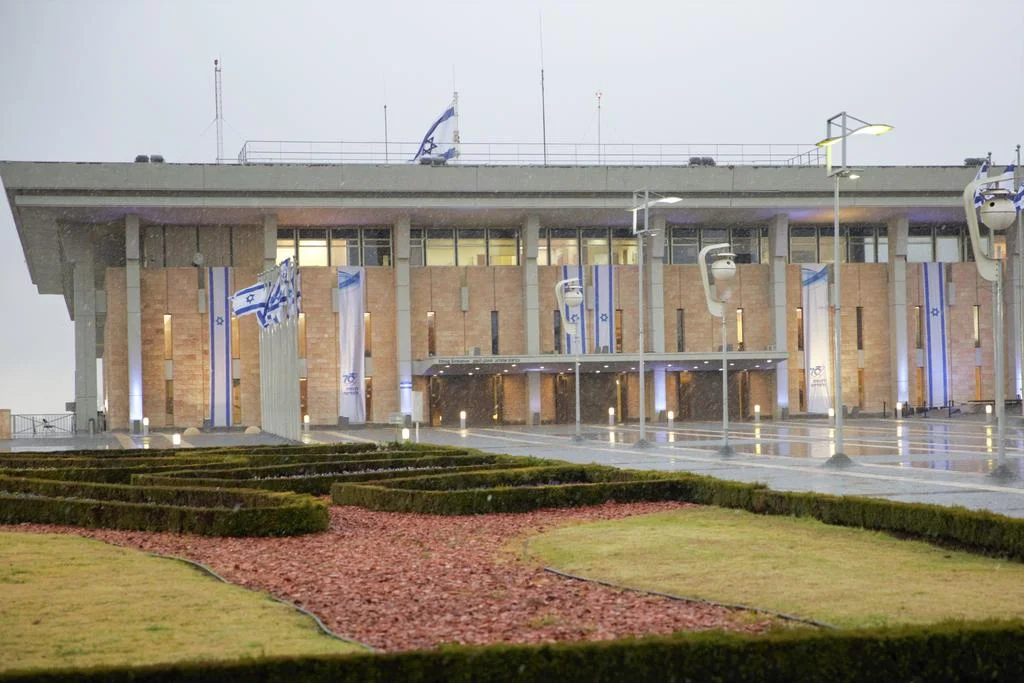
Jerusalem, 31 December, 2025 (TPS-IL) — Israel’s parliament on Wednesday approved a bill establishing a national day to honor Moroccan Jews who immigrated to the country and to remember those who died en route.
Following the vote, Shas party chairman MK Rabbi Aryeh Deri described the law as “the closing of a circle for the glorious Moroccan community.” He added, “The time has come for the State of Israel to remember and cherish our dear parents and grandparents, who gave their lives to immigrate to the Land of Israel and continue the tradition and legacy of our father’s house.” Deri was born in the northern Moroccan city of Meknes and his family moved to Israel in 1968.
The day, set for the 23rd of the Hebrew month of Tevet, coincides with the anniversary of the “Egoz”, which was carrying 44 Moroccan Jews on a clandestine voyage organized by Israel’s intelligence service, the Mossad. At the time, Morocco would not allow Jews to emigrate to Israel.
Rough seas in the Atlantic Ocean near Morocco caused the vessel’s hull to crack on Jan. 10, 1961. All 44 aboard perished. Only 22 of the bodies were recovered, and they were buried in Jerusalem’s Mount Herzl cemetery.
The legislation calls for schools across Israel to teach about the heritage of Moroccan Jewry and for a special session to be held in the Knesset each year.
An estimated one million Israelis are either from Morocco or of Moroccan descent. Approximately 3,000 Jews currently live in the North African country.
Israel and Morocco normalized relations in December 2020 as part of the U.S.-brokered Abraham Accords.
In 2024, Israelis accounted for more than 55% of Morocco’s e‑visa applications, making Israel the country with the highest number of requests that year, the Moroccan Foreign Ministry reported.
Between 1948-1972, approximately 586,000 Jewish refugees from Arab countries in North Africa and Asia were resettled in Israel, while 200,000 more moved to North America and Europe. The vast majority were destitute, their property confiscated by the Arab governments they left behind.
Bank of Israel: Haredi enlistment is crucial to ease army and economic strain. Expanding enlistment saves Israel billions annually, cutting reservist costs. New

By Pesach Benson • December 11, 2025
Jerusalem, 11 December, 2025 (TPS-IL) — Increasing Orthodox Jewish (Haredi) enlistment in the Israel Defense Forces could save the economy billions of shekels, the Bank of Israel said on Thursday. A month of reservist service costs about NIS 38,000 ($11,700), while conscripting young Haredim is far cheaper and may even encourage them to join the workforce. Expanding enlistment by 7,500 Haredim annually — adding around 20,000 over time — could cut the economic burden of reservists by NIS 9–14 billion ($2.8-$4.3 billion) a year.
The report warns that the Security Service Law being considered by the Knesset sets low recruitment targets and weak incentives, meaning it may not meet army needs or reduce costs.
Lapid pushes for Knesset approval of Trump's Gaza peace plan, challenging Netanyahu coalition. Israeli politics at a crossroads.
By Pesach Benson • November 25, 2025
Jerusalem, 25 November, 2025 (TPS-IL) — Opposition leader Yair Lapid announced on Tuesday that he will bring a motion to the Knesset next week calling for Israel to adopt U.S. President Donald Trump’s 20-point Gaza peace plan, a move designed to support Washington while putting Prime Minister Benjamin Netanyahu’s coalition on the spot.
“The entire Israeli people are grateful to President Trump for leading a courageous deal to free the hostages. We support him and strengthen his hand in efforts to implement the steps of the plan. I expect all parties to vote in favor of the president’s plan,” Lapid said.
The plan lays out a phased strategy to end the conflict, including the return of all hostages—living and deceased—within 72 hours of agreement implementation. It envisions a temporary, technocratic Palestinian committee to manage day-to-day affairs in Gaza under the oversight of a new international body, the “Peace Council.” The council would coordinate redevelopment and financing until the Palestinian Authority completes its reform program and can safely resume governance.
Although Trump’s plan frames Palestinian statehood as a distant possibility contingent on reforms and security guarantees, it still explicitly acknowledges “a credible pathway to self-determination and a Palestinian state.” Netanyahu and many coalition members have consistently opposed any notion of a Palestinian state, viewing it as incompatible with Israel’s long-term security and territorial goals.
The U.S. plan also lays the groundwork for the eventual return of the Palestinian Authority to governing Gaza. Many coalition ministers are skeptical or outright opposed to empowering the P.A.
“This is a chance to strengthen Trump’s hand and support a clear framework for ending the conflict,” Lapid said. “It is also a test of whether the government is ready to stand with Israel’s interests — or with political expediency.”
It is uncertain whether Lapid’s motion will pass, which could embarrass Netanyahu.
After the United Nations Security Council adopted the Trump plan, Netanyahu called the plan “a framework that will lead to peace and prosperity because it insists upon full demilitarization, disarmament, and the deradicalization of Gaza.”
Around 1,200 people were killed and 252 Israelis and foreigners were taken captive by Hamas during the October 7, 2023, attack on southern Israel. The bodies of two Israelis and one Thai national are still held in Gaza.
Key Rabbis in Israel's governing coalition back controversial army exemptions for yeshiva students, citing practical considerations for Torah preservation.
By Pesach Benson • November 19, 2025
Jerusalem, 19 November, 2025 (TPS-IL) — A faction within one of the Orthodox parties in Israel’s governing coalition said on Wednesday it has received approval from senior rabbis to advance a controversial government bill regulating Haredi conscription.
A spokesman for Rabbi Dov Lando, spiritual leader of the Degel HaTorah faction of the United Torah Judaism party, said the guidance reflected “practical considerations for saving the world of Torah.” He explained, “In the end, the great rabbis have two main considerations. The primary consideration is that those who want to learn can continue to study, and the second is that those who enlist will have a suitable framework in the IDF. They will do what is needed to safeguard yeshiva students.”
Legislation currently in the Knesset’s Foreign Affairs and Defense Committee seeks to formalize Orthodox community exemptions from the Israel Defense Forces (IDF). Committee chairman Boaz Bismuth has indicated that the revised draft is expected to continue exempting full-time yeshiva students from military service for the foreseeable future.
However, Degel HaTorah’s support does not guarantee the bill’s passage. UTJ’s other faction, Agudat Yisrael, remains opposed.
A spokesman for Agudat Yisrael chairman Rabbi Yitzhak Goldknopf said, “The chairman… has not yet received the draft of the Conscription Law… and therefore it has not yet been brought before the Council of Torah Sages. To make it absolutely clear: Agudat Yisrael will not support any bill that includes sanctions or any harm to the status and rights of Torah students in the Land of Israel, as has been the practice until now.”
Shas, the coalition’s other Orthodox party, is reportedly inclined to support the bill but has not formally endorsed it.
The Movement for Quality Government, an Israeli watchdog organization, criticized Degel HaTorah’s announcement and signaled it could take legal action.
“The High Court has already unanimously ruled… that there is no legal basis for avoiding the enlistment of yeshiva students. Any attempt to circumvent the court ruling and approve… the mass exemption of tens of thousands of Haredi youth… is a serious violation of the rule of law and equality,” the group said. “We will continue the legal battle in the High Court and will not allow the government to breach the court’s rulings and harm national security.”
Opposition Leader Yair Lapid slammed the rabbis’ approval of the bill, calling it a “full-blown draft evasion law.” He told the Knesset, “They would not have approved it unless they knew it was outright draft evasion. Tens of thousands of healthy young people are being released from the IDF… It is simply an erosion of the foundations of Zionism.”
The military began making plans to draft yeshiva students after israel’s high Court of Justice ruled in 2024 that exemptions for the Haredi community were illegal.
Haredi Orthodox men in Israel are generally exempt from mandatory military service if they study full-time in religious seminaries, known as yeshivot. The issue has long divided Israeli society and remains politically sensitive, especially during wartime. Shas and UTJ insist on preserving these exemptions as a matter of religious principle and community identity.
However, public opposition has grown. After two years of war, many Israelis view the policy as unequal.
Military service is compulsory for all Israeli citizens. However, Israel’s first Prime Minister, David Ben-Gurion, and the country’s leading rabbis agreed to a status quo that deferred military service for Haredi men studying in yeshivot, or religious institutions. At the time, no more than several hundred men were studying in yeshivot.