























Cyprus Defense Minister Denies Joint Rapid Force Plans with Israel, Greece
Cyprus Defense Minister Vasilis Palmas firmly denies plans for a joint rapid reaction force with Israel and Greece, clarifying crucial regional defense reports.



Cyprus Defense Minister Vasilis Palmas firmly denies plans for a joint rapid reaction force with Israel and Greece, clarifying crucial regional defense reports.
By Kostis Konstantinou • December 18, 2025
Jerusalem, 18 December, 2025 (TPS-IL) — Cypriot Defense Minister Vasilis Palmas denied to The Press Service of Israel that there is any official plan or agreement for the formation of a joint rapid reaction force between Cyprus, Greece, and Israel. Reports of such a force being created swirled in advance of Monday’s tripartite summit in Jerusalem.
“In regard to the specific publication, I have nothing to add; I do not confirm it. No such meeting with such an agenda has taken place. Contacts and meetings take place on a daily basis, whether they are made public or not, but such a specific issue has not existed and does not exist,” Palmas told TPS-IL.
“Of course, the relationship between Cyprus and Israel, or Greece and Israel, or Greece, Israel, and Cyprus is well known. We are allied countries, whether this concerns the training of personnel or bilateral and trilateral exercises. After all, this is how allied or friendly countries operate with each other,” Palmas explained.
This denial follows media reports in Israel and Greece about a tripartite brigade-level force consisting of 2,500 soldiers from the eastern Mediterranean countries. The force would, according to the reports, cover ground, air, and naval operations.
Greek media initially ran the story, citing Israel’s public broadcaster Kan. The latter had reported on an “unusual” meeting between Israeli Air Force Chief Tomer Bar and high-ranking officials from Cyprus and Greece. The aim, according to Kan, was to strengthen cooperation in eastern Mediterranean airspace while countering Turkey’s efforts to consolidate its presence and influence. However, Kan made no mention of forming a force.
Greek reports citing Kan then reported, without verification, plans to create a rapid intervention force.
Israeli Prime Minister Benjamin Netanyahu, Greek Prime Minister Kyriakos Mitsotakis, and Cypriot President Nikos Christodoulides are expected to discuss energy cooperation, protecting offshore assets, and deterring Turkey.
JerusaLANG creates a unique space in Jerusalem for diverse communities – Jews, Arabs, religious, secular – to meet and converse, fostering connection since.
By Shalhevet Eyal • December 18, 2025
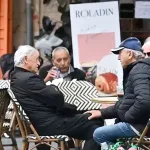
Jerusalem, 18 December, 2025 (TPS-IL) — As the cool Jerusalem air settles over the courtyard of the HaMif’al building, the artists’ space turned bar begins to fill with people. Under warm lights on the inner stone floor, a circle of eight people — Jews and Arabs, religious and secular — sit close together, leaning into a lively conversation in Arabic about faith. Even from a distance, their hands move animatedly, the rhythm of their voices rising and falling in a shared language.
On the patio, a group of Russian speakers sit together, their conversation flowing with the ease of a familiar tongue. Not far away, a cluster of young Turks stand in a loose circle, talking with quick gestures, their voices threading through the winter air. Dozens more people drift between groups in the courtyard and inside, guided by the colorful stickers on their jackets announcing the languages they speak or hope to learn.
This is JerusaLANG, a weekly gathering where Jerusalem’s patchwork of cultures becomes visible, audible, and unexpectedly intimate.
“One thing I take from these events, and what gives me the strength to keep going, is seeing how people meet each other without media or politicians in the middle,” JerusaLANG’s founder, Avner, tells The Press Service of Israel. “Most people, I believe, are good, and you can see it here.”
Avner started the event in 2023, shortly before the war. The inspiration? He was walking through Jerusalem when he realized how many languages he heard — Spanish, English, Arabic, Hebrew, French, Chinese. “I thought: let’s put them in one place and just let people talk,” he recalled.
For Julieta, a Ph.D. student from Argentina, the weekly get-togethers opened unexpected doors. “I met Korean girls here for the first time,” she says. “We ended up meeting again and going on a trip. It was amazing. I love Korean culture.”
Aaron, a Hebrew teacher who immigrated from Uzbekistan, says the evening feels like “real Jerusalem — young people from different backgrounds, full of good interactions and good vibes.” He speaks Hebrew, English, and Bukharian Persian, a Jewish dialect of Persian, and is always struck by the variety of languages he hears around him.
Leigh, who recently moved from New York, stands near the edge of the space and watches people move between groups, switching languages mid-sentence. “Speaking Hebrew fluently helped me connect with people here,” she says. “Language is how you understand someone’s perspective.”
Inside, near the bar, Evyatar and Suhail — friends who met here about a year ago — laugh as they recall how their friendship grew. Evyatar, a Jewish Israeli, came wanting to learn Arabic. Suhail, a Christian Arab from Amman, wanted to practice Hebrew. “Sometimes it’s just chemistry,” Evyatar says. Suhail remembers how that chemistry once led them, after a late trip to Tel Aviv, to spend the night sleeping at the yeshiva where Evyatar studied. “Even the Shabbat dinner was really good,” he recalled.
As the night deepens, the mix of voices becomes a soft chorus — English from the inner courtyard, French from the patio, Mandarin and Spanish rising from small groups inside. People hold beers or hot cider against the cold, peel language stickers from their coats, and drift from one conversation to the next, accents wobbling, words gently corrected — with a smile.
Revolutionary Israeli tech from the University of Haifa uses drone imagery and machine learning to map archaeological sites, revealing ancient patterns and.
By TPS-IL • December 18, 2025
Jerusalem, 18 December, 2025 (TPS-IL) — A new computational tool developed at the University of Haifa is changing how archaeologists document and analyze ancient ruins, using drone imagery and machine learning to reveal architectural patterns that cannot be identified from ground level.
“Sites that appear on the surface as scattered stones suddenly become coherent, organized spaces, and it saves a lot of research time,” Dr. Yitzchak Jaffe of the University of Haifa’s School of Archaeology and Maritime Cultures, one of the study’s authors, told The Press Service of Israel. “And this system is unique in its implementation in the field of archaeology.”
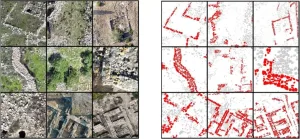
The tool combines high-resolution drone imagery with machine learning to identify individual building stones and wall segments across archaeological sites. Within minutes, the system can map hundreds of thousands of stones and translate what looks like visual chaos into a detailed, measurable site plan. It was recently evaluated in the peer-reviewed Journal of Archaeological Science.
Ancient settlement sites often frustrate both researchers and visitors. From the ground, collapsed walls and eroded structures resemble random piles of stone, and even extended fieldwork can fail to clarify how a site was originally laid out. While drone photography offers a broader perspective, turning aerial images into usable archaeological data has until now required long and labor-intensive manual processing.
Aiming to bridge that gap, the Haifa University team worked with hundreds of drone images captured above archaeological ruins, stitching the photographs into precise spatial maps and elevation models. These maps were then divided into hundreds of small sections used to train two machine learning models. One model was taught to identify individual building stones, while the second detected wall segments.
Both models were trained using thousands of manually labeled examples. Once trained, the system cross-referenced stone and wall layers to generate a detailed site plan in which each stone is fixed to its exact location and associated with a specific wall segment. According to doctoral researcher Erel Uziel, a co-author of the study, the result is a level of spatial precision that was previously unattainable without extensive excavation.
The system was then tested at nine archaeological sites across Israel. In total, it identified roughly 350,000 building stones, about 20 percent of which were classified as part of wall structures. The researchers found that the tool performed accurately even at sites with dense vegetation, varied soil colors, or partial preservation—conditions that typically complicate archaeological documentation.
By integrating stone-level data with wall segmentation, the tool enables researchers to identify construction types, architectural styles, and spatial organization across entire settlements. This, the team says, opens new possibilities for analyzing how sites developed over time, how neighborhoods were planned, and how architectural choices shifted across periods.
The implications extend beyond documentation. With precise spatial data, archaeologists can identify areas of high research potential and plan excavations more strategically, reducing unnecessary digging and better preserving sensitive areas, the team said. The tool also allows scholars to ask new research questions that depend on accurate spatial relationships, such as changes in building density, reuse of materials, or variations in construction techniques within a single site.
Hai Ashkenazi, an archaeologist and manager of Geoinformatics at Israel’s Antiquities Authority, told TPS-IL that the tool might be “very helpful.”
“At first glance, this could be a development that would be very helpful for us at the Antiquities Authority, since it makes it possible to quickly draft site plans. At the moment, we are still testing it to see that it works with our files and across different types and colors of terrain,” he said.
Israeli scientists at Hebrew University discovered a viral switch in bacteriophages, offering a new front to fight antibiotic-resistant bacteria, a global.

By Pesach Benson • December 18, 2025
Jerusalem, 18 December, 2025 (TPS-IL) — A tiny viral switch discovered by Israeli and American scientists could open a new front in the fight against antibiotic-resistant infections, a global health threat projected to kill up to 10 million people annually by 2050. Scientists at the Hebrew University of Jerusalem have revealed that bacteriophages—viruses that infect bacteria—use a small RNA molecule to hijack bacterial cells, a mechanism that had never been described before, offering fresh insights for future phage-based therapies.
The study, led by Dr. Sahar Melamed and her team, including PhD student Aviezer Silverman, MSc student Raneem Nashef, and computational biologist Reut Wasserman, in collaboration with Prof. Ido Golding from the University of Illinois Urbana-Champaign, focused on a tiny viral RNA called PreS. Unlike most prior research, which concentrated on viral proteins, this study showed that even one of the most studied phages, lambda, uses RNA to directly manipulate bacterial gene expression.
“This small RNA gives the phage another layer of control,” Melamed said. “By regulating essential bacterial genes at exactly the right moment, the virus improves its chances of successful replication. What astonished us most is that phage lambda, studied for more than 75 years, still hides secrets. Discovering an unexpected RNA regulator in such a classic system suggests we have only grasped a single thread of what may be a much richer network of RNA-mediated control in phages.”
The researchers discovered that PreS acts like a molecular “switch” inside infected bacteria, targeting specific bacterial messenger RNAs. One key target is the message that codes for DnaN, a protein essential for DNA replication. PreS binds to a normally folded portion of this mRNA, unfolds it, and makes it easier for the bacterial protein-making machinery to translate it. The result is more DnaN protein, faster viral DNA replication, and a more efficient infection. When PreS is removed or its binding site disrupted, the phage weakens, multiplies more slowly, and its destructive phase is delayed.
“This mechanism had never been seen before in phages,” said Silverman. “It shows that even the smallest viral molecules can play a decisive role in infection, giving the virus a subtle but powerful advantage over its host.”
The discovery is particularly striking because small RNAs were not previously considered major players in phage biology. Yet PreS is highly conserved across related viruses, suggesting that many phages may share a hidden “toolkit” of RNA regulators, a field scientists are only beginning to explore.
Understanding how phages control bacterial cells is crucial for both fundamental biology and potential medical applications. With antibiotic resistance rising worldwide, phage therapy—using viruses to selectively attack bacteria—is gaining attention as a flexible, targeted alternative to conventional drugs. Discoveries like PreS provide a blueprint for designing smarter phages that are safer, more predictable, and more effective in combating drug-resistant infections.
“Even the smallest viral molecules can have a huge impact on whether an infection succeeds,” Melamed said. “By learning how phages manipulate their hosts at this microscopic level, we can begin to engineer viruses that are both powerful and precise in the fight against antibiotic resistance.”
Understanding how PreS manipulates bacterial cells could help scientists design smarter phage therapies that are more efficient at targeting harmful bacteria, particularly strains resistant to antibiotics. By harnessing these RNA-based mechanisms, researchers could develop precision treatments capable of attacking multi-drug-resistant infections that conventional antibiotics cannot touch.
Beyond medicine, the findings may also have applications in synthetic biology, allowing engineered phages or bacteria to be used in industrial processes, microbiome management, or controlling biofilms, turning a once-hidden viral strategy into a versatile tool for both health and technology.
The study was published in the peer-reviewed Molecular Cell journal.