










Israeli Forces Destroy 2-Kilometer Hamas Tunnel in Northern Gaza
Israeli forces recently destroyed a 2-kilometer Hamas "offensive tunnel" in northern Gaza, located within the Israeli side of the Yellow Line, neutralizing a.
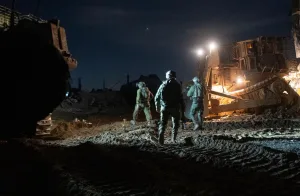


Israeli forces recently destroyed a 2-kilometer Hamas "offensive tunnel" in northern Gaza, located within the Israeli side of the Yellow Line, neutralizing a.

Israel's first 2026 immigrants from Australia mark a shift in Jewish migration. Western aliyah surged in 2025, with French immigration…
Israel's military reports nearly 21,000 strikes across the Middle East in 2025, including 19,530 in Gaza, mobilizing over 300,000 reservists…
Israel allows daytime Jewish prayer at Joseph's Tomb in Nablus for the first time in 25 years, ending two decades…
Israeli forces recently destroyed a 2-kilometer Hamas "offensive tunnel" in northern Gaza, located within the Israeli side of the Yellow Line, neutralizing a.
By Ehud Amiton/TPS • January 4, 2026
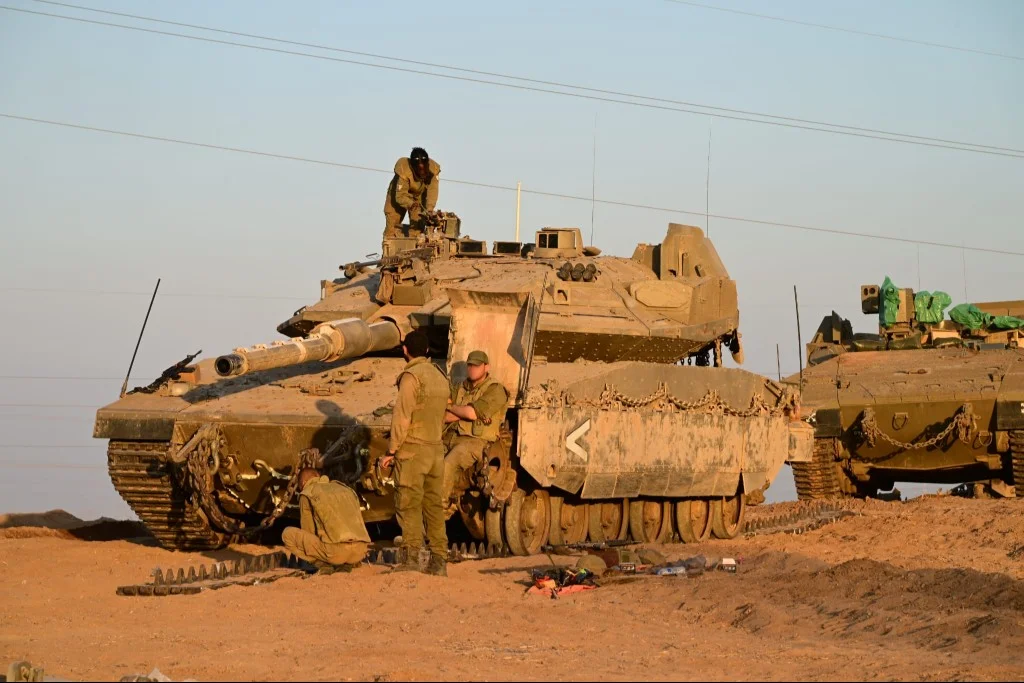
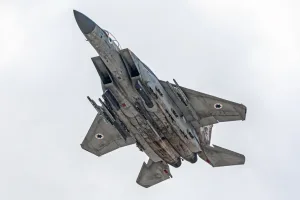
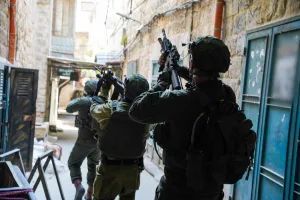
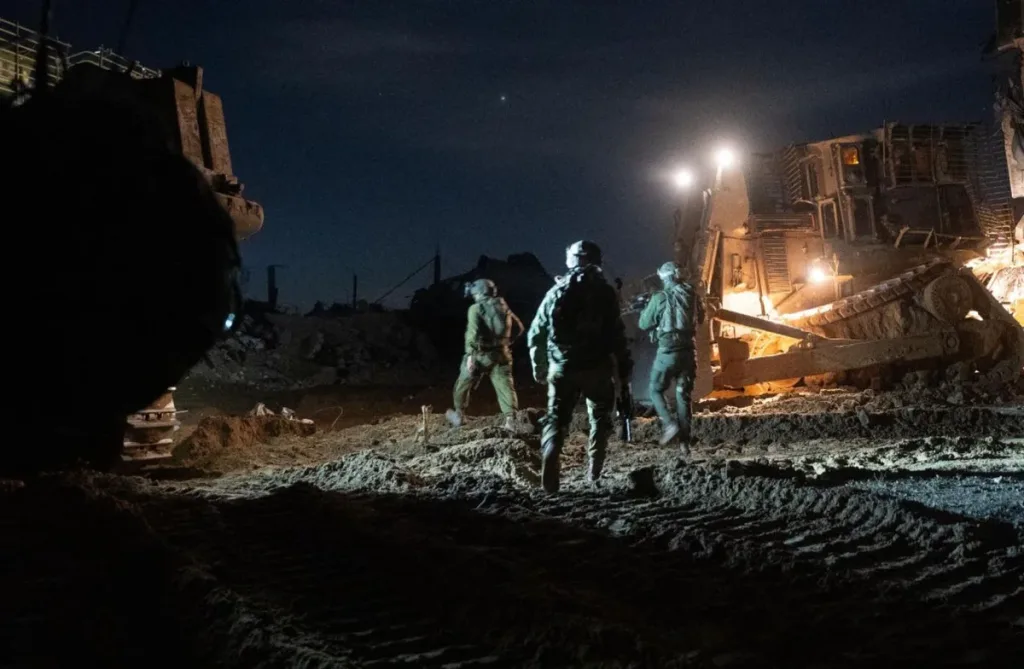
Jerusalem, 4 January, 2026 (TPS-IL) — Combat engineers recently demolished a two-kilometer Hamas tunnel within the Israeli side of the Yellow Line in northern Gaza, the Israel Defense Forces said on Sunday.
The IDF described the tunnel, located in Beit Lahiya, as an “offensive tunnel.”
Around 1,200 people were killed, and 252 Israelis and foreigners were taken captive by Hamas during the October 7, 2023, attack on southern israel. The body of israeli police Master Sgt. Ran Gvili remains in Gaza.
Israel's first 2026 immigrants from Australia mark a shift in Jewish migration. Western aliyah surged in 2025, with French immigration rising 45%.
By Pesach Benson • January 1, 2026
Jerusalem, 1 January, 2026 (TPS-IL) — The Sachs family from Sydney, Australia –- father Trevor, mother Dalit, and daughter Ashira –- became Israel’s first immigrants in 2026 after arriving at ben gurion Airport on Thursday as trends point to rising Jewish immigration from Western countries.
On landing, the three were greeted by Minister of Immigration and Absorption Ofir Sofer, received Israeli ID cards, and officially began their new life in the country. The family’s son, Levi Sachs, had already immigrated ahead of them and enlisted in the Israel Defense Forces.
“The Sachs family’s choice to immigrate to Israel, especially when their son is serving in the IDF, is gratifying and encouraging. We are working for the aliyah [immigration] of Australian Jews to Israel and have already taken and will continue to take significant steps to that end,” Sofer said.
The arrival of the Sachs family adds to the nearly 22,000 immigrants who moved to Israel in 2025.
According to Israel’s Central Bureau of Statistics (CBS), approximately 21,900 people moved to Israel last year, representing only about one-third of the previous year’s total.
Signaling a shift in the global pattern of Jewish migration, Russian and Ukrainian immigration fell by half, while arrivals from the United States, United Kingdom, and France increased. Overall, North American aliyah rose by 13 percent, and French immigration jumped 45 percent, the CBS reported.
The change is generally attributed to rising Western antisemitism.
“The changing composition of new immigrants shows how Israel continues to attract Jews from around the world,” a ministry spokesperson said.
As of December 31, 2025, Israel’s population stood at 10,178,000.
Israel's military reports nearly 21,000 strikes across the Middle East in 2025, including 19,530 in Gaza, mobilizing over 300,000 reservists for an.
By Ehud Amiton/TPS • December 31, 2025
Jerusalem, 31 December, 2025 (TPS-IL) — After a year of near-constant fighting on multiple fronts, Israel’s military says it carried out almost 21,000 strikes in 2025, mobilized more than 300,000 reservists and conducted operations stretching from the Gaza Strip and southern Lebanon to Iran and Yemen, according to sweeping year-end numbers released Wednesday by the Israel Defense Forces (IDF).
The IDF said it struck about 20,900 targets across all fronts during the year and conducted roughly 430 operations. Nearly 307,000 reservists were mobilized, while naval forces logged around 130,000 hours at sea and carried out 50 maritime strikes. An IDF spokesperson said the figures reflected “a sustained, multi-front campaign unlike anything the military has faced in decades.”
The Gaza Strip accounted for the vast majority of Israeli strikes. The IDF said it attacked approximately 19,530 targets there, destroying nearly 14,000 sites it defined as terror infrastructure, including weapons depots, command centers and launch facilities. The military reported killing thousands of Hamas operatives and eliminating dozens of senior commanders, including brigade, battalion and company-level leaders.
Among those killed were Mohammad Sinwar, head of Hamas’ military wing and brother of Yahya Sinwar, as well as Muhammad Shabana, commander of the Rafah Brigade, and several other senior figures involved in weapons production and naval operations. An IDF official said the campaign had “systematically dismantled Hamas’ chain of command,” adding that only one brigade commander from before the war remains alive.
Around 1,200 people were killed, and 252 Israelis and foreigners were taken captive by Hamas during the October 7, 2023, attack on southern Israel. The body of Israeli Police Master Sgt. Ran Gvili remains in Gaza.
In Lebanon, where Israel is enforcing a ceasefire reached in late 2024, the IDF reported killing around 380 Hezbollah operatives and striking roughly 950 to 1,000 targets. These included launchers, weapons depots, military structures and underground shafts. The army also accused Hezbollah of violating the ceasefire about 1,920 times during the year. “We responded to every significant breach,” a senior officer said, “while seeking to prevent a return to full-scale war in the north.”
The ceasefire requires Hezbollah to withdraw its armed forces from southern Lebanon and prohibits it from operating south of the Litani River.
In Judea and Samaria, Israeli forces killed about 230 Palestinian terrorists and arrested approximately 7,400 terror suspects — including nearly 1,200 linked to Hamas. The military said it seized more than 1,300 weapons and confiscated about NIS 16.5 million ($5.19 million) in terror funds. Thirty suspects’ homes were demolished, and around 80 brigade-level operations were carried out. The IDF also announced the establishment of a new eastern border formation, Division 96.
The report detailed Israeli operations far beyond its borders.
In Iran, during 12 days of fighting in June, the IDF said it struck hundreds of targets and killed dozens of senior regime figures, including top commanders of the Islamic Revolutionary Guards Corps (IRGC) and the armed forces. The IDF also claimed responsibility for the deaths of 11 Iranian nuclear scientists.
During 12 days of fighting, Iran launched roughly 550 ballistic missiles and 1,000 drones at Israel, most of which were intercepted. However, at least 31 missiles struck populated areas, and one drone hit a home. The attacks killed 28 Israelis and injured more than 3,000.
In Yemen, Israel conducted about 20 major air operations against the Iran-backed Houthis, striking some 230 targets. Many of the attacks, the IDF noted, were repeat strikes after Houthis attempted to repair damaged sites. The IDF said it killed senior Houthi military and government officials, including the group’s chief of staff, Muhammad al-Ghamari.
On the intelligence front, the IDF revealed new details about Unit 504, a secretive military intelligence unit responsible for interrogations. According to the report, the unit questioned about 3,100 detainees in 2025, roughly half in detention facilities and half in field conditions.
“Field interrogations are conducted under extremely complex circumstances,” the IDF said, noting that interrogators often operate immediately after combat.
The human cost of the year was also highlighted. Ninety-one Israeli soldiers were killed in war-related circumstances, and 821 were wounded. While the numbers were lower than in the peak fighting of 2023 and 2024, the army acknowledged the toll remained heavy. “This has been a demanding year for our forces and for Israeli society,” an IDF official said.
On the home front, the military said it expanded civil defense efforts, deploying 1,500 mobile bomb shelters, renovating about 200 public shelters, and handling more than 1.5 million emergency hotline calls.
Israel allows daytime Jewish prayer at Joseph's Tomb in Nablus for the first time in 25 years, ending two decades of night-only visits. Pilgrims can now pray.

By Pesach Benson • December 29, 2025
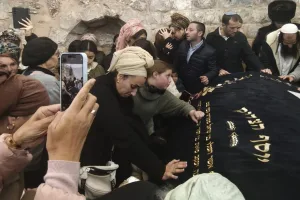
Jerusalem, 29 December, 2025 (TPS-IL) — Israel is set to allow Jewish pilgrims to spend early daylight hours at Joseph’s Tomb in Shechem (Nablus), ending a restriction that has limited visits to nighttime only for more than two decades, officials confirmed on Monday.
The change follows an agreement between Defense Minister Israel Katz and senior Israel Defense Forces commanders, and marks the first time in about 25 years that Jewish worshippers will be permitted to remain at the site after sunrise. Israeli authorities stressed that the decision does not involve a change in security arrangements or an increased military presence.
Katz said the guidelines “allow greater freedom of worship while preserving the security framework that has been in place for years.”
Under the updated guidelines, pilgrims will be allowed to stay at the tomb compound until 8 a.m., enabling them to hold the traditional morning prayer service at the site. Additional groups will be permitted to enter beginning at 6 a.m. and remain for up to two hours.
Until now, visits have taken place almost exclusively at night, coordinated by the Israeli military and conducted under heavy security escort.
The tomb is the burial site of Joseph, the son of the biblical patriarch Jacob.
Shechem is located in Area A under the administrative and security jurisdiction of the palestinian authority. However, under the Oslo Accords, Israeli forces were allowed to remain at the holy site. In 2000, Israel abandoned the grave after a Palestinian mob stormed the compound. A Border Police officer who was shot bled to death when security forces were unable to rescue him. Rioters burned down the site again in 2015. The tomb has been desecrated and refurbished several times, most recently in 2022.
Israel's Cabinet unanimously approved the shutdown of 75-year-old Army Radio by March 1, 2026, sparking a major political dispute over press freedom.

By Pesach Benson • December 22, 2025
Jerusalem, 22 December, 2025 (TPS-IL) — Israel’s cabinet on Monday unanimously approved a plan to shut down Army Radio, one of the country’s longest-running public broadcasters, setting off a fierce legal and political dispute over press freedom, military neutrality, and government authority.
Under the decision, the station — known in Hebrew as Galei Tzahal — will cease operations by March 1, 2026, according to the Defense Ministry. Its popular music-focused subsidiary, Galgalatz, is expected to continue broadcasting.
Army Radio has broadcast to the Israeli public for 75 years, serving as both a news outlet and a cultural presence for the military.
Defense Minister Israel Katz, who spearheaded the move, described the arrangement as a democratic “anomaly,” arguing that a radio station serving the general public should not be operated by the military. Speaking at the cabinet meeting, Katz said the station’s involvement in political and current-affairs programming forces the Israel Defense Forces (IDF) into public political debate.
“This creates a fundamental difficulty that harms the IDF, its soldiers, and its unity,” Katz told ministers. He added that the problem became “even more acute” following Hamas’s October 7, 2023, assault on Israel. He said the ministry has received repeated complaints from soldiers, civilians, and bereaved families who believe the station does not represent them and has at times damaged morale.
The decision is backed by Prime Minister Benjamin Netanyahu. “A military station broadcasting under the authority of the army exists in North Korea and maybe a few other countries,” Netanyahu said. “Israel should not be among them.”
Netanyahu added that he has long supported proposals to abolish or privatize Army Radio. “I am open to all of these proposals because I believe in competition,” he said, concluding that “the time has come, and better sooner rather than later.”
Army Radio currently employs 224 active-duty soldiers, 85 civilian IDF employees, and 48 content workers contracted on a consultancy basis. All now face uncertainty. Katz announced that an expert team within the Defense Ministry will oversee the closure “responsibly,” including arranging employee terminations under lawful and fair conditions.
He also ordered the immediate suspension of all recruitment and selection processes for the radio unit, both for conscripts and reservists, and instructed the IDF to begin gradually reassigning serving soldiers to other units, prioritizing combat and combat-support roles. Contracts with external journalists and advisers are to be terminated, and the lease on the station’s building in Jaffa is to be ended. These measures are scheduled to be completed by February 15, ahead of the final shutdown two weeks later.
The decision drew sharp criticism from journalists, civil society groups, and legal authorities. The Movement for Quality Government in Israel filed a petition with the High Court of Justice, arguing that the decision was driven by “ulterior motives,” based on flawed factual grounds, and likely to cause serious harm to freedom of expression and the public interest.
“The government has no authority to take this step by cabinet resolution,” the group said, arguing that Army Radio’s operations are anchored in law and can only be terminated through legislation passed by the Knesset.
Israel’s Union of Journalists echoed that position, calling the move “a severe and unlawful infringement on freedom of expression and freedom of the press” and pledging to challenge it in court.
Attorney General Gali Baharav-Miara also opposed the closure ahead of the cabinet vote. A detailed legal opinion authored by her deputies warned that shutting Army Radio would “undermine and weaken Israel’s broadcasting media map, which is already on unstable ground.”
The opinion cautioned that public access to reliable, professionally produced news would “dramatically narrow” close to national elections, describing the decision as a “profound and significant infringement of freedom of expression.”
Court challenges are expected in the coming weeks, setting the stage for a high-profile legal battle over the future of public broadcasting and democratic oversight in Israel.
Bank of Israel: Haredi enlistment is crucial to ease army and economic strain. Expanding enlistment saves Israel billions annually, cutting reservist costs. New
By Pesach Benson • December 11, 2025
Jerusalem, 11 December, 2025 (TPS-IL) — Increasing Orthodox Jewish (Haredi) enlistment in the Israel Defense Forces could save the economy billions of shekels, the Bank of Israel said on Thursday. A month of reservist service costs about NIS 38,000 ($11,700), while conscripting young Haredim is far cheaper and may even encourage them to join the workforce. Expanding enlistment by 7,500 Haredim annually — adding around 20,000 over time — could cut the economic burden of reservists by NIS 9–14 billion ($2.8-$4.3 billion) a year.
The report warns that the Security Service Law being considered by the Knesset sets low recruitment targets and weak incentives, meaning it may not meet army needs or reduce costs.