











CyberDome Drill Highlights Growing Digital Threats to Israel’s National Systems
Discover how Israel's CyberDome drill with the US tackles growing digital threats. IDF Cyber Chief Maj. Gen. Dagan reveals dozens of attacks on national systems.



Discover how Israel's CyberDome drill with the US tackles growing digital threats. IDF Cyber Chief Maj. Gen. Dagan reveals dozens of attacks on national systems.
Israel Defense Forces confirm deaths of Hamas East Rafah Battalion commander and top deputies during operation in Gaza. More than…

Israeli soldiers eliminate four Palestinian terrorists emerging from Rafah tunnel, on the Israeli side of the Yellow Line. #Israel #Rafah…
Israeli forces launch broad counterterror sweep in northern Samaria after rise in terrorist activity. Troops move into Palestinian towns with…
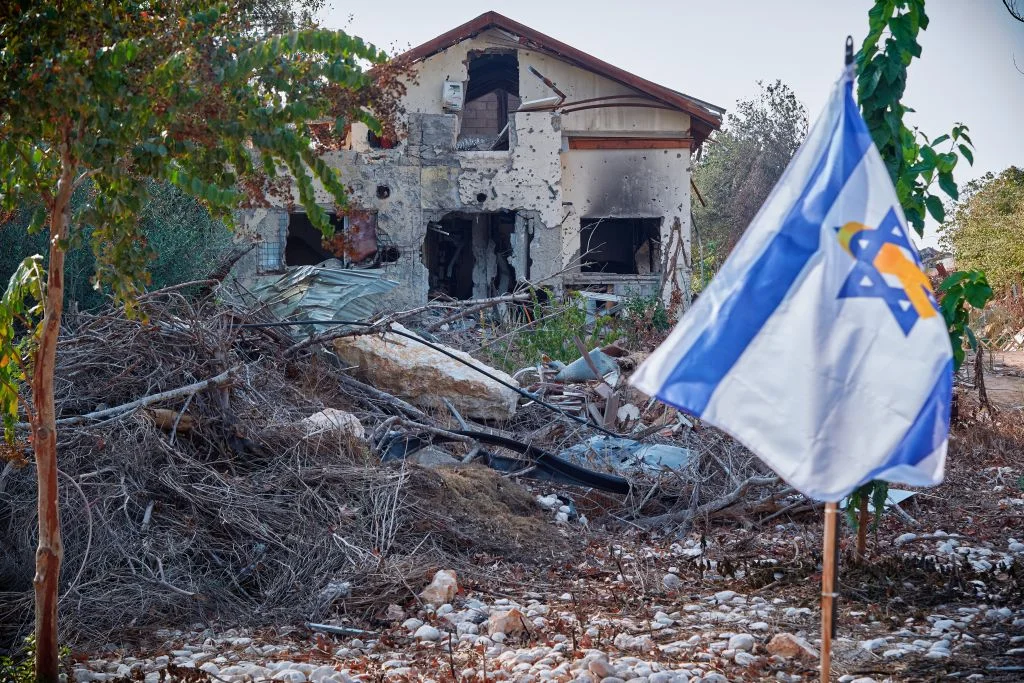
Moshav Yated's volunteers take on Hamas as IDF systems fail, saving lives in a daring defense effort.
Discover how Israel's CyberDome drill with the US tackles growing digital threats. IDF Cyber Chief Maj. Gen. Dagan reveals dozens of attacks on national systems.
By Pesach Benson • December 16, 2025
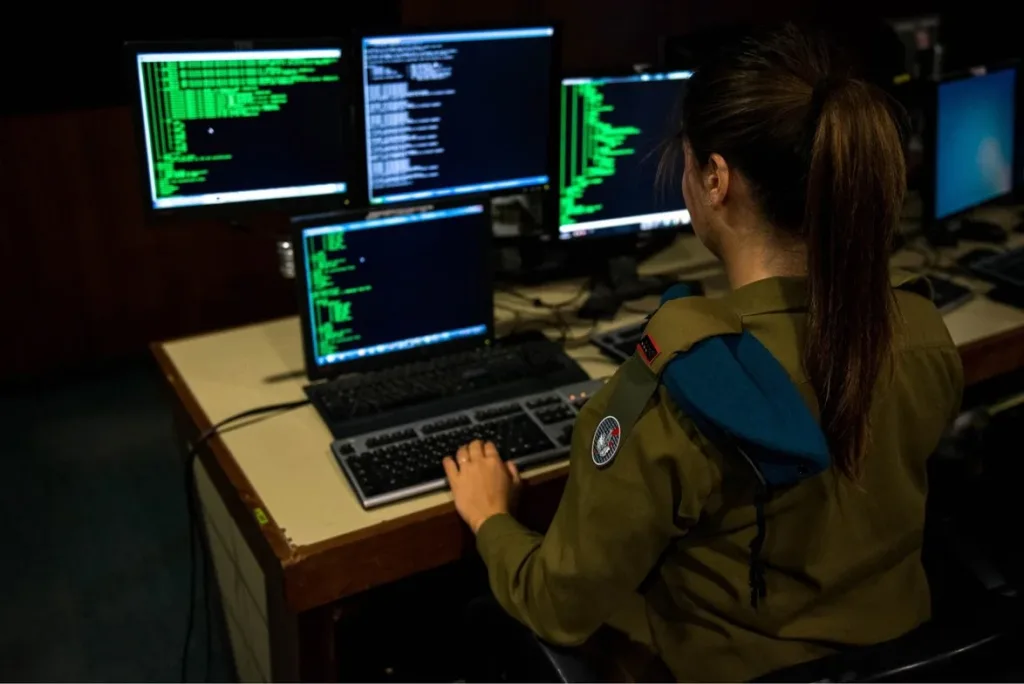
Jerusalem, 16 December, 2025 (TPS-IL) — Dozens of cyberattacks targeting Israel’s “national systems” have been blocked over the past two years of war, the Israel Defense Forces’ cyber chief said.
Maj. Gen. Aviad Dagan — who oversees the IDF’s Cyber Defense Directorate and C4I Corps — was commenting on the annual joint CyberDome exercise with the US Cyber National Mission Force, which concluded on Thursday. “Behind every overt campaign, there is also a covert one. We operate together with United States Cyber Command tirelessly to ensure superiority against any threat, from any direction,” Dagan said.
“The events published thus far do not fully represent the cyberthreat. We must not make a mistake. This is an issue that is at the very heart of our national security,” Dagan added.
He confirmed that “over the past two years, dozens of enemy attempts to damage and disable national systems have been thwarted,” and warned, “These attempts will increase.”
More than 120 Israeli specialists from the military’s two cyber units participated in the CyberDome exercise in the U.S., training together, “keyboard to keyboard, shoulder to shoulder,” against various threats, the IDF said.
During two years of war, Israel has faced a rise in cyberattacks, with some attributed to Iran.
Dagan’s remarks come on the heels of State Comptroller Matanyahu Engelman’s warning that Israel’s preparations for foreign interference in the 2026 elections are inadequate, putting the integrity of the state’s democratic process at risk.
The Comptroller regularly reviews Israel’s preparedness and the effectiveness of government policies.
The Comptroller said in early December that his office is currently reviewing the government’s handling of foreign influence in the digital sphere. Engelman said early findings from the review already indicate serious shortcomings. “It can already be said that the findings indicate significant deficiencies,” he noted.
In April, an audit by Engelman’s office found that a computer system used by Israel’s Home Front Command for monitoring and managing emergencies was highly vulnerable to cyberattacks. Hackers penetrating the system could potentially spread misinformation and manipulate emergency alerts, his report warned.
In 2023, a team of hackers overseen by Engelman staged a controlled penetration of one major hospital to test its preparedness. The attack revealed deficiencies in the medical center’s security precautions and responses to the “hack.” According to Engelman, the shortcomings could also apply to other medical centers.
Israel Defense Forces confirm deaths of Hamas East Rafah Battalion commander and top deputies during operation in Gaza. More than 40 Hamas operatives killed in
By Ehud Amiton/TPS • December 4, 2025
Jerusalem, 4 December, 2025 (TPS-IL) — The Israel Defense Forces on Thursday confirmed the death of the commander of Hamas’s East Rafah Battalion, his deputy, and a company commander during an operation in southern Gaza.
The senior operatives were among four terrorists who were spotted attempting to flee from an underground tunnel system in eastern Rafah on Sunday.
The IDF identified the eliminated commanders as Muhammad Jawad Muhammad al-Ba’ab, commander of Hamas’s East Rafah Battalion, and his deputy, Ismail Kanan Abd al-Hay Abu-Labdah. Both men were involved in planning the battalion’s role in the October 7 assault on southern communities.
Also killed were Abdullah Ghazi Ahmed Hamad, a member of the battalion and son of senior Hamas political bureau official Razi Hamad, and Tawfiq Khaled Tawfiq Salem, a company commander in the unit.
The IDF said the operation was part of a broader campaign underway since the implementation of the ceasefire agreement, during which forces have been encircling the area and demolishing Hamas infrastructure above and below ground with air support.
More than 40 Hamas operatives have been killed in the East Rafah tunnel zone during this period, the IDF added. Southern Command forces remain deployed “in accordance with the agreement” and will continue acting against immediate threats, the statement said.
Earlier on Thursday, Israel confirmed the return of the remains of Thai agricultural worker sudthisak rinthalak. The 42-year-old Rinthalak, 42, was murdered by Palestinian Islamic Jihad terrorists in the orchards of Kibbutz Be’eri on October 7, 2023, and his body taken to Gaza. Israel determined his death in May 2024 based on intelligence. Israel will coordinate arrangements to return Rinthalak’s body for burial in Thailand with the Thai Embassy.
Sudthisak is survived by his parents, Thong Ma and Orn, and his older brother, Thepporn. He was previously divorced, and had no children.
Around 1,200 people were killed, and 252 Israelis and foreigners were taken captive by Hamas during the October 7, 2023, attack on southern Israel. The body of Israeli Police Master Sgt. Ran Gvili is the last remaining in Gaza.
Israeli soldiers eliminate four Palestinian terrorists emerging from Rafah tunnel, on the Israeli side of the Yellow Line. #Israel #Rafah #IDF
By Ehud Amiton/TPS • November 30, 2025
Jerusalem, 30 November, 2025 (TPS-IL) — Israeli soldiers killed four Palestinian terrorists who were spotted emerging from a tunnel in eastern Rafah, the Israel Defense Forces announced on Sunday morning.
The area in southern Gaza is on the Israeli side of the Yellow Line, where dozens of Hamas gunmen are believed to be trapped in tunnels.
Israeli forces launch broad counterterror sweep in northern Samaria after rise in terrorist activity. Troops move into Palestinian towns with arrests and
By Ehud Amiton/TPS • November 26, 2025
Jerusalem, 26 november, 2025 (TPS-IL) — israeli forces launched a wide counterterror operation across northern Samaria overnight, sweeping into several Palestinian towns after what the Israel Defense Forces (IDF) described as a rise in terrorist activity.
The IDF and Israel Security Agency (Shin Bet) said the operation was triggered by efforts by Palestinian terror groups to entrench themselves in the area, alongside an uptick in attempted attacks.
Troops moved into Tubas, Tammun, and al-Aqaba, with Palestinian media reporting a curfew, blocked roads, and bulldozers piling earth across key routes. Soldiers carried out arrests and searched for weapons. The operation is expected to last several days.
The raid comes amid continued violence since Hamas’s October 7, 2023, massacre. Since then, 63 civilians and Israeli security personnel have been killed in attacks inside Israel and in Judea and Samaria, while eight additional members of the security forces have died in clashes during raids in Palestinian cities.
The sweep follows the killings of two wanted Palestinian terrorists in shootouts in northern Samaria.
On Tuesday near Jenin, troops killed Sultan al-Ghani, the gunman behind the 2024 murder of Gideon Perry, and arrested five suspects while seizing firearms and explosives. On Monday in Shechem (Nablus), Israeli forces killed Ala Raouf Shetiyya, responsible for a 2024 car-ramming attack that killed two Israeli soldiers.
Ahead of the current operation, the IDF dropped leaflets in Tubas warning that the area had “become a haven for terrorism” and urging residents to halt terror activity or face military action.
Moshav Yated's volunteers take on Hamas as IDF systems fail, saving lives in a daring defense effort.
By Pesach Benson • November 26, 2025
Jerusalem, 26 November, 2025 (TPS-IL) — An internal Israel Defense Forces probe released on Wednesday credited the civilian defenders of Moshav Yated for confronting Hamas terrorists who infiltrated the agricultural community during the attack of October 7, 2023. The report concluded that the army failed to protect the residents, while the local standby squad on its own prevented what could have been a massacre.
The inquiry, led by Brig. Gen. (res.) Itamar Ben-Haim a is one of dozens of probes examining how thousands of Hamas gunmen crossed into Israel, killed approximately 1,200 people and abducted 251 others. Investigators drew on interviews with residents, local security personnel, military radio logs, video footage, intelligence files and reenactments.
According to the report, 11 terrorists infiltrated Yated. The IDF was unable to deploy forces in time due to widespread breakdowns in command, communications and situational awareness.
In the absence of army protection, the moshav’s security coordinator and standby squad mobilized within minutes and, together with armed civilians, detained or neutralized the infiltrators. Their actions, the investigators wrote, prevented mass casualties and blocked further penetration into the community.
The report also detailed heavy fighting outside the moshav on Route 232, where an outnumbered IDF force from the Paran Regional Brigade and the LOTAR regional counter-terror team battled dozens of gunmen attempting to reach Yated. During those engagements, reservist Cpt. (res.) Iftach Gorny, 51, was killed while trying to prevent terrorists from seizing military equipment.
“Without this battle, the moshav would have faced a triple-digit number of terrorists. Gorny’s death was not in vain,” the report said.
The timeline released by the IDF shows that the community was first hit at 6:29 a.m., when Hamas launched a massive rocket barrage across southern Israel. Eleven minutes later, Yated’s security coordinator activated the local standby squad, locked the gates, opened shelters and deployed armed residents. By 9:15 a.m., patrols had detained the first infiltrator, who was discovered near the fence and surrendered.
Minutes later, defenders rushed to a nearby home after a resident reported an Arabic-speaking stranger at her door. Security team members identified a terrorist crawling between houses and opened fire as he fled into nearby brush. Additional infiltrators slipped under the gate and attempted to hide among the houses, but residents encircled them. By 9:45 a.m., four gunmen were subdued in a thicket, while one escaped. All captured assailants were secured in a private home until military forces arrived.
Meanwhile, at 9:40 a.m., the Paran Brigade force advancing on Route 232 came under intense fire from terrorists disguised in military-style clothing. Gorny remained near vehicles to stop the attackers from reaching the brigade’s command equipment. He was shot while moving between jeeps to retrieve keys and was pulled to cover by fellow soldiers, but medics could not save him. At about 10:05 a.m., a Caracal Battalion tank arrived and opened fire under the brigade commander’s direction, reportedly killing about 20 terrorists. A combat helicopter reached the area roughly 40 minutes after first being requested.
The following morning, while military forces continued searching the fields for additional infiltrators, a Yated resident discovered five unarmed gunmen lying on the ground near a breach in the fence. They surrendered immediately and were handcuffed by the standby squad and a Caracal team. Residents were evacuated later that day in escorted convoys.
The IDF’s report concludes bluntly that “the army failed in protecting the moshav” during the critical early hours. At the same time, investigators praised the civilian defenders. “They made correct decisions and acted as expected,” the report states, adding that the volunteer spirit displayed by armed residents was “remarkable.”
In a statement, Moshav Yated said its residents “do not forget those who fell in the battle for the moshav’s defense,” naming Gorny and other victims. The community expressed gratitude both to the local rapid-reaction squad and to the Paran Brigade, saying their actions “saved Yated from catastrophe.”
The IDF has released a series of detailed internal probes examining how roughly 5,000 terrorists from Hamas and Palestinian Islamic Jihad were able to storm Israeli communities and overrun military positions. The reports reveal that the army’s chain of command collapsed amid the chaos as soldiers found themselves vastly outnumbered. Investigators concluded that the IDF misread Hamas’s intentions and misinterpreted intelligence warnings in the days leading up to October 7, while much of the military’s attention remained directed toward potential threats from Iran and its proxy Hezbollah in Lebanon.
However, an external review of 25 of the reports by a panel of former senior military officers found that many were incomplete or unsatisfactory
The IDF probes only address issues of operations, intelligence, and command—not decisions made by the political echelon.
Prime Minister Netanyahu has resisted calls for a formal state commission of inquiry, calling it “politically biased.” Critics accuse him of delaying and weakening the probe. Such commissions, led by senior Supreme Court justices, can summon witnesses, collect evidence, and make recommendations, though the government is not required to follow them.
Around 1,200 people were killed and 252 Israelis and foreigners were taken captive by Hamas during the October 7, 2023, attack on southern Israel. The bodies of Israeli Police Master Sgt. Ran Gvili and Thai agricultural worker Sudthisak Rinthalak remain in Gaza.
Hamas exploited charity aid to support terror, Israeli military intelligence reveals. Documents show funds diverted to Al-Qassam Brigades. Major revelation
By Pesach Benson • November 20, 2025
Jerusalem, 20 November, 2025 (TPS-IL) — Israeli military intelligence says Hamas used the Gaza-based charity Qawafel al-Khair to support its armed operations. Documents recovered in the territory show the organization provided money, construction aid, and logistics to the group’s Al-Qassam Brigades, the Israel Defense Forces disclosed on Thursday.
“These documents expose only the tip of the iceberg of the phenomenon of Hamas using funds from so-called humanitarian organizations for terrorist purposes,” tweeted the IDF’s chief Arabic spokesperson, Maj. Ella Waweya. “Hamas, which claims to care about supporting the Strip’s residents, exploits donations intended to improve living conditions for Gaza’s population in order to support its members and finance its brutal activities.”
Analysis indicates that in 2023, Hamas met with several non-governmental organizations (NGOs) to coordinate funding, with Qawafel al-Khair playing a key role. According to the IDF, donations labeled as humanitarian were redirected to train terrorists and distribute thousands of food parcels to members of the group. Other documents reportedly showed Hamas requesting economic support from the charity for individual operatives.
Qawafel al-Khair says it delivers food, clothing, and aid to Gazans affected by the blockade and ongoing conflict. Donors can sponsor orphans, food packages, tents, and other basic needs. The charity, founded in Gaza in 2015, originally operated under the name Ruba Al-Khair.
In June, the U.S. Treasury sanctioned what it called “five sham charities” for providing financial support to Hamas under the guise of humanitarian work. Qawafel al-Khair was not among the five.
Amid deadly Sunni-Druze clashes near Damascus, the Israeli Defense Forces struck Syria in a warning to the extremist Islamic groups there, Prime Minister Benjamin Netanyahu’s office said on Wednesday. But one Israeli Druze official told The Press Service…
Jerusalem, 30 April, 2025 (TPS-IL) — Amid deadly Sunni-Druze clashes near Damascus, the Israeli Defense Forces struck Syria in a warning to the extremist Islamic groups there, Prime Minister Benjamin Netanyahu’s office said on Wednesday. But one Israeli Druze official told The Press Service of Israel that airstrikes would not be enough.
“The IDF carried out a warning operation and attacked an extremist group that was organizing to continue attacking the Druze population in the town of Iskhaniya, in the Damascus province of Syria,” Netanyahu’s office said.
“At the same time, a serious message was also conveyed to the Syrian regime – Israel expects it to act to prevent harm to the Druze.”
Wael Mugrabi, head of the Ein Qiniyye Local Council in the Golan Heights, told TPS-IL that only the intervention of Israeli ground forces will provide security for the Syrian Druze. Mugrabi has been lobbying Israeli officials to directly intervene in southern Syria.
“I call on the Prime Minister and demand immediate intervention to save the Druze in Syria — and for the IDF to get involved as soon as possible. I want to see the Armored Corps on the ground before this reaches us,” Mugrabi said.
“I remind you of what Julani said: ‘Our eyes are set on Jerusalem,’” Mugrabi added, referring to Syria’s Turkish-backed President Ahmed al-Sharaa. “If there is no immediate intervention — we are next.”
As Israel marked Memorial Day, Druze demonstrators in northern Israel blocked a road and burnt tires demanding government action to protect their Syrian co-religionists.
At least 12 Syrian Druze were killed in sectarian violence with Sunni gunmen in the predominantly Druze town of Jaramana near Damascus. The fighting is said to have broken out over an audio recording attributed to a local Druze cleric that Muslims said insulted Mohammed. The cleric, Marwan Kiwan, denied making the comments.
Sheikh Mowafaq Tarif, the spiritual leader of Israel’s Druze community, urged the government to intervene.
“At this moment, the eyes and hearts of the Druze community are turned toward the attacks on Druze villages around Damascus,” Tarif said during a Memorial Day address. “Israel must not stand idly by in view of what is happening at this very moment in Syria.”
Said Netanyahu’s statement, “Precisely on Memorial Day for the Fallen in Israel, when we honor the great contribution of the Druze community to Israel’s security and the memory of the Druze fallen who sacrificed their lives to defend the State of Israel – we see great importance in realizing our commitment to the Druze community in Israel and to protecting their brothers in Syria. Israel will not allow harm to the Druze community in Syria out of a deep commitment to our Druze brothers in Israel, who are connected by family and historical ties to their Druze brothers in Syria.”
The Druze trace their ancestry back to the Biblical figure Jethro, who they call Shuaib. On Friday, hundreds of Syrian Druze clerics were allowed to enter Israel to celebrate the holiday of Ziyara at the tomb of Nabi Shuaib in the Lower Galilee.
Around 40,000 Druze live in the southern Syrian provinces of Quneitra, Da’ara and Sweida under Israeli security influence.
Netanyahu has called for the demilitarization of southern Syria and the protection for its Druze community. An estimated 700,000-800,000 Druze live in Syria, mostly in southwestern areas near Israel and Jordan. They make up around four percent of the Syrian population.
Israel’s Druze community numbers 152,000. They serve in senior positions in public and military life, and the bond between Jewish and Druze soldiers is referred to as the “covenant of blood.” The Druze speak Arabic but are not Muslim and are very secretive about their religious beliefs.
The Druze living in the Galilee and Mount Carmel areas sided with the Jews in 1948 during Israel’s War of Independence, opted to be part of Israeli society and established themselves in all areas of public life.
When Israel captured the Golan Heights during the Six-Day War of 1967, the Golan Druze refused Israeli offers of citizenship, believing Syria would recapture the plateau. But attitudes have changed since the Syrian Civil War broke out in 2011.