













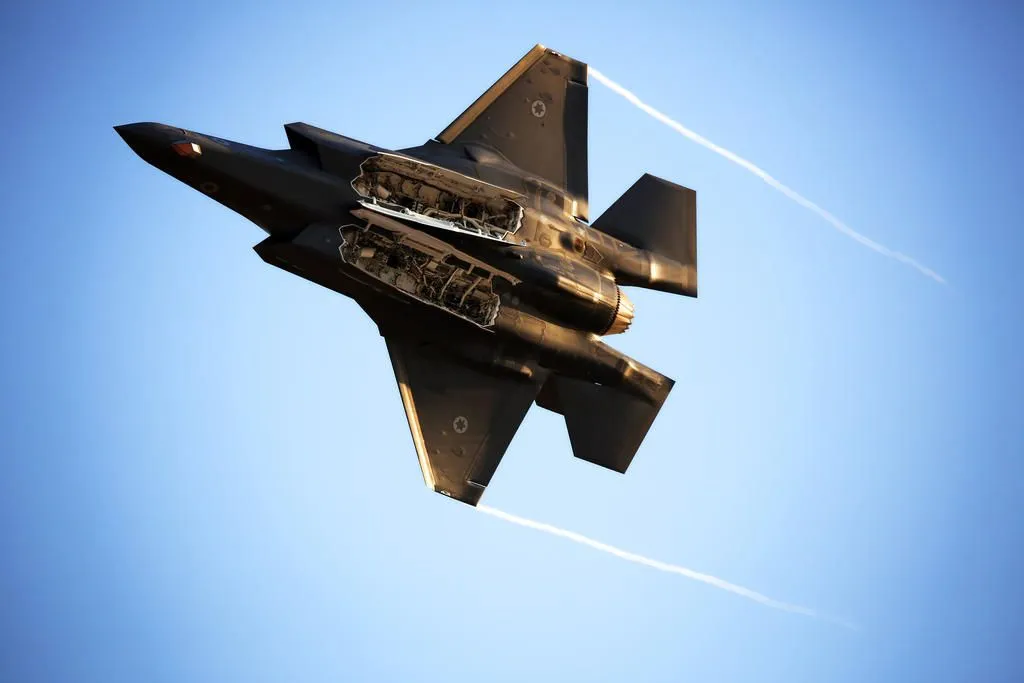
Terrorist bomb maker arrested in Tulkarm
Security forces arrested Fadi Bahti, a central bomb maker for a Tulkarm terrorist organization, in a raid in the West Bank village of Shweika.


Security forces arrested Fadi Bahti, a central bomb maker for a Tulkarm terrorist organization, in a raid in the West Bank village of Shweika.
IDF Human Resources Subcommittee convenes to discuss suicidality prevention, with MK Stern vowing, "We will not leave anyone to fight alone." Almoz Commission.
The foreign affairs and Defense Committee’s Subcommittee for IDF Human Resources, chaired by MK Elazar Stern (Yesh Atid), convened on Sunday for a debate on the measures the IDF is taking to prevent suicidality.
The IDF was asked to present the conclusions of the Almoz Commission, which reviewed the support to be provided to the families of discharged soldiers or reservists who are not in active duty, who take their own lives after their release from military service, under circumstances that may be related to their service. Subcommittee Chair MK Stern said, “I have great respect for the soldiers who work to save lives, but in order to reach everyone who needs help, we must continue to invest more in budgets, professionals, and appropriate accessibility for those in need. The fight against suicidality is not an individual struggle, it is our collective battle as a society. We will not leave anyone to fight alone. It is our duty to help, listen to their distress, and be there for them.”
Brig. Gen. Amir Vadmani, Chief of Staff for the IDF Personnel Directorate, said, “The [Almoz] Commission recommended maintaining the unique status of fallen IDF soldiers and preserving the distinction between civilians and soldiers. However, given the consequences of the Swords of Iron war and the exceptional circumstances, it recommended a unique and tailored response for this war. The response includes two stages – if someone takes their life after their military service and there are circumstances related to their service, it will be brought before the head of the Personnel Directorate, who will assess whether the suicide meets criteria such as the duration of service, the nature of the role, exposure to extraordinary events during service, the timing of the death in relation to service, and whether there were indications of mental distress during service. The information is immediately verified between the IDF and the police. If the head of the Personnel Directorate determines that there are unique circumstances, in accordance with the family’s wishes, military symbols may be included in the civilian funeral ceremony.
“In the second stage, the IDF assists the family in the process with the Ministry of Defense to receive rights according to the law. If the Ministry of Defense accepts that there was a causal connection, commemoration is added, including placing the name on the memorial wall at Mount Herzl, on the Yizkor memorial website, the placement of a candle and flag on memorial day, and the presence of a military cantor at the memorial ceremony,” he said.
According to IDF data, in 2025, 22 suicide cases were recorded, including 12 soldiers in compulsory service, one soldier in standing army service, and nine reservists. In comparison, 21 cases were recorded in 2024. Among soldiers in compulsory service, there was an increase from seven to 12 suicides, while among reservists, there was a decrease from 12 to nine. In 2022, there were 14 cases – 13 among soldiers in compulsory service and none among reservists. The IDF explains that the rise in suicides among reservists in 2024 and 2025 is due to a massive activation of reservists.
Fifty-percent of the suicides in 2025 were committed by combat soldiers, 75% of those who committed suicide had not been treated by a mental health officer (Kaban), and 85% of the cases involved suicides with weapons.
MK Ofer Cassif (Hadash-Ta’al) presented data from a report by the Knesset Research and Information Center, written at his request. The report shows that between 2017 and 2022, the percentage of combat soldiers among all IDF soldiers who committed suicide ranged from 42% to 45%. In 2023, this rate dropped to 17%, and in 2024, it rose significantly to 78%. Between 2024 and 2025 (until the end of July), 17% of the soldiers who committed suicide had met with a mental health officer in the two months prior to their suicide.
Regarding suicide attempts, between January 2024 and July 2025, 279 soldiers attempted suicide – meaning, for every soldier who committed suicide in the IDF, seven more suicide attempts were recorded. According to the IDF Medical Corps’ clinical report, 12% of these suicide attempts were classified as severe (i.e., actions that could have led to death or significant injury), and 88% were classified as moderate (suicidal actions with low risk potential).
Lt. Col. Dr. Carmel Kala, head of the Clinical Branch in the IDF Medical Corps, said, “Regarding treatment for soldiers in their first year of standing army service, there is the Unit for the Designated treatment of a Young Commander. We are engaged in awareness efforts to reduce the stigma attached to seeking help, and we are seeing an increase in requests. It is important to clarify that the primary goal of mental health officers is to provide treatment.'”
The Israel Defense Forces published Sunday the findings of its investigation into the October 7 Hamas assault on the Zikim training base, revealing a desperate battle fought by junior commanders who saved over 100 unarmed recruits from capture…
Jerusalem, 27 April, 2025 (TPS-IL) — The Israel Defense Forces published Sunday the findings of its investigation into the October 7 Hamas assault on the Zikim training base, revealing a desperate battle fought by junior commanders who saved over 100 unarmed recruits from capture or death.
Seven soldiers and commanders were killed during the fighting, which erupted at 6:29 a.m. as Hamas launched a surprise rocket barrage. The rockets knocked out the base’s power, disabling communications. Amid the chaos, commanders swapped rookies out of exposed guard posts and took up defensive positions themselves, the report said.
Over the course of the morning, Hamas terrorists infiltrated Zikim in waves. In the first minutes of the attack, commanders identified armed men breaching the perimeter. A firefight at the base’s southern post erupted; two terrorists were killed, but company commander Maj. Adir Abudi and another captain were fatally shot, and several others wounded. With communications crippled and reinforcements cut off, the commanders fought fiercely.
“Their heroism delayed the enemy and saved lives,” said Col. Shlomi Ben Yair, who led the investigation.
At the seaside gate, about 20 civilians fleeing Zikim Beach were sheltered by base personnel. Shortly after, two terrorists approached. One was shot dead by a commander, while the other was wounded and later neutralized by IDF commandos. Meanwhile, the gate to the shooting range came under attack. An RPG struck, killing four soldiers.
Two Hamas fighters breached the base after the RPG blast. In a bomb shelter, Cpl. Neria Aharon Nagari, an 18-year-old rookie, confronted one of the terrorists. After wrestling him and getting stabbed, Nagari was killed, but his actions helped Pvt. Daniel Abuhatzira and Pvt. Ayman al-Lala finish off the attacker.
“Their quick and courageous response prevented a massacre,” the report said.
By 9:15 a.m., backup forces, including 2nd Lt. Avichail Reuven, a paratrooper who ran 12 kilometers from home under fire, arrived. They shot and killed the second infiltrating terrorist.
Despite the bravery, the investigation noted critical failures. The base had not been properly fortified, its defenses were poorly integrated with Gaza Division command, and it lacked sufficient weaponry. Most of the soldiers were unarmed recruits, only two months into service.
“The lack of prior warning and preparedness severely impacted the outcome,” the report said.
The report stressed that the base was never captured, unlike others such as Nahal Oz. In total, nine terrorists were killed in and around Zikim that day, but “The commanders fought with personal example, brotherhood, and an unwavering commitment to mission,” the report noted.
The IDF said it would better provide training bases with not just with rifles, but also grenades and RPGs to counter similar threats. “We underestimated the risk to training facilities near the border,” an officer admitted. “That mistake won’t be repeated.”
Separately, the IDF showed footage of Zikim Beach’s failed defense, revealing how seven Golani soldiers retreated in the face of Hamas naval commandos without returning fire. Although the naval forces intercepted five of the seven Hamas boats, 16 terrorists landed and contributed to the attack.
Sunday’s report is the latest in a series of army probes — summaries of which have been released in recent weeks — some 5,000 terrorists from Hamas and Palestinian Islamic Jihad managed to attack numerous Israeli communities and overrun the army’s border positions. The army’s chain of command broke amid the chaos and soldiers were outnumbered.
They also found that the army misunderstood Hamas’s intentions for years, and as October 7 approached, intelligence about the looming attack was misinterpreted. The military was also more focused on threats from Iran and its proxy, Hezbollah in Lebanon.
The IDF probes only deal with issues of operations, intelligence and command, not decisions made by the political echelon.
At least 1,180 people were killed, and 252 Israelis and foreigners were taken hostage in Hamas’s attacks on Israeli communities near the Gaza border on October 7. Of the 59 remaining hostages, 36 are believed to be dead.
The Israel Defense Forces confirmed on Thursday that one of its tanks mistakenly shelled a United Nations guesthouse in central Gaza last month, killing a UN staff member. The IDF initially denied reports of its involvement.
Jerusalem, 24 April, 2025 (TPS-IL) — The Israel Defense Forces confirmed on Thursday that one of its tanks mistakenly shelled a United Nations guesthouse in central Gaza last month, killing a UN staff member. The IDF initially denied reports of its involvement.
Following an investigation, the IDF acknowledged the fatal error. The initial findings were presented Thursday to IDF Chief of Staff Lt. Gen. Eyal Zamir and UN representatives.
According to the IDF, a tank operating in the area fired at the building based on “a suspicion of enemy forces in it.” The military now says the structure was not identified by the tank crew as a UN facility.
“We express our deep sorrow for the loss and send our condolences to the family,” the IDF said in a statement, adding that it “regrets this serious incident and continues to conduct thorough review processes to draw operational lessons and evaluate additional measures to prevent such events in the future.”
Lt. Gen. Zamir ordered Maj. Gen. (res.) Yoav Har-Even, who leads the investigation team, to complete the probe and deliver the full findings to the UN.
At least 1,180 people were killed, and 252 Israelis and foreigners were taken hostage in Hamas’s attacks on Israeli communities near the Gaza border on October 7. Of the 59 remaining hostages, 36 are believed to be dead.
Israeli airstrikes overnight destroyed around 40 engineering vehicles used by Hamas for terror purposes, including during the October 7 attack, the Israel Defense Forces said on Tuesday.
Jerusalem, 22 April, 2025 (TPS-IL) — Israeli airstrikes overnight destroyed around 40 engineering vehicles used by Hamas for terror purposes, including during the October 7 attack, the Israel Defense Forces said on Tuesday.
“The Hamas terrorist organization used these vehicles to plant explosives, dig underground shelters, breach fences, and clear rubble to locate weapons and military equipment underneath,” the IDF said. “The engineering vehicles that were attacked constitute a central component of Hamas’ ability to carry out terrorist plots against IDF forces and the State of Israel.”
Many of these tools, the military said, were directly linked to the attack on southern Israel on October 7.
According to the army, Hamas’ engineering unit used heavy equipment to create dozens of breaches in the border fence, enabling waves of terrorists on motorcycles and pickup trucks to enter Israeli territory. The unit also built improvised bridges and planted explosive charges to break through defensive structures.
On March 24, the Israeli Air Force launched a similar wave of strikes specifically targeting 100 pickup trucks and other vehicles used by Hamas. The IDF said those vehicles had been used in the October 7 attack, propaganda events featuring the handover of hostages to the International Red Cross, and to transport weapons.
At least 1,180 people were killed, and 252 Israelis and foreigners were taken hostage in Hamas’s attacks on Israeli communities near the Gaza border on October 7. Of the 59 remaining hostages, 36 are believed to be dead.
The Israeli military dismissed a deputy commander and reprimanded another officer over their roles in a deadly incident when troops opened fire on a convoy of ambulances in the Tel a-Sultan neighborhood of Rafah, southern Gaza, killing 15…
Jerusalem, 20 April, 2025 (TPS-IL) — The Israeli military dismissed a deputy commander and reprimanded another officer over their roles in a deadly incident when troops opened fire on a convoy of ambulances in the Tel a-Sultan neighborhood of Rafah, southern Gaza, killing 15 people, the Israel Defense Forces announced on Sunday.
The deputy commander of the Golani Brigade’s reconnaissance unit was dismissed after army investigators found he gave a “partial and inaccurate” account of the incident in the initial inquiry, the IDF said.
The commander of the 14th Reserve Armored Brigade, which was overseeing operations in the area, was formally reprimanded for his “overall responsibility,” including mishandling the scene after the attack.
The IDF acknowledged that troops mistakenly identified medical personnel as Hamas operatives. “The existing guidelines on the special caution required with regard to rescue forces and medical workers, even in areas of intense combat, were sharpened and clarified,” the military said in a statement. While the investigation found no ethical violations, it cited multiple “professional errors” and breaches of protocol.
The probe determined that the March 23 incident involved three separate shootings: the first at a vehicle wrongly identified as a Hamas police car, killing two people; the second at a convoy of ambulances and a fire truck, killing 12; and a third at a UN-marked vehicle, where one UNRWA staff member was killed. The final case involved fire “in violation of orders.”
The initial shot was fired at 3:57 a.m. after Golani troops lying in ambush mistook a vehicle with red and blue markings for a Hamas vehicle. Later, around 5:06 a.m., they opened fire on a fast-approaching convoy, mistaking it for a Hamas operation. The commander, using night vision, failed to identify medical insignia. “They did not recognize vests and lights,” the IDF said.
Footage later reviewed by the IDF and cross-referenced with a New York Times video revealed that the soldiers ceased fire after realizing the convoy did not contain armed terrorists. “There was no execution,” the military emphasized, denying allegations made by Palestinian sources. One paramedic survived and was arrested; his testimony was included in the investigation.
At 5:18 a.m., a UN-marked vehicle arrived. Although troops identified it as a UN vehicle, they still opened fire, killing the staff member. The IDF confirmed this action violated standing orders.
After the incident, bodies were covered with netting, vehicles were crushed, and the scene was buried in sand on orders from the brigade commander. The IDF said this was done to shield the scene from civilians as evacuations continued. “The vehicles should not have been run over and buried,” the military later acknowledged. UN representatives were eventually able to retrieve the bodies, with the final remains recovered on March 30.
At least 1,180 people were killed, and 252 Israelis and foreigners were taken hostage in Hamas’s attacks on Israeli communities near the Gaza border on October 7. Of the 59 remaining hostages, 36 are believed to be dead.
An internal IDF report admits the army was unprepared for Hamas’s surprise attack, which killed over 1,200 people and led to mass kidnappings. Officials cited overconfidence and misjudging Hamas’s strength as key failures.
Jerusalem, 28 February, 2025 (TPS-IL) — “The Israel Defense Forces failed to protect Israeli citizens. The Gaza Division was overrun in the early hours of the war as terrorists took control and carried out massacres in the communities and roads of the area,” was the general conclusion.
An official presented the basic summary of the report on what went wrong during and after the October 7 attacks, which were not dealt with immediately and resulted in more than 1200 Israelis dead, hundreds taken hostage, and sparked an all-out war on Gaza.
The basic conclusion seems to be that it all happened because of miscalculation of Hamas’s military capabilities. “October 7 was a complete failure,” a senior Israeli military official told reporters, speaking on condition of anonymity in accordance with military rules. He added that “too many civilians died that day asking themselves in their hearts or out loud, where the IDF was,”.
The official stressed that the army had been “overconfident” and had miscalculated Hamas’ capabilities before the attack.
The investigation, which consists of 77 separate investigations into each of the affected areas, as well as the attacks on army bases and the various points of confrontation around Gaza, will be presented to those who were directly affected on that day.
“We did not even imagine such a scenario,” the army official said, explaining that Israel’s attention was focused on threats from Iran and its proxy, Hezbollah in Lebanon. According to the report, Hamas’s attack came in three waves, with more than 5,000 people crossing into Israel from Gaza.
“The first wave … included more than 1,000 Nukhba (Hamas’s elite force) terrorists who infiltrated under cover of heavy fire,” the report points out. The second wave involved some 2,000 militants, while the third saw hundreds more militants join the incursion with several thousand civilians.
The official said the first hours of the attack saw the most killings and kidnappings. It was then, he explained, then Hamas’s elite unit crippled the military’s communications system and command and control centers, creating chaos as the army struggled to regain control.
What was presented today was only “a slice of the whole process,” the official explained, adding that more investigations, including one into the massacre at the Nova music festival, are expected to come.
Israel and India have teamed up to support Indian watertech startups through a new accelerator program. The initiative offers tech validation, mentorship, and market access to tackle India’s growing water challenges.
Jerusalem, 17 August, 2023 (TPS-IL) — Israel’s position as a cyber superpower places it in an exclusive club of world powers, despite having a population a little larger than New York City, according to former Israeli defense official Chuck Freilich.
Freilich, a senior research fellow at the MirYam Institute and the Institute for National Security Studies and a former deputy national security adviser in Israel, recently published a book on the subject, titled, “Israel and Cyber Threat: How the Startup Nation Became a Global Cyber Power.”
A former senior fellow at Harvard’s Kennedy School who teaches at Columbia and at Tel Aviv University, Freilich said Israel’s cyber capabilities are prominent at both the civilian and military levels. The number of cyber start-ups in Israel equals the total number of cyber start-ups in the world, excluding the United States, he noted.
“This is a stunning statistic. It’s the result of a really unique contribution to the Israeli hi-tech scene in general, and the cyber realm especially, by the defense establishment and intelligence agencies,” said Freilich.
Graduates of the Israel Defense Forces cyber units, mainly Unit 8200 and Unit 81, as well as intelligence agencies, enter the private sector and become a primary source of commercial start-ups, he explained.
This in turn acts as a driving force behind cyber innovation. The fact that the Israeli defense establishment funds incubators and technological innovation programs also contributes to this prosperity of the local cyber scene, according to Freilich.
The military units “find and train Israel’s cyber personnel, and most importantly, the really top-level personnel. In the cyber world, a few geniuses make all the difference,” he added.
Between 2011 and 2020, some 100 veterans of Unit 81, who served in the years between 2003 and 2010, went on to found 50 start-ups, with an accumulated evaluation of over $10 billion, Freilich noted. “That’s 100 veterans alone,” he said.
“Another mind blowing statistic is that the NSA [the U.S. National Security Agency] has about 40,000 personnel, while Unit 8200 [its Israeli equivalent] reportedly has a quarter of that, 10,000 people. Most of what Unit 8200 does is cyber based. Here you have little Israel on the scale of a global superpower. Each year, between a few hundred and a thousand cyber personnel are discharged in Israel. China’s 2022 graduating cyber school count was 1,300. So we have a cyber force on the scale of global superpowers,” he stated.
Pointing to compulsory military service as the core secret sauce behind this success, Freilich argues that this enables the IDF to track down the best and the brightest, with the military scouting high school databases and beginning to locate suitable youths by the 10th grade.
“One percent of the best high school graduates go to Atuda [a program that enables them to study and delay military service] and Talpiyot [a program that sends students to complete BAs in mathematics and natural sciences as part of their service]. Talpiyot looks at the top 2%, and then begins an intensive testing process. Only 10% of that 2% pass and are then further winnowed down through a grueling aptitude testing process,” said Freilich, describing the rigorous screening process.
With regard to Unit 81, while 10,000 candidates passed initial annual screening, only a few hundred went on to be selected.
“All told, the IDF trains 10,000 people a year in cyber programs. This is a huge training program, not only giving people computer skills, but also reaching the real geniuses,” he said.
Freilich added that a third of graduates of a Unit 8200 high school program that teaches university-level cyber come from peripheral areas.
He also drew attention to Israel’s national style, which he described in his book as “hutzpah gone viral.”
“Israeli society has a never-ending propensity to challenge authority and reject accepted norms, refusing to take no for an answer, and thirsting for new ways of achieving things,” said Freilich.
“Our strategic circumstances means we have a greater willingness to take risks, and we are non-hierarchical and informal,” he added. “That’s the same culture you find in R&D firms around the world. So cyber fits Israel like a glove.”
On Aug. 8, the Mayanei HaYeshua Medical Center in Bnei Brak announced that it had been struck by a cyber-attack, forcing personnel to switch to pen and paper before recovering computer networks.
Despite Israel’s cyber achievements, problems still exist in protecting the civil sector, Freilich admitted.
“There is reason to be concerned about that and critical national infrastructure, like water and communications—the type of sites that the Israel National Cyber Directorate defends the most. They get specially tailored defense packages, but there is still reason for concern,” said Freilich.
Iran, for its part, woke up to the cyber realm after sustaining the devastating 2009 Stuxnet attack, which international media reports attributed to Israel and the United States.
“Be wary of the law of unintended consequences,” said Freilich. “Until 2010, Iran wasn’t doing much in this area. By 2012, it was launching offensive attacks around the world.”