












Israel Carried Out Nearly 21,000 Strikes Across the Middle East in 2025
Israel's military reports nearly 21,000 strikes across the Middle East in 2025, including 19,530 in Gaza, mobilizing over 300,000 reservists for an.


Israel's military reports nearly 21,000 strikes across the Middle East in 2025, including 19,530 in Gaza, mobilizing over 300,000 reservists for an.
By Ehud Amiton/TPS • December 31, 2025
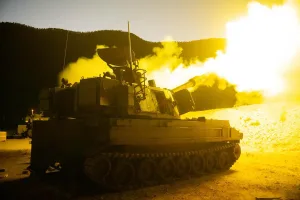
Jerusalem, 31 December, 2025 (TPS-IL) — After a year of near-constant fighting on multiple fronts, Israel’s military says it carried out almost 21,000 strikes in 2025, mobilized more than 300,000 reservists and conducted operations stretching from the Gaza Strip and southern Lebanon to Iran and Yemen, according to sweeping year-end numbers released Wednesday by the Israel Defense Forces (IDF).
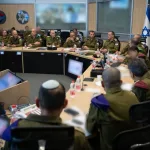
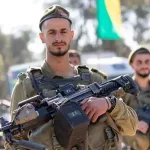
The IDF said it struck about 20,900 targets across all fronts during the year and conducted roughly 430 operations. Nearly 307,000 reservists were mobilized, while naval forces logged around 130,000 hours at sea and carried out 50 maritime strikes. An IDF spokesperson said the figures reflected “a sustained, multi-front campaign unlike anything the military has faced in decades.”
The Gaza Strip accounted for the vast majority of Israeli strikes. The IDF said it attacked approximately 19,530 targets there, destroying nearly 14,000 sites it defined as terror infrastructure, including weapons depots, command centers and launch facilities. The military reported killing thousands of Hamas operatives and eliminating dozens of senior commanders, including brigade, battalion and company-level leaders.
Among those killed were Mohammad Sinwar, head of Hamas’ military wing and brother of Yahya Sinwar, as well as Muhammad Shabana, commander of the Rafah Brigade, and several other senior figures involved in weapons production and naval operations. An IDF official said the campaign had “systematically dismantled Hamas’ chain of command,” adding that only one brigade commander from before the war remains alive.
Around 1,200 people were killed, and 252 Israelis and foreigners were taken captive by Hamas during the October 7, 2023, attack on southern Israel. The body of Israeli Police Master Sgt. Ran Gvili remains in Gaza.
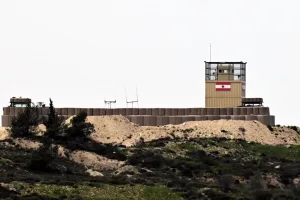
In Lebanon, where Israel is enforcing a ceasefire reached in late 2024, the IDF reported killing around 380 Hezbollah operatives and striking roughly 950 to 1,000 targets. These included launchers, weapons depots, military structures and underground shafts. The army also accused Hezbollah of violating the ceasefire about 1,920 times during the year. “We responded to every significant breach,” a senior officer said, “while seeking to prevent a return to full-scale war in the north.”
The ceasefire requires Hezbollah to withdraw its armed forces from southern Lebanon and prohibits it from operating south of the Litani River.
In Judea and Samaria, Israeli forces killed about 230 Palestinian terrorists and arrested approximately 7,400 terror suspects — including nearly 1,200 linked to Hamas. The military said it seized more than 1,300 weapons and confiscated about NIS 16.5 million ($5.19 million) in terror funds. Thirty suspects’ homes were demolished, and around 80 brigade-level operations were carried out. The IDF also announced the establishment of a new eastern border formation, Division 96.
The report detailed Israeli operations far beyond its borders.
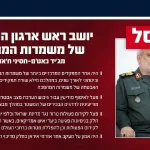
In Iran, during 12 days of fighting in June, the IDF said it struck hundreds of targets and killed dozens of senior regime figures, including top commanders of the Islamic Revolutionary Guards Corps (IRGC) and the armed forces. The IDF also claimed responsibility for the deaths of 11 Iranian nuclear scientists.
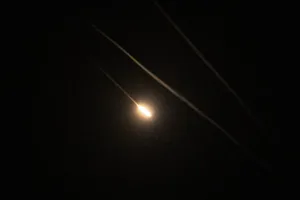
During 12 days of fighting, Iran launched roughly 550 ballistic missiles and 1,000 drones at Israel, most of which were intercepted. However, at least 31 missiles struck populated areas, and one drone hit a home. The attacks killed 28 Israelis and injured more than 3,000.
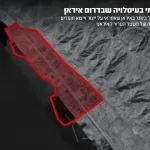
In Yemen, Israel conducted about 20 major air operations against the Iran-backed Houthis, striking some 230 targets. Many of the attacks, the IDF noted, were repeat strikes after Houthis attempted to repair damaged sites. The IDF said it killed senior Houthi military and government officials, including the group’s chief of staff, Muhammad al-Ghamari.
On the intelligence front, the IDF revealed new details about Unit 504, a secretive military intelligence unit responsible for interrogations. According to the report, the unit questioned about 3,100 detainees in 2025, roughly half in detention facilities and half in field conditions.
“Field interrogations are conducted under extremely complex circumstances,” the IDF said, noting that interrogators often operate immediately after combat.
The human cost of the year was also highlighted. Ninety-one Israeli soldiers were killed in war-related circumstances, and 821 were wounded. While the numbers were lower than in the peak fighting of 2023 and 2024, the army acknowledged the toll remained heavy. “This has been a demanding year for our forces and for Israeli society,” an IDF official said.
On the home front, the military said it expanded civil defense efforts, deploying 1,500 mobile bomb shelters, renovating about 200 public shelters, and handling more than 1.5 million emergency hotline calls.
FM Sa’ar condemns Hezbollah's rearmament efforts in press conference with Paraguay’s Foreign Minister. Calls for Lebanon to dismantle Hezbollah’s arsenal to
Minister of Foreign Affairs Gideon Sa’ar today (Monday, 24 November 2025) held a press conference in Asunción with the Foreign Minister of Paraguay Rubén Ramírez.
On Lebanon:
“The world is a better place today without Ali Tabatabai. The Chief of Staff of Hezbollah‘s terror army was a mass-murderer with American and Israeli blood on his hands. The United States had a five-million-dollar bounty on his head.
Tabatabai led terror attacks against Israel. Recently, he directed the efforts to rebuild Hezbollah’s terror army. Our operation yesterday and IDF operations against Hezbollah in general are not a violation of Lebanon’s sovereignty. The very existence of Hezbollah as the strongest armed force in Lebanon – is the violation of Lebanese sovereignty. As long as Hezbollah is not disarmed – Lebanon will remain de-facto under Iranian occupation.
Over the past year – since the ceasefire – Hezbollah has been working to rearm – after the heavy blows it suffered from Israel in 2024. As long as Hezbollah is the strongest military force in Lebanon – Israel has no security, and Lebanon has no future. We wish to see the Lebanese government implement its decision and dismantle Hezbollah’s arsenal. But the truth is that this is happening in a very minor way. In fact, Hezbollah is rearming more than it is disarming.”
Full Remarks:
“I want to thank Foreign Minister Rubén Ramírez Lezcano, for the warm welcome here in Asunción.
Gracias, mi amigo.
Paraguay is one of Israel’s greatest friends.
And you, Dear Minister, are a true friend of Israel.
Our relationship is not based only on interests, but also on shared values.
Paraguay’s foreign policy has a clear moral dimension:
You voted for the establishment of the State of Israel at the United Nations in 1947.
You were among the very first countries to recognize Israel.
The Jewish people are a nation that writes, remembers, and never forgets.
We’re grateful for former President Cartes’ decision in 2018 to move Paraguay’s embassy to Jerusalem, the eternal capital of the Jewish people.
We commend President Peña for his great decision to move your embassy to Jerusalem last December, and we appreciate his consistent support for Israel.
Jerusalem is the city toward which our ancestors prayed every day for 2,000 years in exile.
It is our eternal capital.
We are deeply grateful to President Peña, to you, dear Minister, and to Paraguay – for this historic move.
Minister,
Paraguay is a country that knows how to distinguish between good and evil.
This was demonstrated in April – when Paraguay widened its terror organization designation to include the “political” wings of Hamas, and Hezbollah.
It also designated Iran’s Revolutionary Guards.
I commend this important step and call on other countries to follow suit.
Paraguay’s moral stance has also been demonstrated in its many, many declarations of support for Israel since October 7th. 65 in total!
We are grateful for the government of Paraguay’s consistent, strong, moral support.
We truly appreciate it!
*
The people of Paraguay are courageous.
Your economy is strong and growing. We believe in it.
It’s no surprise that Paraguay’s projected economic growth for 2025 stands at 5.3%.
In 2023, bilateral trade between israel and Paraguay stood at 133 million dollars.
In 2024, it grew to over 212 million.
2025 is not yet over. It has already surpassed last year’s numbers.
Israelis love Paraguayan meat. A huge majority of the export to Israel from Paraguay is meat.
My visit today is an expression of our belief in Paraguay’s bright future.
I arrived today with a business delegation of senior government officials, representatives of companies, and heads of major economic organizations.
We already trade in technological and agricultural equipment.
We want to deepen our cooperation – in water technologies, advanced agriculture, cyber, renewable energy and more.
Israeli companies are expressing interest in Paraguay’s market.
Our goal is to bring these companies and expand mutual investments.
I want to thank the Honorable Minister of Defense for signing the important MOU on security cooperation.
This is a clear expression of our strategic ties and mutual commitment.
Paraguay is developing major defense capabilities.
Israel’s defense industry has experience and capabilities that we want to share with you.
*
The world is a better place today without Ali Tabatabai.
The Chief of Staff of Hezbollah’s terror army was a mass-murderer with American and Israeli blood on his hands.
The United States had a five-million-dollar bounty on his head.
Tabatabai led terror attacks against Israel.
Recently, he directed the efforts to rebuild Hezbollah’s terror army.
Our operation yesterday and IDF operations against Hezbollah in general are not a violation of Lebanon’s sovereignty.
The very existence of Hezbollah as the strongest armed force in Lebanon – is the violation of Lebanese sovereignty.
As long as Hezbollah is not disarmed – Lebanon will remain de-facto under Iranian occupation.
Over the past year – since the ceasefire – Hezbollah has been working to rearm – after the heavy blows it suffered from Israel in 2024.
As long as Hezbollah is the strongest military force in Lebanon – Israel has no security, and Lebanon has no future.
We wish to see the Lebanese government implement its decision and dismantle Hezbollah’s arsenal.
But the truth is that this is happening in a very minor way.
In fact, Hezbollah is rearming more than it is disarming.
*
Dear Minister, Mi Amigo,
Almost a year ago, you came to Israel with President Peña on a historic visit to open Paraguay’s embassy in Jerusalem.
Today, I am repaying the visit.
I hope to host you again soon, in Jerusalem.
This is a long-term strategic partnership.
Together, Minister, we’ll continue strengthening this partnership.
Muchas Gracias!”
Israel heightens defenses in response to Hezbollah's military chief assassination, fearing retaliation. IDF braces for potential rocket barrages and
By Pesach Benson • November 24, 2025
Jerusalem, 24 November, 2025 (TPS-IL) — Israel is reinforcing its defenses in the north amid expectations that Hezbollah may attempt to retaliate for Sunday’s assassination of Haytham Ali Tabatabai, the Lebanese group’s military chief of staff. Security officials say Hezbollah could seek to answer the strike with rocket barrages on Israeli communities, cross-border raids into Israel or against IDF positions in southern Lebanon, or by directing the Houthis to carry out attacks on Israel. At the same time, some in the defense establishment believe Hezbollah’s current weakened state may lead it to refrain from responding.
The decision comes as the IDF continues preparations for what it describes as a “weakening round” against Hezbollah, including further “enforcement strikes” in Lebanon aimed at disrupting the organization’s military buildup. Israeli prime minister Benjamin Netanyahu addressed the nation Sunday evening, framing Tabataba’i’s killing as a major achievement in Israel’s ongoing effort to prevent Hezbollah from restoring its capabilities.
“A few hours ago, the IDF eliminated Haytham Ali Tabatabai, the chief of staff of the Hezbollah terror organization,” Netanyahu said. “Tabatabai was a mass murderer. His hands were full of the blood of many Israelis and Americans; it is not for no reason that the United States offered a five-million-dollar prize for his head. Tabataba’i served as a senior commander in the Radwan Force. This is the force that planned to conquer the Galilee and slaughter many of our citizens.”
Netanyahu said Tabatabai had recently been overseeing Hezbollah’s renewed rearmament efforts following the “heavy blows” the group suffered in previous Israeli operations, including the Pager Operation and the elimination of its longtime leader, Hassan Nasrallah. “I thank the IDF and the security forces who conducted a professional, precise, and successful operation today,” he said, adding that Israel’s policy under his leadership “is absolutely clear: Under my leadership, the State of Israel will not allow Hezbollah to rebuild its power, and we will not allow it to pose a threat to the State of Israel again.”
Netanyahu called on Lebanon’s government to uphold its commitments to disarm Hezbollah. “Only in this way can a better future be made possible for every citizen in Lebanon, and only in this way can good and secure neighborly relations be established between Israel and Lebanon,” he said.
In the same address, the Prime Minister also welcomed an American policy decision. “On this occasion, I also want to commend President Trump on his decision to outlaw and designate the ‘Muslim Brotherhood’ organization as a terrorist organization. This is an organization that endangers stability throughout the Middle East and also beyond the Middle East. Therefore, the State of Israel has already outlawed part of the organization, and we are working to complete this action soon.”
Tabatabai, long one of the most senior commanders in Hezbollah’s hierarchy, was designated an international terrorist in 2016. U.S. officials noted at the time that “his actions are part of a major effort to cause instability in the region.” He directed Hezbollah’s special forces in Syria and Yemen, where he coordinated operations with pro-Iranian militias and provided assistance to the Houthis. Israel says he joined Hezbollah in the 1980s and rose through several senior roles, including in the elite Radwan Force. During the recent war, Tabatabai led Hezbollah’s operations division and advanced further as other commanders were eliminated. After the ceasefire, he became Hezbollah’s chief of staff and “worked extensively to restore their readiness for war with Israel,” the IDF said.
On Monday, the IDF conducted what it described as a scheduled training exercise in the Eastern Galilee. The military warned residents to expect visible movement of troops and vehicles, stressing that “there is no fear of a security incident. In the event of a real incident, the residents will be informed by the security forces.” The drill is part of the IDF’s annual 2025 training schedule.
Israel has stepped up its strikes on Hezbollah as the Iran-backed terror group tries to regroup and rebuild.
Under the terms of the ceasefire that went into effect on November 27, 2024, Hezbollah is required to withdraw its armed forces from southern Lebanon. According to UN Security Council Resolution 1701, which ended the 2006 Second Lebanon War, the group is prohibited from operating south of the Litani River.
Israeli airstrike targets Hezbollah’s number two man in Beirut, escalating tensions in the region as Prime Minister Netanyahu takes action against the
By Pesach Benson • November 23, 2025
Jerusalem, 23 november, 2025 (TPS-IL) — An Israeli airstrike in Beirut on targeted Hezbollah senior commander and number two man Haytham Ali Tabatabai, Prime Minister Benjamin Netanyahu’s office confirmed.
Tabatabai is considered Hezbollah’s de facto chief of staff and the group’s second-most senior figure after secretary general Naim Qassem.
It wasn’t clear if Tabatabai survived the strike.
The U.S. previously offered a $5 million reward for information on Tabatabai, who previously led the terror group’s special forces in Syria and Yemen.
Israel has stepped up its strikes on Hezbollah as the Iran-backed terror group tries to regroup and rebuild.
Under the terms of the ceasefire that went into effect on November 27, 2024, Hezbollah is required to withdraw its armed forces from southern Lebanon. According to UN Security Council Resolution 1701, which ended the 2006 Second Lebanon War, the group is prohibited from operating south of the Litani River.
Israel struck a key figure in Hezbollah’s efforts to smuggle Iranian weapons into Lebanon, the Israel Defense Forces said on Sunday...
Jerusalem, 20 April, 2025 (TPS-IL) — Israel struck a key figure in Hezbollah’s efforts to smuggle Iranian weapons into Lebanon, the Israel Defense Forces said on Sunday.
The IDF said it targeted Hussein Ali Nasser, deputy head of Hezbollah’s Unit 4400 in an airstrike in southern Lebanon on Saturday. Unit 4400 is responsible for smuggling Iranian weapons and money into Lebanon.
The army added that Nasser worked closely with Iranian officials and collaborators at Beirut’s Rafic Hariri International Airport. According to the IDF, Nasser also played a key role coordinating arms deals along the Syria-Lebanon border.
According to United Nations Security Council Resolution 1701, which ended the 2006 Second Lebanon War, the terror group is forbidden from operating in Southern Lebanon south of the Litani River.
The ban on Hezbollah activity in southern Lebanon was reinforced by the ceasefire that took effect on November 27, 2024.
Hezbollah rocket barrages forced thousands of residents of northern Israel to evacuate their homes. Leaders of the Iran-backed terror group vowed to continue the barrages as long as Israeli forces were in Gaza. In September 2024, thousands of booby-trapped Hezbollah pagers and walkie-talkies exploded, followed by wide-ranging airstrikes on Hezbollah’s leadership, missiles, and other assets.
After Israeli forces began a ground operation on Oct. 1, soldiers found evidence that Hezbollah’s elite Radwan Force had been planning to invade the Galilee.