













Israel Confirms Return of Hostage Dror Or’s Remains
Israel confirms the return of hostage Dror Or's remains, bringing closure to a tragic chapter. #Israel #Hostage #DrorOr


Israel confirms the return of hostage Dror Or's remains, bringing closure to a tragic chapter. #Israel #Hostage #DrorOr
Hamas exploited charity aid to support terror, Israeli military intelligence reveals. Documents show funds diverted to Al-Qassam Brigades. Major revelation
Israel confirms the return of hostage Dror Or's remains, bringing closure to a tragic chapter. #Israel #Hostage #DrorOr
By Pesach Benson • November 26, 2025
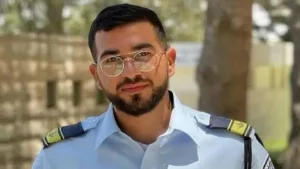
Jerusalem, 26 November, 2025 (TPS-IL) — Israel’s National Center for Forensic Medicine confirmed on Wednesday morning that the body returned by Hamas the previous day was Dror Or of Kibbutz Be’eri.
Or, 49, was a chef and award-winning cheesemaker. Dror was seen being taken captive with his wife and two of their three children from their burning home.
The body of his wife, Yonat, was found several days after the attack. The children, Noam and Alma, were release during a temporary ceasefire in November 2023. Another son, Yahli, was not at Be’eri that day.
Israel confirmed Or’s death based on intelligence in May 2024.
Or is survived by his three children, his parents, and two siblings.
Around 1,200 people were killed and 252 Israelis and foreigners were taken captive by Hamas during the October 7, 2023, attack on southern Israel. The bodies of Israeli Police Master Sgt. Ran Gvili and Thai agricultural worker Sudthisak Rinthalak remain in Gaza.
s and one Thai national are still held in Gaza.
Sderot defies Tehran with launch of Iranian Film Festival, drawing criticism from Fars news agency. Israelis and Iranians unite for cultural connection amid
By TPS-IL • November 25, 2025
Jerusalem, 25 November, 2025 (TPS-IL) — Two years after Iran-backed Hamas terrorists stormed southern Israel, residents of Sderot — one of the hardest-hit communities — launched its first-ever film festival dedicated to Iranian cinema.
The two-day event, which opened on Monday, has already drawn criticism from the Iranian news agency Fars, which accused “Zionists” of taking Iranian films “hostage.”
Dana Sameach, the Israeli founder of the festival, and Younes Sadaghiani, an Iranian-born political analyst hosted by Israel’s Foreign Ministry, told The Press Service of Israel that the festival is about cultural connection, not political confrontation.
“We wanted to do this festival for two reasons: first, to show that from the area of the worst catastrophe in the history of Israel, there is not only grief but culture, with people who know how to reach out their hand in peace and hope for a better future. Second, we wanted to honor Farsi culture. There are many Israelis of Farsi origin, and we want to honor the culture of the Iranian people,” Sameach explained.
Sadaghiani emphasized that Persians and Israelis are not enemies.
“I think the Persian culture and Israeli culture are very, very similar. So when people say they want to make us enemies, we are not enemies. Persians and Israelis are not enemies. It’s the Islamic Republic that is the issue, so we need to get rid of the Islamic Republic. The Islamic Republic is not Iran,” he told TPS-IL.
They shared with TPS-IL a report from the Fars website claiming Israel “is attempting to take another Iranian film hostage.” It was referring to the possibility that a film by Asghar Farhadi, one of the most prominent Iranian directors, will be screened at the festival’s closing ceremony.
The report also accused Israel of “killing more than a thousand Iranians during the sacred twelve days of war,” referencing the 12-day air confrontation between israel and Iran last June.
Israel launched preemptive strikes against Iranian nuclear sites on June 13, citing intelligence that Tehran had reached “a point of no return” in its pursuit of nuclear weapons. During 12 days of fighting, Iranian missile strikes killed 28 Israelis and injured over 3,000.
The festival includes not only award-winning Iranian films but also Persian music, food, talks, and cultural performances. The program has received full encouragement from Sderot’s municipality, Sameach said, and hundreds are expected to attend.
Sameach added she hopes the festival, titled “Nowruz,” which means “new day” in Farsi, will signal a new dawn in relations with the Iranian people and grow into a yearly cultural tradition in a city still rebuilding from October 7.
Netanyahu condemns Hamas, Islamic Jihad over delay in returning hostage’s body, violating agreements. Israel demands immediate return. #NetanyahuSlams
By Pesach Benson • November 25, 2025
Jerusalem, 25 November, 2025 (TPS-IL) — Prime Minister Benjamin Netanyahu on Tuesday condemned what he called an unacceptable delay by Hamas and Palestinian Islamic Jihad in returning the body of a hostage found in central Gaza, saying the hold-up violates existing understandings.
“In light of the Islamic Jihad’s announcement regarding the location of findings related to a deceased hostage, Israel views with severity the delay in their immediate transfer into its hands,” Netanyahu’s office said. “This constitutes a further violation of the agreement. Israel demands the immediate return of the three deceased hostages still being held in the Gaza Strip.”
More than 24 hours have passed since Islamic Jihad confirmed Al Jazeera’s report that the body of a hostage was discovered near Nuseirat on Monday.
Hamas typically announces plans to transfer recovered remains, even when they are held by Islamic Jihad. However, Hamas has not issued any statement, and Islamic Jihad has given no indication it intends to hand over the body. Neither terror group has been in touch with the International Red Cross, which transfers remains between the terror groups and the Israel Defense Forces.
Around 1,200 people were killed, and 252 Israelis and foreigners were taken captive by Hamas during the October 7, 2023, attack on southern Israel. The bodies of two Israelis — Dror Or and Master Sgt. Ran Gvili — and Thai national Sudthisak Rinthalak are still in Gaza.
Israel confirms killing key Hamas supply chief in Gaza airstrike, escalating tensions in the region. IDF takes action against terrorism.
By Ehud Amiton/TPS • November 23, 2025
Jerusalem, 23 November, 2025 (TPS-IL) — The Israel Defense Forces confirmed on Sunday that it killed Alaa Hadidi, head of Hamas’s supply and equipment department, in an airstrike in Gaza on Saturday.
“Hadidi was a central knowledge center in the organization’s supply and production field and served during the war as a conduit for transferring weapons from Hamas headquarters to battalions and commanders in the field for fighting against our forces,” the IDF said.
The escalation followed a Hamas threat to end the ceasefire, triggered by a Palestinian gunman opening fire on Israeli troops in southern Gaza. Prime Minister Benjamin Netanyahu’s Office confirmed that five senior Hamas officials were killed in the subsequent airstrikes, a move a US official said the Trump administration supports.
“The IDF will not tolerate attacks on our forces, and we will continue to target those responsible for terrorism,” an Israeli military spokesperson said.
The incident began Saturday morning when a gunman crossed the Yellow Line—the border dividing Israeli and Hamas-controlled Gaza—approaching IDF troops in a vehicle while using the humanitarian corridor. Soldiers returned fire, killing the operative. “He aimed his weapon at our soldiers, endangering civilians in the area,” the IDF stated, releasing footage of the confrontation.
Following the initial attack, Israeli warplanes struck multiple Hamas positions across Gaza. The identities of the four other senior Hamas officials killed alongside Hadidi have not been publicly disclosed. “These strikes disrupt Hamas’s ability to arm its fighters and threaten Israeli communities,” Netanyahu said in a statement.
In a related development, the IDF announced that it neutralized all 17 Palestinian terrorists who had attempted to escape from a Hamas tunnel on Israeli-controlled land in eastern Rafah. They had emerged Friday from underground hideouts and sought to return to the Hamas side of the Yellow Line.
“After a 24-hour operation, all infiltrators were either killed or captured,” the IDF said.
Around 1,200 people were killed and 252 Israelis and foreigners were taken captive by Hamas during the October 7, 2023, attack on southern Israel. The bodies of two Israelis and one Thai national are still held in Gaza.
Hamas exploited charity aid to support terror, Israeli military intelligence reveals. Documents show funds diverted to Al-Qassam Brigades. Major revelation
By Pesach Benson • November 20, 2025
Jerusalem, 20 November, 2025 (TPS-IL) — Israeli military intelligence says Hamas used the Gaza-based charity Qawafel al-Khair to support its armed operations. Documents recovered in the territory show the organization provided money, construction aid, and logistics to the group’s Al-Qassam Brigades, the Israel Defense Forces disclosed on Thursday.
“These documents expose only the tip of the iceberg of the phenomenon of Hamas using funds from so-called humanitarian organizations for terrorist purposes,” tweeted the IDF’s chief Arabic spokesperson, Maj. Ella Waweya. “Hamas, which claims to care about supporting the Strip’s residents, exploits donations intended to improve living conditions for Gaza’s population in order to support its members and finance its brutal activities.”
Analysis indicates that in 2023, Hamas met with several non-governmental organizations (NGOs) to coordinate funding, with Qawafel al-Khair playing a key role. According to the IDF, donations labeled as humanitarian were redirected to train terrorists and distribute thousands of food parcels to members of the group. Other documents reportedly showed Hamas requesting economic support from the charity for individual operatives.
Qawafel al-Khair says it delivers food, clothing, and aid to Gazans affected by the blockade and ongoing conflict. Donors can sponsor orphans, food packages, tents, and other basic needs. The charity, founded in Gaza in 2015, originally operated under the name Ruba Al-Khair.
In June, the U.S. Treasury sanctioned what it called “five sham charities” for providing financial support to Hamas under the guise of humanitarian work. Qawafel al-Khair was not among the five.
Mossad uncovers Hamas terrorist infrastructures in Europe, thwarting imminent attacks on Israeli and Jewish targets through joint efforts with European
Following a lengthy investigation led by the Mossad for Intelligence and Special Operations, and thanks to cooperation with European intelligence and law enforcement agencies, terrorist infrastructures built by Hamas with the aim of carrying out attacks against Israeli and Jewish targets have recently been thwarted.
Law and enforcement authorities in Europe, including in Germany and Austria, have conducted a series of complex counter-terrorism operations, resulting in the arrest of terrorist operatives and the discovery of weapons caches intended for use by terrorist cells to harm innocent people ‘on the day the order is given.’
In a special operation by the Austrian State Security and Intelligence Directorate (DSN) in Vienna last September, a weapons hideout containing handguns and explosive devices was uncovered and confiscated. The investigation of those involved revealed that the items hidden in the cache belonged to Hamas operative Muhammad Na’im, the son of senior Hamas Political Bureau member abroad, Basem Na’im, who is close to Khalil al-Hayya, the Hamas leader in the Gaza Strip. The involvement of the organization’s leadership from Qatar in promoting terrorist activities is not being exposed for the first time, even though the movement’s senior officials have repeatedly denied it publicly, as part of their effort to protect the image of the Hamas organization in the eyes of international public opinion.
Israeli reserve duty students in higher education institutions express dissatisfaction with academic support after two years of war, according to a State
By Pesach Benson and Omer Novoselsky • November 18, 2025
Jerusalem, 18 November, 2025 (TPS-IL) — After two years of war, reserve duty students in Israeli higher education institutions are expressing widespread dissatisfaction with academic support, according to a State Comptroller report released on Tuesday. Reservist students also shared with The Press Service of Israel their experiences of repeatedly moving between class and combat.
The report, prepared by State Comptroller Matanyahu Englman, examined how Israel’s higher education system responded to the unprecedented mobilization that followed the October 7, 2023, Hamas attack. The Comptroller regularly audits Israel’s preparedness and the effectiveness of government policies.
According to the report, approximately 60,000 students—roughly 18% of all Israeli students—served in reserve duty during the 2023–24 academic year, with many serving extended periods. About 10,000 students served over 90 days between January and June 2024, representing more than half of that academic period.
“Students were required to mobilize for extended periods for the security of the state and its citizens; therefore, the Council for Higher Education and institutions must ensure that all rights they are entitled to and the required resources are fully secured to prevent, as much as possible, any harm to their academic, professional, and employment advancement,” the report stated. The Council for Higher Education is the regulatory body responsible for overseeing Israel’s higher education institutions.
However, surveys conducted by the State Comptroller revealed shortcomings. While 72% of institutions believed students were highly satisfied with academic support, only 31% of students reported high satisfaction levels. A striking 41% of surveyed students indicated they were dissatisfied with the assistance their institutions offered due to absences from reserve duty.
The report highlights mismatches between what students found most helpful and what institutions actually provided. Students identified tutoring sessions, written summaries of lectures, intensive courses, and completion weeks as most beneficial, yet many institutions failed to offer these services adequately.
Financial concerns were also a critical issue. Englman’s report found that 12% of 25 surveyed institutions did not provide full tuition refunds to reserve duty students who withdrew from studies, and 32% did not refund registration fees.
“The Council for Higher Education did not establish guidelines … concerning financial refunds for registration cancellation and tuition refunds for students who were called to reserve duty and forced to cancel or discontinue their studies,” the report noted.
Budget utilization revealed additional problems. Institutions used only NIS 124 million ($38.45 million) of the NIS 195 million ($60.47 million) allocated specifically for supporting reserve duty students—less than two-thirds of available funds.
The audit also documented 1,423 reserve duty students who dropped out during the 2023–24 academic year. No comprehensive analysis was conducted to identify reasons for student attrition, Englman reported.
Interviews with reservist students illuminate the personal impact behind these figures. TPS-IL changed the names of the students because none wanted to be identified by name. As one student put it, “I don’t want arrest warrants.”
Ronnie, 29, is a computer science student at Ariel University. In the last two years, he has served 350 days in a tank unit and has another round of reserve duty coming up.
“I was in my final year of studies when the war began. I went into five months of reserve duty. Obviously the whole beginning of the academic year went down the drain… Luckily, it was my last year, so there wasn’t that much left.”
He recalled the challenges of returning from combat to campus. “There were days where I had just come from Gaza. Seeing people living a normal daily life – it was a crazy shock. It takes time to adjust.”
Then there were the professional setbacks: “For two years, I had nothing to look for in terms of employment… Every two or three months I had reserve duty. It’s like a wheel rolling downhill – over time it gets harder.”
Benny, 25, is studying psychology and economics, also at Ariel University. He served approximately 300 days.
“It was hard for me that reserve duty hit right at the beginning of the academic year… But specifically at Ariel, they’re very, very supportive… Alternative assessments instead of exams, tutors, flexibility with assignments. You feel the hug for reservists.”
He added, “They should make it possible for you to go to reserve duty with peace of mind, or at least as much peace as possible, and not constantly be stressed about studying in the middle of nowhere. There were people opening textbooks in Gaza.”
Uri, a political science student at Hebrew University of Jerusalem has done 370 days of reserve duty. “Since the war, the reserves themselves have become my routine and everything else has taken a lower place… The transition from making life-and-death decisions to sitting in a classroom is intense. It requires a lot of mental strength,” he told TPS-IL.
“What I would like the public to understand is that there is a huge gap around the experience of war itself between civilian and military society. While civil society has long since adapted to the situation, those who are in the reserves continue to experience the war at its peak,” he added.
Michael’s studies in politics and media at the Jerusalem Multidisciplinary Academic Center were interrupted by 350 days of reserve duty.
“The college is very considerate. Exemptions from courses helped me the most… They could have told a student to deal with it, but they came to their aid,” he told TPS-IL.
“The exemptions from the courses are the things that helped me the most, The fact they gave me an exemption from a course and reduced my load,” he added.
The State Comptroller recommended that the Council for Higher Education develop a long-term strategic plan for supporting reserve duty students, establish systematic oversight mechanisms, mandate periodic satisfaction surveys, and examine options for requiring institutions to provide full refunds to students forced to withdraw due to military service.
“These steps will reflect the state’s commitment to reserve duty soldiers who have sacrificed and continue to sacrifice greatly for the State of Israel and its residents,” the report said.
As legal proceedings at the International Court of Justice resumed on Monday addressing the war against Hamas, Israeli Foreign Minister Gideon Sa’ar condemned the hearing, calling it a “disgraceful” attempt to “politicize and abuse the legal process” aimed…
Jerusalem, 28 April, 2025 (TPS-IL) — As legal proceedings at the International Court of Justice resumed on Monday addressing the war against Hamas, Israeli Foreign Minister Gideon Sa’ar condemned the hearing, calling it a “disgraceful” attempt to “politicize and abuse the legal process” aimed at “delegitimizing” Israel.
Briefing reporters in Jerusalem, Sa’ar stressed that Israel would not participate in the hearings in The Hague.
“We decided not to cooperate with this circus,” Sa’ar declared. “It is not Israel that should be on trial but the UN and UNRWA, which has been infiltrated by terrorists.” He accused the United Nations Relief and Works Agency, which coordinates much of Gaza’s humanitarian aid, of employing over 1,400 known terrorists, including Mohammed Abu Itiwi, a Hamas commander who participated in the October 7 massacre. “Abu Itiwi was caught on video participating in the murder and kidnapping of Israelis near Kibbutz Re’im,” Sa’ar said.
Sa’ar also denounced UN Secretary-General António Guterres, claiming he had failed to act despite repeated Israeli warnings about UNRWA’s ties to terrorism.
“He knew what was happening at UNRWA before and after October 7, yet he did nothing to prevent the atrocities,” Sa’ar said. “He continues to whitewash the crimes of UNRWA and its terrorist employees,” Sa’ar said.
The ICJ hearings focus on Israel’s obligations to facilitate humanitarian aid for Palestinians in Gaza, following a UN General Assembly request. However, Sa’ar argued that this was the latest in a series of biased actions by the UN and its institutions against Israel, labeling the UN as “rotten, anti-Israel, and anti-Semitic.” He accused the international body of systematically undermining Israel’s right to defend itself, pointing to previous ICJ rulings that targeted Israel’s actions following the October 7 Hamas attack.
“This is the fourth proceeding against Israel in the court since the October 7 massacre,” Sa’ar noted, recounting earlier cases aimed at criminalizing Israeli actions. “First, they spread blood libels accusing Israel of genocide. Then, they attempted to block Israel’s right to acquire arms for self-defense, followed by a ruling against Israel’s historic claim to its land. And now, they want to force us to cooperate with an organization infiltrated by terrorists.”
Sa’ar also highlighted the potential bias in the tribunal, referencing Nawaf Salam, the Lebanese prime minister and former ICJ president, who had previously called Israel an “enemy state.” He questioned the fairness of a judge with such prejudices, asking, “Shouldn’t a biased judge disqualify himself?”
UNRWA has been under fire with Israeli officials demanding the agency be stripped of its authority in Gaza and defunded amid revelations that members of the agency’s staff participated in Hamas’s October 7 attacks.
Palestinian refugees are the only refugee population with its own dedicated UN agency. The rest of the world’s refugees fall under the mandate of the UN High Commissioner for Refugees.
In early January, UN Watch, a Geneva-based watchdog organization, accused UNRWA of having an “unholy alliance” with Hamas and Palestinian Islamic Jihad. Its 55-page report accused Philippe Lazzarini, UNRWA’s Commissioner-General, and his colleagues of enabling infiltration by Hamas and other terror groups.
According to the report, over 10% of UNRWA’s senior educators in Gaza are members of Hamas or Palestinian Islamic Jihad. Israeli authorities have also alleged that hundreds of UNRWA’s 13,000 Gazan employees, including teachers, are active members of Hamas. It also found that the terror groups influenced UNRWA policies, indoctrinated Palestinian children through agency schools, and established military infrastructure near UNRWA’s Gaza facilities.
More than 100 survivors of Hamas’s October 7 attacks filed a $1 billion lawsuit against UNRWA in June, accusing the agency of “aiding and abetting” the terror group. According to the suit, the lead plaintiff, 84-year-old Ditza Heiman of Kibbutz Nir Oz, was held captive for seven weeks in the home of a Palestinian man who said he was a UNRWA teacher at a boy’s school. The suit also alleges that UNRWA enacted an employee payment scheme to benefit Hamas in violation of UN protocols.
At least 1,180 people were killed, and 252 Israelis and foreigners were taken hostage in Hamas’s attacks on Israeli communities near the Gaza border on October 7. Of the 59 remaining hostages, 36 are believed to be dead.
The Israel Defense Forces published Sunday the findings of its investigation into the October 7 Hamas assault on the Zikim training base, revealing a desperate battle fought by junior commanders who saved over 100 unarmed recruits from capture…
Jerusalem, 27 April, 2025 (TPS-IL) — The Israel Defense Forces published Sunday the findings of its investigation into the October 7 Hamas assault on the Zikim training base, revealing a desperate battle fought by junior commanders who saved over 100 unarmed recruits from capture or death.
Seven soldiers and commanders were killed during the fighting, which erupted at 6:29 a.m. as Hamas launched a surprise rocket barrage. The rockets knocked out the base’s power, disabling communications. Amid the chaos, commanders swapped rookies out of exposed guard posts and took up defensive positions themselves, the report said.
Over the course of the morning, Hamas terrorists infiltrated Zikim in waves. In the first minutes of the attack, commanders identified armed men breaching the perimeter. A firefight at the base’s southern post erupted; two terrorists were killed, but company commander Maj. Adir Abudi and another captain were fatally shot, and several others wounded. With communications crippled and reinforcements cut off, the commanders fought fiercely.
“Their heroism delayed the enemy and saved lives,” said Col. Shlomi Ben Yair, who led the investigation.
At the seaside gate, about 20 civilians fleeing Zikim Beach were sheltered by base personnel. Shortly after, two terrorists approached. One was shot dead by a commander, while the other was wounded and later neutralized by IDF commandos. Meanwhile, the gate to the shooting range came under attack. An RPG struck, killing four soldiers.
Two Hamas fighters breached the base after the RPG blast. In a bomb shelter, Cpl. Neria Aharon Nagari, an 18-year-old rookie, confronted one of the terrorists. After wrestling him and getting stabbed, Nagari was killed, but his actions helped Pvt. Daniel Abuhatzira and Pvt. Ayman al-Lala finish off the attacker.
“Their quick and courageous response prevented a massacre,” the report said.
By 9:15 a.m., backup forces, including 2nd Lt. Avichail Reuven, a paratrooper who ran 12 kilometers from home under fire, arrived. They shot and killed the second infiltrating terrorist.
Despite the bravery, the investigation noted critical failures. The base had not been properly fortified, its defenses were poorly integrated with Gaza Division command, and it lacked sufficient weaponry. Most of the soldiers were unarmed recruits, only two months into service.
“The lack of prior warning and preparedness severely impacted the outcome,” the report said.
The report stressed that the base was never captured, unlike others such as Nahal Oz. In total, nine terrorists were killed in and around Zikim that day, but “The commanders fought with personal example, brotherhood, and an unwavering commitment to mission,” the report noted.
The IDF said it would better provide training bases with not just with rifles, but also grenades and RPGs to counter similar threats. “We underestimated the risk to training facilities near the border,” an officer admitted. “That mistake won’t be repeated.”
Separately, the IDF showed footage of Zikim Beach’s failed defense, revealing how seven Golani soldiers retreated in the face of Hamas naval commandos without returning fire. Although the naval forces intercepted five of the seven Hamas boats, 16 terrorists landed and contributed to the attack.
Sunday’s report is the latest in a series of army probes — summaries of which have been released in recent weeks — some 5,000 terrorists from Hamas and Palestinian Islamic Jihad managed to attack numerous Israeli communities and overrun the army’s border positions. The army’s chain of command broke amid the chaos and soldiers were outnumbered.
They also found that the army misunderstood Hamas’s intentions for years, and as October 7 approached, intelligence about the looming attack was misinterpreted. The military was also more focused on threats from Iran and its proxy, Hezbollah in Lebanon.
The IDF probes only deal with issues of operations, intelligence and command, not decisions made by the political echelon.
At least 1,180 people were killed, and 252 Israelis and foreigners were taken hostage in Hamas’s attacks on Israeli communities near the Gaza border on October 7. Of the 59 remaining hostages, 36 are believed to be dead.
A shadowy market of Hamas-linked money changers have become Gaza’s gatekeepers of cash, enriching the terror group while ordinary Palestinians find that accessing salaries can cost as much as 40 percent, The Press Service of Israel has learned.
Jerusalem, 26 April, 2025 (TPS-IL) — A shadowy market of Hamas-linked money changers have become Gaza’s gatekeepers of cash, enriching the terror group while ordinary Palestinians find that accessing salaries can cost as much as 40 percent, The Press Service of Israel has learned.
“Hamas has essentially become Gaza’s shekel bank. It controls the flow of cash, oversees networks of money changers, and profits from every transaction — whether it’s aid, salaries, or fuel,” Eyal Ofer, an expert on Gaza’s economy and a former government advisor told The Press Service of Israel.
“In Gaza, a whole industry of money changers has emerged. People are getting aid via banking apps, but to turn that into real currency, they must go through brokers. They withdraw funds from these digital wallets and charge outrageous fees — anywhere between 20% and 40%. This is one of the ways Hamas is making a profit,” he points out.
With Gaza’s banks closed, ATMs down, and aid distributed via digital apps, Ofer estimates that 100–150 money changers are currently active in Gaza. At least half are using Hamas funds, and some have been designated for terror financing by Israel’s Ministry of Defense.
“At least half of the active money changers in Gaza operate using Hamas-controlled cash,” Ofer estimated. “Some of them are paid by Hamas, others share profits or offer strategic cooperation.”
In an indication of how deeply Hamas has embedded itself, the Israel Defense Forces announced the assassination of Said Khudari in an April 4 airstrike in Gaza City. The army said Khudari was directly tied to Hamas’ financial apparatus through the Al Wefaq Co. fund which he headed. Israel designated Al Wefaq as a terror organization “due to its involvement in the funneling of money to terrorist entities,” primarily Hamas.
And in a more unusual move, Foreign Minister Gideon Sa’ar asked the Bank of Israel to cancel a series of 200 shekel bills that were introduced to the Gaza Strip. The Bank rejected the proposal.
In a letter to Bank of Israel Governor Prof. Amir Yaron on Thursday, Sa’ar wrote, “the bulk of Hamas’ economic vitality in the Gaza Strip is based on a stockpile of billions of shekels, in cash and banknotes, which serves it as working capital. The funds are paid as salaries to activists and returned to them within a short time in the form of taxes that they collect from merchants in the Gaza Strip.”
Sa’ar added that a team of experts estimated that “canceling the legal circulation of these notes in Israel or at least in the first and immediate stage – canceling the series of 200 shekel notes that were transferred to Gaza in previous years – will dramatically harm Hamas’s economic capacity.”

A damaged ATM machine in Gaza City on April 9, 2025. Photo by Majdi Fathi/TPS-IL
With no cash access through formal channels, money changers have become the only option for Gaza residents. Monthly aid from UNICEF, the World Food Programme, and the Palestinian Authority totals over NIS 50 million ($13.5 million) channeled through Arab digital wallets such as PalPay and Jawwal Pay. But with almost no liquidity in banks and no way to withdraw directly, citizens are forced to find a “broker.”
“I go to the market and meet people whose job is to provide cash in exchange for a fee,” Gaza resident Shahab Yousef told TPS-IL. “The fee is 20–30%. If I transfer 1,000 shekels [$271] I get back 700 [$190],” he said.
“For big purchases, I pay digitally. But at the market, I need cash, and I lose 30% every time,” Yousef added.
Another Gaza resident, Nidal Qawasmeh, expressed similar frustration to TPS-IL.
“These people are charging 30% just to give you cash. I just want to take care of my family, but everything costs me more because of this. Prices are insane.”
The issue is further complicated by mixed messages from authorities. In April, Gaza’s Chamber of Commerce launched the “Stay Ready, Stay Electronic” campaign, promoting digital payments with the slogan, “Cash Isn’t Necessary.” But the campaign was widely mocked online. Commenters noted that Taj Mall in Gaza City, where the campaign launched, still demands half its payments in cash.
Critics further accused the Chamber of Commerce of hypocrisy, saying many of its own members refuse to accept digital payments. With unreliable internet, poor digital infrastructure, and inconsistent pricing, many Gazans appear to see the cashless push as unrealistic. The Gaza Chamber of Commerce has limited independence from Hamas and remains functionally dependent on the terror group.
It seems the terror group also sends its representatives to guide the money changers on how funds should be transferred.
In one viral Telegram post, a man described a money changer openly holding bundles of 200-shekel notes next to Hamas police. In the comment in a discussion group of the activist Hamza Al-Masri dated mid-April, a Palestinian vented, “The money changer, I see him with the (Hamas-employed) policemen … I swear, he holds a bundle of 200-shekel notes, and he’s the one holding the bundle. The police soldiers with their weapons are standing in front of him, leaving him alone. You want to convince me they’re not working together?”
The Palestinian Authority also pointed fingers at Hamas.
As Palestinian Media Watch reports, in a broadcast on official PA TV on November 13, a reporter in the central Gaza city of Deir al-Balah claimed that 28% of salaries or remittances are siphoned by Hamas-affiliated entities. Additionally, a November 10 editorial in Al-Hayat Al-Jadida, the Palestinian Authority’s official daily paper, accused Hamas of monopolizing humanitarian aid for profit.
“The aid that is arriving there [in the northern Gaza Strip] after many hardships… is exclusively controlled by the Hamas militias and others, until it arrives in the greedy free market of commerce that craves forbidden profit,” the paper said.
Said Ofer to TPS-IL, “What’s happening is that Hamas is not only profiting from the cash it holds in Gaza but also laundering it through all this activity. My estimate is that they’ve accumulated around four billion shekels [$1.08 billion]. This isn’t a money shortage issue; it’s about control.”
At least 1,180 people were killed, and 252 Israelis and foreigners were taken hostage in Hamas’s attacks on Israeli communities near the Gaza border on October 7. Of the 59 remaining hostages, 36 are believed to be dead.