











Airstrikes Wipe Out Hamas’ Engineering Vehicles
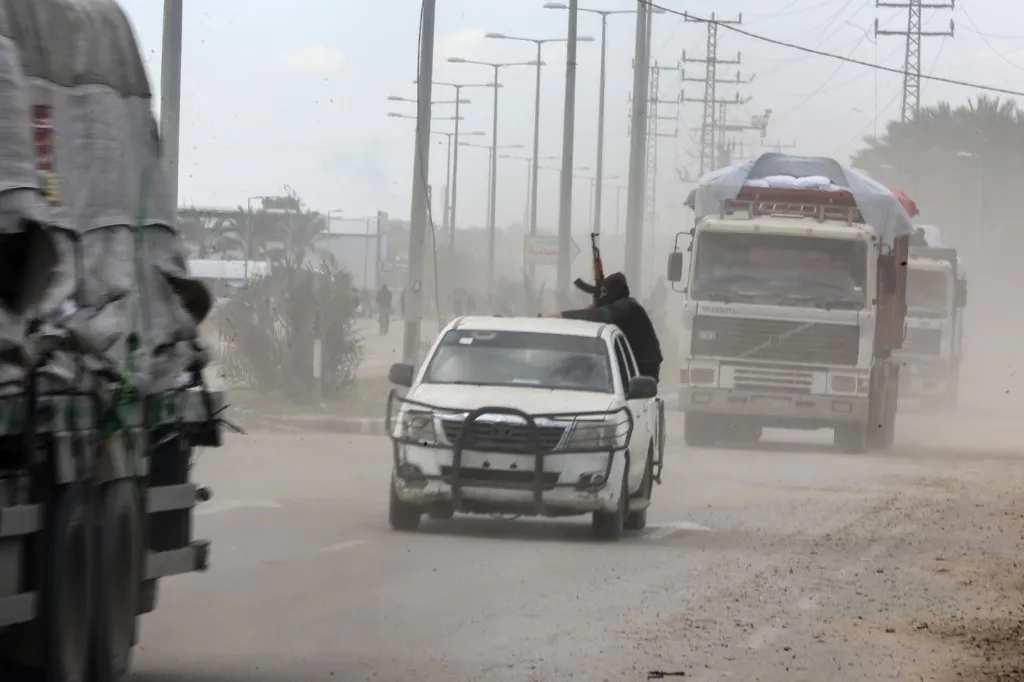
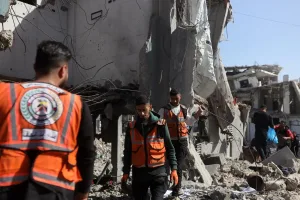
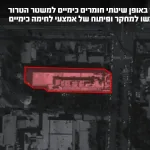
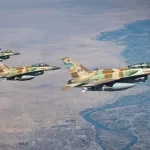
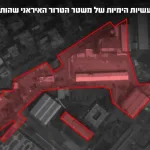
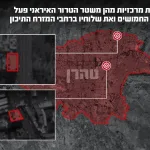
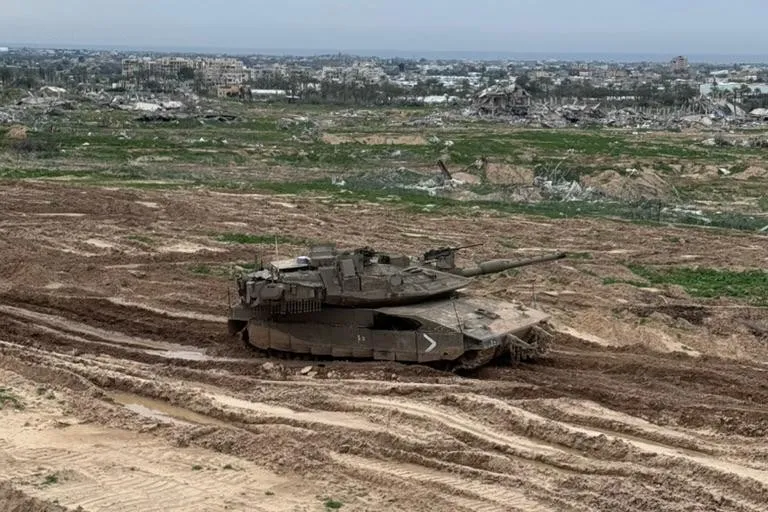
Israeli airstrikes overnight destroyed around 40 engineering vehicles used by Hamas for terror purposes, including during the October 7 attack, the Israel Defense Forces said on Tuesday.


Israeli airstrikes overnight destroyed around 40 engineering vehicles used by Hamas for terror purposes, including during the October 7 attack, the Israel Defense Forces said on Tuesday.
Jerusalem, 22 April, 2025 (TPS-IL) — Israeli airstrikes overnight destroyed around 40 engineering vehicles used by Hamas for terror purposes, including during the October 7 attack, the Israel Defense Forces said on Tuesday.
“The Hamas terrorist organization used these vehicles to plant explosives, dig underground shelters, breach fences, and clear rubble to locate weapons and military equipment underneath,” the IDF said. “The engineering vehicles that were attacked constitute a central component of Hamas’ ability to carry out terrorist plots against IDF forces and the State of Israel.”
Many of these tools, the military said, were directly linked to the attack on southern Israel on October 7.
According to the army, Hamas’ engineering unit used heavy equipment to create dozens of breaches in the border fence, enabling waves of terrorists on motorcycles and pickup trucks to enter Israeli territory. The unit also built improvised bridges and planted explosive charges to break through defensive structures.
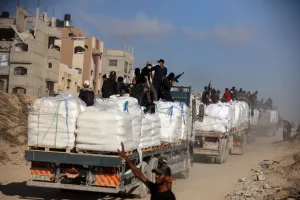
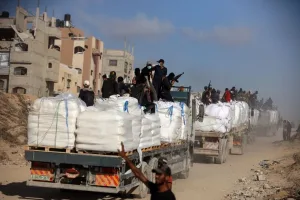
On March 24, the Israeli Air Force launched a similar wave of strikes specifically targeting 100 pickup trucks and other vehicles used by Hamas. The IDF said those vehicles had been used in the October 7 attack, propaganda events featuring the handover of hostages to the International Red Cross, and to transport weapons.
At least 1,180 people were killed, and 252 Israelis and foreigners were taken hostage in Hamas’s attacks on Israeli communities near the Gaza border on October 7. Of the 59 remaining hostages, 36 are believed to be dead.
The Israeli military dismissed a deputy commander and reprimanded another officer over their roles in a deadly incident when troops opened fire on a convoy of ambulances in the Tel a-Sultan neighborhood of Rafah, southern Gaza, killing 15…
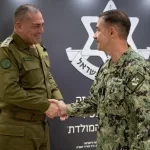
Jerusalem, 20 April, 2025 (TPS-IL) — The Israeli military dismissed a deputy commander and reprimanded another officer over their roles in a deadly incident when troops opened fire on a convoy of ambulances in the Tel a-Sultan neighborhood of Rafah, southern Gaza, killing 15 people, the Israel Defense Forces announced on Sunday.
The deputy commander of the Golani Brigade’s reconnaissance unit was dismissed after army investigators found he gave a “partial and inaccurate” account of the incident in the initial inquiry, the IDF said.
The commander of the 14th Reserve Armored Brigade, which was overseeing operations in the area, was formally reprimanded for his “overall responsibility,” including mishandling the scene after the attack.
The IDF acknowledged that troops mistakenly identified medical personnel as Hamas operatives. “The existing guidelines on the special caution required with regard to rescue forces and medical workers, even in areas of intense combat, were sharpened and clarified,” the military said in a statement. While the investigation found no ethical violations, it cited multiple “professional errors” and breaches of protocol.
The probe determined that the March 23 incident involved three separate shootings: the first at a vehicle wrongly identified as a Hamas police car, killing two people; the second at a convoy of ambulances and a fire truck, killing 12; and a third at a UN-marked vehicle, where one UNRWA staff member was killed. The final case involved fire “in violation of orders.”
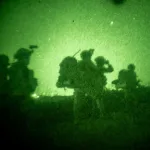
The initial shot was fired at 3:57 a.m. after Golani troops lying in ambush mistook a vehicle with red and blue markings for a Hamas vehicle. Later, around 5:06 a.m., they opened fire on a fast-approaching convoy, mistaking it for a Hamas operation. The commander, using night vision, failed to identify medical insignia. “They did not recognize vests and lights,” the IDF said.
Footage later reviewed by the IDF and cross-referenced with a New York Times video revealed that the soldiers ceased fire after realizing the convoy did not contain armed terrorists. “There was no execution,” the military emphasized, denying allegations made by Palestinian sources. One paramedic survived and was arrested; his testimony was included in the investigation.
At 5:18 a.m., a UN-marked vehicle arrived. Although troops identified it as a UN vehicle, they still opened fire, killing the staff member. The IDF confirmed this action violated standing orders.
After the incident, bodies were covered with netting, vehicles were crushed, and the scene was buried in sand on orders from the brigade commander. The IDF said this was done to shield the scene from civilians as evacuations continued. “The vehicles should not have been run over and buried,” the military later acknowledged. UN representatives were eventually able to retrieve the bodies, with the final remains recovered on March 30.
At least 1,180 people were killed, and 252 Israelis and foreigners were taken hostage in Hamas’s attacks on Israeli communities near the Gaza border on October 7. Of the 59 remaining hostages, 36 are believed to be dead.
Israel confirmed on Tuesday the death of Hamas commander Muhammad al-‘Ajlah, who was eliminated in an airstrike in the northern Gaza area of Shejaiya on Sunday...
Jerusalem, 15 April, 2025 (TPS-IL) — Israel confirmed on Tuesday the death of Hamas commander Muhammad al-‘Ajlah, who was eliminated in an airstrike in the northern Gaza area of Shejaiya on Sunday. Al-‘Ajlah is fifth commander of the terror group’s Shejaiya battalion killed since the October 7 attacks.
The Israel Defense Forces said al-‘Ajlah became the Shejaiya battalion’s commander less than one week ago last week, succeeding Haitham Sheikh Khalil, who Israeli forces killed on April 9.
“Throughout the war, the terrorist al-‘Ajlah served as the commander of a combat support company in the Shejaiya battalion. He was responsible for arming the battalion’s terrorists with weapons used to carry out terrorist attacks against Israeli civilians and IDF troops,” the IDF said.
“Al-‘Ajlah was the fifth commander of Hamas’ Shejaiya battalion to be eliminated since the beginning of the war, and the third since the start of the renewed operations in Gaza,” the military added.
The IDF was referring to Jamil al-Wadidya, who was killed on March 18 after the collapse of a temporary ceasefire. Two other Shejaiya battalion commanders, Imad Qreiqa and Wissam Farhat, were killed in separate strikes in December 2023.
At least 1,180 people were killed, and 252 Israelis and foreigners were taken hostage in Hamas’s attacks on Israeli communities near the Gaza border on October 7. Of the 59 remaining hostages, 36 are believed to be dead.
A senior nurse at Nasser Hospital in Gaza was threatened by Palestinian Islamic Jihad after urging terrorists to stop using the facility for militant activity. The IDF condemned the exploitation of medical centers, citing similar cases, including Hamas…
Jerusalem, 14 April, 2025 (TPS-IL) — The head of a hospital in the southern Gaza city of Khan Yunis is facing threats after publicly condemning Palestinian Islamic Jihad for using the hospital to conduct terror activity.
Mohammed Saqer, the head of nursing at Nasser Hospital in Khan Yunis identified revealed he had urged terror groups to leave the hospital to protect it from being targeted or shut down.
“I call on you in the name of God — not to forgive them,” Saqer wrote, saying he received a threatening from Palestinian Islamic Jihad that read, “You’ve crossed the line—be careful. This is your first warning.”
Col. Avichai Adraee, the Israel Defense Force’s Arabic language spokesperson responded with a tweet calling this a clear example of Palestinian terror groups “exploiting” Gaza’s medical facilities.
“A new crime has been added to the record of Palestinian terrorism and its love of exploiting hospitals,” Adraee tweeted. “The Director of Nursing at Nasser Hospital… announced the hospital was reserved for patients only, not for terrorists. The Al-Quds Brigades responded by sending him a direct threat! Heinous, disgusting terrorism.”
In a separate incident, the IDF reported striking a Hamas command center located inside Al-Ahli Baptist Hospital in Gaza City overnight, saying it was in response to a rocket launched at Kibbutz Re’im in southern Israel during Passover. Medical personnel were warned ahead of time and evacuated. No injuries were reported.
According to the Israeli military, Eighty-five percent of Gaza’s hospitals have been used by Hamas and Palestinian Islamic Jihad for terror.
As reported by The Press Service of Israel in 2023, Hamas made extensive use of the Shifa Hospital, Gaza’s largest medical center. Hamas launched rockets from its compound, hid hostages in the bowels of the building, tortured collaborators, and dug tunnel shafts.
Other Palestinians told Israeli interrogators Hamas deeply embedded itself in the Palestinian Red Crescent Society to use hospitals and clinics as a base for attacks.
At least 1,180 people were killed, and 252 Israelis and foreigners were taken hostage in Hamas’s attacks on Israeli communities near the Gaza border on October 7. Of the 59 remaining hostages, 36 are believed to be dead.
An internal IDF report admits the army was unprepared for Hamas’s surprise attack, which killed over 1,200 people and led to mass kidnappings. Officials cited overconfidence and misjudging Hamas’s strength as key failures.
Jerusalem, 28 February, 2025 (TPS-IL) — “The Israel Defense Forces failed to protect Israeli citizens. The Gaza Division was overrun in the early hours of the war as terrorists took control and carried out massacres in the communities and roads of the area,” was the general conclusion.
An official presented the basic summary of the report on what went wrong during and after the October 7 attacks, which were not dealt with immediately and resulted in more than 1200 Israelis dead, hundreds taken hostage, and sparked an all-out war on Gaza.
The basic conclusion seems to be that it all happened because of miscalculation of Hamas’s military capabilities. “October 7 was a complete failure,” a senior Israeli military official told reporters, speaking on condition of anonymity in accordance with military rules. He added that “too many civilians died that day asking themselves in their hearts or out loud, where the IDF was,”.
The official stressed that the army had been “overconfident” and had miscalculated Hamas’ capabilities before the attack.
The investigation, which consists of 77 separate investigations into each of the affected areas, as well as the attacks on army bases and the various points of confrontation around Gaza, will be presented to those who were directly affected on that day.
“We did not even imagine such a scenario,” the army official said, explaining that Israel’s attention was focused on threats from Iran and its proxy, Hezbollah in Lebanon. According to the report, Hamas’s attack came in three waves, with more than 5,000 people crossing into Israel from Gaza.
“The first wave … included more than 1,000 Nukhba (Hamas’s elite force) terrorists who infiltrated under cover of heavy fire,” the report points out. The second wave involved some 2,000 militants, while the third saw hundreds more militants join the incursion with several thousand civilians.
The official said the first hours of the attack saw the most killings and kidnappings. It was then, he explained, then Hamas’s elite unit crippled the military’s communications system and command and control centers, creating chaos as the army struggled to regain control.
What was presented today was only “a slice of the whole process,” the official explained, adding that more investigations, including one into the massacre at the Nova music festival, are expected to come.