







Study on Language Origins Could Transform Child Development and AI Research
Israeli scientists reveal groundbreaking findings on the origins of human language, challenging traditional theories and offering a new perspective on language



Israeli scientists reveal groundbreaking findings on the origins of human language, challenging traditional theories and offering a new perspective on language
Israel uncovers arms smuggling network involving soldiers, transporting weapons from Syria to criminal elements in the north.
Israeli scientists reveal groundbreaking findings on the origins of human language, challenging traditional theories and offering a new perspective on language
By Pesach Benson • November 24, 2025
Jerusalem, 24 November, 2025 (TPS-IL) — A study that could influence everything from child development research to the design of more natural-sounding AI argues that human language arose not from one evolutionary breakthrough but from the gradual convergence of biological capacities and cultural learning, according to Israeli scientists.
For centuries, scientists and philosophers have sought to explain how humans evolved the ability to speak, create grammar, and share meaning. Despite language being one of the defining traits of the human species, its roots have remained elusive.
Scientists at the Hebrew University of Jerusalem attempted to break the impasse by bringing together findings from linguistics, psychology, genetics, neuroscience, and animal communication, creating what the authors describe as a unified framework for understanding language evolution.
Their study, recently published in the peer-reviewed Science journal, argues that language must be understood as a biocultural phenomenon built from multiple evolutionary threads rather than a single origin point.
“Crucially, our goal was not to come up with our own particular explanation of language evolution,” said first author Inbal Arnon of the Hebrew University of Jerusalem. “Instead, we wanted to show how multifaceted and biocultural perspectives, combined with newly emerging sources of data, can shed new light on old questions.”
The researchers argue that no isolated biological or cultural capacity can explain the emergence of language. Human communication, they say, arose from the intersection of abilities such as producing novel sounds, recognizing patterns, forming complex social bonds, and transmitting knowledge within and across generations. This interaction between biology and culture, they believe, is essential for understanding how language became the richly structured system humans use today.
“The multifaceted nature of language can make it difficult to study, but also expands horizons for understanding its evolutionary origins,” said co-author Simon Fisher of the Max Planck Institute for Psycholinguistics and Radboud University. “Rather than looking for that one special thing that singles humans out, we can identify different facets involved in language, and productively study them not just in our own species but also in non-human animals from different branches of the evolutionary tree.”
The authors caution that research has sometimes stalled because different scientific disciplines examined language in isolation. They argue that advancing the field requires an integrated approach capable of capturing the full range of biological and cultural forces that shape communication.
To illustrate the value of their framework, the paper examines three areas where a biocultural perspective helps clarify long-standing questions.
One focus is vocal learning, a skill crucial for human speech but limited among our closest primate relatives. Species such as birds, bats, and whales show far stronger vocal-learning abilities, and the authors say those comparisons offer key insights into human speech.
The research also highlights the slow emergence of linguistic structure, saying grammar took shape over generations through repeated use and cultural transmission, a process evident in the development of new sign languages and in laboratory simulations.
The study also points to the social foundations of language, noting that humans’ strong inclination to share information underpins communication yet appears rarely in other animals.
The findings offer several practical implications. For early childhood language interventions, the framework suggests that difficulties in speech or comprehension may arise from different underlying facets — such as vocal learning, pattern recognition, or social motivation — allowing clinicians to target therapies more precisely rather than treating language as a single, uniform skill.
The study also has relevance for artificial intelligence, indicating that communication systems become complex not through one breakthrough but through gradual cultural transmission and social interaction. AI models designed to learn in more interactive, human-like ways could develop more natural communication abilities.
Additionally, the biocultural approach may help researchers better understand and diagnose communication disorders by showing which specific components of language break down in conditions such as autism, developmental language disorder, or aphasia, leading to more focused and effective treatments.
Alona Ben Natan secures top female spot after impressive finish in Dubai Baja, eyes Dakar Rally.
By Pesach Benson • November 23, 2025
Jerusalem, 23 November, 2025 (TPS-IL) — Israeli Baja motorcycle racer Alona Ben Natan on Sunday took second place in the Dubai Baja World Cup, propelling her to the number one female racer in the overall Baja World Cup.
“This race, for me, what was important is to finish the race because I am leading the world championship in the female category,” Ben Natan told The Press Service of Israel after the race.
Other races on the Baja World Cup circuit include Spain, Portugal, Hungary, Saudi Arabia and Jordan.
“I wasn’t in Saudi Arabia or Jordan because of the situation, but I competed in other races. Most of them I finished first or second. That’s why I have the highest qualification,” the 36-year-old Ben Natan explained to TPS-IL.
In Baja racing, competitors thread their way from waypoint to waypoint, making split-second route choices over hundreds of kilometers each day. “It’s all about navigation, focus and to ride very fast,” Ben Natan explained to TPS-IL while training for the Dubai race.
She hopes to amass enough points and sponsors to participate in the Dakar Rally.
Prime Minister Netanyahu holds meeting with AIPAC leadership delegation at Jerusalem's PMO.
Prime Minister Benjamin Netanyahu, at the Prime Minister’s Office in Jerusalem, met with an AIPAC leadership delegation.
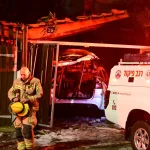
Beer-Sheva fires prompt arson probe after night of dramatic rescues. Multiple buildings ablaze, dozens evacuated.
By Pesach Benson • November 20, 2025
Jerusalem, 20 November, 2025 (TPS-IL) — Fires erupted overnight Wednesday to Thursday in nine residential buildings across Beer-Sheva, prompting large-scale rescue operations and raising suspicions of deliberate arson.
Firefighters pulled roughly 15 people from smoke-filled apartments, including infants and young children, according to the Fire and Rescue Service. Two adults — a 48-year-old woman and a 46-year-old man — were evacuated to Soroka Hospital in mild condition.
The first emergency calls reached the 102 hotline shortly before midnight, with additional reports continuing until around 3:00 a.m. Crews from the Beer-Sheva station raced between multiple three- to five-story buildings.
“Upon the arrival of the teams to the various scenes,” the fire department said, “the fighters identified fires in the building lobbies, in the electrical cabinets and in the shelters.”
Many of the locations were older buildings with enclosed stairwells, allowing smoke to spread quickly and complicating evacuations. Firefighters conducted floor-by-floor searches while working to extinguish the flames. Because smoke blocked escape routes in several buildings, crews instructed numerous residents to remain in their apartments, seal door frames with wet cloths, close windows and doors, and move to interior rooms.
“Most of the residents were instructed to lock themselves in their homes,” the department said, noting that the measure prevented further injuries.
Magen David Adom medics and paramedics were dispatched throughout the city, treating residents suffering from smoke inhalation. Several children were transported for additional evaluation.
A fire investigator called to the scenes found evidence consistent with intentional ignition. According to the Fire and Rescue Service, the preliminary assessment points to an “arson attack.” Police later confirmed that one suspect had been arrested, though no details on a possible motive were released.
Fire officials said the blazes originated from multiple ignition points, including electrical cabinets and furniture inside protected rooms, and that the simultaneous outbreaks posed significant danger to residents and complicated the overnight response. Authorities are continuing to investigate.
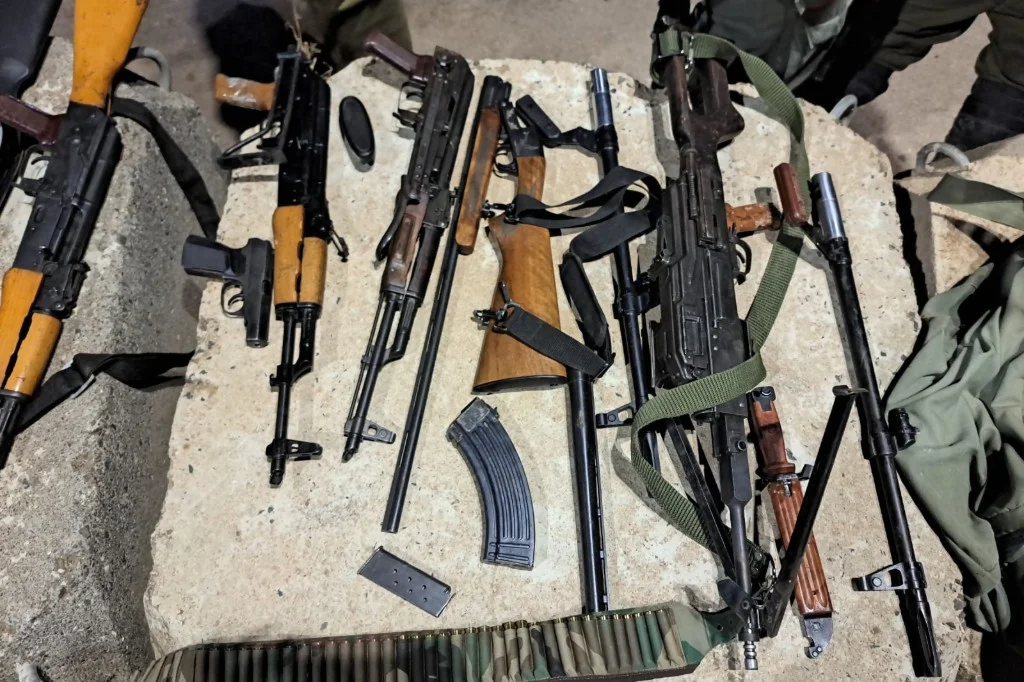
Israel uncovers arms smuggling network involving soldiers, transporting weapons from Syria to criminal elements in the north.
By Ehud Amiton/TPS • November 19, 2025
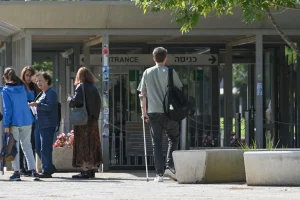
Jerusalem, 19 November, 2025 (TPS-IL) — Israel uncovered a significant weapons smuggling network involving several northern residents, including five soldiers, the authorities announced on Wednesday.
According to the Israel Security Agency (Shin Bet), the Israel Defense Forces and the Israel Police, the suspects were repeatedly transporting weapons from Syria into Israel and handing them over to criminal elements in the north.
The smuggled weapons included explosives, RPG missiles, assault rifles, and large quantities of ammunition. Among those arrested is Iyad Halabi, 45, a sergeant major from Yarka, a northern Druze village, and Rami Abu Shah, 49, of the Israeli-Arab town of Shfaram, who coordinated with Syrian arms traffickers.
Israeli reserve duty students in higher education institutions express dissatisfaction with academic support after two years of war, according to a State
By Pesach Benson and Omer Novoselsky • November 18, 2025
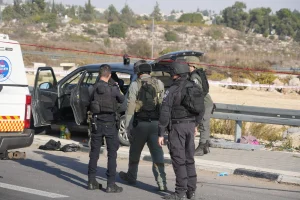
Jerusalem, 18 November, 2025 (TPS-IL) — After two years of war, reserve duty students in Israeli higher education institutions are expressing widespread dissatisfaction with academic support, according to a State Comptroller report released on Tuesday. Reservist students also shared with The Press Service of Israel their experiences of repeatedly moving between class and combat.
The report, prepared by State Comptroller Matanyahu Englman, examined how Israel’s higher education system responded to the unprecedented mobilization that followed the October 7, 2023, Hamas attack. The Comptroller regularly audits Israel’s preparedness and the effectiveness of government policies.
According to the report, approximately 60,000 students—roughly 18% of all Israeli students—served in reserve duty during the 2023–24 academic year, with many serving extended periods. About 10,000 students served over 90 days between January and June 2024, representing more than half of that academic period.
“Students were required to mobilize for extended periods for the security of the state and its citizens; therefore, the Council for Higher Education and institutions must ensure that all rights they are entitled to and the required resources are fully secured to prevent, as much as possible, any harm to their academic, professional, and employment advancement,” the report stated. The Council for Higher Education is the regulatory body responsible for overseeing Israel’s higher education institutions.
However, surveys conducted by the State Comptroller revealed shortcomings. While 72% of institutions believed students were highly satisfied with academic support, only 31% of students reported high satisfaction levels. A striking 41% of surveyed students indicated they were dissatisfied with the assistance their institutions offered due to absences from reserve duty.
The report highlights mismatches between what students found most helpful and what institutions actually provided. Students identified tutoring sessions, written summaries of lectures, intensive courses, and completion weeks as most beneficial, yet many institutions failed to offer these services adequately.
Financial concerns were also a critical issue. Englman’s report found that 12% of 25 surveyed institutions did not provide full tuition refunds to reserve duty students who withdrew from studies, and 32% did not refund registration fees.
“The Council for Higher Education did not establish guidelines … concerning financial refunds for registration cancellation and tuition refunds for students who were called to reserve duty and forced to cancel or discontinue their studies,” the report noted.
Budget utilization revealed additional problems. Institutions used only NIS 124 million ($38.45 million) of the NIS 195 million ($60.47 million) allocated specifically for supporting reserve duty students—less than two-thirds of available funds.
The audit also documented 1,423 reserve duty students who dropped out during the 2023–24 academic year. No comprehensive analysis was conducted to identify reasons for student attrition, Englman reported.
Interviews with reservist students illuminate the personal impact behind these figures. TPS-IL changed the names of the students because none wanted to be identified by name. As one student put it, “I don’t want arrest warrants.”
Ronnie, 29, is a computer science student at Ariel University. In the last two years, he has served 350 days in a tank unit and has another round of reserve duty coming up.
“I was in my final year of studies when the war began. I went into five months of reserve duty. Obviously the whole beginning of the academic year went down the drain… Luckily, it was my last year, so there wasn’t that much left.”
He recalled the challenges of returning from combat to campus. “There were days where I had just come from Gaza. Seeing people living a normal daily life – it was a crazy shock. It takes time to adjust.”
Then there were the professional setbacks: “For two years, I had nothing to look for in terms of employment… Every two or three months I had reserve duty. It’s like a wheel rolling downhill – over time it gets harder.”
Benny, 25, is studying psychology and economics, also at Ariel University. He served approximately 300 days.
“It was hard for me that reserve duty hit right at the beginning of the academic year… But specifically at Ariel, they’re very, very supportive… Alternative assessments instead of exams, tutors, flexibility with assignments. You feel the hug for reservists.”
He added, “They should make it possible for you to go to reserve duty with peace of mind, or at least as much peace as possible, and not constantly be stressed about studying in the middle of nowhere. There were people opening textbooks in Gaza.”
Uri, a political science student at Hebrew University of Jerusalem has done 370 days of reserve duty. “Since the war, the reserves themselves have become my routine and everything else has taken a lower place… The transition from making life-and-death decisions to sitting in a classroom is intense. It requires a lot of mental strength,” he told TPS-IL.
“What I would like the public to understand is that there is a huge gap around the experience of war itself between civilian and military society. While civil society has long since adapted to the situation, those who are in the reserves continue to experience the war at its peak,” he added.
Michael’s studies in politics and media at the Jerusalem Multidisciplinary Academic Center were interrupted by 350 days of reserve duty.
“The college is very considerate. Exemptions from courses helped me the most… They could have told a student to deal with it, but they came to their aid,” he told TPS-IL.
“The exemptions from the courses are the things that helped me the most, The fact they gave me an exemption from a course and reduced my load,” he added.
The State Comptroller recommended that the Council for Higher Education develop a long-term strategic plan for supporting reserve duty students, establish systematic oversight mechanisms, mandate periodic satisfaction surveys, and examine options for requiring institutions to provide full refunds to students forced to withdraw due to military service.
“These steps will reflect the state’s commitment to reserve duty soldiers who have sacrificed and continue to sacrifice greatly for the State of Israel and its residents,” the report said.
Aharon Cohen, a 60-year-old man from Kiryat Arba, identified as victim of terror attack in Gush Etzion Junction. Two Palestinians shot dead by security forces.
By Pesach Benson • November 18, 2025
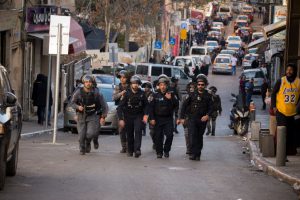
Jerusalem, 18 November, 2025 (TPS-IL) — A 60-year-old man killed in a Palestinian car-ramming and stabbing attack on Tuesday was identified as Aharon Cohen, a resident of Kiryat Arba.
Three other Israelis were injured when two Palestinians accelerated their car at people at the Gush Etzion Junction south of Jerusalem, then proceeded to stab several victims. The terrorists, identified as 18-year-olds Imran al-Atrash and Walid Sabarneh from Hebron and Beit Ummar respectively, were shot and killed by responding security forces.
Emergency responders pronounced Cohen dead at the scene. Three others were evacuated to hospitals in jerusalem. Magen David Adom said a 55-year-old woman was evacuated to Jerusalem’s Hadassah-En Kerem Medical Center in critical condition with gunshot wounds after being hit by Israeli fire. A 30-year-old man and a 15-year-old boy were treated at Jerusalem’s Shaare Zedek Medical Center; both were conscious, with the man lightly injured and the teenager in moderate condition.
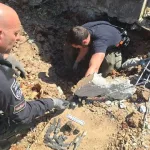
Following the attack, Israeli forces discovered several explosive devices in the terrorists’ vehicle, which were safely disarmed by sappers.
Eitan Saar, a United Hatzalah medic at the scene, described the chaos: “I heard the security forces shooting and shouting, I immediately understood what it was about. We saw wounded people bleeding profusely on the road. We gave them treatment and called in additional forces.”
Palestinian Islamic Jihad claimed responsibility for the attack.
The Kiryat Arba municipality said Cohen’s funeral would take place Tuesday night.
The attack sparked political responses.
The Yesha Council, the umbrella organization representing the Jewish communities of Judea and Samaria tied the attack to the UN Security Council’s approval of a resolution supporting U.S. President Donald Trump’s peace plan for Gaza. The resolution recognizes Trump’s plan as a “credible pathway to Palestinian self-determination and statehood,” a clause that drew cautious attention in Israel.
“When Israel quietly enables a path to a Palestinian state, terrorism again raises its head. We said all along, it is either sovereignty or a Palestinian state. The Israeli government is refraining from sovereignty and we are getting a tailwind in the sails of a terrorist state in the heart of the country,” the council said.
MK Avigdor Liberman, chairman of the opposition Yisrael Beytenu party, criticized the government’s handling of security.
“When terrorism smells weakness, it raises its head and goes out to kill. Terror attacks are not a decree of fate, but a struggle that requires determination, strength and independence, everything that this government of negligence does not have,” Liberman said.
In a series of arrests highlighting a pattern of identity fraud, illegal employment and violence, Israeli authorities arrested four Palestinians in separate incidents for staying in Israel illegally, the police announced on Wednesday.

Jerusalem, 7 May, 2025 (TPS-IL) — In a series of arrests highlighting a pattern of identity fraud, illegal employment and violence, Israeli authorities arrested four Palestinians in separate incidents for staying in Israel illegally, the police announced on Wednesday.

The first arrest came after a Jerusalem hospital reported that a man seeking treatment was using a stolen identity. Officers found the suspect, a Bethlehem resident in his 20s, in possession of a health insurance card and documents belonging to an Israeli citizen. Police said the suspect had “habitually impersonated” the individual in order to receive medical services fraudulently, noting that he had a previous conviction for the same crime.
“Upon uploading the cardholder’s details, it was revealed that he had previously filed a complaint for identity theft,” police said.
The suspect was charged with impersonation to commit fraud and illegal residence.
During a separate eastern Jerusalem police operation, a Palestinian man in his 50s was found working at a construction site without a permit. The site’s owner, a local woman in her 40s, was also arrested on suspicion of employing him illegally. Both were released under restrictive conditions, and police said an indictment is expected soon.
A third investigation unfolded after police received a tip about a violent domestic incident. Officers arrested a man in his 30s who had allegedly assaulted his partner and mother in eastern Jerusalem. Further checks revealed he was living illegally in Israel under false pretenses.
“The suspect not only committed violent offenses but was residing unlawfully, violating both criminal and immigration laws,” police said. His detention has been extended until May 8 as investigations continue.
In a fourth case, linked to a violent clash between two families in eastern Jerusalem, police raided a residence and arrested a 19-year-old Palestinian from Hebron. Officers found him hiding in a house belonging to one of the families involved in the dispute. Two firearms were seized in the operation.
The suspect, who was unlawfully residing in Israel, was indicted following his questioning. The car wash where the shooting took place was closed for 30 days.