





From Jerusalem to Baku – Strengthening a Strong Regional Partnership!
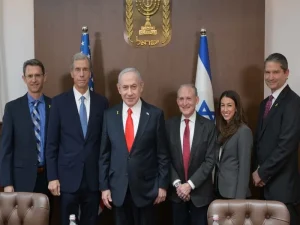
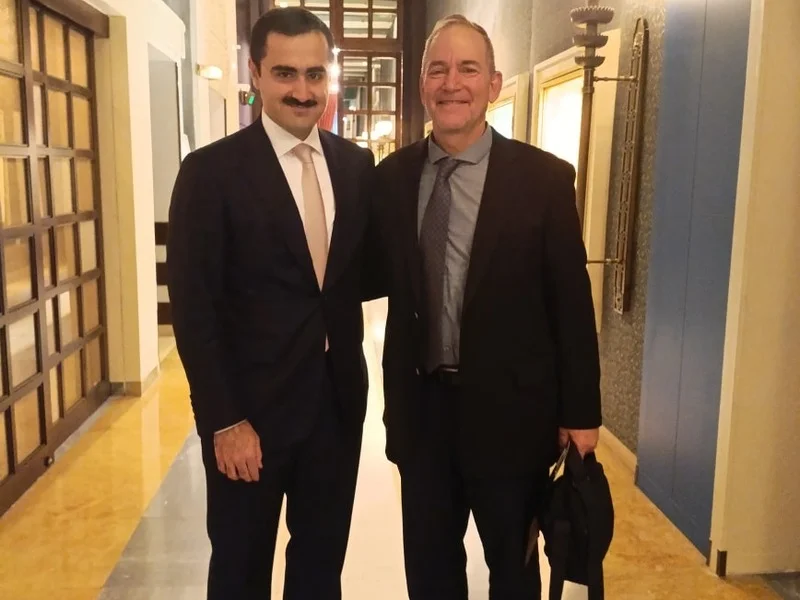
Strengthening Israeli-Azerbaijani ties! Director General Gilad Shadmon meets with senior officials in Baku to deepen partnerships and promote collaboration.



Strengthening Israeli-Azerbaijani ties! Director General Gilad Shadmon meets with senior officials in Baku to deepen partnerships and promote collaboration.
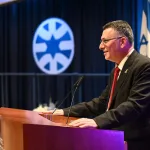
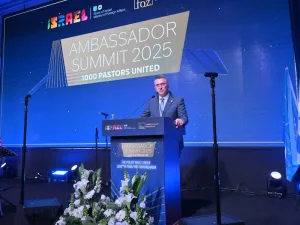
FM Sa’ar addresses gala event in Jerusalem for largest ever delegation of pastors from the United States, reaffirming support for Israel and the Jewish people.
Strengthening Israeli-Azerbaijani ties! Director General Gilad Shadmon meets with senior officials in Baku to deepen partnerships and promote collaboration.
During the conference, Director General of the Ministry for Regional Cooperation, Mr. Gilad Shadmon, met with senior Azerbaijani officials, including Deputy Minister of Education Mr. Hasan Hasanli, Deputy Minister of Culture, and Deputy Minister of Economy.
Director General Shadmon and Minister Hasanli have a long-standing acquaintance from previous collaborations, and this meeting served as an opportunity to deepen ties, explore new projects, and further promote the implementation of the Memorandum of Understanding between the two countries.
Azerbaijan is a loyal friend of Israel, and our growing ties are built on trust, shared values, and a mutual desire to advance education, culture, and innovation for the benefit of all citizens in the region.
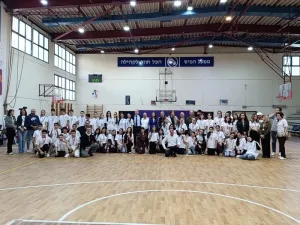
The youth of Israel and Kosovo come together in a groundbreaking event fostering dialogue and friendship, shaping a brighter future for the region.
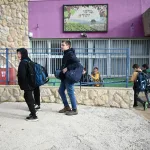
The youth played, connected, and built friendships with Jewish and Arab teens from Jerusalem and Abu Ghosh. The Director General of the Ministry for Regional Cooperation and his team met with the youth and with Kosovo’s Ambassador to Israel, Ms. Ines Demiri.
The event was led by the Abu Ghosh Community Center and served as a rare opportunity for a productive connection between Israel and Kosovo. The entire event was supported by the Ministry for Regional Cooperation – promoting values of dialogue, friendship, and cross-cultural understanding from a young age, and strengthening ties between diverse communities through shared activities, participation, and listening.
This is a living example of how real connections are built – the future generation of Israel and the region, with big hearts and open minds.
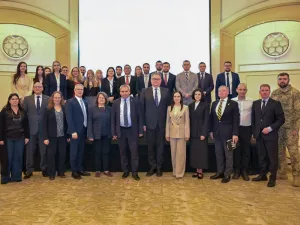
13th Israel-Ukraine Joint Economic Commission meeting in Jerusalem underscores strong partnership and cooperation potential between the two countries.
The 13th meeting of the Joint Economic Commission between the Government of Ukraine and the Government of Israel was held on December 4, 2025, in jerusalem, chaired by Ukraine’s Deputy Prime Minister Taras Kachka and Minister Zeev Elkin.
Both sides emphasized the partnership between the countries and the significant potential for cooperation. The Ukrainian delegation included 10 deputy ministers and additional senior officials. As part of the commission’s work, professional discussions were held between Israeli and Ukrainian ministries in a wide range of fields, including trade, agriculture, energy, digital affairs, environment, and health.
Special emphasis was placed on the exchange of information in the fields of resilience and reconstruction—both in terms of physical infrastructure and in the aspect of support and rehabilitation for veterans.
The commission was held in full collaboration with the Ministry of Foreign Affairs, which accompanied the process and contributed to advancing the discussions and deepening intergovernmental ties.
At the conclusion of the meeting, the delegations expressed satisfaction with the commission’s achievements and stressed the importance of continuing the dialogue between the governments.
According to Minister Elkin:
“Resuming the activity of an intergovernmental commission between Israel and Ukraine after a four-year hiatus (due to the wars in Ukraine and the Middle East) is a clear sign of the strength of the ties between the two countries and a return to the path of expanding cooperation between them.
Israel and Ukraine are two Western states facing long and difficult wars.
The cooperation agreement on the exchange of experience and information in the field of reconstruction is a groundbreaking agreement that will help both countries deal with the challenge of rebuilding, on the one hand, and will open the door for Israeli companies to take part in major projects in Ukraine as part of the large-scale reconstruction activity expected to be carried out with international funding once the war ends.”
Jerusalem boy's sudden flu death leads to four life-saving transplants, showcasing the power of organ donation in Israel.
By Pesach Benson • December 4, 2025
Jerusalem, 4 December, 2025 (TPS-IL) — A six-year-old Jerusalem boy who died this week from an exceptionally rare flu complication has saved four lives through organ donation, Israeli hospitals said on Thursday.
Ariel Hakakian, described by doctors as previously healthy and fully vaccinated against the flu, was brought to Shaare Zedek Medical Center in critical condition after developing fever and cough only days earlier. His condition deteriorated with unusual speed.
“He tested positive for the flu, arrived almost dead, and suffered a very rapid deterioration,” Shaare Zedek said in a statement. “He suffered from a complication resulting from the flu. This is a super rare case — the boy was vaccinated.”
Despite prolonged resuscitation and intensive care, Ariel was pronounced dead shortly after arrival. His death marks the second pediatric fatality from flu in Israel this year, following the death of a 10-year-old girl reported several days ago.
At the family’s request, Ariel’s organs were donated, enabling four life-saving transplants at medical centers around the country.
The liver was transplanted into a six-year-old boy at Schneider Children’s Medical Center in Petah Tikvah. A kidney went to a 44-year-old woman at Beilinson Medical Center in Petah Tikvah, and another kidney to a nine-year-old boy at Haifa’s Rambam Medical Center.
Meanwhile, Ariel’s small intestine was transplanted into 36-year-old Daniel Haim Biton at Beilinson — only the third intestinal transplant ever performed in Israel.
Dr. Eviatar Nesher, director of Beilinson’s transplant department, said the seven-hour intestinal procedure required “precise coordination between many teams and high surgical skills.” Biton, who has lived 17 years without a functioning digestive system and has relied on a central venous catheter for nutrition, said he now hopes to “eat like everyone else and become a chef.”
The National Transplant Center said all four transplant recipients are recovering well.
“Ariel — one child, a whole life that continues thanks to him,” the center said.
The Health Ministry warned that this year’s flu season began early and is spreading rapidly, with global monitoring suggesting severe morbidity. While the vaccine does not fully prevent infection, it typically reduces severity and the risk of serious illness or death, the ministry said.
The public is urged to get vaccinated, with free vaccines available for everyone six months and older through the health insurers.
FM Sa’ar addresses gala event in Jerusalem for largest ever delegation of pastors from the United States, reaffirming support for Israel and the Jewish people.
Minister of Foreign Affairs Gideon Sa’ar this evening (Wednesday, 3 December 2025) addressed the gala event in Jerusalem for the largest ever delegation of 1,000 Pastors from the United States, organized by Israel’s Foreign Ministry and Dr. Mike Evans and the Friends of Zion. Following is his speech:
“Welcome to the Holy Land.
Welcome to Jerusalem – the eternal capital of the Jewish state and the people.
This is an extraordinary event.
This is the largest delegation that the Foreign Ministry has ever brought.
I want to thank you all – each of you – for coming.
Thank you for standing by Israel!
Thank you for being our Ambassadors.
Ambassadors of the Truth.
You are the greatest friends of Israel and the Jewish people.
I also want to thank both Mikes – Mike Huckabee and Mike Evans – for your vision and longstanding friendship.
There’s nobody like Mike, they say.
*
Distinguished Pastors,
You are standing in Jerusalem, the ancient and eternal capital of the Jewish people.
Jerusalem DC – David’s Capital.
It’s the beating heart of the Jewish people.
It’s not just a city.
Jerusalem is a symbol.
It represents the fulfillment of a dream of over three-thousand-years.
Yet there is a huge global movement today trying to erase the proven historical connection – between the Jewish people and our ancient homeland and capital.
They try to challenge our sovereignty over it.
They deny our historical, Biblical roots here.
But around us the Bible is present.
Shiloh is still Shiloh.
Hebron is still Hebron.
The Cave of our Patriarchs is still here.
And Jerusalem remained – and will remain – our capital.
The archeological findings in the City of David show beyond any doubt – the Jewish people are indigenous to this ancient land.
We were here a long, long time ago.
Three thousand years ago, King David lived and walked here.
He established Jerusalem as our capital.
In the book of Psalms King David wrote: “If I forget you Jerusalem, let my right hand be forgotten.”
Ever since then, the Jewish people have prayed for Jerusalem. We have never forgotten.
And we were able to see with our own eyes how the ancient words of the Biblical prophets came true.
The Jewish people returned to Israel. Jerusalem was restored as our capital.
God fulfilled his promise.
And we are here now – to stay – forever.
Remembering our past – and building Jerusalem in the present – ensures our future.
The Roman Emperor Hadrian destroyed Jerusalem.
He built a new city on its ruins. He called it Ilia Capitolina.
His goal was to erase the memory of the Jewish city.
Nobody remembers Ilia Capitolina.
But everyone knows Jerusalem.
There has never been a sovereign nation in the land of Israel besides the Jewish people.
Not the Palestinians. Or any other nation.
There has never been a Palestinian state.
Jerusalem has always been and will always be the eternal capital of the Jewish people.
The axis denying the Jewish people’s historical connection to the Holy Land – wants to eliminate the Jewish state.
Against this axis stands the alliance of believers:
America and Israel.
Jews and our Evangelical Christian brothers.
Your overwhelming presence today proves: this alliance is alive and kicking.
But the truth must be told.
There is an evil campaign underway in America.
This campaign is well-funded also by states hostile to Israel.
Its method: pushing propaganda, flooding social media with lies, and promoting insane conspiracy theories.
Its goal: to ruin the U.S.-Israel alliance.
At its core, this campaign is anti-Israel. But it’s much more than that.
This campaign is anti-Western. It’s anti-American.
The truth is that Israel is an asset for America.
Just as the United States is indispensable for Israel:
Israel is indispensable for the United States, and for its National Security interests.
The United States has no way to ensure its National Security interests in the dangerous Middle East, without Israel.
We share real-time intelligence that saves the lives of American soldiers.
We are fighting, by ourselves, against enemies that are also the enemies of America.
These enemies – such as Hezbollah, Hamas and the Houthis in Yemen – swear “Death to America”, as much they swear “Death to Israel”.
Friends, those who try to harm the U.S.-Israel Alliance, harm America itself.
They undermine American values, and interests.
We won’t let it happen.
These values – our Judeo-Christian alliance – form the basis of Western civilization.
It’s the foundation of the unbreakable bond between Israel and America.
I want to praise President Donald Trump. President Trump is the greatest friend Israel has ever had in the White House.
And America is our greatest ally and closest friend. It will always be like that.
*
Dear Friends,
Israel has had a difficult two years.
During this time, we saw who our true friends are.
Christian friends of Israel are our most important and influential friends.
In 2025, under my direction, the joint projects between Israel and our Christian friends reached new heights.
Yet we have a lot more to do together.
I intend to continue our close cooperation in 2026.
Thank you all for coming.
God Bless America.
God Bless the U.S.-Israel Alliance.
Am Yisrael Chai!”
Heat-loving microbes with remarkable abilities could revolutionize medicine, according to Israeli scientists. Discover the secrets of these extreme-heat

By Pesach Benson • December 3, 2025
Jerusalem, 3 december, 2025 (TPS-IL) — Some of Earth’s hardiest microorganisms, living in volcanic craters, hot springs, and underwater vents, have evolved a remarkable ability to keep their essential cellular machinery running even in extreme heat that would destroy most life. Now, an international team led by Israel’s Weizmann Institute of Science has uncovered the chemical tricks these heat-loving microbes use in a study that may open a door to more stable vaccines, better cancer treatments, and other medical and industrial technologies.
The study, published in the peer-reviewed Cell, focused on the ribosome, a cellular structure that produces proteins in all organisms.
Ribosomal RNA undergoes chemical modifications after it is produced, but the scope and variability of these changes remained unclear. “Until recently, it was believed that RNA editing was uniform in ribosomes of different individuals and did not vary depending on the environment,” said Prof. Shraga Schwartz of the Institute’s Department of Molecular Genetics. “However, evidence has accumulated in a handful of species that editing can sometimes be dynamic and allow the ribosome structure to adapt.”
Existing methods could detect only one modification at a time. A new approach developed in Schwartz’s lab, led by Dr. Miguel A. Garcia Campos, allows 16 modifications to be examined simultaneously across dozens of RNA samples. The researchers mapped modifications in 10 single-celled species and compared them with four previously studied, deliberately selecting organisms from extreme environments.
The results were striking.
“While most bacteria and archaea have a few dozen modifications in ribosomal RNA, in hyperthermophilic species we found hundreds,” Schwartz said. “The warmer an organism’s natural environment, the more editing modifications it performs.”
The team tested whether a species could re-edit its RNA in response to temperature changes. Species accustomed to moderate conditions showed few changes, while hyperthermophiles displayed dramatic flexibility. Nearly half of their RNA modifications were dynamic, increasing as growth temperatures rose. Ribosome restructuring, they concluded, is central to survival in extreme heat.
Three types of modifications increased with temperature. One — methylation — almost always appeared alongside acetylation. “This raised the hypothesis that the modifications work together,” Schwartz said. Working with Prof. Sebastian Glatt’s group in Krakow, they tested RNA molecules with no modifications, with each separately, and with both combined. “Both methylation and acetylation stabilize RNA, but together the whole is greater than the sum of its parts,” Schwartz said.
To understand structural effects, the team partnered with Prof. Moran Shalev Ben-Ami’s group, which used cryo-electron microscopy to map ribosomes under two conditions — when the methylation enzyme was active and when silenced. Methyl groups at high temperatures formed numerous weak bonds with nearby molecules, strengthening the ribosome and reducing structural gaps.
The discovery may explain the pharmaceutical “magic methyl” — the dramatic increase in drug effectiveness sometimes seen when a methyl group is added. “It is now possible that some RNA editing changes, such as methylation and acetylation, are not isolated, and that we should decipher them as a continuous code,” Schwartz said.
The findings could help medicine and drug development. By revealing how hyperthermophiles chemically modify RNA to remain stable, scientists may design molecules that resist degradation — a major hurdle for RNA-based vaccines, cancer therapies, and gene-editing tools.
Beyond medicine, the study has industrial applications. Insights into ribosomal adaptation could allow engineers to develop microorganisms capable of efficient protein production under harsh conditions, improving biofuel generation and chemical synthesis. Discovering that RNA modifications may function as a coordinated “code” opens the door to custom-designed RNA molecules with predictable properties for diagnostics, biosensors, and therapeutics that are stable in diverse environments.
As RNA-based vaccines, diagnostics, and treatments reshape medicine, Schwartz believes these insights could drive further breakthroughs. “The natural RNA editing process has undergone billions of years of refinement, and unlocking its secrets could enable the development of more reliable and efficient RNA-based technologies,” he said.
Israel's State Comptroller reveals major failures in protecting critical infrastructure from missile threats, leaving the country vulnerable during moments of

By Pesach Benson • December 2, 2025
Jerusalem, 2 December, 2025 (TPS-IL) — Israel’s State Comptroller on Tuesday accused the country’s defense and national security bodies of failing, for years, to protect some of the state’s most sensitive civilian and strategic facilities from missile, rocket, and UAV threats — even as dangers escalated dramatically during two years of war.
The report, prepared by State Comptroller Matanyahu Englman, reviewed steps taken since a 2020 audit and concluded that despite repeated warnings, two major wars, and tens of thousands of aerial attacks, core deficiencies remain largely unaddressed. The Comptroller regularly reviews Israel’s preparedness and the effectiveness of government policies.
“Not one of the major shortcomings identified in the previous audit was corrected,” the report said, warning that critical infrastructure was left vulnerable at moments of unprecedented escalation.
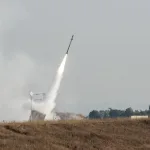
The audit highlights the scale of the threat Israel has faced since October 7, 2023. From the start of that war until October 2024, more than 26,000 rockets, missiles, attack drones, and explosive UAVs were launched toward Israel. The danger increased further during Israel’s June 2025 operation against Iran, when Tehran fired more than 500 ballistic missiles and nearly 1,000 UAVs.
Israel’s multilayered air defenses intercepted most projectiles, but some struck civilian and military sites. These incidents, the report said, “underscored the urgent need for reinforced physical protection of essential facilities,” a need the Comptroller argues has not been met. Critical infrastructure hit during attacks included Ben-Gurion Airport, the Bazan oil refinery at Haifa’s port, the Weizmann Institute of Science in Rehovot, and Beer-Sheva’s Soroka Hospital.
Englman found that Israeli authorities failed to complete basic preparatory tasks such as mapping which critical facilities require reinforced protection, determining how they should be secured, or drafting a multi-year, budgeted national program. Ministries and agencies debated responsibilities, but no single body assumed ownership. Within the defense establishment, the report stated, “none of the relevant entities view themselves as responsible for the matter, let alone responsible for coordinating it,” resulting in years of inaction.
Internal documents cited in the report show that senior officials in at least one government body repeatedly warned the defense minister in 2019, 2021, and 2022 about rising missile threats and the absence of national planning. These letters, the Comptroller wrote, went unanswered.
Even after war erupted, the Ministry of Defense took only “isolated and limited measures,” failing to initiate or complete the facility-mapping process or present a protection plan to the government. The MoD director-general and multiple defense ministers “did not promote treatment of the issue,” the audit said.
The National Security Council (NSC) was also criticized for failing to raise the matter with the Security Cabinet, despite its legal mandate to do so. For years, the NSC did not propose cabinet discussion of the protection gap, even after the 2020 audit explicitly recommended doing so. Only in late 2023—after an appeal from a senior official in a sensitive body—did the NSC begin limited activity, according to Englman.
A major obstacle remains the absence of a legal or regulatory framework. A comprehensive “Home Front Law,” intended to clarify emergency-preparedness responsibilities and empower the government to mandate protective measures, has been stalled in draft form for fourteen years. A 2011 government decision intended to guide national infrastructure protection was never expanded to cover additional sensitive bodies, leaving a regulatory vacuum.
Budget disagreements also stalled progress. The Defense Ministry argued that fortifying all relevant sites would cost tens of billions of shekels, exceeding available resources, while the Finance Ministry maintained that the defense establishment could absorb the expense. With no agreement on funding, no plan was presented to the cabinet.
Englman concluded that the prolonged failure to act “poses a significant risk to essential national systems,” particularly as hostile actors increasingly employ long-range precision weapons and explosive drones. The Comptroller called on the prime minister, defense minister, and military chief of staff to immediately map critical facilities, establish a budgeted multi-year program, define interagency responsibilities, resolve funding mechanisms, and advance legislative and interim regulatory solutions.
In response to the audit, the Ministry of Defense said the “survival of vital facilities and the preservation of functional continuity are at the core of the ministry’s strategy,” and that detailed work plans have been formulated. It said a joint team of ministry departments, the Israel Defense Forces (IDF), and other agencies has been established to map, prioritize, and define required protection packages.
Additional steps, the ministry said, include adding protective elements to key facilities, improving coordination with the IDF, and upgrading defenses at prioritized sites.
FM Sa’ar addresses the opening of Ecuador's Center of Innovation and Entrepreneurship in Jerusalem, praising President Noboa’s leadership and Ecuador's support

Minister of Foreign Affairs Gideon Sa’ar’s today (Monday, 1 December 2025) addressed the opening of Ecuador’s Center of Innovation and Entrepreneurship with diplomatic status in Jerusalem. Following are his full remarks:
“It’s an honor to join you for the opening of Ecuador’s Center of Innovation and Entrepreneurship in Jerusalem, our eternal capital.
Ecuador, under President Daniel Noboa’s leadership, is among Israel’s greatest friends in Latin America and the world.
Over the past two years Ecuador’s support has been especially clear.
Ecuador stood by Israel during some of our most challenging moments.
It supported our right to self-defense.
Ecuador designated the Iran’s Revolutionary Guards, Hezbollah, and Hamas as terrorist organizations.
These are examples of Ecuador’s strategic responsibility and moral clarity – under President Noboa’s leadership.
President Noboa is a very distinguished and impressive leader.
I’ve heard that in Ecuador they say:
“Noboa habla poco pero speso.”
“He speaks little but deeply”. Indeed, President Noboa delivers.
Immediately after being re-elected by a clear majority, President Noboa visited Israel.
He became the second President of Ecuador to visit.
During that visit he inaugurated the Innovation Center, whose opening we celebrate today.
President Noboa is leading Ecuador to great places. He is fighting narco-terrorism at home and reducing poverty rates.
Under his leadership, Ecuador has a foreign policy with a clear moral dimension. It is deeply appreciated these days.
The President is positioning Ecuador as an influential actor in Latin America.
*
Our nations have close and longstanding relations.
Ecuador welcomed Jewish refugees fleeing Europe before World War II and the Holocaust.
Ecuador voted at the UN for the establishment of the State of Israel in 1947. It established full diplomatic relations with Israel in 1950.
Latin American countries – Guatemala, Paraguay, and Honduras – have already moved their embassies to Jerusalem.
President Javiet Milei announced that he will move Argentina’s embassy in the spring of 2026.
I commend President Noboa and Ecuador for this important decision.
The opening of Ecuador’s Innovation Center with diplomatic status is yet another milestone in this direction.
It brings us closer to the day – this is my belief and hope – when Ecuador hopefully will move its embassy to Jerusalem, the eternal capital of the Jewish people.
Through this new center, israel and Ecuador are strengthening our innovation, economic and people-to-people partnership.
Strengthening relations with Ecuador is a priority of mine.
I intend to personally work on deepening our bilateral and economic ties.
I discussed this with Foreign Minister Sommerfeld just two days ago.
I intend to visit Ecuador in 2026 as part of my commitment to strengthen our relationship.
Deepening Israel’s ties with our friends in Latin America is a goal that I am committed to advancing – and Ecuador is a central part of it.
Excellencies,
I congratulate the government of Ecuador for this step.
I thank President Noboa, Foreign Minister Sommerfeld, and Ambassador Calero for their friendship and partnership.
I also thank the Hebrew University and Professor Sheafer for hosting this important diplomatic center.
Together, we are strengthening this strategic partnership and I’m sure we’ll continue to do so in the coming years.
Thank you.”
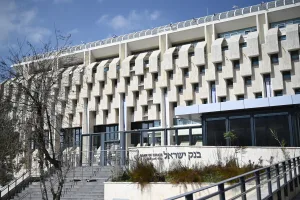
Record-breaking rainfall triggers widespread flooding across Israel, leading to emergency rescues and meteorological warnings.
By Pesach Benson • November 25, 2025
Jerusalem, 25 November, 2025 (TPS-IL) — After days of unseasonably hot weather, Israel was hit Tuesday by an intense storm that brought record-breaking rainfall, widespread flooding and dozens of emergency rescues.
“We saw tens of thousands of lightning strikes and thunderstorms developing overnight,” said Dr. Amir Givati, director of the Israel Meteorological Service. “Conditions deteriorated rapidly, and many areas in the north and center experienced large amounts of rain, accompanied by hail and strong wind gusts.”
Meteorologists reported that 128 millimeters of rain fell within four hours in Neve Tzuf in Samaria — a new record for Israel’s central region — while Ariel registered 100 millimeters in the same period.
Heavy rain was recorded from the Galilee to the northern Negev. Karnei Shomron received 50 millimeters, Mevo Dotan 47, Ariel 39, Haifa 33 and Modi’in 30. In the south, the Negev Junction logged 35 millimeters, while Beersheba saw 28, the Nevatim area 25, Mitzpe Ramon 18, and smaller amounts were measured in the Arava.
In the Hebron Hills, part of the security barrier separating Israel from the Palestinian Authority collapsed under pressure from water and runoff, leaving a section of the fence open.
The Meteorological Service issued flood warnings across the coastal plain, the lowlands and desert regions, stressing the high risk in dry riverbeds in the Judean Desert, the Dead Sea basin and the Arava. “In the morning, rain will continue from the north to the northern Negev — some of it very heavy,” Givati said. “There remains significant concern for flooding, and only in the second half of the day will the rains decrease and taper off toward evening.”
The downpour forced major road closures and caused significant disruption to transportation. In the Negev, portions of Route 90, Route 40 and roads near Dimona, Sde Boker and Ramon Crater were blocked by flooding, while the entrance to Kibbutz Mashabei Sade was closed. In central Israel, authorities shut Route 446 by Modi’in Illit and Route 463 near Na’ela.
Israel Fire and Rescue Services said its teams had responded to dozens of incidents since Monday night, many involving trapped motorists and flooded residential buildings. Crews rescued people from vehicles in Hora, Nahal Yatir, Tamra, Omer, Nahal Alexander and Kiryat Gat, and evacuated residents from flooded homes in Beit Shemesh, Kiryat Motzkin, Shaar Shomron and Ariel. In Elkana, firefighters brought ten residents, including a mother and her baby, to safety. The agency said command centers were reinforced throughout the storm and urged the public to avoid flooded areas.
Magen David Adom teams were dispatched repeatedly throughout the night to deal with flooded homes and stranded vehicles in Kiryat Gat, Rahat, Shfaram, Modi’in Illit, Beersheba, Kafr Qasem and Tirat Carmel. In all cases examined by medics, no injuries were reported.
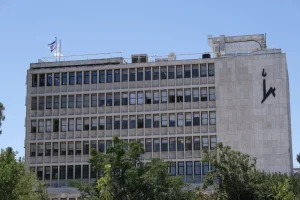
Bank of Israel lowers interest rate to 4.25% for first time in almost two years, impacting mortgage holders and boosting economic recovery in Israel.
By Pesach Benson • November 24, 2025
Jerusalem, 24 November, 2025 (TPS-IL) — After nearly two years, the Bank of Israel lowered its interest rate, cutting it by a quarter of a percentage point to 4.25% on Monday. This marks the first reduction since January 2024, ending a stretch of 14 consecutive decisions in which the rate remained unchanged at 4.5%.
The Monetary Committee, led by Governor Professor Amir Yaron, made the decision amid months of inflation running below the target range and ongoing political pressure.
Inflation currently stands at 2.5%, comfortably within the Bank’s 1%-3% target, and has remained below the center of that range for several months. An initial cut had long been expected.
The reduction is expected to directly impact families and mortgage holders across the country. For an average mortgage of NIS 1 million ($310,000) over 25 years, monthly repayments will initially drop by around 70 shekels ($21), translating to over NIS 20,000 ($6,100) in savings across the life of the loan. Estimates from the Mortgage Advisors Association suggest annual savings for mortgage holders will range from NIS 720-2,300 ($220-$700).
The new interest rate will take effect Thursday, allowing banks time to adjust.
Economic activity in Israel has shown signs of recovery. GDP expanded at an annualized rate of 12.4% in the third quarter, though the overall level remains below the long-term trend. The labor market continues to be tight, with a high ratio of vacant jobs to unemployed individuals, and wage growth remains strong. Apartment prices have declined for seven consecutive months, with fewer purchase transactions, while local stock indexes have risen relative to global markets.
The shekel has also strengthened, appreciating 1.3% against the dollar and 2.9% against the euro since the last interest rate decision. The capital market had largely anticipated a rate cut, with stock and bond markets already reflecting the change. Analysts point to a combination of global interest rate declines, reduced risk premiums following a ceasefire with Hamas, and moderated inflation as key factors behind the timing.