



















Machine Learning Offers New Way to Predict Plant Water Use, Israeli Study Finds
Israeli researchers from Hebrew University revolutionize agriculture. Machine learning predicts plant water use with high precision, optimizing irrigation and.



Israeli researchers from Hebrew University revolutionize agriculture. Machine learning predicts plant water use with high precision, optimizing irrigation and.
Israeli researchers reveal a breakthrough technique that precisely maps toxic protein growth in Alzheimer's disease. This advance offers new paths for studying
Israeli researchers from Hebrew University revolutionize agriculture. Machine learning predicts plant water use with high precision, optimizing irrigation and.
By Pesach Benson • December 16, 2025
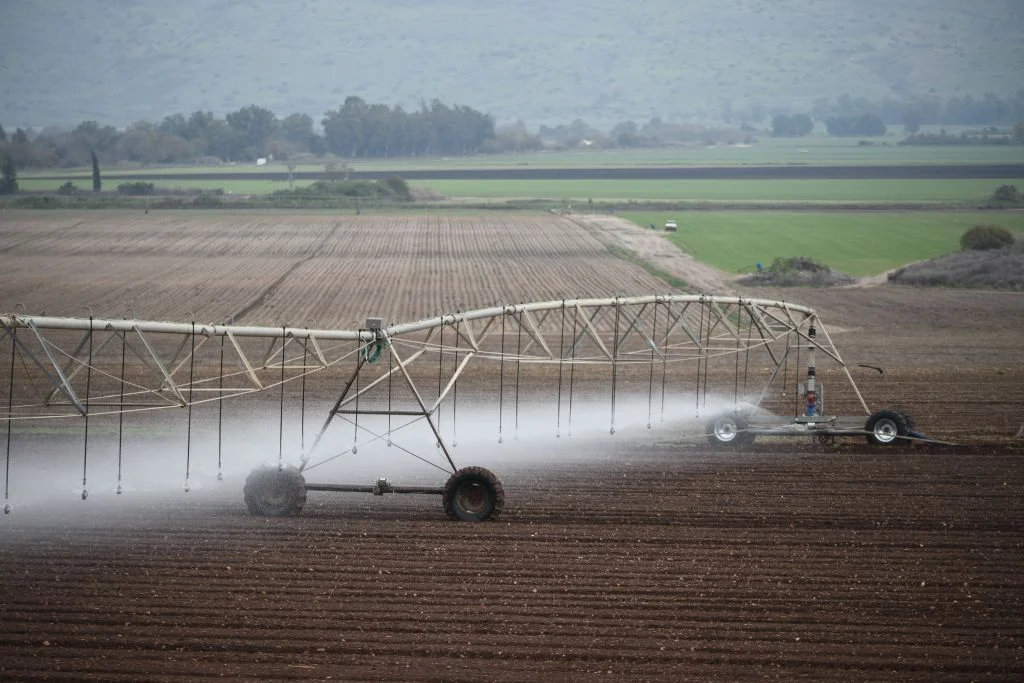
Jerusalem, 16 December, 2025 (TPS-IL) — A new Israeli study suggests that machine-learning models may soon give growers a far more precise way to predict how much water their crops use each day, while also laying the groundwork for earlier detection of plant stress.
The research focused on daily plant transpiration — a process by which water evaporates through the leaves and a key indicator of how much water a plant actually consumes. While transpiration is central to irrigation planning, most existing methods of assessing it rely on indirect information such as weather data or soil moisture, rather than the plant’s own physiological behavior.
Led by Shani Friedman and Nir Averbuch under the supervision of Prof. Menachem Moshelion at the Hebrew University of Jerusalem, the study drew on seven years of continuous, high-resolution measurements from tomato, wheat and barley plants grown in semi-commercial greenhouse conditions. Using a high-precision load-cell lysimeter system, the team recorded subtle changes in plant weight in real time, enabling direct and exceptionally accurate measurement of daily transpiration.
That long-term, plant-level dataset enabled a key innovation: training machine-learning models on how healthy, well-irrigated plants actually behave, rather than on indirect environmental proxies. By feeding the data into models such as Random Forest and XGBoost, the team showed that machine learning can reliably predict daily transpiration from environmental conditions and plant characteristics across multiple crops.
In independent tests, the XGBoost model achieved an R² value of 0.82, closely matching measured transpiration even when applied under different climate conditions and in separate research facilities. According to the researchers, this ability to generalize across crops and environments suggests the models are capturing fundamental physiological signals rather than crop-specific noise.
Two variables emerged as especially influential: plant biomass and daily temperature. “These variables consistently shaped how much water plants consumed,” Friedman said. “Understanding how a healthy, well-irrigated plant is expected to behave on a given day also allows us to detect when something is off.”
That concept represents another novel aspect of the work. Because the model predicts what a healthy plant should be doing, unexpected deviations from the prediction may serve as early warning signs of stress. Such stress could result from drought, salinity, disease, root damage or other environmental pressures, potentially before visible symptoms appear.
“If a plant behaves differently than the model predicts, that deviation can be an indicator of abnormal or unhealthy plant behavior,” Friedman said.
Averbuch, whose research focuses on precision irrigation, said the findings point toward a shift in how data-driven tools could be used in agriculture. “Today, many irrigation decisions still rely on indirect estimates,” he said. “Although this model is not yet field-ready, the findings show how future systems could incorporate physiological predictions to support more accurate irrigation scheduling.”
While the current approach depends on lysimeter data not typically available to growers, the researchers see it as a conceptual step toward plant-driven decision tools that could eventually be adapted to more practical sensors.
The study also performed well when tested on plants grown in a separate research greenhouse at Tel Aviv University, reinforcing the potential for broader applicability across climates and production systems.
In the near term, the study’s approach is most applicable in research and controlled growing environments. By providing a precise physiological baseline for how healthy plants should transpire under given conditions, the model can help researchers benchmark crop water use, validate irrigation algorithms, and improve greenhouse management. Deviations between predicted and measured transpiration may also serve as an early indicator of plant stress in breeding trials or experimental systems, often before visible symptoms appear.
In the longer term, insights from the model point toward more advanced precision agriculture tools for growers supporting better irrigation scheduling and water savings. As similar models are paired with field-ready sensors, they could also form the basis of early warning systems that alert growers to emerging stress caused by drought, salinity, disease, or root damage.
The study was published in the peer-reviewed Plant, Cell & Environment.
Discover a 1,300-year-old Ancient Menorah Pendant unearthed in Jerusalem. This rare find by the Israel Antiquities Authority challenges assumptions about Jewish.
By Pesach Benson • December 15, 2025
Jerusalem, 15 December, 2025 (TPS-IL) — A remarkably rare 1,300-year-old lead pendant bearing a seven-branched menorah has been uncovered in Jerusalem, shedding new light on Jewish presence in the city during a period when imperial authorities officially barred Jews from entering, the Israel Antiquities Authority announced on Monday.
The discovery was made in an archaeological park adjacent to the Temple Mount during large-scale excavations conducted in recent years.
The small, disk-shaped pendant dates to the 6th to early 7th centuries CE, during the Late Byzantine period. Cast almost entirely of lead, it is decorated on both sides with an identical image of a menorah framed within a circular border. Only one other ancient lead pendant bearing the menorah symbol is known worldwide, an object of unknown provenance housed at The Walters Art Museum in Baltimore.
The pendant was discovered by chance inside the rubble of a Late Byzantine structure that had been buried beneath an approximately eight-meter-thick layer of fill. That fill was deposited in the early 8th century as part of extensive construction work connected to the erection of monumental Umayyad buildings in the area.
“One day while I was digging inside an ancient structure, I suddenly saw something different, gray, among the stones,” said Ayayu Belete, a City of David worker who uncovered the artifact. “I picked the object up and saw that it was a pendant with a menorah on it. I immediately showed the find to Esther Rakow-Mellet, the area director, and she said it was an especially rare find. I was deeply moved and excited!”
Archaeologists determined that the pendant was designed to be worn on a necklace, with a loop cast at its top. One side of the object was well preserved, while the other was partially obscured by patina, a natural weathering layer. Each menorah features a central shaft with three arms extending from each side, topped with horizontal bars and stylized flames. An XRF test carried out at the Israel Antiquities Authority’s analytical laboratories found the pendant to be composed of approximately 99% lead.
According to Israel Antiquities Authority researchers Dr. Yuval Baruch, Dr. Filip Vukosavović, Esther Rakow-Mellet, and Dr. Shulamit Terem, the object is exceptional not only for its iconography but also for its material.
“A pendant made of pure lead, decorated with a menorah, is an exceptionally rare find,” they said. “The double appearance of the menorah on each side of the disc indicates the deep significance of this symbol, and the central place of the menorah in the visual expression of connection to the Temple and its memory, even in periods long after the destruction of the Temple.”
The historical context of the discovery raises intriguing questions. During the Byzantine period, Jews were formally prohibited from entering Jerusalem, making the presence of a personal Jewish object in the city difficult to explain. Scholars are left to consider whether the pendant belonged to a merchant, an official visitor, a clandestine pilgrim, or someone who managed to reside in the city despite the ban.
“This is an unusual find,” said Dr. Baruch, who has directed excavations at the site for nearly 25 years. “This pendant, bearing the symbol of the menorah, is not just a material object; it is a personal seal, an emblem of memory and identity, which probably belonged to an anonymous Jew who chose to wear it around his or her neck.”
He added that the choice of lead suggests the pendant may have served as an amulet rather than jewelry, noting that lead was commonly used for amulets in the Byzantine period. “During the Byzantine period, the menorah became a symbol of national memory, and it expressed the expectation of national revival among the Jewish communities in the Land of Israel and the Diaspora,” Baruch said. “Despite prohibitions and difficulties, Jews did not stop coming to Jerusalem.”
Israeli Minister of Heritage Rabbi Amichai Eliyahu said the find reinforces a broader historical narrative. “The exciting find of the menorah pendant joins a series of testimonies that continue to be discovered in Jerusalem, and that tell the story of the continuity and devotion of the Jewish people in the city,” he said.
A menorah is a seven-branched candelabrum that is one of the oldest and most important symbols of Judaism.
In antiquity, a menorah of pure gold stood in the Jewish Temple in Jerusalem and was lit daily by the priests. It took on greater symbolism in the 2nd century BCE after the Maccabee revolt. When they sought to rededicate the Temple, the Maccabees found only one small jar of ritually pure oil — enough for a single day. Miraculously, the menorah remained lit for eight days, enough time to prepare more.
The pendant will be displayed to the public during Chanukah in Jerusalem.
Israeli leaders condemn the vile, deadly Sydney Chanukah attack, expressing solidarity after gunmen opened fire at a Bondi Beach celebration. President Herzog
By Pesach Benson • December 14, 2025
Jerusalem, 14 December, 2025 (TPS-IL) — Israeli leaders strongly condemned a terrorist attack on a Chanukah celebration in Sydney, Australia, on Sunday, which left multiple people dead and wounded at the Bondi Beach event.
According to Australian reports, two gunmen opened fire on a menorah-lighting celebration at Sydney’s popular Bondi Beach, attended by around 2,000 people. Numerous people were killed or injured.
Speaking at a ceremony honoring immigrant contributions to Israel, President Isaac Herzog called the attack “vile” and expressed solidarity with the victims. “At these very moments, our sisters and brothers in Sydney, Australia, have been attacked by vile terrorists in a very cruel attack on Jews who went to light the first candle of Chanukah on Bondi Beach,” Herzog said. “Our hearts go out to them. The heart of the entire nation of Israel misses a beat at this very moment. As we pray for the recovery of the wounded, we pray for them and we pray for those who lost their lives. We send our warmest strength from Jerusalem.”
Herzog also urged the Australian government to act against rising antisemitism, warning of “the enormous wave of antisemitism which is plaguing Australian society.”
Foreign Minister Gideon Sa’ar called the attack “murderous” and linked it to years of antisemitic incitement in Australia. “These are the results of the anti-Semitic rampage in the streets of Australia over the past two years, with the anti-Semitic and inciting calls of ‘Globalise the Intifada’ that were realized today,” Sa’ar tweeted. He added that the Australian government, “which received countless warning signs, must come to its senses.”
Energy Minister Eli Cohen extended condolences and underscored the need to fight antisemitism worldwide. “We stand with the Jewish community in Sydney, Australia, in its difficult times, sending condolences to the murdered and praying for the recovery of the wounded,” Cohen said. “Sadly, antisemitism in the world is raising its head, gaining backing from weak leaders who succumb to terror and collaborate with false campaigns against Israel. We must fight antisemitism with an iron fist and by all means.”
Israel's High Court overturns the government's attempt to remove Attorney General. Gali Baharav-Miara remains in office; the court cites major procedural flaws
By Pesach Benson • December 14, 2025
Jerusalem, 14 December, 2025 (TPS-IL) — Israel’s Supreme Court on Sunday overturned the government’s decision to dismiss Attorney General Gali Baharav-Miara, ruling that she will continue to serve in her position. The decision also criticized the government for procedural flaws and a lack of legal foundation in its attempt to remove the country’s top legal advisor.
“The Attorney General continues to serve in her position lawfully; the dismissal decision is void; and any unilateral action that could change her status, powers, or working methods is inconsistent with this ruling,” the court said. The expanded panel of seven justices stressed that the rule of law applies to all, including state authorities, and highlighted the “great discomfort” caused by the government’s conduct.
The controversy centers on the government’s dismissal of Baharav-Miara in August. According to the Supreme Court, the procedural changes were applied retrospectively and lacked consultation, alternatives, or a proper factual and legal foundation.
“This decision was made in a lightning-fast process, without organized staff work and in sharp deviation from the Shamgar Committee’s recommendations,” the court said, referring to a previous advisory body that had established guidelines to ensure the Attorney General’s independence from political pressure.
Earlier this month, a scheduled hearing to review petitions against Baharav-Miara’s dismissal was abruptly canceled after the government refused to send representatives. Supreme Court President Yitzhak Amit said at the time, “Without government representation, there is no point in holding a hearing in front of an empty court.” Justice Minister Yariv Levin criticized the cancellation, accusing the court of prejudging the matter.
The ruling has sparked immediate political reactions. Communications Minister Shlomo Karai called the decision illegal and urged the government to disregard it, saying, “The authority to dismiss a legal advisor is the government’s sole authority by law. We do not accept the High Court’s blatant intervention in the very core of government authority.” Karai further called for blocking Baharav-Miara from government offices and appointing a replacement.
By contrast, opposition leader Yair Lapid welcomed the Supreme Court’s ruling, stating, “We will continue to fight for the Israeli rule of law.” Leaders of the Protest for Democracy movement accused the government of attempting to undermine judicial independence, saying the ruling “proves once again that any attempt to oust the Attorney General and attack the rule of law will fail.”
The government and Baharav-Miara have been at odds since the governing coalition took power at the end of 2022, with each side accusing the other of overreach. The government claims Baharav-Miara has been “serially thwarting its policies and actions,” while she maintains the government has been “acting unlawfully and advancing unconstitutional legislation.”
The government’s controversial judicial overhaul, which Baharav-Miara opposes, initiative includes changes to the system for appointing and removing judges, giving the Knesset the ability to override certain High Court rulings, changing the way legal advisors are appointed to government ministries, and restricting the ability of judges to apply the legal principle of “reasonableness.” The initiative was frozen with the formation of a unity government following Hamas’s October 7 attack, but the government has resumed its efforts.
Supporters of the legal overhaul say they want to end years of judicial overreach, while opponents describe the proposals as anti-democratic.
Israeli Attorneys General serve a non-renewable six-year term.
Israeli researchers reveal a breakthrough technique that precisely maps toxic protein growth in Alzheimer's disease. This advance offers new paths for studying

By Pesach Benson • December 14, 2025
Jerusalem, 14 December, 2025 (TPS-IL) — Israeli and Dutch researchers have unveiled a new technique that allows scientists to precisely measure toxic protein clumps associated with Alzheimer’s disease — something that has long been out of reach and could open new paths for studying and eventually diagnosing dementia.
The technology, known as FibrilPaint combined with the FibrilRuler test, makes it possible to directly measure the length of Tau amyloid fibrils while they are still suspended in fluid, even at extremely low concentrations. Because the buildup and growth of these fibrils are closely linked to Alzheimer’s disease and related dementias, the ability to quantify their size represents a major advance for the field.
The research was led by Prof. Assaf Friedler of the Institute of Chemistry at Hebrew University of Jerusalem and Prof. Stefan G. D. Rüdiger of Utrecht University, and was published in the peer-reviewed Proceedings of the National Academy of Sciences.
Alzheimer’s disease and several other neurodegenerative disorders are marked by the abnormal accumulation of Tau proteins in the brain. Tau proteins are normal, essential proteins in the brain that help nerve cells maintain their internal structure and function. But problems arise when Tau changes shape and begins to clump abnormally. Over time, these proteins misfold and assemble into elongated amyloid fibrils, structures believed to track with disease progression. Despite their importance, scientists have struggled to measure fibril length directly in solution under realistic biological conditions.
“The length of Tau fibrils is not just a detail — it is a key parameter of the disease process,” Friedler said. “Until now, it has been extremely difficult to measure fibril size directly in solution, especially at the tiny concentrations found in real biological samples.”
Most existing techniques rely on microscopy or bulk biochemical methods that require large amounts of material, remove fibrils from their natural environment, or provide only indirect estimates of size. These limitations have made it difficult to observe how fibrils grow, fragment, or respond to potential drugs and biological pathways.
At the heart of the new approach is FibrilPaint1, a short, 22–amino acid peptide engineered to act as a highly selective fluorescent probe. Unlike conventional dyes, FibrilPaint1 binds tightly to amyloid fibrils while ignoring individual Tau molecules that have not yet aggregated, allowing researchers to distinguish harmful structures from harmless proteins in complex samples.
“We wanted a probe that behaves like a smart key,” Rüdiger said. “It finds amyloid fibrils, including very early ones, and ignores the rest of the crowded biological environment. FibrilPaint1 does exactly that.”
The probe recognizes a broad range of Tau fibrils, including those derived from patients with Alzheimer’s disease, corticobasal degeneration, and frontotemporal dementia. It also binds fibrils formed by other disease-related amyloid proteins, such as Amyloid-β, α-synuclein, and huntingtin, while showing negligible background binding to blood serum, cell lysate, or non-amyloid aggregates.
To transform this selective probe into a quantitative measuring tool, the researchers combined it with a microfluidics technique known as flow-induced dispersion analysis. In the FibrilRuler test, FibrilPaint1 binds to fibrils in solution, and the sample flows through a microscopic capillary. The way the fluorescent signal spreads during flow reveals the effective size of the fibril–probe complex, allowing researchers to calculate fibril length directly.
“This is essentially a molecular ruler that works inside the fluid itself,” Friedler said. “We no longer need to immobilize fibrils on a surface or rely on large amounts of material. We can quantify fibril length directly in solution.”
Using submicroliter sample volumes, the team measured Tau fibrils ranging from as few as four molecular layers to more than 1,100 layers, even at nanomolar concentrations. The researchers said this level of sensitivity and resolution had not previously been achievable for amyloid fibrils in solution.
The new technique has immediate value for basic research into Alzheimer’s disease and related dementias. By allowing scientists to directly measure the length of Tau fibrils in solution, at very low concentrations and in complex biological mixtures, the method makes it possible to closely track how these toxic protein structures form, grow, and break apart over time. Researchers can now study the earliest stages of fibril development, compare fibrils from different diseases or patient samples, and observe how environmental conditions influence fibril behavior, all under conditions that more closely reflect what happens in the body.
Beyond basic research, the approach could also accelerate drug development and inform future diagnostics.
And in the longer term, “if we can directly measure amyloid fibril size in patient material, such as cerebrospinal fluid, we may gain a new type of biomarker for dementia,” Rüdiger said.
Friedler stressed that clinical use would require further development and validation.
One dead, dozens rescued as Storm Byron sweeps across Israel, bringing heavy rain and flash floods. Get urgent updates on the extreme weather impact.

By Pesach Benson • December 11, 2025
Jerusalem, 11 December, 2025 (TPS-IL) — Storm Byron battered Israel for the second consecutive day on Thursday, bringing heavy rain, flash floods, and icy temperatures that claimed at least one life and caused injuries across the country. Authorities warned that the extreme weather could continue into Friday, with the heaviest downpours expected along the central and southern coastal plains.
From Wednesday afternoon through Thursday morning, the northern regions of Haifa, the Carmel, and Zichron Ya’akov recorded some of the highest rainfall totals. Zichron Ya’akov led the national table with 77 millimeters (3 inches), while Ein Carmel saw 73 millimeters (2.9 inches) and Haifa 60 millimeters (2.4 inches). Mount Hermon and surrounding peaks experienced heavy snowfall, though lower elevations remained snow-free.
The storm pushed south overnight, bringing significant rainfall to central Israel, including Gush Dan and the Tel Aviv metropolitan area. By Thursday, rainfall intensified in the Judean Lowlands and along the central and southern coastline, with local totals reaching up to 200 millimeters (nearly 8 inches) in areas such as the Nahal Ma’arot Nature Reserve and Atlit. Flash flood warnings were issued for streams in the Judean Desert, the Dead Sea, and the northern Arava, while authorities flagged the risk of flooding along the coastal plain.
The storm’s first fatality was in the coastal city of Netanya, where a 53-year-old man was found lifeless in an apartment building with signs of severe hypothermia. ZAKA spokesperson Israel Hasid urged the public to check on vulnerable populations during extreme weather. “Do not ignore the elderly. Pick up the phone and make sure they have the necessary equipment to get through the winter safely. Do not be indifferent.”
The man’s body was taken to the National Institute of Forensic Medicine for further investigation.
Storm Byron also caused injuries and disruptions across the country. Two girls, around 10 years old, were lightly hurt when a tree fell on their schoolyard in Rishon Lezion. In central Israel, multiple vehicles were trapped in rising floodwaters in the Judean Lowlands and coastal towns such as Yavne, with emergency crews working to rescue stranded drivers. Social media footage showed cars submerged above the wheels in the streets of Rehovot.
The Israel Meteorological Service had issued a 24-hour “red warning” for significant precipitation along the central and southern coastline and the Shfela, starting Wednesday at 10 p.m., with rainfall estimates of 100–150 millimeters in affected areas. An “orange warning” was also issued for flooding in the Negev and Judean Desert regions. Overnight temperatures in much of central Israel fell below 10°C (50°F).
Due to the weather, the Israel Defense Forces suspended outdoor training and limited routine security operations to essential activities.
Forecasts indicated that rainfall would gradually weaken midday Friday, with clearer skies and slightly warmer temperatures returning for the weekend, though local showers were still expected in northern and central regions on Saturday.
Israeli elementary schools implement a new phone-free policy starting February. Education Minister Kisch bans cell phones to boost student social interaction,
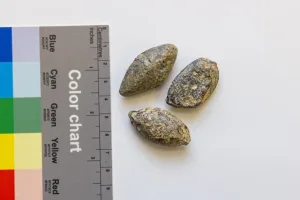
By Pesach Benson • December 11, 2025
Jerusalem, 11 December, 2025 (TPS-IL) — Starting in February, students in Israeli elementary schools will no longer be allowed to use cell phones on school grounds, Education Minister Yoav Kisch announced on Thursday.
“We are allowing children to return and truly meet each other, reduce external distractions, and expand the human and natural connection between students, without screens,” Kisch said. “Creating a school space that enables social and emotional growth for our children is our commitment and responsibility.”
Kisch emphasized that the decision is part of a broader systemic effort “to reduce distractions, strengthen social ties, and ensure optimal conditions for learning.”
Phones will only be permitted in designated classes where controlled use is approved for learning purposes. The ministry plans to support schools through educational programs in classrooms and dialogue with parents, aiming to foster balanced phone use, prevent social media misuse, and limit exposure to inappropriate content. The emphasis, Kisch said, is on cultivating social and emotional skills and encouraging face-to-face interaction among students.
“This is a huge and powerful step,” Kisch said. “Several months ago, the ministry held a broad staff meeting on the use of mobile phones among Israeli children. Excessive use of cell phones creates a feeling of loneliness and depression. Some schools are already doing it, by choice. The noise has returned to the schools, and everyone has stopped being on the screen. At the moment, the move will not be in middle schools and high schools.”
Ina Salzman, Senior Deputy Director and Director of the Ministry’s Pedagogical Administration, stressed the link between phone use and academic outcomes.
“The more cell phones are used by students, the lower the students’ achievements,” she said. “Our emphasis for administrators and education teams is to create social activities and social skills. We will also engage parents to reduce screen time at home. Sixty percent of teenagers are addicted to social networks, and the earlier they start, the harder it is to break the habit.” She noted that many children receive smartphones as early as first grade.
Unlike previous guidelines, which gave principals wide discretion, the new policy applies to all areas of the school, including breaks.
“Today it will be mandatory. There will be positive noise: there will be no use of smartphones in school,” Kisch said. “Parents understand the importance of the move. The policy is no use, but not a ban on bringing cell phones.”
According to ministry Director General Meir Shimoni, the ban’s delay until February is to give people an adjustment period. “We know that it will not happen all at once, it will be a process. But cell phones will be outside of schools,” he said.
Archaeologists confirm first material evidence of Judah Maccabee’s battlefield discovered near Jerusalem. This significant find emerges just ahead of the
By TPS-IL • December 10, 2025
Jerusalem, 10 December, 2025 (TPS-IL) — New archaeological finds in the hills south of Jerusalem may offer the first material evidence from one of Judah Maccabee’s battles, The Press Service of Israel has learned, as the Chanukah holiday approaches.
The eight-day holiday of Chanukah, which begins on Sunday night, marks the successful Hasmonean revolt against the Seleucid King Antiochus IV and the subsequent rededication of the Second Temple some 2,100 years ago.
In an exclusive interview with TPS-IL, Dr. Dvir Raviv of Bar-Ilan University said that a survey at Horbat Bet Zecharia, in the Gush Etzion region south of Jerusalem, has uncovered objects that match both the date and the military profile of the famous battle described in the Book of Maccabees in 163 BCE.
The site, on a hill about seven kilometers southwest of Bethlehem, is widely identified with the ancient village of Bet Zecharia, where the Seleucid army and the forces of Judah Maccabee clashed in what is known as the fifth Maccabean battle.
On Dec. 10, 2025, Dr. Dvir Raviv of Bar-Ilan University holds a sling bullet found at Horbat Bet Bet Zecharia south of Jerusalem, where the Maccabees fought the Greek Seleucid army. Photo by Elad Zagman/TPS-IL
According to First Maccabees and later Jewish historian Josephus, the Seleucid army advanced north along the Jerusalem-Hebron road with war elephants. In the most dramatic scene, Judah’s brother Eleazar ran under the largest elephant, killed it, and was crushed to death beneath its body. The battle ended in a Seleucid victory and a siege of the Temple in Jerusalem.
Raviv’s 2022 survey at the site documented ninety-two coins and hundreds of pottery sherds from the Persian, Hellenistic, and Hasmonean periods. However, what drew his attention were four objects pointing directly to a Hellenistic battlefield — three cast lead sling bullets and a bronze coin minted in the city of Side in Asia Minor, today southern Turkey.
“This is the first time we may be holding objects that came from one of Judah Maccabee’s battlefields,” Raviv told TPS-IL. “At Bet Zecharia, we found a Side coin that is usually linked with Seleucid mercenaries, and three lead sling bullets that only appear in military contexts. Together, they fit very well with the description of the battle in First Maccabees.”
The sling bullets, discovered on the western slope of the hill, are typical Hellenistic ammunition. One carries the winged thunderbolt of Zeus, a common symbol on such projectiles. Across Israel, similar bullets have been found at only about twenty sites, almost all known from historical sources as siege works, forts, or battlefields, including Jerusalem, Dor, Samaria, Maresha, Yodfat, and Mount Gerizim.
“You do not expect to find Seleucid military equipment in a small rural village unless an army actually fought there,” Raviv explained. He noted that the bullets were found in a cluster on the slope facing the ancient Jerusalem-Hebron road, exactly where the Seleucid army is said to have advanced. “The finds sit where the sources place the battle, along the old road below the village. They give us, for the first time, an archaeological echo of the confrontation described in the texts.”
A bronze coin from the Asia Minor city of Side found at Horbat Bet Zekharya south of Jerusalem, where the Maccabees fought the Greek Seleucid army. Foreign mercenaries fighting with the Greeks were paid with such coins. Photo by Shahar Cohen/TPS-IL
The bronze coin from Side strengthens the case.
One side shows the Greek goddess Athena wearing a Corinthian helmet. The other features a pomegranate, which was the symbol of Side. Side served as a recruitment center for mercenaries who fought in Seleucid armies. Although around 120 such coins have been found around Israel, this is the first time that a Side coin has emerged from a location explicitly connected to a documented Hasmonean battlefield, Raviv explained.
“Its presence, alongside the sling bullets, reflects military activity that fits the historical description of the battle,” he told TPS-IL.
Most critical scholars already accept that a battle took place in the Bet Zecharia area, even if they debate the literary shaping of the story. Raviv stressed that the new finds do not settle questions about exact location, numbers, or tactics. Their importance, he says, lies in offering the first independent support for the historicity of the battle itself.
For Raviv, the implications go beyond technical analysis. “It is the first time we have possible archaeological evidence from one of Judah Maccabee’s battlefields,” he said. “This is where history, text and ground finally begin to meet.”
Groundbreaking Israeli-U.S. research challenges assumptions: learning doesn't have to slow down with age. Older adults thrive with active methods, boosting
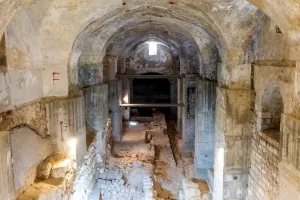
By Pesach Benson • December 9, 2025
Jerusalem, 9 December, 2025 (TPS-IL) — Learning doesn’t have to slow down with age. In fact, new Israeli-U.S. research shows that older adults can thrive when taught the way young people are—through active participation, meaningful discussion, and material that connects to their lives. The findings suggest that seniors can boost memory, maintain emotional well-being, and even gain a renewed sense of purpose by engaging in education that respects their life experience.
The study, published in the peer-reviewed Educational Gerontology, was conducted by Prof. Anat Zohar of the Seymour Fox School of Education at the Hebrew University of Jerusalem and Dr. Yochai Z. Shavit of the Stanford Center on Longevity. It challenges the long-held assumption that aging inevitably limits learning, showing instead that the right teaching methods can help older adults thrive.
“We’re teaching older adults the wrong way,” said Zohar. “The dominant model is still the lecture, but it is built on assumptions that simply don’t hold for older learners. First, it relies heavily on memorization, even though memory is the very ability that tends to decline with age. Second, it doesn’t connect new ideas to the rich knowledge and life experience older adults already have—one of their greatest learning resources. And third, lectures rarely create the meaningful, relevant learning and relationships that drive motivation in later life. Despite the large industry built around them, lectures just don’t work pedagogically. Older adults enjoy attending them, but they don’t retain enough. High-quality, active learning can support cognitive abilities, promote health, and even contribute to longer lives.”
The research emphasizes that older adults learn best when education taps into their motivations, connects new knowledge to previous experience, and allows for active engagement. These principles mirror the methods that help children and young adults learn deeply, suggesting that age does not require a fundamentally different approach—just one that respects and builds on life experience.
The study builds on earlier research by the same team, which examined nineteen highly educated women in the “third age.” That research found that many participants felt they were learning better than at any earlier stage of life. They reported deeper understanding because they could connect new knowledge to decades of accumulated experience, challenging stereotypes about cognitive decline.
Shavit highlighted the psychological benefits of later-life learning. “Older adulthood is a time of real psychological depth,” he said. “When education taps into older adults’ motivations, like the search for meaning, connection, and self-understanding, it becomes not just effective, but deeply rewarding.”
Despite growing evidence supporting active, meaningful learning, many programs for older adults still rely on lecture-based formats. In the United States alone, the broader continuing education sector—which includes adult courses, vocational programs, and professional training—was valued at USD 66.9 billion in 2024 and is projected to reach about USD 96 billion by 2030. Yet a substantial portion of this spending continues to flow into formats that do not align with older adults’ learning needs.
The study suggests that universities, community colleges, and online learning platforms can apply these findings by redesigning courses to incorporate group discussions, hands-on projects, problem-solving exercises, and real-world case studies.
Employers and health programs can also benefit from these insights. Workplace training for older employees can shift from passive instruction to interactive workshops, mentorship, and collaborative problem-solving, boosting skill acquisition and motivation. Similarly, cognitive health initiatives—such as language classes, skill-building workshops, or lifelong learning programs—can help maintain mental sharpness, support emotional well-being, and even contribute to longer, more engaged lives, turning education into both a professional and personal resource for older adults.
“Older adults are not a separate category requiring entirely different rules,” Zohar said. “They are part of the continuous story of human learning, and education should treat them that way.”
Archaeologists uncover one of Jerusalem’s longest Hasmonean-era walls under the Tower of David. This impressive discovery offers rare insight into ancient
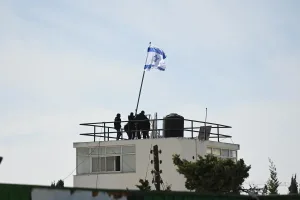
By TPS-IL • December 8, 2025
Jerusalem, 8 December, 2025 (TPS-IL) — Jerusalem’s Tower of David complex has yielded one of the most impressive archaeological discoveries of recent years: an exceptionally well-preserved section of the city wall built during the Hasmonean period in the late second century BCE, the Israel Antiquities Authority announced on Monday. The excavation director told The Press Service of Israel that the newly exposed fortification is among the longest and most intact stretches of ancient defensive architecture ever unearthed in the city, offering rare insight into Jerusalem at the height of Hasmonean rule.
The discovery was made during excavations led by the Israel Antiquities Authority (IAA), when workers clearing the area uncovered a monumental fortification measuring more than forty meters in length and roughly five meters in width, preserved far better than expected for a structure dating to the Second Temple era.
Dr. Amit Re’em, the excavation director, told TPS-IL the newly revealed wall corresponds with what ancient writers, including the first century historian Josephus, described as the First Wall that encircled Jerusalem before its expansion under later rulers. Josephus recorded that the Hasmonean fortifications were formidable, punctuated by dozens of towers and engineered to withstand siege.
“It’s one of the most significant segments of the Hasmonean wall ever found in archaeological excavations in Jerusalem,” Re’em said. “It’s one of the only times we’ve found the full width of this wall. The interesting thing is that it has been demolished in a systematic and surgical manner– not due to gradual decay or a battle, ” he added.
The exposed stones bear the hallmark of the period’s royal construction, with massive blocks dressed in the characteristic chiseled style associated with Hasmonean architecture. Although only the lower portion survives, archaeologists estimate the wall originally stood more than ten meters high. Finds from earlier digs in the area support this interpretation: in the 1980s, excavators uncovered a cache of hundreds of catapult stones, sling bullets and arrowheads at the foot of the wall, physical evidence of the Seleucid siege led by Antiochus VII Sidetes in 134 to 132 BCE.
That siege is a pivotal episode in Jewish history and provides one possible explanation to the wall’s systematic destruction pattern, Re’em said. Ancient accounts describe Antiochus surrounding Jerusalem and bombarding its defenses. According to Josephus, the Hasmonean leader John Hyrcanus I eventually negotiated a truce, which required dismantling parts of the city’s fortifications as a condition for lifting the siege. Re’em told TPS-IL the newly exposed wall segment may be a remnant of that political moment, intentionally brought down rather than left to decay over time.
Another possible explanation, Re’em added, is tied to Herod the Great, who came to power in 37 BCE. Re’em suggests that Herod, eager to mark a dramatic break from the Hasmonean dynasty he replaced, systematically removed their monumental works to reshape Jerusalem in his own image. The deliberate nature of the destruction seen in the current excavation, which is located exactly under the accepted location of Herod’s palace, fits this pattern.
“This is a possible political explanation. Herod wanted to send a message, and systematically demolishing his predecessors’ work is how you send a message in the ancient world,” Re’em told TPS.
The discovery will become a central feature of the Tower of David Museum’s new archaeological wing. Museum officials say visitors will soon be able to stand on a transparent floor above the ancient stones and view them alongside installations by contemporary artists.
Jerusalem’s Tower of David — also known as the Jerusalem Citadel — is one of the city’s most iconic landmarks. Despite its name, it has no connection to King David; the title was mistakenly applied in the Byzantine period and stuck.