











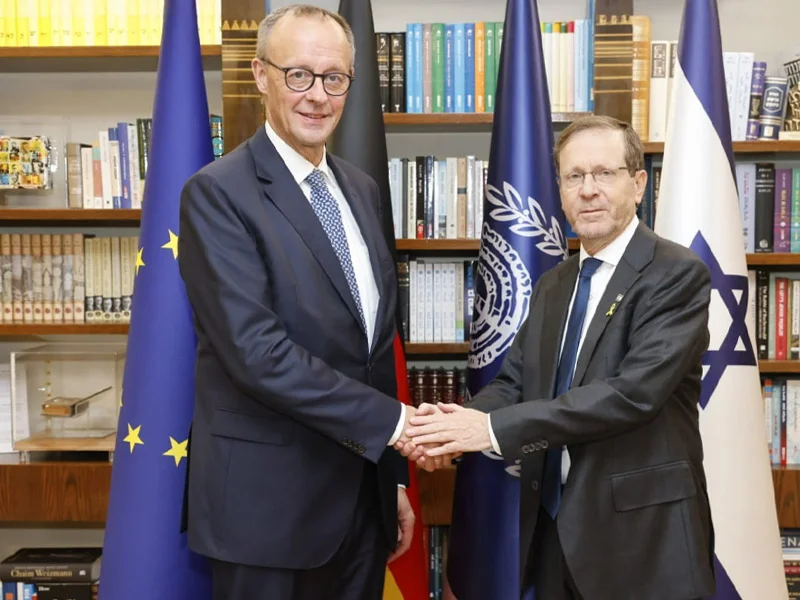
13th meeting of the Israel-Ukraine Joint Economic Commission held in Jerusalem
13th Israel-Ukraine Joint Economic Commission meeting in Jerusalem underscores strong partnership and cooperation potential between the two countries.


13th Israel-Ukraine Joint Economic Commission meeting in Jerusalem underscores strong partnership and cooperation potential between the two countries.
Israel to reopen Rafah Crossing for Gaza residents to exit into Egypt in the coming days, in accordance with ceasefire agreement. Limited reopening as part of
13th Israel-Ukraine Joint Economic Commission meeting in Jerusalem underscores strong partnership and cooperation potential between the two countries.
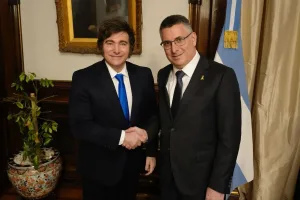
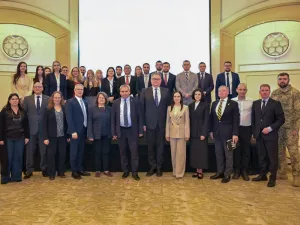
The 13th meeting of the Joint Economic Commission between the Government of Ukraine and the Government of Israel was held on December 4, 2025, in jerusalem, chaired by Ukraine’s Deputy Prime Minister Taras Kachka and Minister Zeev Elkin.
Both sides emphasized the partnership between the countries and the significant potential for cooperation. The Ukrainian delegation included 10 deputy ministers and additional senior officials. As part of the commission’s work, professional discussions were held between Israeli and Ukrainian ministries in a wide range of fields, including trade, agriculture, energy, digital affairs, environment, and health.
Special emphasis was placed on the exchange of information in the fields of resilience and reconstruction—both in terms of physical infrastructure and in the aspect of support and rehabilitation for veterans.
The commission was held in full collaboration with the Ministry of Foreign Affairs, which accompanied the process and contributed to advancing the discussions and deepening intergovernmental ties.
At the conclusion of the meeting, the delegations expressed satisfaction with the commission’s achievements and stressed the importance of continuing the dialogue between the governments.
According to Minister Elkin:
“Resuming the activity of an intergovernmental commission between Israel and Ukraine after a four-year hiatus (due to the wars in Ukraine and the Middle East) is a clear sign of the strength of the ties between the two countries and a return to the path of expanding cooperation between them.
Israel and Ukraine are two Western states facing long and difficult wars.
The cooperation agreement on the exchange of experience and information in the field of reconstruction is a groundbreaking agreement that will help both countries deal with the challenge of rebuilding, on the one hand, and will open the door for Israeli companies to take part in major projects in Ukraine as part of the large-scale reconstruction activity expected to be carried out with international funding once the war ends.”
Jerusalem boy's sudden flu death leads to four life-saving transplants, showcasing the power of organ donation in Israel.
By Pesach Benson • December 4, 2025
Jerusalem, 4 December, 2025 (TPS-IL) — A six-year-old Jerusalem boy who died this week from an exceptionally rare flu complication has saved four lives through organ donation, Israeli hospitals said on Thursday.
Ariel Hakakian, described by doctors as previously healthy and fully vaccinated against the flu, was brought to Shaare Zedek Medical Center in critical condition after developing fever and cough only days earlier. His condition deteriorated with unusual speed.
“He tested positive for the flu, arrived almost dead, and suffered a very rapid deterioration,” Shaare Zedek said in a statement. “He suffered from a complication resulting from the flu. This is a super rare case — the boy was vaccinated.”
Despite prolonged resuscitation and intensive care, Ariel was pronounced dead shortly after arrival. His death marks the second pediatric fatality from flu in Israel this year, following the death of a 10-year-old girl reported several days ago.
At the family’s request, Ariel’s organs were donated, enabling four life-saving transplants at medical centers around the country.
The liver was transplanted into a six-year-old boy at Schneider Children’s Medical Center in Petah Tikvah. A kidney went to a 44-year-old woman at Beilinson Medical Center in Petah Tikvah, and another kidney to a nine-year-old boy at Haifa’s Rambam Medical Center.
Meanwhile, Ariel’s small intestine was transplanted into 36-year-old Daniel Haim Biton at Beilinson — only the third intestinal transplant ever performed in Israel.
Dr. Eviatar Nesher, director of Beilinson’s transplant department, said the seven-hour intestinal procedure required “precise coordination between many teams and high surgical skills.” Biton, who has lived 17 years without a functioning digestive system and has relied on a central venous catheter for nutrition, said he now hopes to “eat like everyone else and become a chef.”
The National Transplant Center said all four transplant recipients are recovering well.
“Ariel — one child, a whole life that continues thanks to him,” the center said.
The Health Ministry warned that this year’s flu season began early and is spreading rapidly, with global monitoring suggesting severe morbidity. While the vaccine does not fully prevent infection, it typically reduces severity and the risk of serious illness or death, the ministry said.
The public is urged to get vaccinated, with free vaccines available for everyone six months and older through the health insurers.
Israel confirms the return of Sudthisak Rinthalak’s remains, victim of Palestinian Islamic Jihad terrorists. Closure for his family and justice served.
By Pesach Benson • December 4, 2025
Jerusalem, 4 December, 2025 (TPS-IL) — Israel’s National Center for Forensic Medicine confirmed on Thursday morning that the body returned by Hamas the previous day was Sudthisak Rinthalak, a Thai agricultural worker, the Israel Defense Forces announced.
Rinthalak, 42, was murdered by Palestinian Islamic Jihad terrorists in the orchards of Kibbutz Be’eri on October 7, 2023, and his body taken to Gaza.
Israel determined his death in May 2024 based on intelligence.
Sudthisak is survived by his parents, Thong Ma and Orn, and his older brother, Thepporn. He was previously divorced, and had no children.
Around 1,200 people were killed, and 252 Israelis and foreigners were taken captive by Hamas during the October 7, 2023, attack on southern Israel. The body of Israeli Police Master Sgt. Ran Gvili is the last remaining in Gaza.
Israel prepares to receive remains of hostage found in Gaza Strip, as Hamas announces transfer. Prime Minister Netanyahu's office confirms.
By Pesach Benson • December 3, 2025
Jerusalem, 3 December, 2025 (TPS-IL) — Israel is preparing to receive from the Red Cross in the coming hours the coffin of a hostage found in the northern Gaza Strip, Prime Minister Benjamin Netanyahu’s office confirmed.
Hamas announced it would transfer the remains at 5:00 P.M.
Around 1,200 people were killed, and 252 Israelis and foreigners were taken captive by Hamas during the October 7, 2023, attack on southern Israel. The bodies of Israeli Police Master Sgt. Ran Gvili and Thai agricultural worker Sudthisak Rinthalak remain in Gaza.
Israel to reopen Rafah Crossing for Gaza residents to exit into Egypt in the coming days, in accordance with ceasefire agreement. Limited reopening as part of
By Pesach Benson • December 3, 2025
Jerusalem, 3 December, 2025 (TPS-IL) — Israel will reopen the Rafah Crossing in the coming days to allow residents of the Gaza Strip to exit into Egypt, the Coordinator of Government Activities in the Territories (COGAT) announced Wednesday.
“In accordance with the ceasefire agreement and the directives of the political echelon, the Rafah Crossing will open exclusively for the exit of residents from the Gaza Strip to Egypt,” COGAT stated. The coordinator emphasized that the departure process will occur in coordination with Egyptian authorities, subject to Israeli security approval, and supervised by a European Union delegation. “This will follow a mechanism similar to the one implemented in January 2025,” the statement added.
The limited reopening is part of the broader 20-point ceasefire plan agreed under U.S. auspices. The plan envisions that the Rafah Crossing could eventually operate in both directions, though that step has not yet been authorized.
Daily quotas for departures will be set in coordination with Egypt in the coming days, marking a cautious but significant step toward implementing the ceasefire agreement while maintaining security oversight.
The Rafah Crossing is the only direct passage between Egypt and Gaza. Since President Abdel Fattah el-Sisi came to power in 2013, Rafah has only opened sporadically. Egyptian trucks delivering goods to the Strip pass through the Kerem Shalom Crossing, which is operated by Israel.
Meanwhile, Hamas announced it will transfer to Israel the body of what it says is a deceased hostage found in the northern Gaza area of Beit Lahiya. The group said the transfer will take place at 5:00 p.m.
Earlier in the day, Prime Minister Benjamin Netanyahu’s office confirmed that testing at the National Center for Forensic Medicine determined that partial remains found in Gaza were not linked to any hostages.
“The effort to bring them home will not stop until the mission is complete and they receive a proper burial in their homeland,” the statement said.
Around 1,200 people were killed, and 252 Israelis and foreigners were taken captive by Hamas during the October 7, 2023, attack on southern Israel. The bodies of Israeli Police Master Sgt. Ran Gvili and Thai agricultural worker Sudthisak Rinthalak remain in Gaza.
Heat-loving microbes with remarkable abilities could revolutionize medicine, according to Israeli scientists. Discover the secrets of these extreme-heat
By Pesach Benson • December 3, 2025
Jerusalem, 3 december, 2025 (TPS-IL) — Some of Earth’s hardiest microorganisms, living in volcanic craters, hot springs, and underwater vents, have evolved a remarkable ability to keep their essential cellular machinery running even in extreme heat that would destroy most life. Now, an international team led by Israel’s Weizmann Institute of Science has uncovered the chemical tricks these heat-loving microbes use in a study that may open a door to more stable vaccines, better cancer treatments, and other medical and industrial technologies.
The study, published in the peer-reviewed Cell, focused on the ribosome, a cellular structure that produces proteins in all organisms.
Ribosomal RNA undergoes chemical modifications after it is produced, but the scope and variability of these changes remained unclear. “Until recently, it was believed that RNA editing was uniform in ribosomes of different individuals and did not vary depending on the environment,” said Prof. Shraga Schwartz of the Institute’s Department of Molecular Genetics. “However, evidence has accumulated in a handful of species that editing can sometimes be dynamic and allow the ribosome structure to adapt.”
Existing methods could detect only one modification at a time. A new approach developed in Schwartz’s lab, led by Dr. Miguel A. Garcia Campos, allows 16 modifications to be examined simultaneously across dozens of RNA samples. The researchers mapped modifications in 10 single-celled species and compared them with four previously studied, deliberately selecting organisms from extreme environments.
The results were striking.
“While most bacteria and archaea have a few dozen modifications in ribosomal RNA, in hyperthermophilic species we found hundreds,” Schwartz said. “The warmer an organism’s natural environment, the more editing modifications it performs.”
The team tested whether a species could re-edit its RNA in response to temperature changes. Species accustomed to moderate conditions showed few changes, while hyperthermophiles displayed dramatic flexibility. Nearly half of their RNA modifications were dynamic, increasing as growth temperatures rose. Ribosome restructuring, they concluded, is central to survival in extreme heat.
Three types of modifications increased with temperature. One — methylation — almost always appeared alongside acetylation. “This raised the hypothesis that the modifications work together,” Schwartz said. Working with Prof. Sebastian Glatt’s group in Krakow, they tested RNA molecules with no modifications, with each separately, and with both combined. “Both methylation and acetylation stabilize RNA, but together the whole is greater than the sum of its parts,” Schwartz said.
To understand structural effects, the team partnered with Prof. Moran Shalev Ben-Ami’s group, which used cryo-electron microscopy to map ribosomes under two conditions — when the methylation enzyme was active and when silenced. Methyl groups at high temperatures formed numerous weak bonds with nearby molecules, strengthening the ribosome and reducing structural gaps.
The discovery may explain the pharmaceutical “magic methyl” — the dramatic increase in drug effectiveness sometimes seen when a methyl group is added. “It is now possible that some RNA editing changes, such as methylation and acetylation, are not isolated, and that we should decipher them as a continuous code,” Schwartz said.
The findings could help medicine and drug development. By revealing how hyperthermophiles chemically modify RNA to remain stable, scientists may design molecules that resist degradation — a major hurdle for RNA-based vaccines, cancer therapies, and gene-editing tools.
Beyond medicine, the study has industrial applications. Insights into ribosomal adaptation could allow engineers to develop microorganisms capable of efficient protein production under harsh conditions, improving biofuel generation and chemical synthesis. Discovering that RNA modifications may function as a coordinated “code” opens the door to custom-designed RNA molecules with predictable properties for diagnostics, biosensors, and therapeutics that are stable in diverse environments.
As RNA-based vaccines, diagnostics, and treatments reshape medicine, Schwartz believes these insights could drive further breakthroughs. “The natural RNA editing process has undergone billions of years of refinement, and unlocking its secrets could enable the development of more reliable and efficient RNA-based technologies,” he said.
Israel and US sign landmark agricultural trade deal to cut prices and boost exports, strengthening ties and lowering food costs.
By Pesach Benson • December 3, 2025
Jerusalem, 3 december, 2025 (TPS-IL) — Israel and the United States signed a new agricultural trade agreement late Tuesday, setting what officials described as a long-term framework to boost competition, lower food prices and reinforce strategic ties between the two allies.
Minister of Economy and Industry Nir Barkat, who signed the agreement alongside U.S. Trade Commissioner Jameson Greer, said the deal reflects both economic necessity and strategic alignment.
“The new agreement is a significant step towards reducing the cost of living in Israel and strengthening strategic ties with the US – our most important economic and political partner,” said Barkat. “We have succeeded in creating a balanced framework that will increase competition, lower prices and give Israeli exports a renewed advantage in the American market. Alongside this, we are investing heavily in Israeli farmers, in order to maintain food security, strengthen settlement and protect the borders.”
The Agreement on Trade in Agricultural Products, or ATAP, replaces a temporary arrangement in place since 2004 and is intended to serve as the foundation for broader trade negotiations expected in the coming months.
Agriculture and Food Security Minister Avi Dichter said the agreement comes at a time when Israel faces growing challenges in global markets. “Increasing quality agricultural exports means higher quality and more available local produce,” he said. “In the anti-Israeli reality in countries that were once friendly and have become hostile, the US is an important anchor for Israeli food security. At the same time, we must identify the opportunities to realize the government’s decision to increase agricultural production by a third in the coming decade.” Dichter added that the agreement ensures “full shelves here, alongside significant support for Blue and White agriculture and food security.”
According to the ministries, the breakthrough came after extensive coordination between Israel’s Foreign Trade Administration and the Ministry of Agriculture’s Center for International Trade and Cooperation, resulting in understandings with the Trump administration on a permanent agricultural framework. Officials said the new pact ensures gradual changes to protect local producers and maintain stability in sensitive markets, especially the dairy sector, by avoiding abrupt tariff shifts that could “destroy agricultural sectors.”
Under the deal, Israel will grant duty exemptions to about 300 American food and agricultural products. Some exemptions will take effect immediately, while others will be phased in over the next decade. The list includes beef, poultry, lamb, dairy products, eggs, oils, juices, and a wide range of fresh and frozen produce. The changes are expected to increase imports, heighten competition and help ease consumer prices.
Negotiations are ongoing to secure expanded American concessions for Israeli exports, which Israeli officials say is key to restoring competitiveness in the U.S. market. About 70% of Israeli goods exports to the United States currently face new tariffs, and Jerusalem hopes to reverse that trend in the next stage of talks.
To help local producers adjust, the government is working on a national support plan built around technological innovation, including artificial intelligence and advanced agricultural tools aimed at improving efficiency and resilience.
The United States remains Israel’s largest trading partner. In 2024, Israel exported $17.3 billion in goods and $16.7 billion in services to the U.S., while importing $9.3 billion in goods and $4.8 billion in services.
The new agreement is scheduled to take effect on January 1, 2026.
Israel breaks barriers with Lebanon as representative dispatched for historic talks on economic cooperation amidst ongoing tensions.

By Pesach Benson • December 3, 2025
Jerusalem, 3 december, 2025 (TPS-IL) — In an unusual announcement, Prime Minister Benjamin Netanyahu instructed the Deputy Head of Israel’s National Security Council to send a representative to a meeting with government officials in Lebanon, his office said Wednesday. The brief statement described the move as “a first attempt to create a basis for a relationship and economic cooperation between Israel and Lebanon.”
The announcement comes one day after Netanyahu met with US President Donald Trump’s envoy for Lebanon affairs, Morgan Ortagus, in Jerusalem.
Under the terms of a year-old ceasefire, the Lebanese government is committed to disarming Hezbollah, but Israeli officials have criticized Beirut’s measures as unsatisfactory. Israel has launched frequent airstrikes on Hezbollah as the Iran-backed terror group tries to rebuild.
Under the terms of the ceasefire that went into effect on November 27, 2024, Hezbollah is required to withdraw its armed forces from southern Lebanon. According to UN Security Council Resolution 1701, which ended the 2006 Second Lebanon War, the group is prohibited from operating south of the Litani River.
Israel and Lebanon do not have diplomatic relations, and Lebanese nationals are prohibited from being in contact with Israelis.
Israel's State Comptroller reveals major failures in protecting critical infrastructure from missile threats, leaving the country vulnerable during moments of
By Pesach Benson • December 2, 2025
Jerusalem, 2 December, 2025 (TPS-IL) — Israel’s State Comptroller on Tuesday accused the country’s defense and national security bodies of failing, for years, to protect some of the state’s most sensitive civilian and strategic facilities from missile, rocket, and UAV threats — even as dangers escalated dramatically during two years of war.
The report, prepared by State Comptroller Matanyahu Englman, reviewed steps taken since a 2020 audit and concluded that despite repeated warnings, two major wars, and tens of thousands of aerial attacks, core deficiencies remain largely unaddressed. The Comptroller regularly reviews Israel’s preparedness and the effectiveness of government policies.
“Not one of the major shortcomings identified in the previous audit was corrected,” the report said, warning that critical infrastructure was left vulnerable at moments of unprecedented escalation.
The audit highlights the scale of the threat Israel has faced since October 7, 2023. From the start of that war until October 2024, more than 26,000 rockets, missiles, attack drones, and explosive UAVs were launched toward Israel. The danger increased further during Israel’s June 2025 operation against Iran, when Tehran fired more than 500 ballistic missiles and nearly 1,000 UAVs.
Israel’s multilayered air defenses intercepted most projectiles, but some struck civilian and military sites. These incidents, the report said, “underscored the urgent need for reinforced physical protection of essential facilities,” a need the Comptroller argues has not been met. Critical infrastructure hit during attacks included Ben-Gurion Airport, the Bazan oil refinery at Haifa’s port, the Weizmann Institute of Science in Rehovot, and Beer-Sheva’s Soroka Hospital.
Englman found that Israeli authorities failed to complete basic preparatory tasks such as mapping which critical facilities require reinforced protection, determining how they should be secured, or drafting a multi-year, budgeted national program. Ministries and agencies debated responsibilities, but no single body assumed ownership. Within the defense establishment, the report stated, “none of the relevant entities view themselves as responsible for the matter, let alone responsible for coordinating it,” resulting in years of inaction.
Internal documents cited in the report show that senior officials in at least one government body repeatedly warned the defense minister in 2019, 2021, and 2022 about rising missile threats and the absence of national planning. These letters, the Comptroller wrote, went unanswered.
Even after war erupted, the Ministry of Defense took only “isolated and limited measures,” failing to initiate or complete the facility-mapping process or present a protection plan to the government. The MoD director-general and multiple defense ministers “did not promote treatment of the issue,” the audit said.
The National Security Council (NSC) was also criticized for failing to raise the matter with the Security Cabinet, despite its legal mandate to do so. For years, the NSC did not propose cabinet discussion of the protection gap, even after the 2020 audit explicitly recommended doing so. Only in late 2023—after an appeal from a senior official in a sensitive body—did the NSC begin limited activity, according to Englman.
A major obstacle remains the absence of a legal or regulatory framework. A comprehensive “Home Front Law,” intended to clarify emergency-preparedness responsibilities and empower the government to mandate protective measures, has been stalled in draft form for fourteen years. A 2011 government decision intended to guide national infrastructure protection was never expanded to cover additional sensitive bodies, leaving a regulatory vacuum.
Budget disagreements also stalled progress. The Defense Ministry argued that fortifying all relevant sites would cost tens of billions of shekels, exceeding available resources, while the Finance Ministry maintained that the defense establishment could absorb the expense. With no agreement on funding, no plan was presented to the cabinet.
Englman concluded that the prolonged failure to act “poses a significant risk to essential national systems,” particularly as hostile actors increasingly employ long-range precision weapons and explosive drones. The Comptroller called on the prime minister, defense minister, and military chief of staff to immediately map critical facilities, establish a budgeted multi-year program, define interagency responsibilities, resolve funding mechanisms, and advance legislative and interim regulatory solutions.
In response to the audit, the Ministry of Defense said the “survival of vital facilities and the preservation of functional continuity are at the core of the ministry’s strategy,” and that detailed work plans have been formulated. It said a joint team of ministry departments, the Israel Defense Forces (IDF), and other agencies has been established to map, prioritize, and define required protection packages.
Additional steps, the ministry said, include adding protective elements to key facilities, improving coordination with the IDF, and upgrading defenses at prioritized sites.
Minister of Agriculture and Food Security, MK Avi Dichter and his Georgian counterpart sign a declaration of intentions for agricultural collaboration between
minister of Agriculture and Food Security, MK Avi Dichter: “I congratulate the fruitful collaboration with Georgia, a true friend of Israel among the nations of the world. This reciprocal visit by the Minister is in continuation with my visit to Georgia, where, together with Ministry officials, I kickstarted the process. Today, we are taking another step in promoting the warm relations between the countries and are bringing extensive Israeli knowledge in research and development to a country in which almost 40% of its population are engaged in agriculture. We are dramatically expanding the partnership between the two countries; and we expect to see this process blossom, literally and figuratively.”
Minister of Agriculture and Food Security, MK Avi Dichter met with the Georgian Minister of Environmental Protection and Agriculture, Mr. David Songulashvili, during his visit to Israel. The ministers discussed the expansion of the collaborations in the field of agriculture between the countries and signed a joint declaration of intentions to promote agricultural collaborations in various fields, including food security, agricultural trade, irrigation and water systems, research and development and innovation. This meeting was held in continuation with the visit of the minister, MK Avi Dichter, this past September, when he met with Minister Songulashsvili and met with other officials to strengthen collaboration with Israeli agricultural companies operating in Georgia.
The joint declaration states that israel and Georgia shall take steps to expand collaboration in diverse fields of agriculture, including food security and agricultural trade between the countries, development of irrigation methods and resource – saving water systems and sharing research and development capabilities. Additionally, the declaration refers to collaboration in the field of veterinary services and animal welfare, with an emphasis on meeting international standards that will enable safe agricultural trade between the two countries.
The signed document also deals with the development of the next generation of agriculture through innovation and technology. The parties agreed to jointly promote precise agriculture, use of digital tools to manage farms and smart farm systems, remote sensory systems, and sharing of technological knowledge. Moreover, in the business and academic fields, an emphasis shall be placed on connections between agricultural companies and startups from both countries and expanding collaboration between research and academic institutions through joint experiments and research exchanges.
In order to implement these agreements, the parties agreed to establish a joint work force to create concrete projects and to follow-up the actual progress of the collaborations.
Georgia is a country located in the Caucasus region of Western Asis, and it borders Russia from the north, Azerbaijan from the east and Armenia and Turkey from the south. In addition, Georgia borders the Caspian and Black Seas and is geographically close to Europe and the Mediterranean Sea. Consequently, Georgia is located in a strategic trade location, and strengthening ties with Georgia can lead to strengthening Israel’s trade relations in general and thereby strengthening Israel’s food security.
Agriculture constitutes a significant aspect of employment in Georgia, where 39.9% of its residents are engaged in agriculture, as of 2023. The value of the export of agricultural products to other countries from Georgia totals $1.68 billion, where its leading export products are wine, mineral water and walnuts.