


















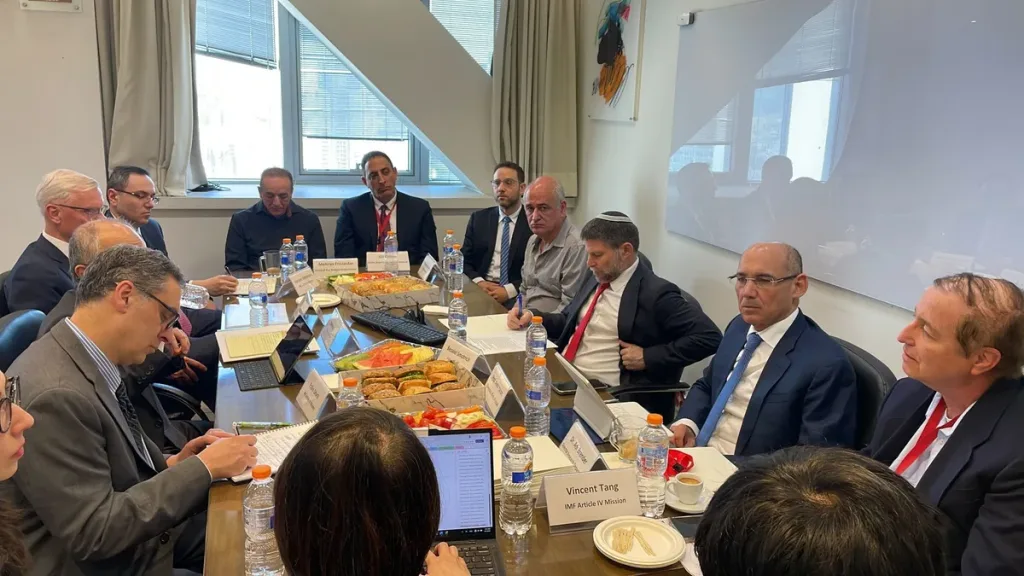
Haredi Enlistment Would Ease Army and Economic Strain, Bank of Israel Says
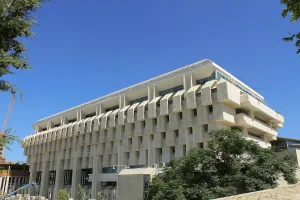
Bank of Israel: Haredi enlistment is crucial to ease army and economic strain. Expanding enlistment saves Israel billions annually, cutting reservist costs. New


Bank of Israel: Haredi enlistment is crucial to ease army and economic strain. Expanding enlistment saves Israel billions annually, cutting reservist costs. New
Israel confronts an early, severe flu surge as the Health Ministry urgently calls for widespread vaccinations. Cases are rising sharply, with serious
Bank of Israel: Haredi enlistment is crucial to ease army and economic strain. Expanding enlistment saves Israel billions annually, cutting reservist costs. New
By Pesach Benson • December 11, 2025
Jerusalem, 11 December, 2025 (TPS-IL) — Increasing Orthodox Jewish (Haredi) enlistment in the Israel Defense Forces could save the economy billions of shekels, the Bank of Israel said on Thursday. A month of reservist service costs about NIS 38,000 ($11,700), while conscripting young Haredim is far cheaper and may even encourage them to join the workforce. Expanding enlistment by 7,500 Haredim annually — adding around 20,000 over time — could cut the economic burden of reservists by NIS 9–14 billion ($2.8-$4.3 billion) a year.
The report warns that the Security Service Law being considered by the Knesset sets low recruitment targets and weak incentives, meaning it may not meet army needs or reduce costs.
State Comptroller warns cyber weaknesses imperil Israeli elections and democracy. Inadequate preparations for foreign interference put the democratic process at
By Pesach Benson • December 9, 2025
Jerusalem, 9 December, 2025 (TPS-IL) — State Comptroller Matanyahu Engelman warned on Tuesday that Israel’s preparations for foreign interference in the 2026 elections are inadequate, putting the integrity of the state’s democratic process at risk.
“We found significant deficiencies in Israel’s preparation for foreign influence on the 2026 elections,” Engelman said at Tel Aviv University’s “Cyber Week” conference. “The government and the Elections Committee must come to their senses and improve their preparedness to prevent foreign influence.”
The Comptroller regularly reviews Israel’s preparedness and the effectiveness of government policies.
Engelman stressed the increasing cyber threats posed by Iran, highlighting recent cases in which Israeli citizens were recruited as agents for espionage. “We must recognize that foreign influences may emerge and affect our democratic process,” he warned. “During an election year, the threat intensifies and may jeopardize the democratic process—creating chaos on election day, undermining public confidence in the election system, influencing voters and distorting election results, eroding citizens’ trust in the vote count and results, deepening social division, and more.”
The Comptroller said his office is currently reviewing the government’s handling of foreign influence in the digital sphere. Engelman said early findings from the review already indicate serious shortcomings. “It can already be said that the findings indicate significant deficiencies,” he noted.
“Government bodies and the Central Elections Committee must act now and improve their readiness to prevent foreign influence on the elections expected to be held in Israel next year,” Engelman insisted.
By law, Israel must hold national elections by October 27, 2026. Approximately 4.2 million Israelis cast ballots in the country’s most recent national election in November 2022, a turnout of 70.3% of eligible voters.
In April, an audit by Engelman’s office found that a computer system used by Israel’s Home Front Command for monitoring and managing emergencies was highly vulnerable to cyberattacks. Hackers penetrating the system could potentially spread misinformation and manipulate emergency alerts, his report warned.
In 2023, a team of hackers overseen by Engelman staged a controlled penetration of one major hospital to test its preparedness. The attack revealed deficiencies in the medical center’s security precautions and responses to the “hack.” According to Engelman, the shortcomings could also be applied to other medical centers.
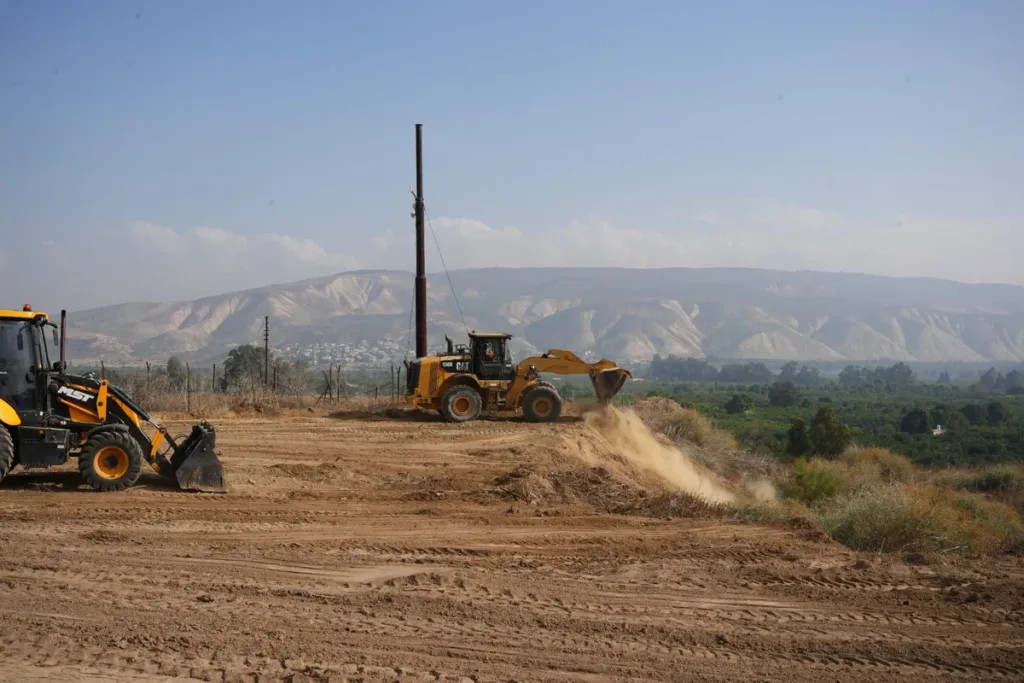
Israel begins construction of a critical security barrier along its Jordanian border. The project aims to halt weapons smuggling and counter Iranian efforts to

By Ehud Amiton/TPS • December 8, 2025
Jerusalem, 8 December, 2025 (TPS-IL) — Work has commenced on the construction of a security barrier along Israel’s border with Jordan, the Defense Ministry announced Monday. The first two sections, totaling approximately 80 km, are being built in the valleys and surrounding areas, with planning for the remaining segments underway.
“Immediately upon taking office, I defined the establishment of the barrier on the eastern border as one of the central tasks for Israel’s security,” said Defense Minister Israel Katz. “The new barrier will strengthen settlement along the border, significantly reduce the smuggling of weapons into the hands of terrorists in Judea and Samaria, and will deal a severe blow to the efforts of Iran and its proxies to establish an eastern front against the State of Israel.”
The first two sections of the barrier, approximately 80 km in total, are being built in the valleys and surrounding terrain, with additional sections already in the planning stages.
The barrier project spans roughly 500 km from the southern Golan Heights to the Samar Sands north of Eilat. The NIS 5.5 billion ($1.7 billion) initiative includes a multi-layered system of fences, radars, cameras, and advanced IT capabilities.
Israel’s border with Jordan, the country’s longest, has seen a surge in weapons smuggling as Iranian operatives attempt to deliver arms to Palestinian terror groups via the Jordan Valley, due to its proximity to Syria and Lebanon.
With approximately 70% of the population of Palestinian descent, many Jordanians strongly support Hamas.
Israel and Costa Rica sign a historic Free Trade Deal, immediately eliminating over 90% of tariffs. This agreement strengthens exports and aims to lower the
By Pesach Benson • December 8, 2025
Jerusalem, 8 December, 2025 (TPS-IL) — Israel and Costa Rica signed a Free Trade Area (FTA) agreement on Monday, marking a significant milestone in economic cooperation between the two countries. The agreement, signed at the Ministry of Economy and Industry in Jerusalem, is expected to strengthen Israeli exports, expand bilateral trade, and contribute to lowering the cost of living in Israel.
“Costa Rica is a natural trade partner for Israel – an OECD country with a deep commitment to free and open trade,” said Minister of Economy and Industry Nir Barkat. “The Free Trade Agreement is expected to strengthen the trend of growth in israeli exports, deepen business collaborations, and help reduce the cost of living in Israel by lowering import prices. The agreement reflects the policy we are leading: opening new markets, diversifying trade destinations, and strengthening the growth engines of the Israeli economy.”
The deal will immediately eliminate over 90% of tariffs, opening the Costa Rican market to Israeli industrial and agricultural products. At the same time, Israel will reduce import costs on a wide range of products from Costa Rica, including tropical fruits, nuts, vegetables, and medical equipment. Officials said these reductions are likely to benefit both producers and consumers in Israel.
Minister of Foreign Trade of Costa Rica Manuel Tovar Rivera also emphasized the potential benefits of the agreement. “This agreement opens significant new avenues for both Costa Rica and Israel. It enhances access to high-quality Costa Rican goods and services while creating a mutually beneficial platform for collaboration in high-technology industries, premium agribusiness, and specialized services. We see this partnership as a catalyst for two-way investment, innovation, and expanded commercial opportunities that will strengthen the economic ties between our nations,” he said.
Under the agreement, Israeli exports to Costa Rica will benefit from zero tariffs on products including fertilizers, agricultural chemicals, plastic sheets, machinery, laboratory equipment, aluminum profiles, printing ink, olive oil, dates, grapefruit, citrus fruits, waffle cookies, and roasted grains. Conversely, Costa Rican exports to Israel, such as asparagus, nuts, mushrooms, cabbage, celery, dried pineapple, tropical fruits, coffee, cocoa, cane sugar, and medical and orthopedic equipment, will see tariffs eliminated or maintained under preferential conditions. Fresh pineapple, Costa Rica’s leading export to Israel, will continue to enjoy a general exemption from customs duties.
The FTA also includes modern trade provisions, such as using a Declaration of Origin instead of a Certificate of Origin, recognition of software as part of production, flexible cumulation rules, and measures adapted to global supply chains. It regulates trade in services for the first time between the two countries, allowing remote service provision, promoting secure digital trade, recognizing electronic signatures, and ensuring equal rights for Israeli suppliers.
Currently, annual Israeli exports to Costa Rica average around $32 million, but officials expect the new agreement to significantly expand trade across multiple sectors. Costa Rica already maintains trade agreements with 18 major trading partners, including the European Union, the United States, China, and South Korea, giving Israel a competitive position in line with these markets. Following the signing, a formal ratification process will begin before the agreement comes into force.
“The signing of the agreement is a significant achievement for Israeli industry. Upon its entry into force, Israeli exporters will enjoy preferential access to a market where customs rates are high – an advantage that strengthens their competitiveness. Israel and Costa Rica complement each other in the fields of agriculture, manufacturing, and technology – a combination that creates real opportunities for expanding trade and deepening cooperation,” said Roy Fisher, Director of the Ministry of Economy and Industry’s Foreign Trade Division.
Israel confronts an early, severe flu surge as the Health Ministry urgently calls for widespread vaccinations. Cases are rising sharply, with serious
By Pesach Benson • December 8, 2025
Jerusalem, 8 December, 2025 (TPS-IL) — Israel is facing an early and severe flu season, prompting the Ministry of Health to urge the entire population to get vaccinated and for those who are sick to stay home. Experts say the number of cases is rising sharply, with serious complications already reported among children and the elderly.
“Based on monitoring of global data, a season with serious infection is to be expected,” the Health Ministry said. “The rise in morbidity is steep, and serious complications in children have already been reported, including three deaths over the past two weeks.”
During a meeting of the Ministry’s Team of Experts for the Treatment of Epidemics (TCM) on Sunday night, which included representatives from hospitals, the community, and academia, officials presented the latest data on influenza trends in Israel and abroad. The discussion highlighted that the season began earlier than usual this year and is already affecting all age groups, particularly children.
The ministry reported that as of the last week of November, 1,165 people had been hospitalized with the flu, and 26 had died within 30 days of laboratory confirmation of infection. Most of the fatalities, 23 in total, were among people aged 65 and older, with 12 aged 85 and above. The recent deaths of two six-year-olds and a 10-year-old girl have drawn particular attention.
The family of Ariel Hakakian, one of the six-year-old children who died, donated his organs to four people in need. Despite being vaccinated, doctors at Jerusalem’s Shaare Zedek Medical Center were unable to save him.
“This year, the flu came a few weeks early while the pace of vaccination has not changed, which means there are more unvaccinated people at a time when the spread of the disease has started to rise,” said Prof. Lital Keinan-Boker, director of the Israel Center for Disease Control. She added that although the increase in cases is significant, “it’s not something we haven’t seen in the past.”
The TCM emphasized that the flu vaccine, while not entirely preventing infection, is highly effective in reducing the severity of the illness and the risk of hospitalization and death. The Ministry of Health confirmed that the vaccine is safe, recommended for everyone aged six months and older, and is available free of charge through health insurance providers.
Doctors at the meeting urged anyone with symptoms to remain at home until fully recovered and stressed that children should not attend schools or daycare while ill to avoid spreading the virus. “It’s critical to protect others, especially the youngest and most vulnerable,” the ministry said.
In recent weeks, at least 30 children have been hospitalized in intensive care units due to complications from the flu, including two infants admitted in critical condition in Jerusalem and another in Haifa requiring advanced life support. Authorities warn that the peak of the season has not yet arrived, and they remain concerned about low vaccination rates, particularly among at-risk groups. Less than half of adults over 65 and fewer than 10 percent of children have been vaccinated so far.
The Ministry of Health said it will continue to explore ways to increase vaccination coverage and monitor the outbreak closely. “Vaccination remains the most effective protection for the public,” the ministry stated, urging all residents to receive the flu shot and take precautions to reduce transmission.
U.S. Ambassador to Israel Mike Huckabee highlights strong partnership at 2025 Heads of Missions Conference, emphasizing shared security and resilience.
(Ministry of Foreign Affairs Press Release)
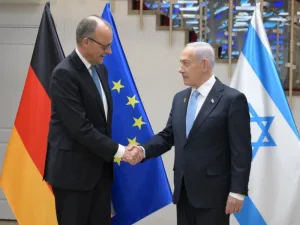
U.S. Ambassador to Israel Mike Huckabee today (Sunday, 7 December 2025) addressed Israel’s ambassadors at the 2025 Heads of Missions Conference.
Ambassador Huckabee emphasized the depth of the partnership between the two countries and Israel’s unique contribution to the security, economy, and resilience of the United States.
He added that every enemy of Israel is an enemy of the United States, and that the Iranian threat is directed at the U.S. as well. On a personal note, he shared that during the past year in Israel, he experienced four wars and ran with all Israelis to shelters, yet stressed: “I’ve been in Washington and in jerusalem – and here I feel safer.”
He mentioned the importance of bringing delegations to Israel, as the delegation he met today of 1,000 pastors from the U.S.—the largest delegation ever organized by the Ministry of Foreign Affairs and Friends of Zion, led by Foreign Minister Gideon Sa’ar.
He thanked the Israeli ambassadors and asked them to convey that the United States stands with Israel and benefits from the partnership through medical innovation that saves many American lives, groundbreaking agricultural capabilities, and significant security contributions.
He concluded by saying that he is proud to serve as the U.S. Ambassador to Israel and that the U.S. stands with Israel unapologetically.
Prime Minister Netanyahu engages in crucial talks with German Chancellor Friedrich Merz, discussing key diplomatic issues. Watch the video for exclusive

Video credit: Omer Miron (GPO)
Costa Rica to open diplomatic-status office in Jerusalem in 2026, boosting trade and innovation cooperation with Israel. #CostaRica #Jerusalem #DiplomaticOffice
By Pesach Benson • December 7, 2025
Jerusalem, 7 December, 2025 (TPS-IL) — Costa Rica will open a diplomatic-status office for trade and investment innovation in Jerusalem in the first quarter of 2026, Israel’s Foreign Minister Gideon Sa’ar announced after meeting Costa Rican Foreign Trade Minister Manuel Tovar on Saturday night. The move comes as Israel and Costa Rica prepare to sign a free trade agreement this week, with Economy Minister Nir Barkat and Minister Tovar set to attend the ceremony.
Sa’ar welcomed the decision, calling the new office an essential tool for deepening cooperation in innovation and technology. He also thanked Costa Rica for adopting the International Holocaust Remembrance Alliance (IHRA)’s definition of antisemitism and praised President Rodrigo Chavez Robles for his support of Israel.
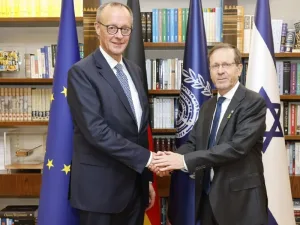
President Herzog welcomes German Chancellor Friedrich Merz to Israel for historic visit, marking 60 years of relations. Important discussions ahead.
(Communicated by the President’s Spokesperson)
President Isaac Herzog today (Saturday, 6 December 2025) welcomed german chancellor Friedrich Merz to Israel this evening on his first visit to Israel as Chancellor of Germany.
Ahead of their meeting, the two made brief statements to the media.
President Isaac Herzog: “Welcome Herr Kanzler. Thank you very much for visiting us. This is your first visit to Israel as the Chancellor of the Federal Republic of Germany, a great friend of Israel. We mark 60 years of relations between Israel and Germany, which bear an incredibly important and moving history and many challenges. We have become very close friends, and for me to see the Arrow 3 missiles being installed in Germany to defend Germany and Europe, Israeli-made products, is something very unique and moving and important.
“You are coming here following the very unique, important, and historic UN Security Council Resolution, which calls for the day after in Gaza and in the region, which was led and crafted by President Trump and his team. It is clear that in order to move to the next stage, we must make sure that Hamas and its capabilities are removed from Gaza and offer a horizon to the region, a new horizon to the region, a new horizon to the people of Gaza and the people of Israel, a new horizon to Israel and its Palestinian neighbors, and Israel and its Arab neighbors. We must work on it together. Germany has a huge role to play, both in Europe and as a very important country in the world, and I’m sure that your meetings will be very productive and successful. As we know, we are facing an empire of evil from Tehran, and that is why the equilibrium in the world is very clear. It’s us defending Europe, and it’s us working very hard to reach the day after in Gaza. So welcome, Mr. Chancellor.”
Chancellor Friedrich Merz: “Thank you very much, Mr. President, for the invitation and the very warm welcome. I come as a friend, and we’ve met on numerous occasions before when we were able to hold discussions, but this is the first time I come in my capacity as Federal Chancellor. I come as a longstanding friend of Israel, and I’m delighted to have this first opportunity to be here in my capacity as Federal Chancellor on the first official visit.
“We couldn’t meet in more challenging and more complicated times, and you know that Germany firmly stands at Israel’s side, especially since the horrific attack perpetrated by Hamas on October 7, 2023. Since then, we were able to deepen and further intensify our friendship, and you know that we will always stand by Israel’s side. We still consider this friendship a miracle. So shortly after the Shoah to be able to establish diplomatic relations and further continue to deepen and foster our friendship is very special and important to us indeed.
“Now, the military actions and the government‘s actions confronted us with a dilemma. We were faced with a dilemma. We had to react to it, but rest assured that we are still on your side. Israel has the right to defend itself and has the right to exist. We stand with Israel in its right to exist, and we support you in your endeavors. We are going to help you as peace and the negotiations enter into a next phase. The war is going to end as soon as Hamas has laid down all its arms, the war will end, and then we will look into the future. We also hope that the situation in the West Bank will continue to evolve in a positive direction so that in the end we will see a two-state solution that we have always advocated for, and the two-state solution is an important factor for good coexistence between Israel and the Palestinians, and the Israeli people, the Palestinian people, and the Arab world, for it to be able to live peacefully in peace and security and in dignity.
“So thank you very much for this opportunity to be here. It’s a pleasure to be here, and I know, as all Federal Chancellors before me, I am fully aware of the responsibility we bear as Germany, as a German Chancellor. It’s an honor and a privilege to be here, and let me assure you that standing with Israel is part of our core DNA and our policies to support and stand with it with Israel. Thank you, and I look forward to our discussion. ”
13th Israel-Ukraine Joint Economic Commission meeting in Jerusalem underscores strong partnership and cooperation potential between the two countries.

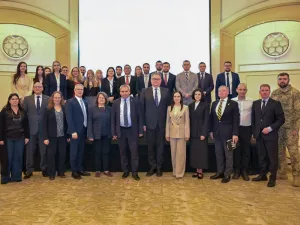
The 13th meeting of the Joint Economic Commission between the Government of Ukraine and the Government of Israel was held on December 4, 2025, in jerusalem, chaired by Ukraine’s Deputy Prime Minister Taras Kachka and Minister Zeev Elkin.
Both sides emphasized the partnership between the countries and the significant potential for cooperation. The Ukrainian delegation included 10 deputy ministers and additional senior officials. As part of the commission’s work, professional discussions were held between Israeli and Ukrainian ministries in a wide range of fields, including trade, agriculture, energy, digital affairs, environment, and health.
Special emphasis was placed on the exchange of information in the fields of resilience and reconstruction—both in terms of physical infrastructure and in the aspect of support and rehabilitation for veterans.
The commission was held in full collaboration with the Ministry of Foreign Affairs, which accompanied the process and contributed to advancing the discussions and deepening intergovernmental ties.
At the conclusion of the meeting, the delegations expressed satisfaction with the commission’s achievements and stressed the importance of continuing the dialogue between the governments.
According to Minister Elkin:
“Resuming the activity of an intergovernmental commission between Israel and Ukraine after a four-year hiatus (due to the wars in Ukraine and the Middle East) is a clear sign of the strength of the ties between the two countries and a return to the path of expanding cooperation between them.
Israel and Ukraine are two Western states facing long and difficult wars.
The cooperation agreement on the exchange of experience and information in the field of reconstruction is a groundbreaking agreement that will help both countries deal with the challenge of rebuilding, on the one hand, and will open the door for Israeli companies to take part in major projects in Ukraine as part of the large-scale reconstruction activity expected to be carried out with international funding once the war ends.”