

















Germany Approves $3.1B Expansion of Arrow 3 Missile Deal with Israel
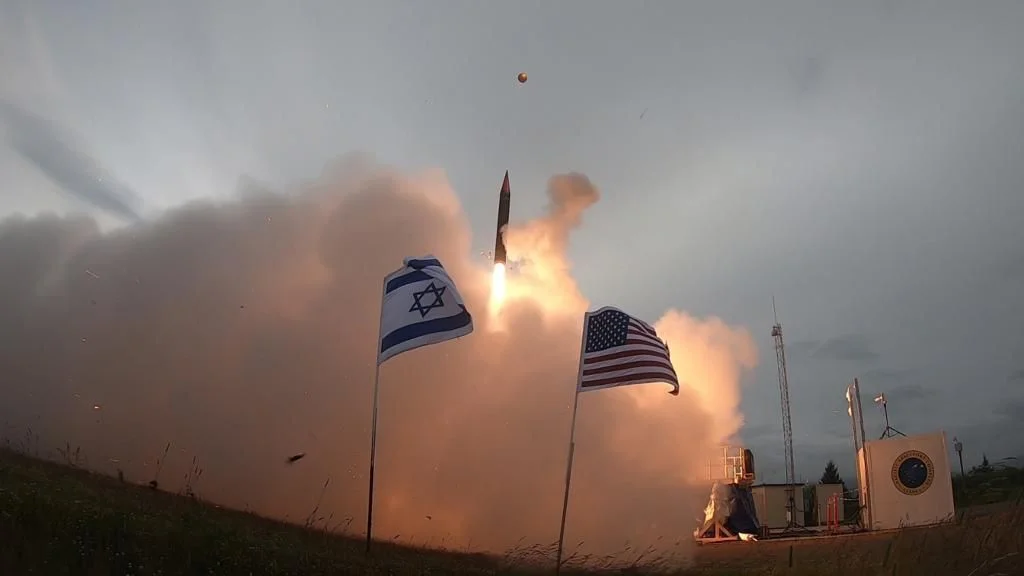
German lawmakers approved a $3.1 billion expansion for the Arrow 3 missile defense system, making this Israel's largest defense export deal, now valued at over.



German lawmakers approved a $3.1 billion expansion for the Arrow 3 missile defense system, making this Israel's largest defense export deal, now valued at over.
One dead, dozens rescued as Storm Byron sweeps across Israel, bringing heavy rain and flash floods. Get urgent updates on the extreme weather impact.

By Pesach Benson • December 11, 2025
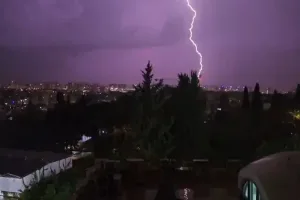
Jerusalem, 11 December, 2025 (TPS-IL) — Storm Byron battered Israel for the second consecutive day on Thursday, bringing heavy rain, flash floods, and icy temperatures that claimed at least one life and caused injuries across the country. Authorities warned that the extreme weather could continue into Friday, with the heaviest downpours expected along the central and southern coastal plains.
From Wednesday afternoon through Thursday morning, the northern regions of Haifa, the Carmel, and Zichron Ya’akov recorded some of the highest rainfall totals. Zichron Ya’akov led the national table with 77 millimeters (3 inches), while Ein Carmel saw 73 millimeters (2.9 inches) and Haifa 60 millimeters (2.4 inches). Mount Hermon and surrounding peaks experienced heavy snowfall, though lower elevations remained snow-free.
The storm pushed south overnight, bringing significant rainfall to central Israel, including Gush Dan and the Tel Aviv metropolitan area. By Thursday, rainfall intensified in the Judean Lowlands and along the central and southern coastline, with local totals reaching up to 200 millimeters (nearly 8 inches) in areas such as the Nahal Ma’arot Nature Reserve and Atlit. Flash flood warnings were issued for streams in the Judean Desert, the Dead Sea, and the northern Arava, while authorities flagged the risk of flooding along the coastal plain.
The storm’s first fatality was in the coastal city of Netanya, where a 53-year-old man was found lifeless in an apartment building with signs of severe hypothermia. ZAKA spokesperson Israel Hasid urged the public to check on vulnerable populations during extreme weather. “Do not ignore the elderly. Pick up the phone and make sure they have the necessary equipment to get through the winter safely. Do not be indifferent.”
The man’s body was taken to the National Institute of Forensic Medicine for further investigation.
Storm Byron also caused injuries and disruptions across the country. Two girls, around 10 years old, were lightly hurt when a tree fell on their schoolyard in Rishon Lezion. In central Israel, multiple vehicles were trapped in rising floodwaters in the Judean Lowlands and coastal towns such as Yavne, with emergency crews working to rescue stranded drivers. Social media footage showed cars submerged above the wheels in the streets of Rehovot.
The Israel Meteorological Service had issued a 24-hour “red warning” for significant precipitation along the central and southern coastline and the Shfela, starting Wednesday at 10 p.m., with rainfall estimates of 100–150 millimeters in affected areas. An “orange warning” was also issued for flooding in the Negev and Judean Desert regions. Overnight temperatures in much of central Israel fell below 10°C (50°F).
Due to the weather, the Israel Defense Forces suspended outdoor training and limited routine security operations to essential activities.
Forecasts indicated that rainfall would gradually weaken midday Friday, with clearer skies and slightly warmer temperatures returning for the weekend, though local showers were still expected in northern and central regions on Saturday.
Israel and Bolivia formally restore diplomatic relations, ending over a decade of estrangement. The move opens new channels for cooperation and appointing
By Pesach Benson • December 10, 2025
Jerusalem, 10 December, 2025 (TPS-IL) — israel and Bolivia formally renewed diplomatic relations, ending more than a decade of estrangement with the signing of a joint declaration in Washington, Israel’s Foreign Ministry announced Wednesday morning. Israeli Foreign Minister Gideon Sa’ar and his Bolivian counterpart, Fernando Aramayo, signed the agreement during a ceremony also attended by Bolivia’s Minister of Finance and Economy, José Gabriel Espinosa.
The declaration commits both countries to restoring full diplomatic ties, reopening channels of cooperation and appointing ambassadors “as soon as possible.”
Bolivia’s left-wing government of Evo Morales broke diplomatic ties with Israel in 2009 during a three-week war in response to Hamas rocket attacks. The new center-right government of President Rodrigo Paz, who took office in november, seeks warmer ties with Israel and the U.S.
Sa’ar said the step marks the close of “a long and unnecessary chapter of estrangement” and emphasized that both sides had agreed on a clear framework for rebuilding relations. “We agreed to restore full diplomatic relations and appoint ambassadors in the near future,” he said. “We exchanged mutual invitations to representatives of the government and the private sector. We will visit each other’s countries to explore new opportunities for cooperation.”
He added that ongoing dialogue between the foreign ministries will address bilateral, regional and multilateral issues, with the aim of strengthening ties across multiple fields. Sa’ar also highlighted the recent cancellation of visa requirements for Israeli tourists to Bolivia, saying he expects “thousands of Israelis will return to visit this beautiful country every year,” helping reinforce what he called a “human bridge between the peoples.”
The foreign minister cast the renewal as part of a broader diplomatic push in Latin America. “Strengthening relations with Latin American countries is a key goal of my foreign policy for 2026,” he said. “Renewing and building relations with Bolivia is a cornerstone of this policy. Today, Israel and Bolivia are opening a new page in their relations.”
Israel braces for Winter Storm Byron, expected to unleash heavy rainfall, strong winds, and widespread flooding. Authorities issue warnings for severe weather.
By Pesach Benson • December 9, 2025
Jerusalem, 9 December, 2025 (TPS-IL) — Israel is bracing for Storm Byron, which is expected to bring heavy rainfall, strong winds, and widespread flooding over the coming days. Some areas could see up to 200 millimeters of rain, particularly along the northern coast and in the lowlands, prompting authorities to issue flood warnings and prepare emergency services for a severe weather event.
The storm follows Byron’s destructive passage through Greece and Cyprus, where it caused property damage, school closures, and travel disruptions, though no casualties were reported.
Rainfall is expected to begin on Israel’s northern coast on Tuesday evening with heavier showers expected along the coastal plain later in the night. On Wednesday, thunderstorms and heavy rain are forecast from the north down to the northern Negev, with flash floods possible in low-lying areas. By afternoon, precipitation will extend to the Negev and Dead Sea regions, increasing the risk of flash floods in desert streams.
The storm is expected to peak Wednesday night and Thursday, with particularly intense rainfall along the coast and in the lowlands, likely causing significant flooding. By late Thursday, flooding is expected to focus on the southern coastal plain, from Rishon Lezion to Ashkelon, while Dead Sea streams remain at high risk. Rain and flooding may continue into Friday, gradually tapering off during the day.
Authorities have urged the public to avoid traveling to flood-prone areas, especially in the Negev and Judean deserts, and to take precautions near rivers and streams. Swimming in the Mediterranean is strongly discouraged due to high waves and severe tidal changes. Emergency services are on high alert, with fire and rescue teams deployed to sensitive areas, observation posts established along waterways, and flood rescue equipment ready. Command and control centers are operating on a 24/7 footing in coordination with local authorities.
Authorities emphasized that main hazards include falling trees, poles, traffic signs, and flooded underground parking, citing past incidents that resulted in injuries or fatalities.
Municipalities are also taking precautions.
Kfar Saba has prepared retention reservoirs, improved water flow routes, and reinforced protective barriers in flood-prone zones. Ashdod canceled a planned market over concerns about underground parking flooding and advised residents to avoid low-lying areas until Friday evening. Tel Aviv-Yafo also canceled its farmers’ and flea markets and implemented emergency measures, including support systems for street dwellers. Officials warned that extreme rainfall could still overwhelm the city’s drainage systems.
Byron is the first named storm of the season for Israel, Greece, and Cyprus under a regional cooperation initiative launched in 2021.
Israel reveals a sharp decline in illegal border crossings from Egypt. New data shows entries have virtually halted, significantly reducing the infiltrator
By Pesach Benson • December 9, 2025
Jerusalem, 9 December, 2025 (TPS-IL) — Israel’s population of illegal border infiltrators has declined to approximately 26,700 people, including children born in the country, as new unauthorized entries have virtually stopped in recent years, according to data released Tuesday by the Central Bureau of Statistics (CBS).
The CBS reported that, as of the end of 2024, the infiltrator population consists of roughly 19,600 individuals who crossed illegally from Egypt, plus about 7,100 children born to them during their time in Israel. The overwhelming majority came from Eritrea and Sudan, with the bureau noting that 82.6 percent arrived from Eritrea and 8.9 percent from Sudan.
The infiltrator population represents just over 10 percent of Israel’s total foreign resident population, which the CBS now estimates at 260,400 people. This marks the first time Israeli authorities have provided comprehensive demographic data on all categories of foreign residents, following a 2019 cooperation agreement between the CBS and the Population and Immigration Authority.
According to the data, illegal border crossings have essentially halted in recent years. The CBS stated that new infiltrator entries have almost completely stopped, though it did not provide specific figures on annual border-crossing attempts or successful entries.
The infiltrator population is heavily concentrated in central Israeli cities, with Tel Aviv-Jaffa hosting the largest number at 39.3 percent of the total. Smaller concentrations live in Petah Tikva (6 percent), Eilat (5 percent), Netanya (4.9 percent), and Bnei Brak (4.9 percent). The population is predominantly male, with men comprising 78.8 percent of infiltrators.
The much larger legal foreign worker population in Israel stood at 156,000 people with valid work permits at the end of 2024, primarily employed in caregiving, construction, and agriculture. An additional 55,200 foreign residents include students, clergy, volunteers, and their family members, most of whom live in Jerusalem.
The CBS also identified approximately 22,500 tourists from developing countries who remained in Israel after their permits expired, down 5 percent from the previous year. These individuals entered on tourist visas valid for three months but stayed beyond the authorized period. The largest numbers came from Russia (19 percent), Ukraine (14.7 percent), and Nigeria (8.8 percent).
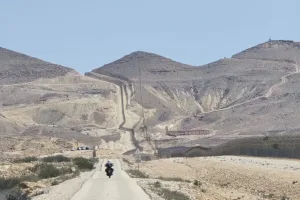
Israeli authorities define infiltrators as foreign nationals who entered the country illegally through the border with Egypt because that’s where the vast majority of African asylum seekers physically entered the country. Egypt’s Sinai Peninsula has been the main transit route for years. The decline in new infiltrations follows the construction of a border fence along Israel’s frontier with Egypt, completed in recent years.
The phenomenon of African asylum seekers illegally entering Israel peaked between 2007-2012 with thousands of people primarily fleeing repressive regimes and conflict in Eritrea and Sudan. Smugglers facilitated the dangerous overland journey, charging thousands of dollars per person. The influx sparked intense domestic debate in Israel over asylum policy, national identity, and the treatment of refugees.
Infiltrators from Lebanon and Syria are regarded as “security threats,” while those from Jordan are typically referred to as “illegal border crossers.”
State Comptroller warns cyber weaknesses imperil Israeli elections and democracy. Inadequate preparations for foreign interference put the democratic process at

By Pesach Benson • December 9, 2025
Jerusalem, 9 December, 2025 (TPS-IL) — State Comptroller Matanyahu Engelman warned on Tuesday that Israel’s preparations for foreign interference in the 2026 elections are inadequate, putting the integrity of the state’s democratic process at risk.
“We found significant deficiencies in Israel’s preparation for foreign influence on the 2026 elections,” Engelman said at Tel Aviv University’s “Cyber Week” conference. “The government and the Elections Committee must come to their senses and improve their preparedness to prevent foreign influence.”
The Comptroller regularly reviews Israel’s preparedness and the effectiveness of government policies.
Engelman stressed the increasing cyber threats posed by Iran, highlighting recent cases in which Israeli citizens were recruited as agents for espionage. “We must recognize that foreign influences may emerge and affect our democratic process,” he warned. “During an election year, the threat intensifies and may jeopardize the democratic process—creating chaos on election day, undermining public confidence in the election system, influencing voters and distorting election results, eroding citizens’ trust in the vote count and results, deepening social division, and more.”
The Comptroller said his office is currently reviewing the government’s handling of foreign influence in the digital sphere. Engelman said early findings from the review already indicate serious shortcomings. “It can already be said that the findings indicate significant deficiencies,” he noted.
“Government bodies and the Central Elections Committee must act now and improve their readiness to prevent foreign influence on the elections expected to be held in Israel next year,” Engelman insisted.
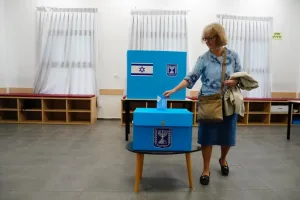
By law, Israel must hold national elections by October 27, 2026. Approximately 4.2 million Israelis cast ballots in the country’s most recent national election in November 2022, a turnout of 70.3% of eligible voters.
In April, an audit by Engelman’s office found that a computer system used by Israel’s Home Front Command for monitoring and managing emergencies was highly vulnerable to cyberattacks. Hackers penetrating the system could potentially spread misinformation and manipulate emergency alerts, his report warned.
In 2023, a team of hackers overseen by Engelman staged a controlled penetration of one major hospital to test its preparedness. The attack revealed deficiencies in the medical center’s security precautions and responses to the “hack.” According to Engelman, the shortcomings could also be applied to other medical centers.