





















By TPS-IL • December 25, 2025
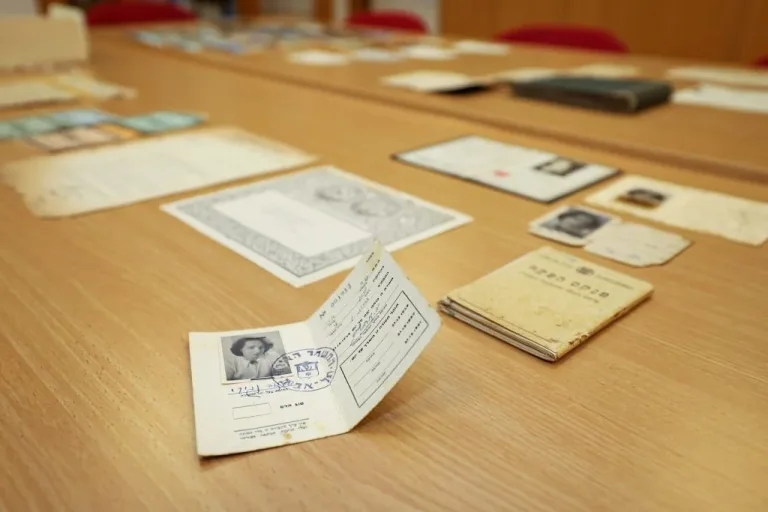
Jerusalem, 25 December, 2025 (TPS-IL) — For decades, some of the most intimate records of German Jewish life before the Holocaust have been preserved quietly in archives in Jerusalem, far from the classrooms where history is first encountered. That is now set to change.
As part of its 70th anniversary, the Leo Baeck Institute in Jerusalem told TPS-IL it has launched Entangled Lives, a new digital platform that will, for the first time, integrate rare archival materials held in Israel into history curricula in schools in both Israel and Germany. Unlike existing educational initiatives that focus primarily on the Holocaust, including those led by Yad Vashem, the project reaches further back in time, offering students direct engagement with original documents and personal life stories.
By exposing high school students to the human texture of German Jewish history beyond the Shoah, as the Holocaust is referred to in Hebrew, the platform aims to deepen historical understanding and contribute to confronting contemporary antisemitism, the institute said.
“Historical learning, understanding historical processes, and how this affects individual lives helps to think in perspective, to learn understanding complexity, to question ‘fake news,’ and to overcome black and white thinking,” Dr. Irene Aue-Ben-David, CEO of the Leo Baeck Institute in Jerusalem, told TPS-IL.
Entangled Lives draws on the institute’s extensive archive of photographs, letters, documents, and personal collections originating in Germany and preserved in Jerusalem. The platform presents life stories of individuals born in Germany whose paths diverged during the upheavals of the 20th century, including migration to Mandatory Palestine and to other parts of the world. Students using the platform will be able to work directly with authentic historical sources, exploring the lived experience behind major historical developments, Aue-Ben-David said.
“This goes far beyond the Shoah. The aim and task is indeed to research this history in a wider sense. In an age of information overload and growing challenges in teaching history, it is profoundly important to connect students with primary sources… in that sense, it might help the fight against antisemitism,” Aue-Ben-David said.
The first two stories featured on the platform focus on sharply different trajectories. One is Aliza Nagidi, a Berlin-born photographer and committed Zionist whose work documented both community life and her own personal journey. The second is Willy Lewison, a young German who enlisted in the German army during World War I, fought on the Eastern Front, and was taken prisoner in Russia.
The project is a joint effort between the Leo Baeck Institute and the German-Israeli Textbook Commission (DISBK). Founded in 2010, the commission examines how Israel and Germany are represented in each other’s textbooks and offers recommendations aimed at improving accuracy, balance, and historical sensitivity. The Leo Baeck Institute, established 70 years ago with centers in Jerusalem, London, and New York, is a leading research institution dedicated to the history and culture of German-speaking Jewry.
Tal Kopel, a history teacher from Jerusalem, told TPS-IL that “the initiative will give us, as history teachers, the ability to connect students to real people rather than to abstract headings like ‘German Jews.’ For a generation that shapes its worldview through visual tools, this is an important step in linking Jewish history to the present.”
Aue-Ben-David said an initial version of the platform is already accessible for teachers, with a full release expected in the coming months.
Related Topics