




















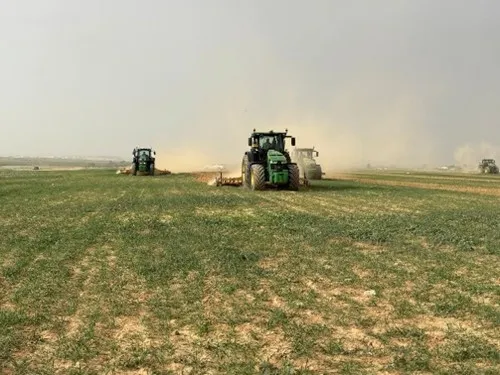
The operation was carried out in accordance with Section 18(b) of the Land Law, following illegal agricultural cultivation defined as a fresh invasion of state lands.
enforcement officials stated that the cultivation carried out at the site was done by trespassing on the land, in an attempt to establish facts on the ground. As part of the operation, the land was returned to state custody, with the aim of preventing continued illegal takeover and ensuring regulated future use of the area.
The enforcement area is of strategic importance as part of the “Kidmat Negev” (Negev Advance) region, designated for future development and strengthening economic and infrastructural growth in the region. According to professional sources, this is an area with significant potential for promoting industrial zones and development, which is expected to contribute to strengthening settlement and creating new growth engines in the South.
The Authority emphasized that enforcement activities will continue in the future, with the aim of preserving state lands, enabling long-term planning, and promoting regulated development in accordance with government policy.
Shira Tam, Director of the Land Preservation Division at the Israel Land Authority: “The determined operation we carried out today in Nevatim is a central pillar in our uncompromising war for the land reserves of the State of Israel. The evacuation of 6,000 dunams is not only an enforcement action against a fresh invasion, but a strategic step intended to ensure that the ‘Kidmat Negev’ areas remain available for the benefit of developing industrial zones, national infrastructure, and economic growth for the welfare of the entire public. The Land Preservation Division will continue to act wherever attempts are made to establish facts on the ground contrary to the law, in order to ensure that the national land resource is managed responsibly and with a forward-looking perspective.”
Related Topics