






















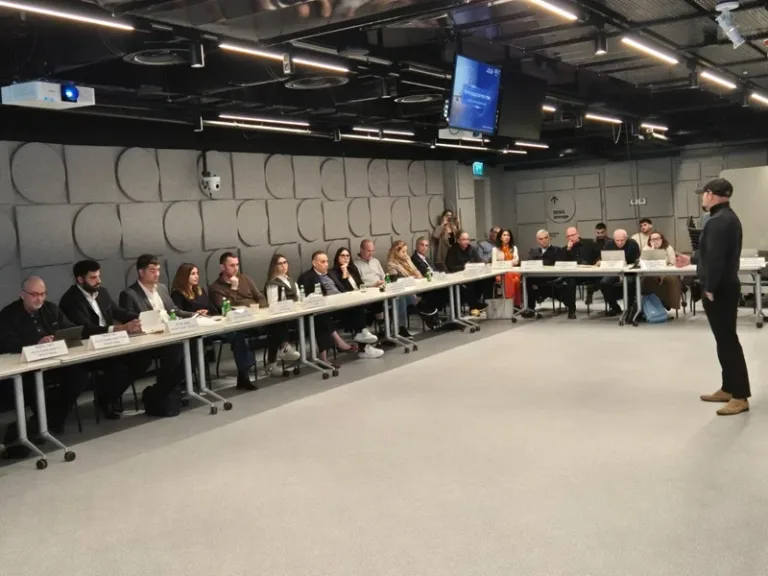
The meeting, which dealt with the topic “artificial intelligence as a Growth Engine for Israeli Tourism,” was intended to generate brainstorming that would lead to finding ways to leverage Technology and artificial intelligence to restore tourism to Israel and integrate them into the management of tourism businesses. CEOs and senior figures in the tourism industry and the fields of artificial intelligence were present at the meeting. During the meeting, the Director General of the Ministry, Michael Itzhakov, presented the steps the Ministry is currently promoting in the field: establishing a dedicated innovation community that will bring together leading players from the private sector, academia, and Technology; formulating a national policy document for AI uses in tourism, and accelerating the use of technological tools within the Ministry’s service array. Additionally, the “Talking Tourism” project was presented, which will allow tourists to scan a barcode at key sites and watch AI-based videos that tell about the place.
Director General of the Ministry of Tourism, Michael Itzhakov: “Investment in the use of smart tourism and artificial intelligence is expected to reach $40 billion within a decade. This is our time to implement these technologies and lead them. The Ministry of Tourism, as an economic ministry, sees smart tourism as a tool for streamlining processes, and the meeting will help us learn about the needs, opportunities, and challenges facing us as a ministry and facing the State of Israel as a tourist destination.”
Hadassah Getstein, AI and Innovation Promoter at the Ministry of Tourism: The State of Israel ranks 7th globally in AI leadership and 2nd relative to its population size. Given this, it is only natural that the tourism sector in Israel will also lead the artificial intelligence revolution for the benefit of the industry. The meeting is the starting point for extensive activity to promote the field.
Under the guidance of Minister Haim Katz, the Ministry of Tourism is leading a historic turning point in the perception of the Ministry’s role as an economic ministry, viewing AI as a strategic growth engine and not just another technological tool. The Ministry aims to establish a platform that will connect technological entrepreneurs and startups with tourism companies interested in technological solutions, within the framework of an innovation community being promoted these days.
Global trends in tourism were presented at the meeting, including, among others, the shift from destination-based tourism to experience-based tourism. Travelers today choose a destination they want to feel and experience, not just by the name of the place. Festivals, sporting events, retreats, etc., are examples of events that are not dependent on location but on content. This trend works in favor of Israel, especially with audiences for whom “Israel” may evoke negative sentiments. The implication for us is clear – we must focus marketing on the experiences Israel has to offer, not just on the destination itself.
The Ministry of Tourism sees innovation and the use of artificial intelligence as significant growth engines for the industry’s recovery, for improving the tourist experience, for strengthening local tourism businesses, and for consolidating Israel’s position as a relevant, intriguing, and leading destination on the international stage.
Related Topics