
By Edy Cohen • April 19, 2026
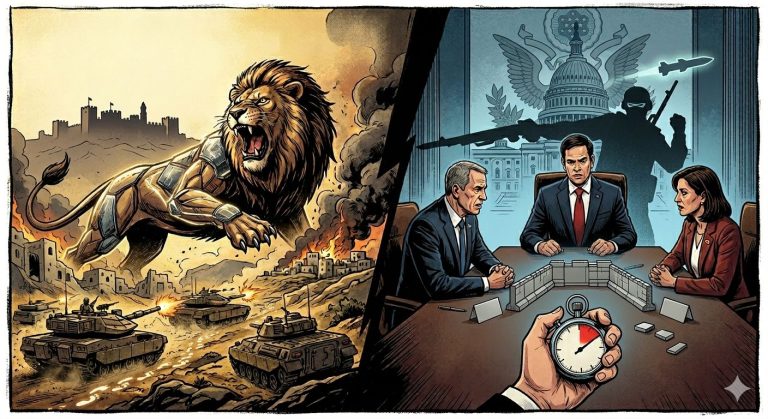
Operation “Lion’s Roar,” which began on March 2, 2026, and ended (at least temporarily) with a ceasefire on April 16, 2026, is another chapter in the ongoing war between Israel and the terrorist organization Hezbollah – but this time in a broader regional context, including the Iran War of 2026. The current agreement (for 10 days) reached in April 2026, under American mediation, is intended to enable the first direct negotiations in decades between Israel and Lebanon – but it is fragile, full of reservations, and reflects the complex interests of all parties.
From the War of Support for Gaza to the War of Support for Iran
About two and a half years ago, fighting broke out on the northern front on October 8, 2023, a day after the October 7 massacre (“Swords of Iron”), when Hezbollah joined as part of the “support front” for Hamas and Gaza. It escalated and continued for a long time and even included a ground incursion into southern Lebanon. The ceasefire agreement reached in November 2024 (based on UN Security Council Resolution 1701) led to a temporary ceasefire, a gradual withdrawal of the IDF (which was not fully completed), and a partial deployment of the Lebanese army in several areas in southern Lebanon, along with a commitment to disarm Hezbollah and withdraw it up to the Litani. However, Hezbollah did not disarm nor withdraw north of the Litani as stipulated in the agreement. As if that were not enough for Hezbollah after it lost thousands of its fighters and caused the destruction of almost all of southern Lebanon, it recently reopened war against Israel, this time as revenge for the death of Iran’s Supreme Leader Ali Khamenei, who was assassinated by Israel in an airstrike. This is another war of support, and this time a war of support for Iran.
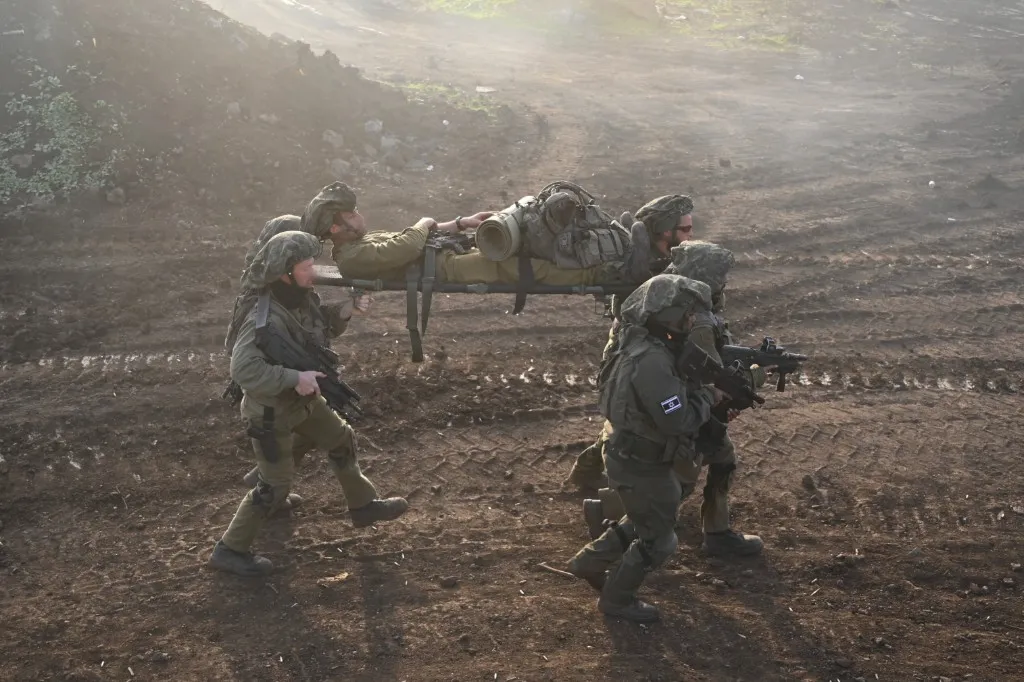
In fact, at the end of February 2026, the Iran War broke out: the United States and Israel attacked Iranian targets, including the aforementioned assassination of Supreme Leader Khamenei. Hezbollah, as an Iranian proxy that was established, funded, armed, and supported by Iran, entered the arena on March 2, 2026, and fired 6 rockets and drones toward Israel – the first time since November 2024, as revenge for the assassination. Israel responded with a large-scale aerial operation, strikes in Beirut, the Bekaa Valley, and the south, as well as a ground invasion into southern Lebanon (up to Bint Jbeil). Israel’s objectives: creating a “security zone” (buffer zone), destroying Hezbollah infrastructure, and defeating its military capabilities. Hezbollah did not hide its motives and claimed that the action was “defense of Lebanon” and revenge for the assassination of Khamenei and a response to violations carried out by Israel during the long ceasefire.
The Iranian Demand for a Ceasefire
The ceasefire achieved in Lebanon originated from pressure exerted by the Iranians on U.S. President Donald Trump. Iran is well aware of the damage Hezbollah caused to Lebanon and acted quickly to save it, and therefore linked the negotiations it is conducting with Trump on the nuclear issue and the Strait of Hormuz to the ceasefire in Lebanon, and indeed Trump yielded to this demand. In fact, a ceasefire was again declared, and this time a temporary cessation of hostilities that came into effect on April 16, 2026, at 17:00 (U.S. time), for an initial 10 days – as a gesture of goodwill. It was announced by the U.S. President after the first direct talks in decades between Israeli and Lebanese representatives in Washington (April 14). The agreement includes:
A mutual cessation of military actions.
Commitment to direct talks on a permanent security arrangement, sovereignty, and borders.
Preservation of Israel’s right to self-defense.
Possibility of extension if negotiations progress.
The new Lebanese government (headed by President Joseph Aoun and Prime Minister Nawaf Salam) – which was formed after elections and committed to strengthening sovereignty and limiting weapons to the state – found itself between a rock and a hard place: internal pressure from Hezbollah on one hand, and international pressure for a settlement on the other. It is important to note that already in early March, a few weeks after the war, the Lebanese expressed willingness to conduct direct negotiations with Israel, which was not answered until later.
Diplomacy Instead of Cannons
The direct negotiations between Israel and Lebanon took place for the first time in more than 40 years (since the failure of the May 17, 1983 agreement). The talks were held in the United States and opened against the backdrop of the Lebanon War of 2026, and were the result of heavy American pressure from the Trump administration, which saw them as a way to achieve a ceasefire and promote a broader security arrangement in the Gulf. On the Israeli side, Yechiel (Michael) Leiter – Israel’s Ambassador to the United States – participated and led the Israeli delegation in the meeting in Washington. On the Lebanese side, Nada Hamadeh Moawad – Lebanon’s Ambassador to the United States – participated and led the Lebanese delegation. The talks were conducted under the mediation of Marco Rubio – the U.S. Secretary of State, who hosted the meeting in Washington.
The main points discussed in the talks:
Disarming Hezbollah: the central and most difficult Israeli demand. Israel demands the complete dismantling of Hezbollah’s military force south of the Litani, including the destruction of long-range missiles and weapons depots.
Marking land borders and regulating the border, including 13 disputed points, mainly in the Mount Dov and Rosh HaNikra areas.
IDF withdrawal from southern Lebanon – Israel is willing to withdraw gradually only in exchange for full deployment of the Lebanese army and a “security zone” (buffer zone) that will remain under temporary international/American supervision.
Return of displaced persons: the return of about one million Lebanese displaced from southern Lebanon who fled at the beginning of the war to Beirut and northern Lebanon.
Deployment of the Lebanese army and strengthening sovereignty: Lebanon commits to deploy 15,000–20,000 soldiers in the south and prevent any Hezbollah presence in the area.
Establishment of a comprehensive peace agreement – a more ambitious topic, including full diplomatic relations and ending the state of war (similar to the Abraham Accords).
The Motivations of the Parties
There is no doubt that Israel agreed to the temporary ceasefire and to enter direct negotiations with Lebanon as a result of American pressure exerted by President Trump. The desire in Israel, especially among residents of the north, is to put an end to the cycles with Hezbollah and destroy it once and for all, including advancing to the Litani River in order to prevent it from carrying out anti-tank fire on northern communities.
As for Lebanon, the Lebanese were the first to request direct negotiations. Their goal is clear: to achieve a ceasefire that will put an end to Israel’s bombardments. Images of the destruction of buildings in Beirut and Israeli threats to strike strategic facilities did their part.
Hezbollah wanted the ceasefire like air to breathe. Beaten again and weakened, while dozens of its fighters were surrounded in Bint Jbeil, the ceasefire came at the right time for it. However, publicly Hezbollah’s position is different. Hezbollah officially strongly opposes the direct talks and does not see them as legitimate: Naim Qassem (Hezbollah’s Secretary-General) called the negotiations a “shameful surrender” and a “free gift to Israel.” He called on the Lebanese government to cancel the talks immediately and warned they would “deepen the Lebanese division.” The terrorist organization claims the ceasefire is its “victory” (thanks to the “resistance”) and not because of the negotiations. Hezbollah announced it would not respect any agreement that does not include a full and immediate withdrawal of the IDF and “complete calm” on the border. In practice, the organization continued limited attacks even during the first days of the ceasefire and threatened that it is “ready to return to war at any moment.”
Returning to the negotiations, they are indeed considered historic, although not the first in history. Next, we will present the direct negotiations that took place in the past and the agreement that resulted from them. It is appropriate to note the similarities and differences between the two negotiations.
Direct Negotiations in 1983
Direct negotiations between Lebanon and Israel are not new. In the past, there were series of meetings between the two sides, and even a historic agreement was reached called the May 17 Agreement, as it was signed on that day. In fact, the previous negotiations between Israel and Lebanon began on December 28, 1982, with the participation and mediation of the Americans. From the outset, there were disagreements on many issues: Lebanon insisted that the negotiations be military in nature rather than political, while Israel wanted them to be political. Israel wanted the negotiations to be held in Jerusalem at the level of foreign ministers, while Lebanon requested that they be conducted at the level of military commanders. Lebanon requested that the future agreement be based on the ceasefire agreement between Lebanon and Israel signed on March 23, 1949, while Israel demanded its cancellation and the establishment of diplomatic relations between the states, that is, a peace agreement as signed with Egypt in 1979.
The American administration sent two envoys to the Middle East to monitor and assist the negotiations: mediator Philip Habib and his assistant Morris Draper. With their help, a compromise was reached whereby the negotiations would be held simultaneously in Khaldeh (in one of the hotels in the southern suburbs of Beirut) and in Kiryat Shmona, with the participation of senior officials from the foreign, defense, and military establishments. The Lebanese delegation, headed by Ambassador Antoine Fattal – a world-renowned Lebanese expert in international law – included Judge Antoine Baroud, Ambassador Ibrahim Khoury, General Abbas Hamdan, Lieutenant Colonel Said Kaakour, and Lieutenant Colonel Munir Rahim. David Kimche, a former senior Mossad official and Director-General of the Foreign Ministry at the time, headed the Israeli delegation, which included Eliakim Rubinstein, Ambassador Shmuel Divon, Avraham Tamir, and additional military commanders. Morris Draper headed the American delegation, which included Christopher Ross and other assistants.
The main issues discussed in the negotiations were ending the state of war between the two sides, establishing security arrangements, bilateral relations, and mutual guarantees.
“The May 17, 1983 Agreement”
Dozens of negotiation rounds took place between the two sides, but the 34th round marked the end of a difficult and complex negotiation process that lasted about six months. The negotiations between Lebanon and Israel ultimately led to the signing of an agreement between the two states. On May 17, 1983, representatives of the three parties – the United States, Israel, and Lebanon – met in a festive atmosphere in Khaldeh, and later in Kiryat Shmona, to sign the document, which was intended to bring security and the appearance of normalization of relations between Lebanon and Israel, and ultimately to lead, within three months, to Israel’s withdrawal from Lebanon.
The new agreement, titled “Agreement between the Government of Israel and the Government of the Lebanese Republic,” was approved by Lebanese institutions. In fact, on May 13 the final meeting within the framework of the negotiations was held; on May 14 the Lebanese government was secretly updated on the content of the agreement; and on May 16 the agreement was brought before the Lebanese parliament and ratified by a majority of 80 members of parliament. Approval of the agreement without difficulty was made possible thanks to the exceptional cooperation between the Speaker of the Lebanese Parliament Kamel al-Assad and President Amin Gemayel. Al-Assad, a Shiite Muslim, faced harsh criticism for this cooperation, which undoubtedly aroused the anger of Syria and Islamic elements in Beirut. The entire Christian camp, which included among others Pierre Gemayel, Camille Chamoun, Etienne Saqr, Fadi Frem, and many others, supported and welcomed the agreement. The newspaper Al-Amal of the Phalanges welcomed the “historic” agreement, as it called it, and sharply criticized Arab states that did not do enough to assist Lebanon.
In addition to Lebanon’s approval, the agreement was also approved by the Israeli Knesset by a large majority. The agreement with Israel was in essence more of a security agreement and less of a full peace agreement, thus constituting a compromise and allowing a delicate balance between the aspirations and constraints of both sides. The political content of the agreement reflected a significant change in the nature of relations between Israel and Lebanon, even though the relationship was not officially described as “peace,” and the word “recognition” was not included, but the state of war between Israel and Lebanon ended. The agreement included the following components: commitment to respect sovereignty, independence, and borders; a joint declaration ending the state of war; a commitment to prohibit and prevent terrorism and incitement; and a series of arrangements toward normalization of civil, cultural, and economic relations between the two states. The agreement established security arrangements in southern Lebanon in the area south of the Awali River, defined as a “security zone,” and it was agreed that special efforts would be made there to prevent terrorism by two brigades of the Lebanese army: a “territorial brigade” operating from the international border to the Zahrani River, incorporating the forces of Major Haddad, and a regular brigade deployed from the Zahrani River to the Litani River. These security arrangements were intended to enable the withdrawal of the IDF from Lebanon along with the departure of all other foreign forces – Syria and the “armed elements” of the PLO.
The main “weak point” of the agreement was that it did not take into account Syrian interests, Syria’s position of power in the Lebanese arena, and its strong influence over the regime of Amin Gemayel. This “weak point” underlay Amin Gemayel’s submission to heavy Syrian pressure, and in practice he ultimately refused to ratify the agreement. In addition, the Lebanese government unilaterally announced on March 5, 1984, the cancellation of the agreement, only ten months after it was signed. The IDF found itself “stuck” in Lebanon, subject to increasing terrorist pressure encouraged by Syria, and without a political agreement to accompany the end of the war.
Summary and Conclusions
Lebanon since 1975 has been subject to dictates of foreign actors on its soil. First by Arafat and Palestinian factions, then by Syria which occupied most of Lebanon, and in recent decades Lebanon has been controlled by Hezbollah, which receives its orders from Iran. Thus, it is unclear whether the Lebanese today can make fateful decisions such as disarming Hezbollah or signing an agreement with Israel, even a security agreement, not to mention normalization and peace in the style of the Abraham Accords.
If we listen to the Israeli side, we all heard the Prime Minister’s speech announcing the opening of negotiations and even speaking about a peace agreement and the Abraham Accords. On the Lebanese side, including the speech of the Lebanese President on April 17, there was talk of a ceasefire agreement and an Israeli withdrawal. Here lie the differences in approach between the two sides.
In any case, the ceasefire agreement imposed on Israel by Trump is an “entry point” for direct talks between Israel and Lebanon. The Iranians tied the fate of their proxy to their own fate in the war with the United States. The agreement is fragile, and for now there is no talk of withdrawal. Israel continues to hold positions in southern Lebanon; at the same time Hezbollah has not disarmed or surrendered, and it is assessed that it will once again obtain weapons and missiles and strengthen during the ceasefire as it has recently done. Internal tension in Lebanon (between Hezbollah supporters and its opponents) may erupt. The fate of hundreds of thousands of displaced persons has not yet been decided. Some have begun to return to the south despite IDF warnings not to do so.
If the negotiations succeed – this could lead to a historic arrangement between Israel and Lebanon. If not – renewed escalation is likely, and Israel will reach the Litani River. The latest Lebanon war again emphasizes: the threat from Hezbollah does not disappear with a ceasefire alone, but requires determined security enforcement, namely the real disarmament of Hezbollah, international support, and genuine Lebanese sovereignty. For now, the lull gives a small hope, but reality on the ground will dictate the way forward.