

















In the heart of jerusalem, the city where every stone tells a story thousands of years old, an extraordinary meeting took place this week that seemed to be taken from the pages of both history and the future. In the reality of 2026, where land scarcity meets the Jewish tradition of preserving Halachic tradition for generations, the leaders of “those involved in kindness” – those who work in the shadows while we all sleep – gathered for a stormy and fascinating study day that dealt with one question: What will the world of burial look like in the new era?
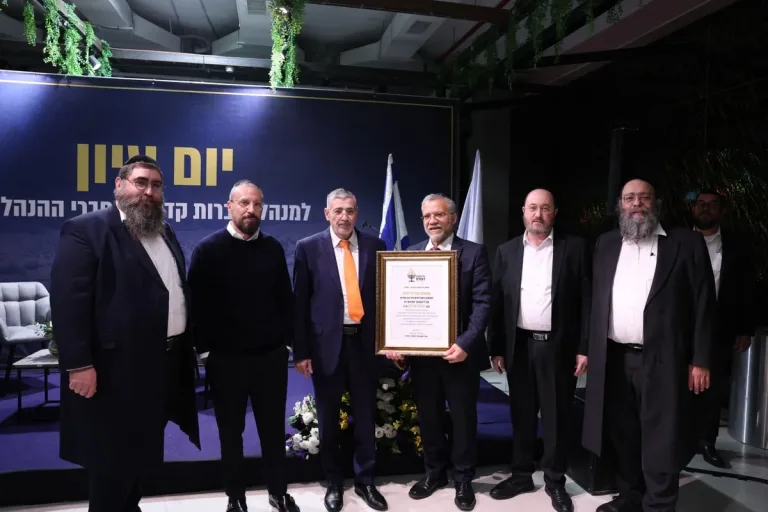
The study day, intended for directors of Chevra Kadisha companies and members of the Jerusalem Cemeteries Council’s management, opened with a rare tribute from the members of the Jerusalem Cemeteries Council’s management.
At the center of the stage was Rabbi Yehuda Avidan, Director-General of the Ministry of Religious Services, who received a surprising certificate of appreciation for the encouragement he provides to the system. “Your work is perhaps the only one in the world that combines true kindness with managing complex systems at the highest level,” Avidan declared with emotion, outlining the ministry’s new direction: uncompromising professionalism.
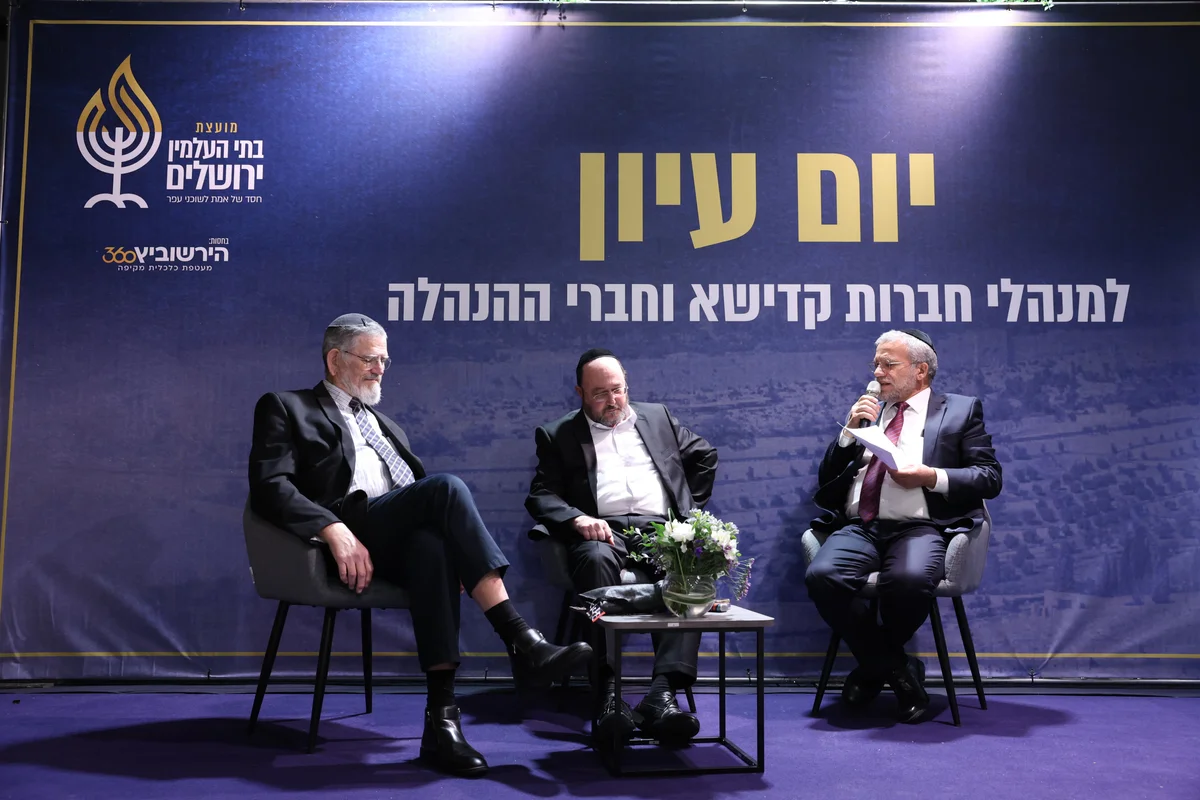
One of the most tense moments of the study day dealt with Israel’s most burning real estate issue, and no, it’s not about residential apartments. Participants discussed the “cities of rest” for future generations – field burial solutions designed to cope with the severe land shortage without compromising the dignity of the deceased.
Rabbi Tzuri’el Krispel, Director-General of the Cemeteries Council, spared no praise for the revolution: “Under Avidan’s tenure, the Council has been significantly upgraded. We are preserving the ancient customs of Jerusalem, but streamlining the systems in an unprecedented way.” Alongside him, Rabbi Yitzchak Henoch, a member of the Cemeteries Council’s management and Director of the Religious Buildings Department in the Jerusalem Municipality, emphasized the critical connection between the municipality and the Chevra Kadisha companies – a connection without which the system would collapse under the load.
During the day, participants experienced an emotional rollercoaster: The historical journey: “Man of Jerusalem” Rabbi Yisrael Glis took attendees on a chilling journey through ancient alleys and hidden cemeteries, revealing the origins of the unique burial customs that make Jerusalem what it is.

The tension between law and heart: In a session dealing with proper management, experts discussed under the guidance of Mr. Tzuri Porat, Deputy Director-General of Services at the Ministry of Religious Services, including: Adv. Ovadia Vizel Sankari, Yitzchak Ishai, and Gal Sham Tov, the impossible tension between “dry law” and the overwhelming emotion of families during the most painful moments of bereavement.
In the digital revolution session: What does service look like in 2026? Guided by Avi Rosen, spokesperson for the Ministry of Religious Services, Rabbi Avraham Menala, Director of Chevra Kadisha Tel Aviv, and Mr. Akiva Weitz, Director of Chevra Kadisha Haifa, discussed new technologies for accompanying mourners, understanding that in the end – no screen will replace warm human contact.
The day concluded with a special panel that addressed burial problems unique to Israel’s capital city, guided by the Director-General of the Cemeteries Council, Rabbi Tzuri’el Krispel. Participants included Rabbi Hanania Shachor, former Director-General of Chevra Kadisha Jerusalem Community, and Rabbi Yitzchak Henoch, a member of the Jerusalem Cemeteries Council’s management.
The study day concluded with a sense of heavy but hopeful mission. The combination of modern management and traditional “true kindness” proves that even in the digital age, Jerusalem knows how to honor its past while building its future with sacred awe.
Related Topics