












Knesset Press Release • September 29, 2025
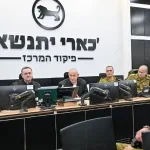
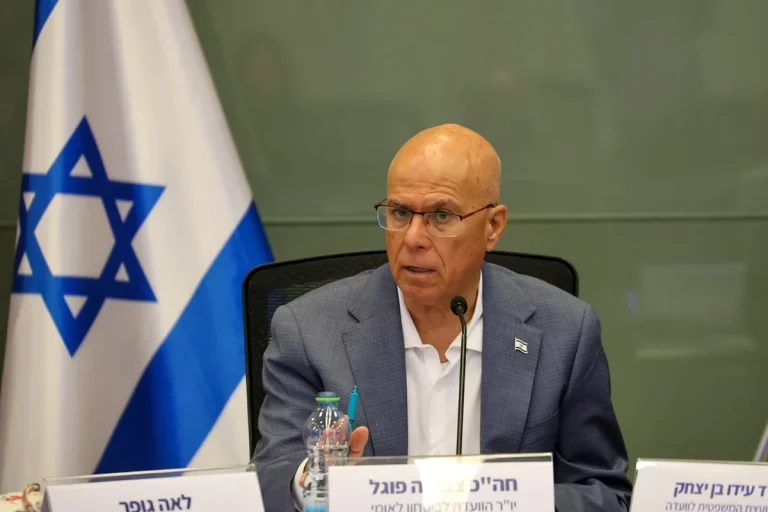
The national security Committee, chaired by MK Tzvika Foghel (Otzma Yehudit), convened on Sunday to discuss a request for an urgent debate on the “police’s preparedness to prevent harm to settlers during the olive harvest season,” submitted by MK Limor Sonn Har Melech (Otzma Yehudit).
In her request, MK Sonn Har Melech wrote “Every year we witness a disturbing and dangerous phenomenon: anarchist elements, far-left activists and Arabs exploit this period to arrive in large numbers to settlement areas under the guise of ‘helping with the olive harvest.’ They surveil the communities, harass settlers, and create provocations that quickly escalate into violent terror incidents. Experience shows that this period carries high security sensitivity, and insufficient preparedness may lead to severe terror outbreaks, physical harm to settlers, and even genuine risk to human life.”
In the discussion, MK Sonn Har Melech said there was “cynical use of our willingness to allow harvesting in this season as a pretext to carry out provocations and as a cover for violent acts and for smearing the settlers in Judea and Samaria.” According to her, access to the communities and the permits “they receive” are exploited to collect critical information inside the settlements and to carry out attacks and damage property.
“Despite repeated warnings, they move from sector to sector, attack, and enjoy absolute immunity from arrest. I call on the security establishment to stop the lawlessness. There is an attempt to create a routine and convenience for our enemies,” said MK Sonn Har Melech.
MK Gilad Kariv (Labor) said, “The data show that the olive harvest season severely harms the property of Palestinians and prevents them from reaching their lands. One hundred and thirty cases of harm to Palestinian farmers have been documented. The picture is largely the opposite, or at least mixed. There are many complaints about a lack of a real-time response to Palestinian farmers’ reports of violence and there is no control center that provides an immediate response.”
Settlement activist Elisha Yered argued that there are Arabs who exploit the olive harvest season for terror and that there is a special organization that uses the harvest period to incite violence. “These are the same people and groups that enjoy immunity. It is not merely provocations — it’s actual violence. We have been tracking them for six years. The same people attack and are not arrested,” he said.
Avi Dabush of Rabbis for Human Rights said, “This is a very violent period, and Yesh Din addressed the data. Farmers are prevented from reaching their lands, and our volunteers also experience violence from settlers. Until October 7, we were in contact with the army, but since then this has not been happening. I hope that coordination will be strengthened, and we need them to stop the rioters and Jewish terror, and prevent violence.”
Chief Superintendent Abraham Mevorach, head of operations, Shai Sub-District Police, said “We are conducting orderly staff work and there is a clear set of orders from the district commander and the GOC Central Command. The central idea is to prevent events, not to respond to them. Our goal is that the period will pass without harm to life or property from any direction.” He said there was cooperation between the army, police, and Border Police, and that “forces will be deployed at significant friction points to prevent incidents.” MK Sonn Har Melech said, “When someone collects information on the communities, you also need to provide a response.” Chief Superintendent Mevorach replied that to ensure there is no collection of information that could be used for terrorist activity, “there is an intelligence layer that is supposed to monitor and verify this”.
Lt. Col. Hakim Khalil of the Civil Administration added that there is close cooperation among all the forces together with the local security coordinators. “There are many influencing factors this year, and, for security reasons, the GOC Central Command may declare that certain places must be inaccessible. The guiding principle is that where there is no confrontation, harvesting will be carried out. Every Palestinian resident has a point-of-contact who works with us, and the operations room is manned 24 hours [a day].”
committee chair MK Foghel concluded the debate by saying that the freedom the State of Israel grants for the olive harvest must not be accompanied by a potential for violence. “If there are elements who come to incite and harm, they must be prevented from arriving. If they come only to harvest olives, that is great,” he said, adding: “The key phrase is early preparedness. We are champions at reacting, but the experience we have acquired obligates us to prepare and prevent incidents in advance. Unfortunately, the Shin Bet (Israeli Security Agency) does not cooperate as it should when it comes to sending its representatives to hearings. We will hold a closed hearing with the participation of Shin Bet representatives.”