
























Knesset Press Release • November 4, 2025
The Labor and Welfare committee on Tuesday held a debate on the National Insurance Institute’s response to stuttering individuals. The discussion took place as part of a special day at the Knesset to mark International Stuttering Awareness Day, initiated by MK Vladimir Beliak (Yesh Atid).
At the start of the debate, Committee Chair MK Michal Woldiger (Religious Zionism) said, “We are at the beginning of a special debate in which we will seek to hear about and act toward ensuring the rights of people who stutter, in their dealings with the National Insurance Institute. I hope this discussion will bring us one step closer to an optimal reality for them, not as an act of charity, but as a societal interest.”
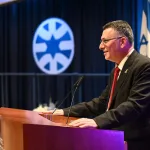
MK Beliak said, “I have been stuttering since the age of three. Even if it is not always audible, the problem exists, and it forces me to speak more slowly or to substitute words. It is a constant struggle. Stuttering is not just a problem of speech fluency; it is a functional problem that can affect social participation, employment, and of course, emotional well-being. It is important to discuss all these aspects. This process will not end at the conclusion of this debate. We will do everything possible to reduce gaps and advance legislation where needed.”
The debate was attended by a number of stuttering individuals, as well as representatives of the Israel Stuttering Association, a public non-profit charitable organization that supports people in Israel who stutter, and their families.
Hanan Horvitz said, “When I was looking for a job, I just said ‘hello,’ and the interviewer told me, ‘No one will hire you,’ and walked away. That is how the interview ended. I had to pick myself up, and fortunately, I had the ability to do so. Stuttering is not the problem; it is the stigma. We can all listen to someone who stutters, no matter how long it takes, just like at a crosswalk, I allow a disabled person to cross, because that is the right thing to do.”
Anat Maor, deputy director of Israel Stuttering Association and the mother of a girl who stutters, said: “Stuttering is currently defined as a neurological problem, a communication disorder, but it also involves many emotional and social consequences—people who avoid participating in society, who are afraid to attend job interviews, to participate in class, and struggle with anxiety, fears, and isolation at home. This creates a distortion in the evaluation of the disability and the solutions provided.”
Israel Stuttering Association representatives also noted that in many cases, the disability ratings given for stuttering are low, which results in the stuttering individual being denied various services that cannot be accessed elsewhere.
Prof. Yair Lampl, the National Insurance Institute’s neurology consultant, explained: “The current thinking in the committees themselves deals with the rehabilitative capacity and the ability of the person to earn and make a living. This issue needs to be resolved, and people should be able to receive services even when the disability rating assigned is less than 20%.”
An attorney from the National Insurance Institute expressed willingness to arrange a meeting between the Institute’s representatives and Israel Stuttering Association representatives to discuss the needs of the stuttering community and to promote possible solutions.