











Knesset Press Release • September 17, 2025
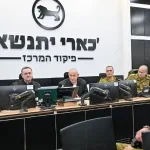
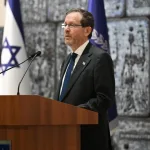
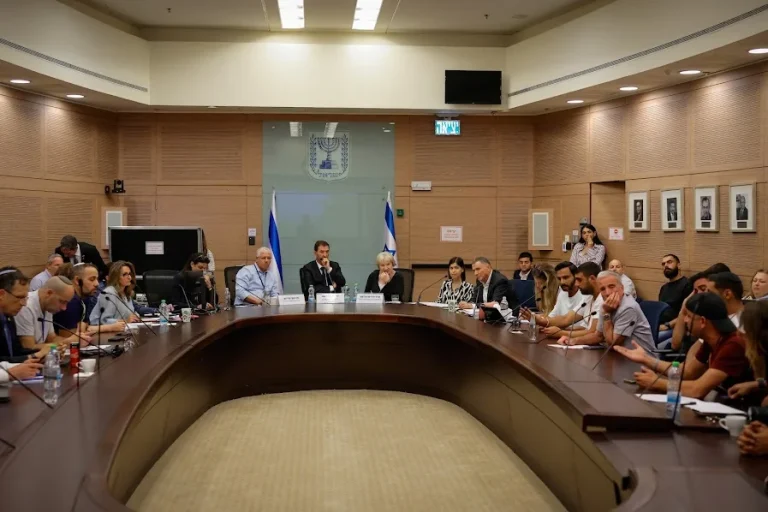
The foreign affairs and defense Committee, chaired by MK Boaz Bismuth (Likud), convened on Tuesday for a debate on the status of the treatment provided to IDF soldiers suffering from PTSD.
Committee Chair MK Bismuth opened the discussion by saying, ”I urgently requested this meeting. There are so many debates waiting for us, so many pressing issues, and I specifically asked to hold this important discussion for the people to whom we are committed. The soldiers, both male and female, are the defenders of the state who sacrificed their well-being and souls for our security, bearing the weight of the struggle for all of us, and continue to pay the price even after it ends. As a country, we are obligated to always be there for them, just like the parents who are commanded, committed, and will always do it – so must the state, exactly like the parents.
“Shell-shocked soldiers are not a hidden corner of society; they are the core of our national resilience. They and their families sacrifice for the security of all of us. Therefore, our moral duty is to stand by them, and it is the responsibility of us all to ensure they are not left behind. In today’s discussion, which certainly will not be the last, we will ask to hear about the status of the systems responsible for the treatment of shell-shocked soldiers, as well as to address the challenges, gaps, and solutions”, he said.
Itzik Saidyan, an IDF veteran suffering from PTSD who self-immolated outside the Petah Tikva offices of the Defense Ministry’s Rehabilitation Department four years ago, read aloud the values of the IDF and asked: “Where are the values of the State of Israel? How is it that they recruit us at the age of 18, without asking us if we want to or not? At 18, we are still children, and we are forced to defend the state with our bodies and souls, and we feel that the state does not appreciate us. How is it that we are even sitting here? The fact that we are sitting and discussing this topic is already something that should not be. This in itself is an insult to our values, to who we are, to what we gave for the State of Israel. We were ready to die, and if you send us to fight again, we are ready to die again for the State of Israel.
“For 15 years, there have been discussions about the treatment of shell-shocked soldiers. another debate, and another. When will you understand that you need to cancel all the debates you have and deal only with this matter? If the fighters had not gone into battle on October 7th, the terrorists would have come to your homes. They didn’t ask questions, they went into battle with their personal weapons. They didn’t wait for orders, they went into battle. Where are you? Where is your commitment? Stop stringing us along and put an end to this.”
Committee Chair MK Bismuth asked Saidyan to be the advisor overseeing this process.
During the debate, committee members heard from a number of shell-shocked soldiers and family members of soldiers who took their own lives, who shared their personal stories, detailing the challenges they face, and asking for recognition and appreciation. Among other things, they pointed to the need for training for families on how to deal with a shell-shocked soldier in the family, creating a known single point of contact for the public to approach in cases of PTSD symptoms, establishing emergency response services available 24/7, creating safe spaces in every city, expanding the workforce, particularly social workers, providing occupational rehabilitation for many who struggle to find and maintain jobs, and mainly, to treat shell-shocked soldiers not as mentally ill individuals, but as fighters wounded in battle.
Rehabilitation Department head Limor Luria said, “In the past two years, the Rehabilitation Department has absorbed over 20,000 soldiers who were wounded in the Swords of Iron war; 56% of them are dealing with mental injuries. We expect tens of thousands more to join. In the past two years, the Rehabilitation Department has significantly expanded its services: we established treatment teams that visit the wounded at their homes during crisis situations, seven designated homes for wounded soldiers as an alternative to psychiatric hospitalization, rehabilitation farms, and new technologies for treating those with combat stress reaction.
“However, we are experiencing significant gaps today, such as a shortage of caregivers, especially in peripheral areas, lack of sufficient services for the families who support the wounded, and a shortage of staff in the Rehabilitation Department. The law does not meet the current needs – we must remove barriers and enable the department to provide quick rehabilitation services without bureaucratic delays. In an event of this scale, extraordinary solutions are required. We must all join forces – the public sector, the private sector, the civil sector, and the community. Only together can we provide a profound response to the wounded, to whom we owe our lives.”
MK Elazar Stern (Yesh Atid) said, “When it comes to shell-shocked soldiers, there is no coalition and no opposition. You are fighters who give everything you have. When we hear a shell-shocked soldiers speak, it is obvious that they were in battle, and as a society, we owe them everything.”