













Prime Minister Netanyahu in the Knesset Plenum: “We will not allow Iran to rebuild its missile or nuclear industry”
Prime Minister Benjamin Netanyahu delivered a speech this week in the Knesset plenum as part of a 40-signature discussion: “President Trump and I have expressed a firm stance – we will not allow Iran to rebuild its ballistic missile industry or renew its nuclear program.” The Prime Minister also said: “We identify with the struggle of the Iranian people and their aspiration for freedom and justice. If we are attacked – the consequences for Iran will be very severe.”
Netanyahu also addressed the law for integrating yeshiva students into security service: “We are advancing a historic plan that will lead to the enlistment of 23,000 Haredim in the next three and a half years. This is a real revolution.” Regarding the investigation committee for the October 7th events, he said: “There will be no broad trust in an investigation committee in which more than half the nation is not represented and does not believe in it.”
Opposition leader MK Yair Lapid responded to the Prime Minister’s remarks: “We managed this country much better than you, more quietly and more efficiently. We don’t just think about ourselves, but about all citizens of Israel.” The Opposition leader added: “The cost of living is crushing an entire generation here. There is a record of negative immigration. People are leaving because they have despaired, they have stopped believing in the future of the State of Israel.”
IDF Representative Revealed in the Foreign Affairs and Defense Committee Discussion How Many Haredim Enlisted
Head of the Manpower Planning and Administration Division, Brigadier General Shay Tayeb, noted in the foreign affairs and Defense Committee discussion held on Sunday the enlistment data as of that day: “As of noon, there were over 210 combat soldiers and over 140 support personnel, and it is likely that in ten days this will conclude with the largest enlistment in recent times.”
This week’s discussion dealt with the revocation of personal benefits for those who did not report for regular service. Among the benefits to be revoked: driver’s license, revocation of scholarships and financial assistance, restriction of exit from the country, ineligibility to apply for positions designated for groups entitled to affirmative action, and revocation of eligibility for tax credits. Deputy Director of Budgets at the Treasury, Kfir Batat, said regarding the economic sanctions: “Almost everything listed in the immediate sanctions are things that are already prohibited by law. Regarding future sanctions, the expiration date of the sanctions renders most of them void.” MK Yitzhak Goldknopf insisted during the meeting: “We insist that there will be no sanctions on Torah scholars.”
Mayors from the Negev in the Committee for Strengthening and Developing the Negev and Galilee Discussion: We are living in a reality of personal insecurity
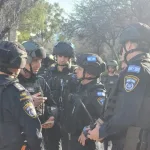
These remarks were made in a discussion held following the “pogrom in the Negev settlements.” Southern District Police Commander, Superintendent Shlomi Darai, said: “There is still much to improve, but the business outputs of the Southern District do not lie; whoever takes the law into their own hands – we will attack them with all means.” Chairman of the committee, MK Oded Forer: “The situation in the Negev is far from excellent and is not solely the responsibility of the Israel Police but of the entire government, and it will not end with just one operation. I do not accept the assertion that the situation is improving.”
Deputy Mayor of Jerusalem: “70,000 residents have no protection against infiltrators”
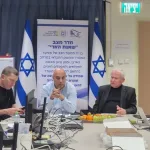
This was warned by Yael Antabi regarding the residents of the Neve Yaakov and Pisgat Ze’ev neighborhoods in the capital, during a joint discussion of the State Audit Committee headed by MK Alon Schuster and the Foreign Affairs and Defense Committee headed by MK Boaz Bismut, which took place this week. The discussion dealt with the operational and infrastructural situation on the seam line and at the crossings of the Jerusalem envelope. Representatives of the settlements in the Jerusalem envelope added: “There is no single body managing the crossings, and a security failure has occurred.” According to the Comptroller’s report on the matter from the past month, there are breaches in the seam line used for the passage of illegal infiltrators. According to the audit findings, there have been delays in repairing damage to the fence and in maintaining the technological components installed on it, there is a shortage of dedicated personnel, and in the quality of the technological response for monitoring and inspection.
Discussion on Police Enforcement Against Ethiopians: “Cases are opened wholesale”
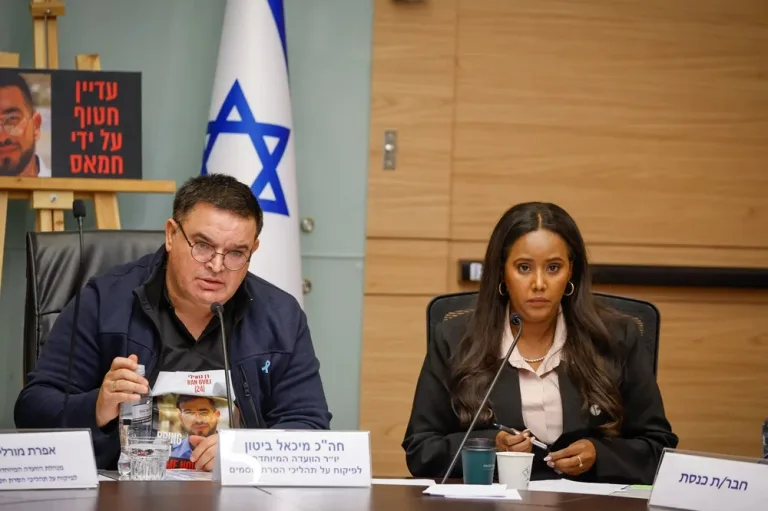
The Committee for Removing Barriers, which convened this week, discussed police enforcement against Ethiopians, some of whom testified at the hearing about violence from police officers. One of them told the committee: “I was arrested for lack of identification and then they tasered me in the back while I was handcuffed.” MK Pnina Tamano protested to the police representatives who participated in the discussion: “You are opening cases wholesale. We are in a state of survival, and I am discovering insensitivity and a wall and a lack of responsibility. Israel Police, you are going the wrong way.” Committee Chairman MK Michael Biton: “There is a prevalence of hundreds of percent in arrests relative to their size in the population.” The police representative responded: “We need to sit together and lead joint activity. We will spare no effort and will come with data, and where we are not good, we will do everything to be better.”
The Election Committee and the Shin Bet Established a Team to Deal with External Influences Ahead of the Elections
This was reported in a discussion of the Subcommittee of the Science and Technology Committee, which dealt with dealing with awareness campaigns based on artificial intelligence, especially during election periods. The CEO of the Election Committee, Orly Adas, emphasized in the discussion that the existing law is outdated and noted as an example: “It is not stipulated that lying in election propaganda is forbidden.” It was noted in the discussion that the Election committee and the Shin Bet have established a team to deal with external influences, due to concerns about fake AI-based campaigns. Adas said that the Election Committee has already held preliminary discussions with Meta and TikTok, but the committee has no ability to act with X and Telegram networks due to the lack of representation in Israel.
In a discussion of the State Audit Committee, headed by MK Alon Schuster, which took place this week and dealt with the same issue, the CEO of the Central Election Committee called: “We must consider adopting the European Union’s decision and promoting legislation that will require clear labeling of content created by artificial intelligence.” She explained: “It is impossible to clean the network of millions of videos and campaigns created with the click of a button.”
The Ministry of Health will clarify to hospitals: Operate an acute room at all hours of the day
The Director of the Department for the treatment of Sexual Assaults at the Ministry of Health, Dr. Zohar Sahar, made these remarks in a discussion of the Health Committee that dealt with the operation of acute rooms. The Chairperson of the committee, MK Limor Son Har Melech, clarified: “Medical treatment in an acute room is a basic right and is not conditional on filing a police complaint. No victim should give up her health due to incorrect information or lack of clarity in the process.”
The Economics Committee Discussed the Regulation of Mortgage Counseling: “A difference of hundreds of thousands of shekels”
President of LAHAV, Adv. Roi Cohen, explained: “A difference of heaven and earth and hundreds of thousands of shekels between professional advice and someone receiving incorrect service.” The initiators of the law, MK Asher and Beliak: “The cost of living is most evident in mortgages.” Committee Chairman MK David Bitan: Regulation in the industry is important, we will advance the proposal quickly.
The Committee on the Rights of the Child: A shortage of approximately 3,000 educational assistants
This was estimated by the Center for Local Government, in a committee discussion that dealt with the intermittent closure of kindergartens due to a severe shortage of early childhood personnel. The shortage leads to sudden and repeated closures of kindergartens, shortened school days, and cancellation of afternoon programs. Committee Chairperson, MK Keti Shitrit: “It is unacceptable for the education system to operate through temporary solutions, improvisations, and surprise closures, instead of a structured policy.”
Amendment to the Law Regarding Contract Interpretation Approved
This week, the Knesset plenum approved in its second and third readings an amendment to the Contracts Law (General Part), according to which the interpretation of a contract will be as the parties agreed; a business contract in which no provisions for interpretation are specified – will be interpreted according to its wording alone, unless the wording of the contract leads to an unreasonable result or a contradiction between its provisions. The explanation for the amendment states: “The purpose of the amendment is to establish interpretation rules adapted to business contracts versus other contracts, in accordance with the trend in case law that distinguishes between different types of contracts, in order to bring greater certainty to the business world and assist in reducing the burden on the courts.”
Related Topics