








Knesset Press Release • October 28, 2025
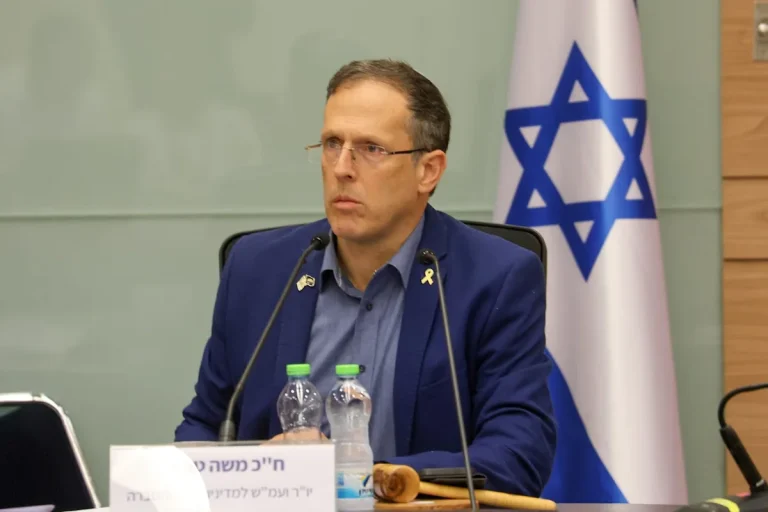
The Foreign Affairs and Defense Committee’s Subcommittee for Foreign Policy and Public Diplomacy, chaired by MK Moshe Turpaz (Yesh Atid), convened on Tuesday for a debate dealing with public diplomacy in the wake of the [Gaza] deal. In the debate, all the agencies dealing with public diplomacy presented the activity done until now and the preparations for future developments.
Dr. Yacov Livne, Deputy Director General for Public Diplomacy at the Ministry of Foreign Affairs: “It’s difficult for our enemies to defeat us on the battlefield, so they channel vast resources into the media field. People talk about the bond between the Islamists and the environmentalists, between the ‘red’ and the ‘green,’ and I would like to add to that the ‘black’ of antisemitism. This red-green-black alliance will not vanish, and we should be prepared for this.
“Over the past six months, we have had more tools to step up the public diplomacy activity, since the ministry received a budget of half a billion [shekels]; that is nearly 20 times as much as in past years, and it opens up possibilities for us that we did not have in the past.
“There are three events in which the ministry has led the public diplomacy issue: The first two are the flotillas. In these two events the results were impressive and the organizers did not succeed in achieving their goal. The third and largest-scale event was Operation Rising Lion; everyone saw that the State of Israel dominated the narrative from the first hour until the end of the operation.
“It’s important to understand that there are many elements worldwide that are working against us in the public diplomacy arena. There are countless actors, both state actors and others, who operate against us powerfully. This also refers to economic power, funds that are investing in attacking the State of Israel; these are funds on a different scale, and [invested] over time.
“As for our messages regarding what’s happening now—we have an entire campaign that deals with exposing Hamas’s atrocities, the executions and the abuse of their own people. I can’t say that the messages don’t arrive, but is everyone convinced? Of course not.
“We tell the truth, we don’t lie. Sometimes it takes more time to get out the truth. In the minutes and the hours that pass until we receive the true picture, the lies being spread about us are already circulating around the world, but we stick to the truth.
“Our main messages are that Israel is the first one that said yes to the agreement, and it is upholding it painstakingly, as opposed to Hamas. We expose the atrocities committed by Hamas; many people are working to cause [the world] to forget what Hamas is,” said Dr. Livne.
Gal Ilan of the National Public Diplomacy Directorate: “The general line is that there is a clear good [side] and bad [side] here. There is a side here that both perpetrated October 7 and is also cruelly harming the Gazans themselves. There has been intensive work by all agencies to release and disseminate the videos of what Hamas is doing to people in the Gaza Strip.”
Police Spokesperson Cmdr. Aryeh Doron: “We work mainly inwards, but we also have spokespersons for foreign languages. In terms of communications in Arabic, we are talking about huge numbers of views on our platforms, nearly 100 million per month.
“As for Operation Return to Their Border, the cooperation between all the organizations dealing with communications led to good and significant results. Our teams, operating around the clock, followed the events. It was important for us to make it clear, both to Israel’s citizens and outwardly, that the State of Israel won in this matter.
“In Operation Return to Their Border, there was also a release of terrorists, and it was important to us that there would not be parties celebrating the release. We took steps to ensure that nothing of this sort would come out, and it worked. The police worked to make sure that there would not be victory parties, and no such image or video came out. This was a message of victory as far as we were concerned,” said Cmdr. Doron.
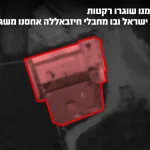
IDF International Spokesperson Lt.-Col. Nadav Shoshani: “Hamas is not in a cease-fire in terms of communications, it issues fake news every day. We have to debunk this using intelligence and evidence. It’s difficult to bring people back to October 7, but we can show pictures of a missile in a school and explain why it was demolished.
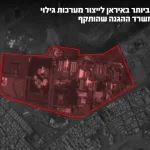
“In terms of preparations for the future, our focus is on making a negative image for Hamas. Yesterday we launched a website with all the incriminations of Hamas, and it is being updated all the time. This is divided by regions and we’re working on [obtaining] more intelligence that can be released.
“Even before a decision is made by the other echelons on the entry of foreign media, we aren’t waiting, and we are working on explaining to foreign journalists the proximity to the IDF at the yellow line, and the warfare methods.
“Regarding coordination, there’s no one at the table that I haven’t seen a great deal in the past months. Each agency understands its role, and there is a joint effort, without ego, with work that is coordinated in great detail. The successes come from preparation and coordination,” said Lt.-Col. Shoshani.
Government Press Office Director Nitzan Chen commented on the policy of allowing foreign media to enter the Gaza Strip. Chen said, “Our professional position is that foreign correspondents should be allowed to enter Gaza without being escorted by the IDF Spokesperson’s Unit. In today’s situation, the harm of not having [them] enter Gaza outweigh the benefit.
“A successful project that we are working on, together with the Hostages Directorate, is documentation of the hostages for the next generations, and for the purpose of creating a museum. There is great importance to having the state document for the sake of the next generations,” Chen said.
Subcommittee Chair MK Turpaz: “the committee calls upon the professionals to be prepared for opening the gates of Gaza to the media, and not to take for granted that this will be to our detriment. We can establish a narrative, and explain why Gaza looks this way. In addition, we should prepare for the possibility of additional rounds [of warfare]—things should be ready.” The committee chair also addressed the coverage of setting up the American base in Kiryat Gat, saying, “The world is covering this as a babysitter, and a response should be given to this.”