

















By TPS-IL • December 29, 2025
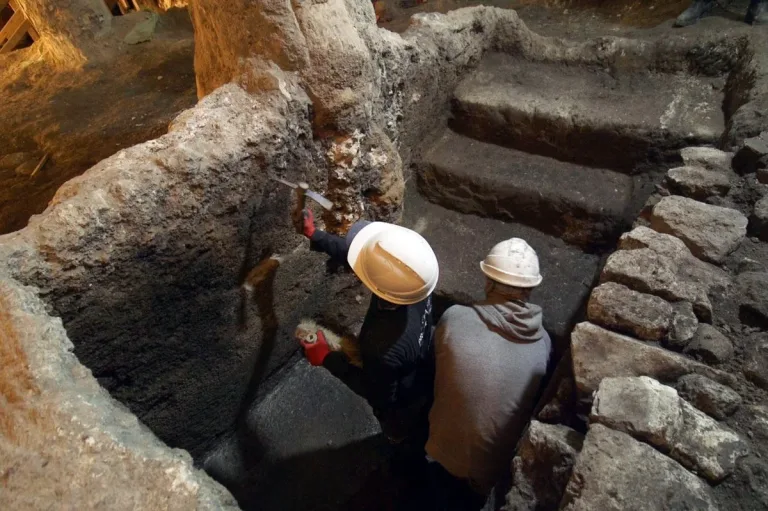
Jerusalem, 29 December, 2025 (TPS-IL) — A rare archaeological discovery beneath Jerusalem’s Western Wall Plaza has uncovered a rock-hewn Jewish ritual bath from the final days of the Second Temple period, adding new physical evidence of Jewish life and practice around the Temple complex nearly 2,000 years ago, researchers told The Press Service of Israel.
“Many ancient ritual baths have been found in Jerusalem, but not in such proximity to the Temple location,” excavation director Ari Levy of the Israel Antiquities Authority told TPS-IL.
“It is significantly close to the Temple. It is located only 30 meters (98 feet) west of the Temple site and in proximity to the main entranceways to the Temple Mount,” Levy said.
The mikvah was sealed beneath ash layers that bear witness to Jerusalem’s destruction by the Romans nearly 2,000 years ago. Ash remains were found inside the sealing layer, along with pottery vessels and stone containers characteristic of Jewish households in the late Second Temple period, Levy said. According to the IAA, the context of the ash layer leaves little doubt that the installation was in use until the final moments before the city’s destruction.
The mikvah is rectangular in shape, measuring just over three meters in length (about 9.8 feet), with plastered walls and four carefully carved steps leading down into the bath.
The excavation area lies in close proximity to what were once the main entrances to the Temple compound, including the Great Bridge to the north and Robinson’s Arch to the south. Previous digs in the area have revealed additional ritual baths and stone vessels, reinforcing evidence that the surrounding neighborhood was closely tied to Temple activity and observance of Jewish ritual purity laws.
Researchers believe the mikvah served both local residents and the large numbers of pilgrims who visited Jerusalem, particularly during festivals. In Temple-era Jerusalem, ritual purity was not limited to priests or formal religious settings, but was woven into daily life throughout the city.
The excavations are being conducted in parallel with development work to make underground areas of the Western Wall Plaza more accessible to the public. The mikvah is expected to become part of the expanded underground visitor route beneath the Western Wall Plaza, offering the public a tangible connection to everyday life in ancient Jerusalem, the IAA and the Western Wall Heritage Foundation said. The foundation administers the daily affairs of the Western Wall.
The Western Wall, the holiest spot where Jews can pray, is the only remnant of a retaining wall encircling the Temple Mount built by Herod the Great in the first century.
The Temple Mount, where the First and Second Jewish Temples were built, is the overall holiest site in Judaism.
Related Topics