










By TPS-IL • December 10, 2025
Jerusalem, 10 December, 2025 (TPS-IL) — New archaeological finds in the hills south of Jerusalem may offer the first material evidence from one of Judah Maccabee’s battles, The Press Service of Israel has learned, as the Chanukah holiday approaches.
The eight-day holiday of Chanukah, which begins on Sunday night, marks the successful Hasmonean revolt against the Seleucid King Antiochus IV and the subsequent rededication of the Second Temple some 2,100 years ago.
In an exclusive interview with TPS-IL, Dr. Dvir Raviv of Bar-Ilan University said that a survey at Horbat Bet Zecharia, in the Gush Etzion region south of Jerusalem, has uncovered objects that match both the date and the military profile of the famous battle described in the Book of Maccabees in 163 BCE.
The site, on a hill about seven kilometers southwest of Bethlehem, is widely identified with the ancient village of Bet Zecharia, where the Seleucid army and the forces of Judah Maccabee clashed in what is known as the fifth Maccabean battle.
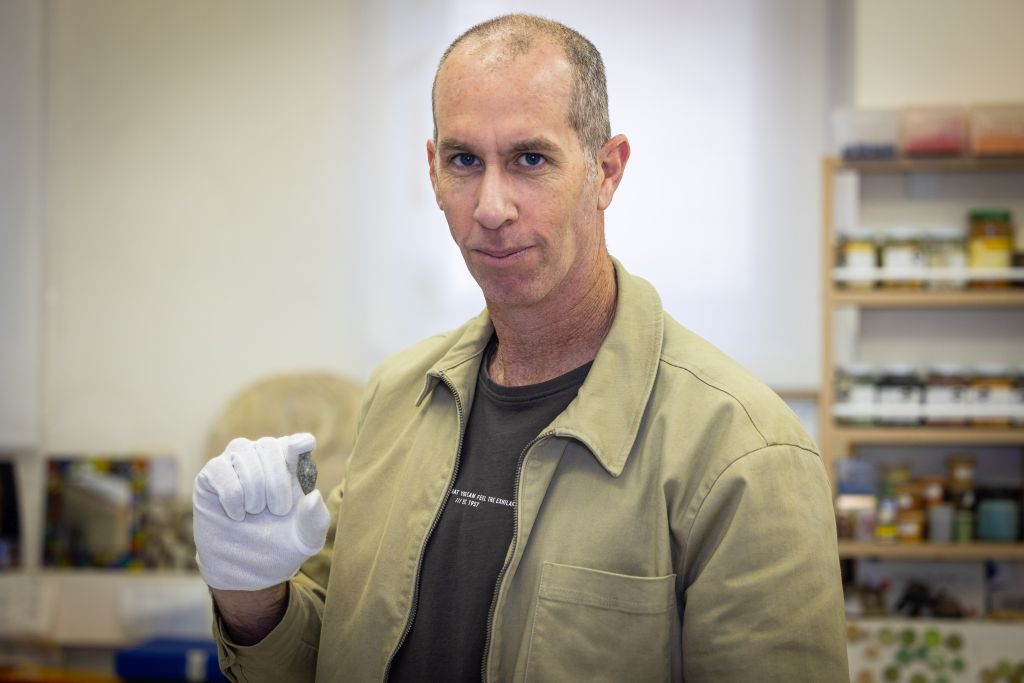
On Dec. 10, 2025, Dr. Dvir Raviv of Bar-Ilan University holds a sling bullet found at Horbat Bet Bet Zecharia south of Jerusalem, where the Maccabees fought the Greek Seleucid army. Photo by Elad Zagman/TPS-IL
According to First Maccabees and later Jewish historian Josephus, the Seleucid army advanced north along the Jerusalem-Hebron road with war elephants. In the most dramatic scene, Judah’s brother Eleazar ran under the largest elephant, killed it, and was crushed to death beneath its body. The battle ended in a Seleucid victory and a siege of the Temple in Jerusalem.
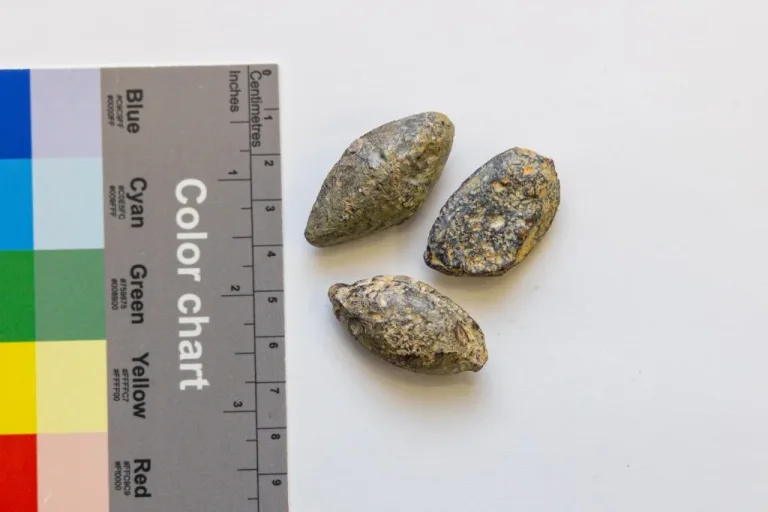
Raviv’s 2022 survey at the site documented ninety-two coins and hundreds of pottery sherds from the Persian, Hellenistic, and Hasmonean periods. However, what drew his attention were four objects pointing directly to a Hellenistic battlefield — three cast lead sling bullets and a bronze coin minted in the city of Side in Asia Minor, today southern Turkey.
“This is the first time we may be holding objects that came from one of Judah Maccabee’s battlefields,” Raviv told TPS-IL. “At Bet Zecharia, we found a Side coin that is usually linked with Seleucid mercenaries, and three lead sling bullets that only appear in military contexts. Together, they fit very well with the description of the battle in First Maccabees.”
The sling bullets, discovered on the western slope of the hill, are typical Hellenistic ammunition. One carries the winged thunderbolt of Zeus, a common symbol on such projectiles. Across Israel, similar bullets have been found at only about twenty sites, almost all known from historical sources as siege works, forts, or battlefields, including Jerusalem, Dor, Samaria, Maresha, Yodfat, and Mount Gerizim.
“You do not expect to find Seleucid military equipment in a small rural village unless an army actually fought there,” Raviv explained. He noted that the bullets were found in a cluster on the slope facing the ancient Jerusalem-Hebron road, exactly where the Seleucid army is said to have advanced. “The finds sit where the sources place the battle, along the old road below the village. They give us, for the first time, an archaeological echo of the confrontation described in the texts.”
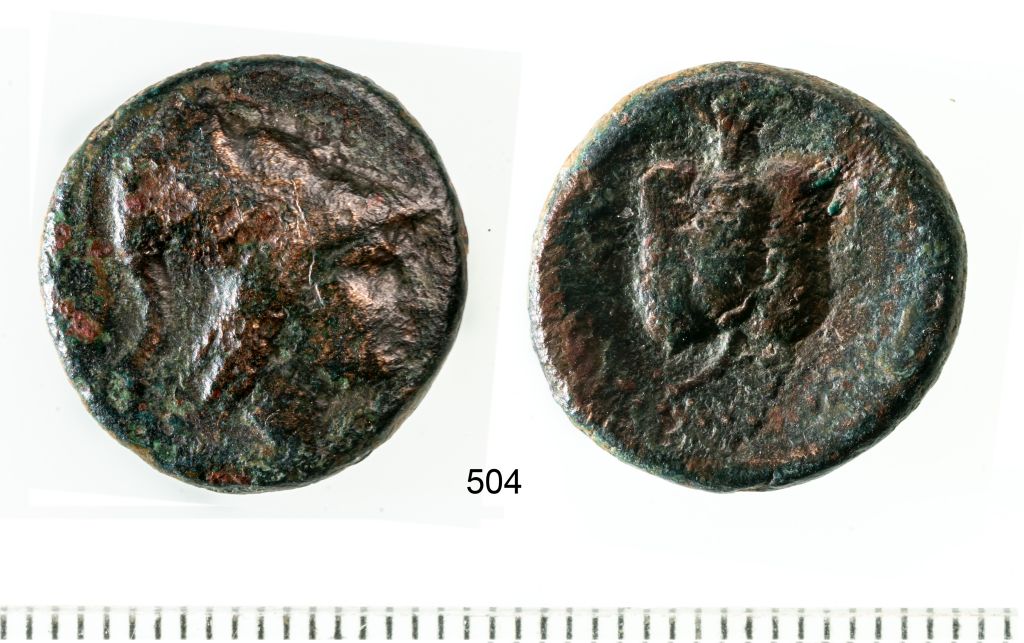
A bronze coin from the Asia Minor city of Side found at Horbat Bet Zekharya south of Jerusalem, where the Maccabees fought the Greek Seleucid army. Foreign mercenaries fighting with the Greeks were paid with such coins. Photo by Shahar Cohen/TPS-IL
The bronze coin from Side strengthens the case.
One side shows the Greek goddess Athena wearing a Corinthian helmet. The other features a pomegranate, which was the symbol of Side. Side served as a recruitment center for mercenaries who fought in Seleucid armies. Although around 120 such coins have been found around Israel, this is the first time that a Side coin has emerged from a location explicitly connected to a documented Hasmonean battlefield, Raviv explained.
“Its presence, alongside the sling bullets, reflects military activity that fits the historical description of the battle,” he told TPS-IL.
Most critical scholars already accept that a battle took place in the Bet Zecharia area, even if they debate the literary shaping of the story. Raviv stressed that the new finds do not settle questions about exact location, numbers, or tactics. Their importance, he says, lies in offering the first independent support for the historicity of the battle itself.
For Raviv, the implications go beyond technical analysis. “It is the first time we have possible archaeological evidence from one of Judah Maccabee’s battlefields,” he said. “This is where history, text and ground finally begin to meet.”
Related Topics