











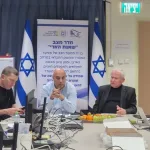






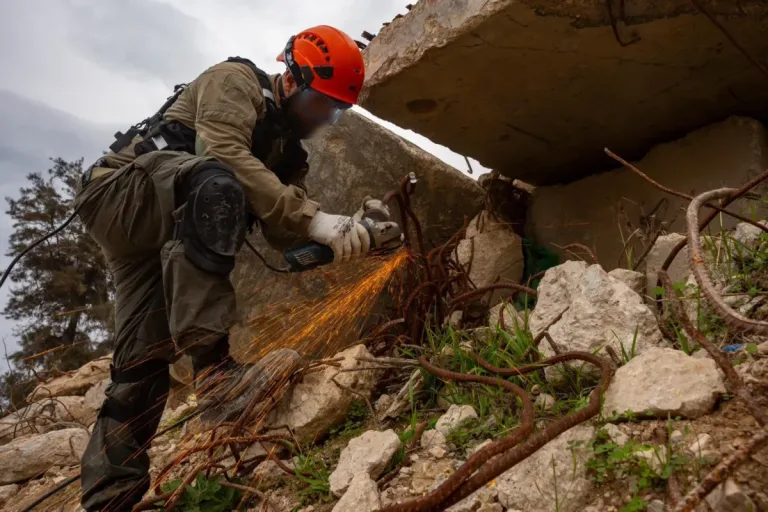
After a long rehabilitation, tense quiet, and painful memory, the Home Front Command training base in Zikim has been recommissioned. The destruction site has been renovated from the ground up, expanded, and adapted to the lessons learned from the war, and has now returned to fulfill its central purpose – training all Home Front Command combatants, both regular and reserve – as part of the regular exercise routine.
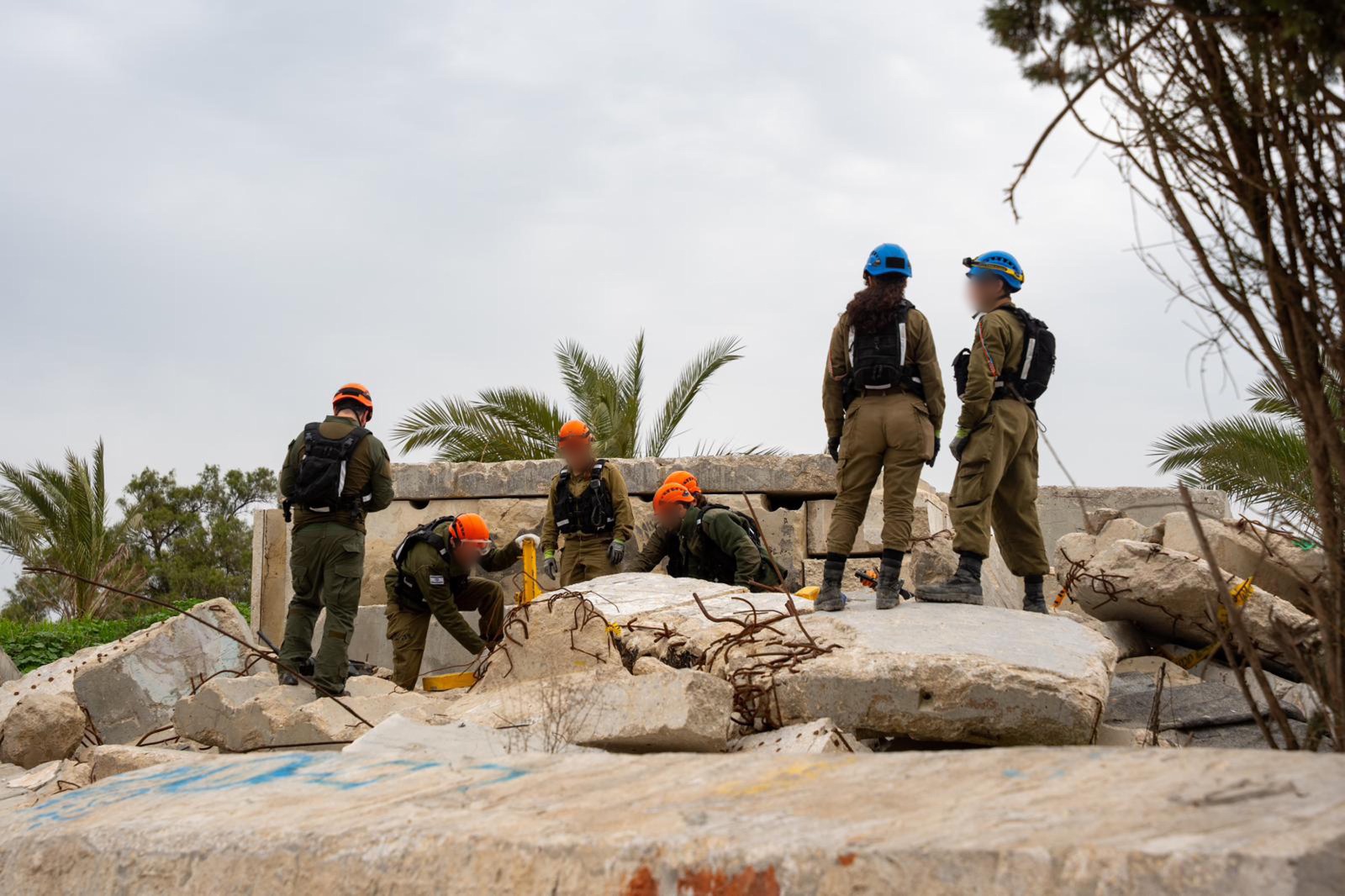
For two years, the “orange” reservists manned lines in Judea and Samaria with high intensity, and most of their exercises were adapted to the sector in which they operated at the time. During that period, the training base underwent extensive renovations. Now, almost two and a half years after the outbreak of the war, it is time to train at the command’s large and central site.
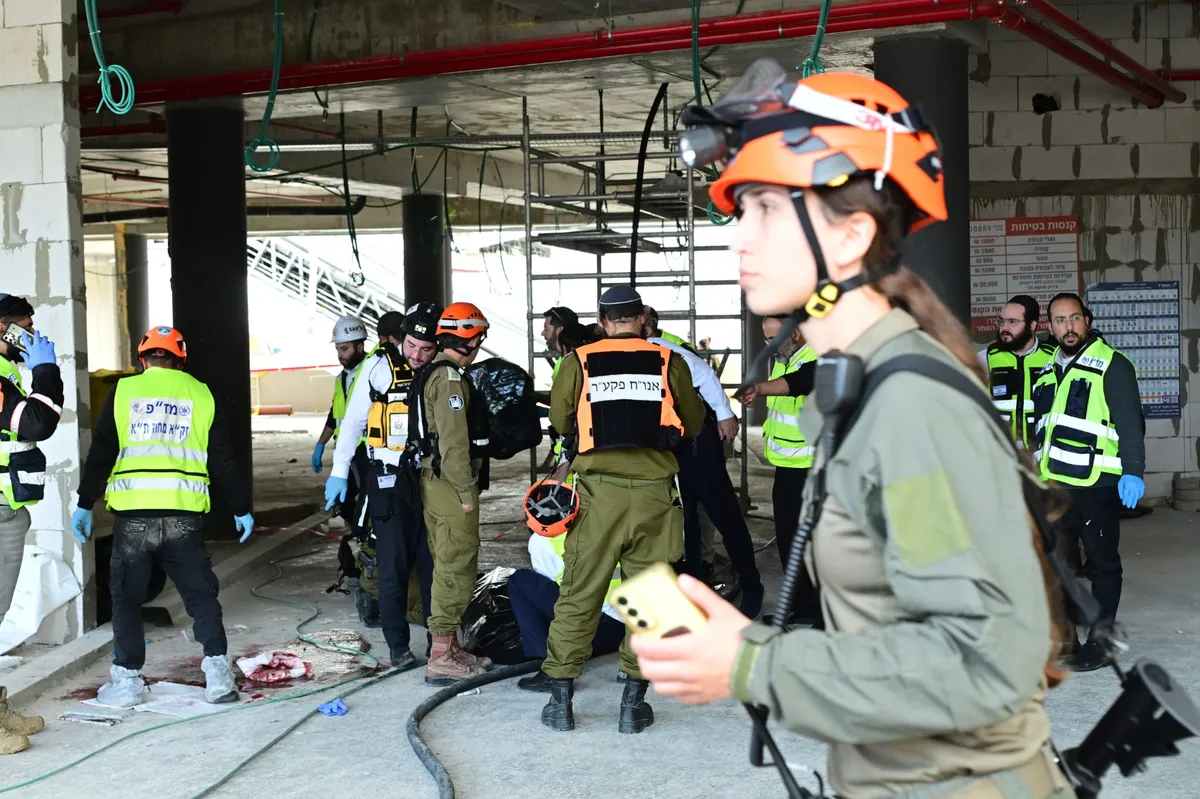
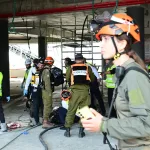
The festive opening was attended by Reserve Battalion 974 of the Northern District, who were the first to undergo a large-scale battalion exercise at full strength, for the first time in two years at the site. They arrived at the training base for four intensive days, packed with learning. On the first day, they engaged in preliminary discussions and preparations, and on the second day, the rescue combatants dove straight into the upgraded destruction site.
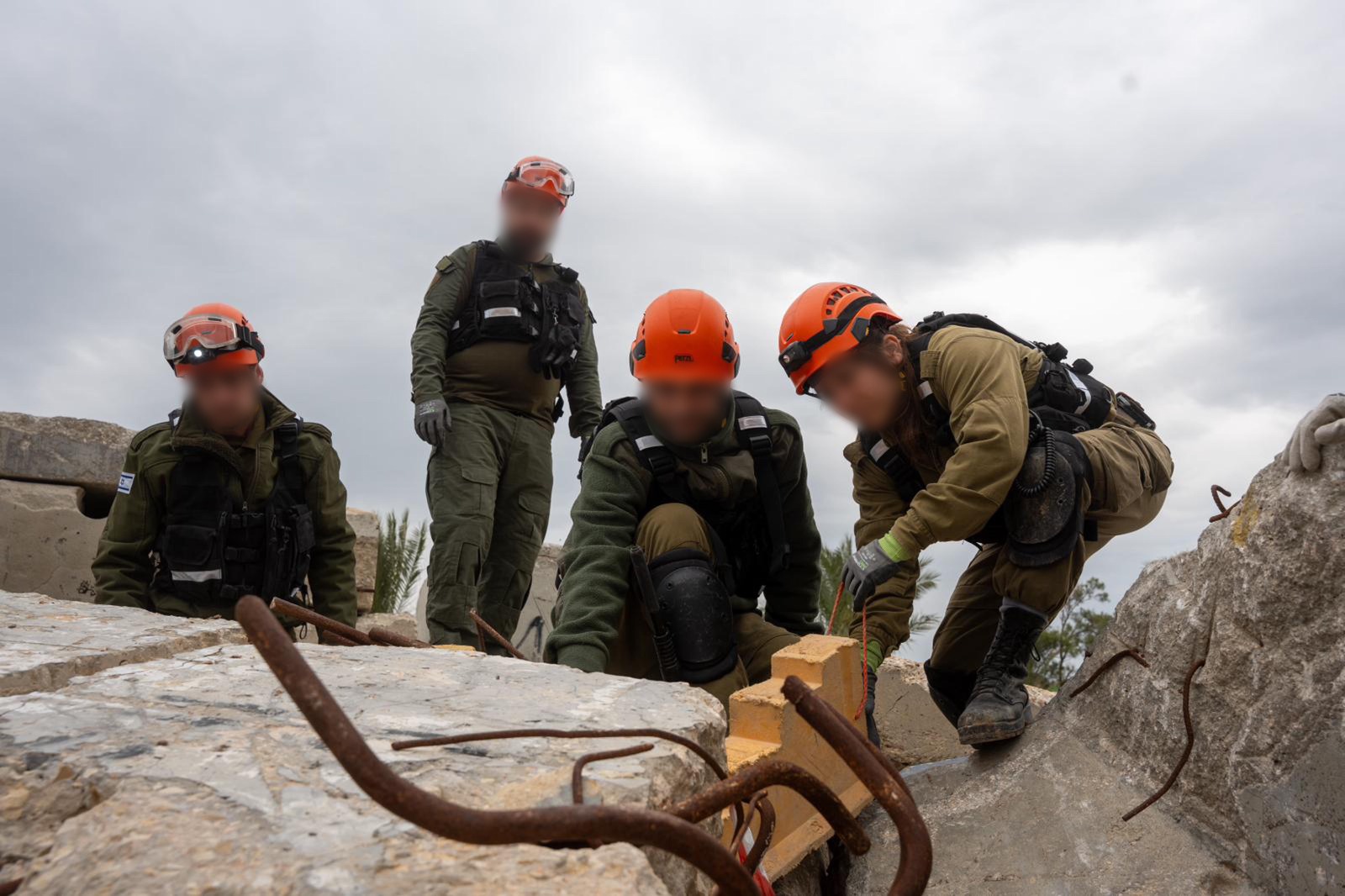
Today, the place has almost completely changed its face and undergone a real revolution. It is no longer a matter of a few collapsed structures, but entire zones – neighborhoods, with each building presenting different and unique challenges. “It is full of internal spaces, some underground, buildings, and shelters,” explains the Head of the Rescue Department, Captain B., “It is exceptionally large and allows for adapting the zones and scenarios for the training of a specific authority, in order to train the forces with a focus on the sector to which they belong in an emergency.”
And now, it is the combatants’ turn to return and train in the advanced complex. Battalion 974 was chosen for this mission and delivered the opening blow to return the place to operational readiness. Following them, all of the command’s reserve battalions are expected to train weekly, one after another. And among them, of course, are the combatants of the Rescue and Training Brigade, for whom, until October 7th, Zikim camp was their training and instruction base.
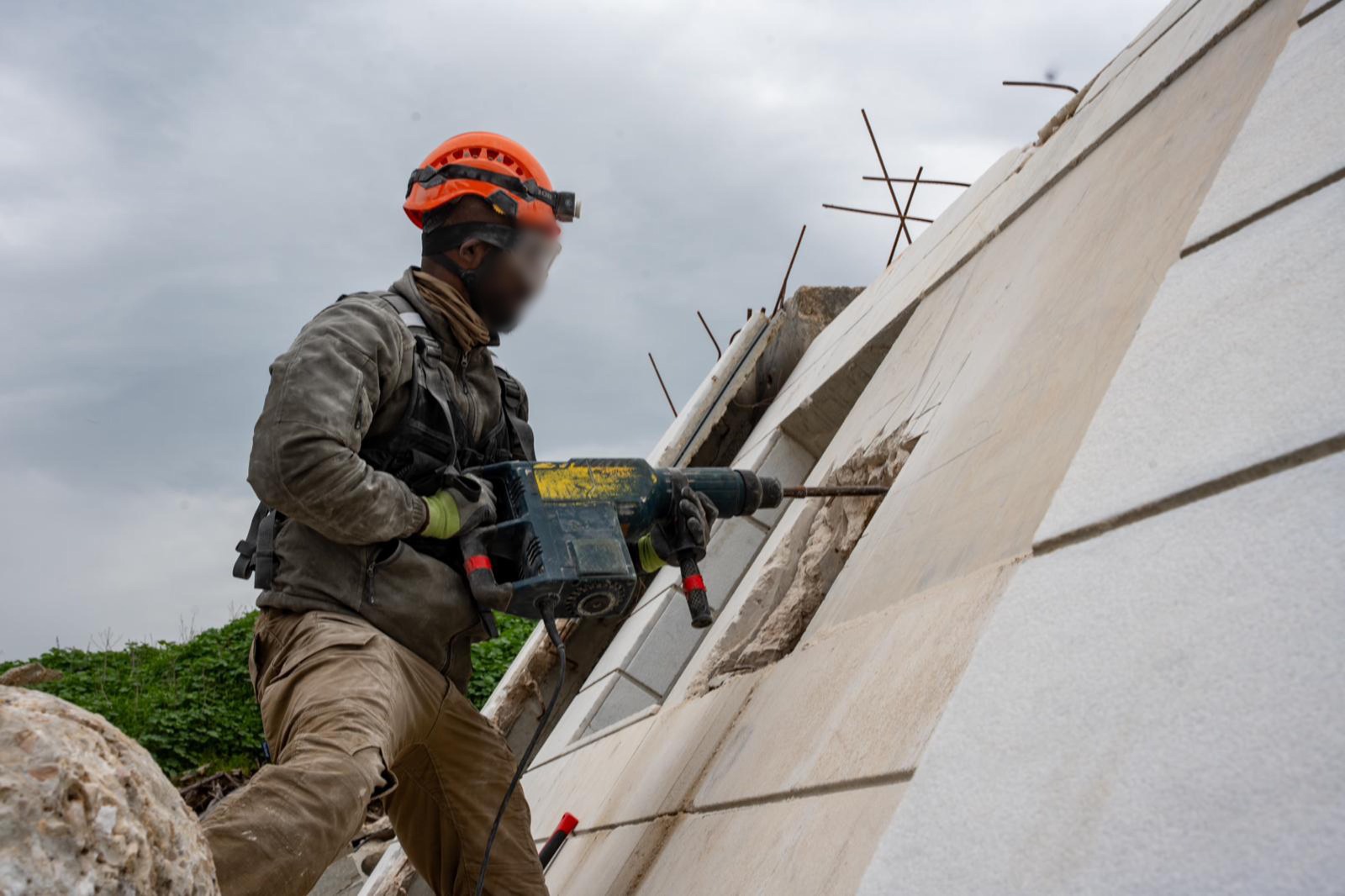
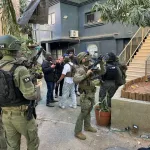
On the second day, the battalion underwent departmental exercises: “There were stations set up at the site, each presenting a different challenge,” describes Lieutenant Colonel (Res.) Y., the battalion commander, “We practiced using cutting tools to reach the trapped, lifting equipment to clear heavy elements, or rescue medicine in complex conditions.”
On the third day, the training was expanded, and the departments were combined into companies, and they performed company-level exercises. “The forces operated in tunnels, and also at height,” recalls the battalion commander, “Concurrently, there was also a ‘NBC incident’ (Ar”n), where the scene was managed in all its aspects – from the searches, through the initial mapping, to the rescue.” And of course, the activity in the zone does not end until the population issue is resolved. Throughout each scenario, they build an ‘anchor list,’ which compiles the missing persons at the site. “Only after we have found everyone can the zone be closed,” he emphasizes.
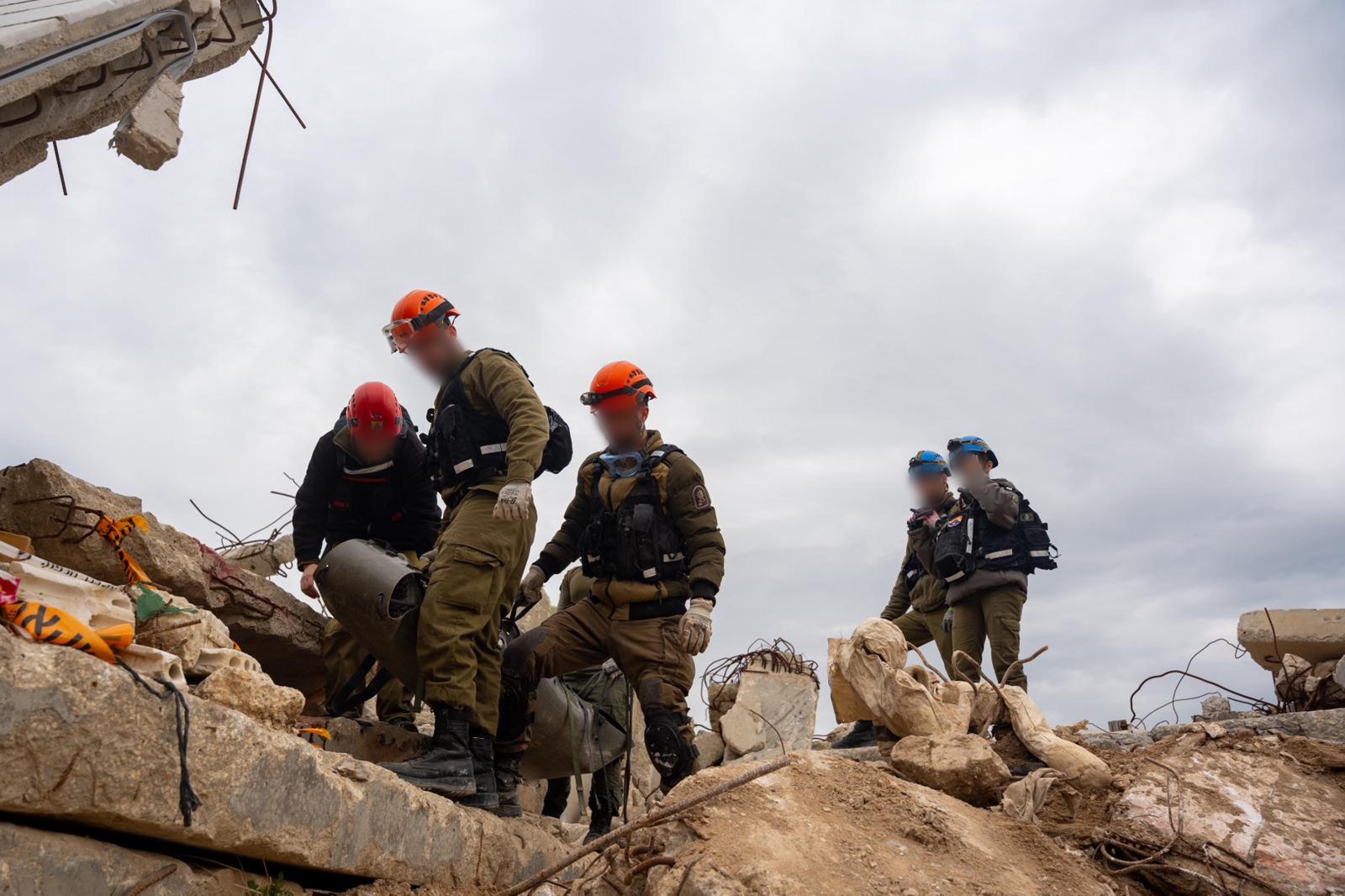
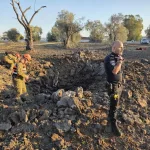
And then came the ‘Grand Finale’ – the battalion exercise that concluded the week. “The scenario was a missile strike – with no prior information,” describes Lieutenant Colonel (Res.) Y., “The forces were required to gather pieces of information, build a situational picture, and assemble the narrative. Slowly, more and more zones were added, until the combatants were working on 12 destruction sites simultaneously.”
For years, Zikim camp has been the home of the Rescue and Training Brigade. In the October 7th attack, a fierce battle took place there, in which seven brave combatants and commanders fell. Since the disaster, the camp has begun intensive rehabilitation and is preparing itself for the new reality.
“Returning to Zikim, to our home – that is a victory for us. Especially after all that the brigade went through there,” says Captain B., “We are taking back the reins, with the aim of returning to train recruits and commanders here, and to train the entire brigade.”
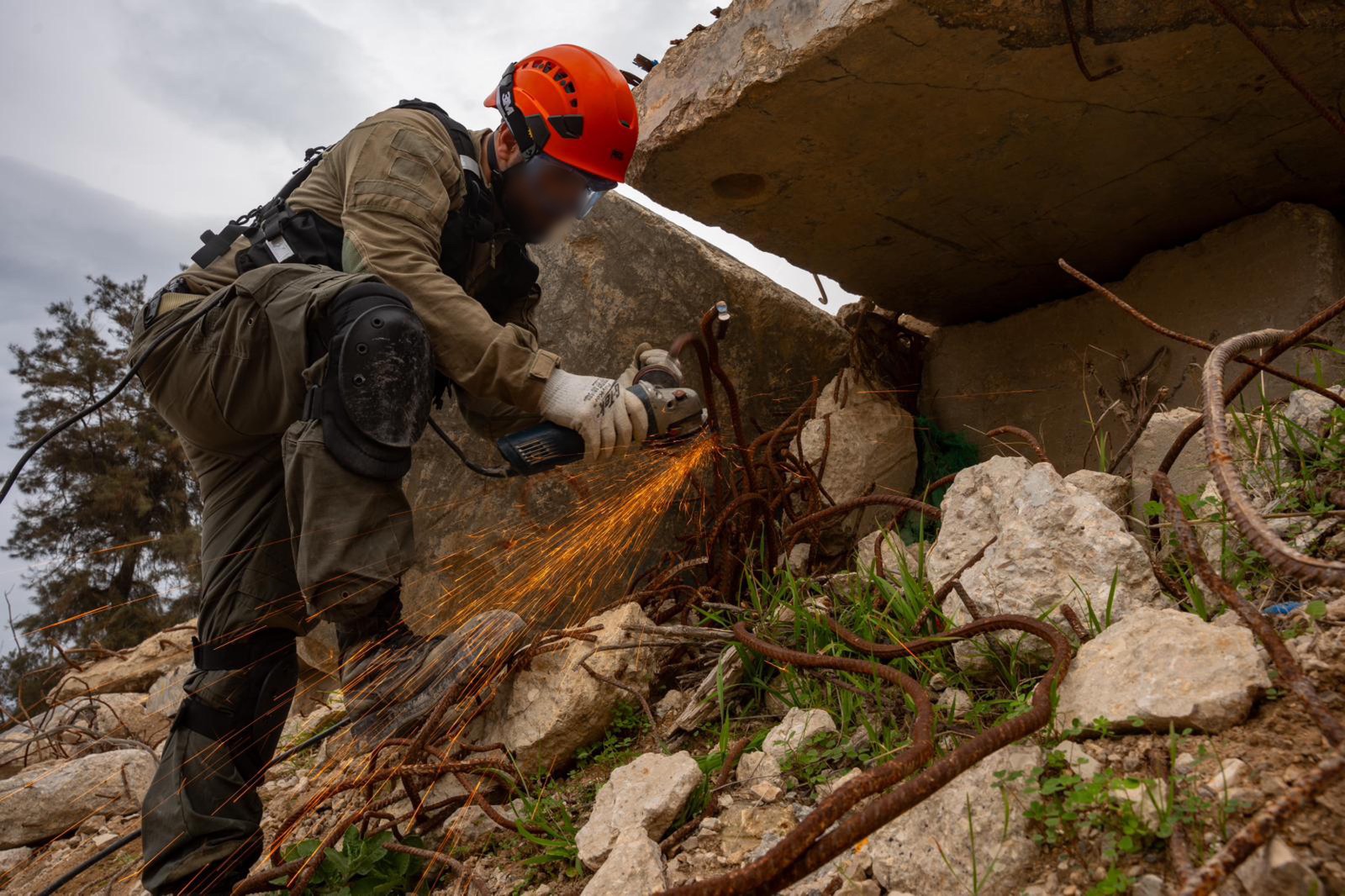
According to him, the process of upgrading and improving the camp and the site within it does not stop for a moment. “The infrastructure is improving week by week. We are working to provide the forces with the best conditions so that we do not remain stagnant, but move forward,” he details, “Upgrading the destruction sites, the training infrastructure, and even improving the living quarters and the dining hall.”
This was the first time in over two years that a large-scale battalion exercise was held at the site. The vigilance is constant, and almost every day, combatants from various battalions, regular, reserve, and training, are training at the location. The combatants training today at the training base carry with them the memory and the responsibility to meet the challenges of the future.
Related Topics