
“As we advance along the river, or up the ridge, we identify many launchers, weapons, and above us – tactical missile fire. At such a moment, I think to myself how important it is that we are here and what it all means,” says the commander of the Givati Brigade, Colonel Natanel Shacham, for the first time describing his feelings during the operation to capture Beaufort.


Just a few days ago, he went out with Givati forces on an operation to clear the villages of Zutar Al-Sharqiya and Zutar Al-Gharbiya, during which they were the first to cross the Litani River and took part in the capture of the Beaufort ridge and the Saluki River – together with Division 36, the Commando Brigade, and the Mitznefet Brigade.
“The first stage was the preparation of the crossings in the Litani,” the commander describes the beginning of the operation. This involved extensive engineering efforts to clear the thicket and level the steep terrain, and build crossings over the bridge for the forces. Concurrently, after the forces established themselves in the area, they began to clear it of terrorists and destroy Hezbollah infrastructure embedded within it. This stage also included face-to-face encounters with terrorists.
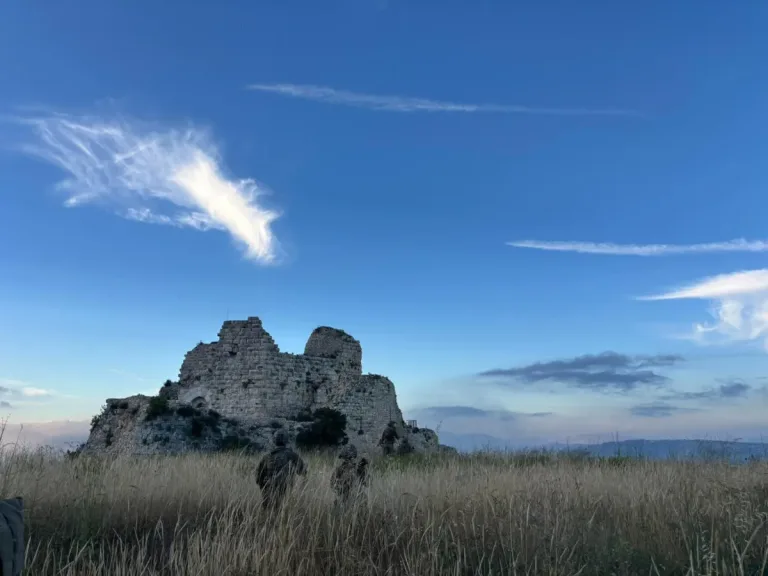
Once the crossings over the river were ready, they began a rapid crossing and breached the routes where Hezbollah had a significant presence. “We quickly moved to the other bank, and to the foot of the ridge,” Colonel Shacham recounts, “We immediately secured the area, including clearing the villages and destroying the infrastructure within them, as well as entire Hezbollah outposts, which contained extensive tactical missile and anti-tank capabilities, which the terror organization has used extensively in recent months.” This was a rapid stage, which allowed for a more significant entry of forces, on the way to capturing Beaufort and Saluki.


Indeed, within a few days, our fighters completed the mission. “Standing there, on the summit of the ridge, alongside all the forces that participated, evoked mixed emotions,” admits the commander, “both looking back at the northern communities we are defending, but also remembering and thinking about those brave fighters who fell on the way there.”
Currently, the main effort is focused on clearing the area of terrorists, as well as identifying and destroying Hezbollah’s strategic assets within it. So far, over 100 strikes have been carried out with the assistance of the Air Force, and approximately 20 terrorists have been neutralized, alongside hundreds of pieces of weaponry found in civilian homes in the area. In parallel with the combat efforts, within a few days of the operation’s commencement, logistics routes for trucks and Humvees were already established to meet the needs of the forces operating there.
And in moments like these, of intense fighting in enemy territory, Colonel Shacham’s role as brigade commander becomes even more defined. “Like any combat commander, my mission is to push my people to achieve. And my place must be at the front. To push them forward. Even in difficult moments, when we lose brave soldiers in battle, I stand with them at the front, fighting alongside them, with them in engagements, in evacuating the wounded. And I step in to help. This is my duty as their commander.”
In the last two years, the Givati Brigade’s activity has focused on Gaza and the communities in the Gaza envelope. For the brigade, which led the fighting within the Strip, with its constant presence in the command’s areas, the move north is not just about the new sector. Now, they had to quickly adapt to a less familiar terrain, a sharp change. “We knew what we were facing, and we prepared ourselves for this change and challenge, to arrive as prepared as possible.”
Between the fighting in Gaza and the commencement of ground operations in Lebanon, all battalions managed to take up defensive positions in the north. “During this period,” the commander emphasizes, “we did not forgo any training, any exercise, or preparation for the new terrain. We studied the nature of the enemy and the fighting we would encounter, we practiced them, and we deeply embedded the changes within the entire brigade.”
And so, about two months ago, Givati fighters, their commanders, soldiers, and staff arrived at the assembly areas and command centers, for the final moments before crossing the border. Even for Colonel Shacham, it was a significant milestone: “Before I am a brigade commander – I am a fighter, and I remember the feelings of a fighter in such moments. I knew I was responsible for the thousands of soldiers standing before me. And I wake up in the morning and fall asleep at night with that thought in my head, and even now, as we achieve such great accomplishments, this is what drives me.”