










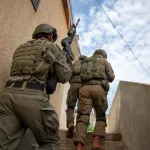

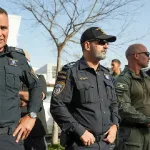
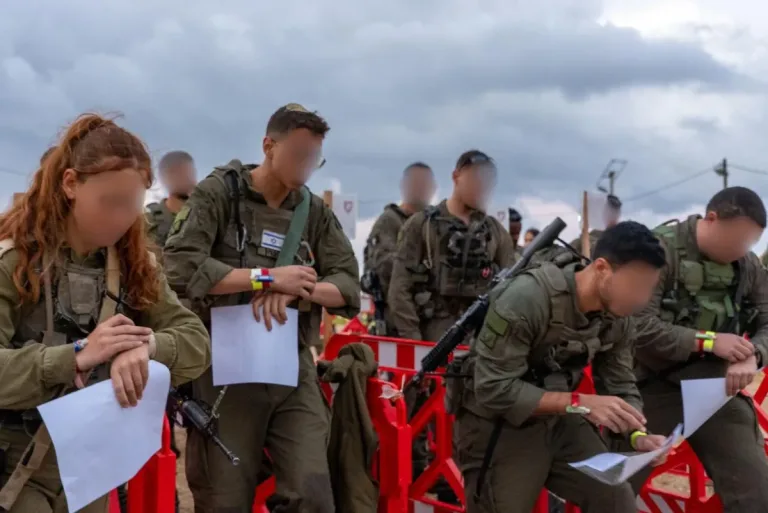
After a long period of fighting, during which operational readiness was primarily measured in real-time in the field, the combat fitness array has recently reinstated the professional assessments that were suspended for all combat officers in the army – from the rank of Second Lieutenant to Colonel. This time, it’s in an updated version, rebuilt according to the insights and lessons of the past two years.
“This is a fitness test that simulates the battlefield and examines the physiological and mental capabilities of commanders in the field,” describes Colonel Avi Dahan, Head of the IDF’s Combat Fitness Department. “It examines and precisely identifies the components required of them in combat – from Gaza to Lebanon.”
The last time official assessments were held was in March ’23. “Since October 7th, it was impossible to assess officers broadly and accurately, because everyone was in combat,” the Head of Department explains simply. “Now, as we are focused on restoring basic fitness to IDF soldiers and their commanders, we are looking at the previous assessments from a different perspective – and this time, we are launching them in an improved and precise version, one that incorporates the physiological and mental insights from combat.”

And what does it look like in practice? The test is structured as a sequence of tasks that simulate rapid transitions between battlefield situations, and includes four different segments measured under time and pressure: foot movement while carrying an additional 20 kg of personal combat equipment, precise navigation on a topographical map, overcoming a series of obstacles, and finally – shooting after exertion.
“The commanders arrive with their full combat equipment, add weight to simulate battlefield loads, and begin a 4-3 km navigation in challenging terrain,” he details. “This time, navigation received extra attention in the test, because in today’s reality, it requires decision-making under physical and cognitive stress, in a way that wasn’t present before.”
From there, they immediately proceed to a series of obstacles that simulate combat in mountainous terrain – like the kind they have fought in for a considerable time. “The commanders arrive already tired, with a high heart rate, to a section that reflects the transition between different terrains on the battlefield,” explains the Head of Department.
First, they encounter the ‘Marines’ net, which they must climb. “What makes it particularly challenging is that it requires coordination between hands and feet, all under significant exertion,” he describes, and immediately continues to the next ‘obstacle’: the terraces. “They truly simulate traversing boulders in mountainous terrain, like in the northern arena for example, and this is perhaps what’s most unique here.”

They advance towards a double-sloped beam, which adds to and tests their stability and balance. “This is a complex task by any measure even in a routine situation, but significantly more so when they are doing it with combat equipment and an additional 20 kg on them.”
The next stage: obstacles simulating combat in urban terrain – like what they encountered extensively in the Gaza and Judea and Samaria sectors. “There is passage over walls and barriers, reminiscent of climbing and breaching in an urban environment. The focus of each exercise is different, but the principle is the same – to test them in a situation where all of this happens sequentially, without breaks, as fatigue accumulates and the difficulty only increases.”

At the end of the obstacle sequence, commanders engage in shooting under exertion. “After all the movement and transitions, they reach the final point with their bodies already exhausted, and precisely then – they are required to fire 10 rounds,” he details.
And as part of the ‘version update’, the nature of the shooting has also changed: “We have incorporated shooting through cover in the test, similar to what commanders encountered in urban combat. This requires a higher level of weapon proficiency and creates a broad change in the training itself.”

The assessments are conducted on a broad and continuous basis for a total of 4 months, with hundreds of commanders from all combat units and brigades participating in parallel sessions each week. The final score is a weighted average of execution time, navigation accuracy, obstacle completion, and shooting results. “Each commander receives a detailed update on their result at the end and knows what they achieved – all based on precisely constructed performance tables.”
Alongside individual measurement, the fitness tests also serve as a competition between different units. The officers are divided into ‘houses’ according to units, brigades, and ranks, with each person having their own performance table. “There is a house for training units, a house for infantry brigades, and a house for commando units. At the end of the period, we weigh the scores and announce the outstanding performers in a festive ceremony – both individually and as a group.”

At the peak of the activity so far, over 540 officers were tested in a single day. “This indicates,” Colonel Dahan is convinced, “the high motivation of the forces to come, be tested, and prove their fitness. In the end, from one end to the other, approximately 5,000 in total are expected to go through here – from junior ranks to senior command levels.”
For Colonel Avi, the message is quite clear, and the goal has already been achieved. “In the end, what’s important isn’t the test itself as much as the preparation and effort invested before they arrived. The most significant thing is personal example – when a commander knows they passed the test and met the standard, their subordinates also know they have someone to rely on in the field.”

And if you’re clear about which unit will take the trophy or have already bet on a favorite brigade – you should stop and think again, because in this competition, nothing is decided yet, and until the final whistle blows, the clock is still ticking. It’s likely that the result, as the commanders know well from their operational experience in the field, will only be revealed at the end – and perhaps it will be surprising, who knows.
Related Topics