
By Pesach Benson • May 12, 2026
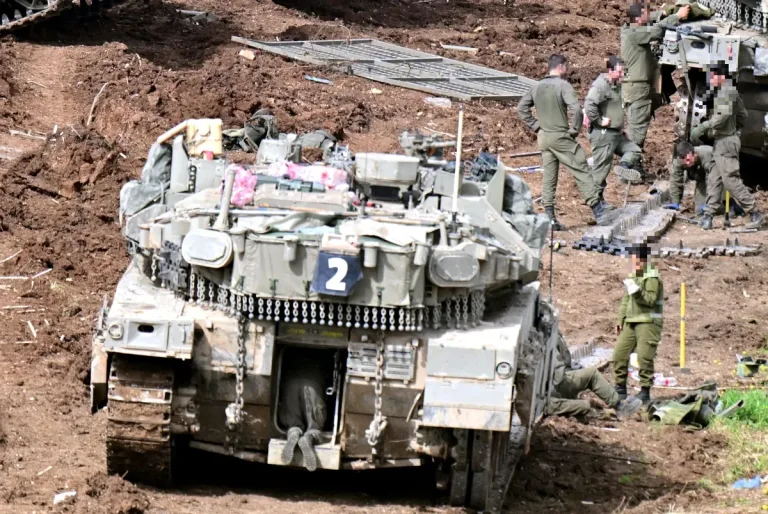
Jerusalem, 12 May, 2026 (TPS-IL) — Israel entered the war in Gaza facing critical ammunition shortages due to years of failure to strengthen domestic weapons production, according to a State Comptroller audit published Tuesday.
More than two years of war “further highlighted Israel’s need to strengthen the independence of Blue and White weapons production and reduce dependence on foreign countries and international interests in the supply of weapons, raw materials and components necessary for production,” State Comptroller Matanyahu Englman said.
He added that the loss of domestic production capabilities over more than a decade, including the shutdown in 2012 of the ability to produce a key raw material, increased reliance on foreign suppliers and made battlefield conditions more difficult for soldiers.
The State Comptroller independently reviews government preparedness and effectiveness.
The report examined Israel’s “Blue and White” defense production policy, which aims to ensure that key weapons systems and munitions are manufactured domestically to reduce reliance on foreign suppliers during wartime.
According to the audit, successive governments failed since 2007 to address persistent deficiencies in defense production capacity despite repeated warnings and internal discussions.
Englman said the Security Cabinet did not hold dedicated discussions on defense production independence before the war, while the National Security Council also failed to initiate strategic preparedness debates despite its mandate.
The audit found that Israel Aerospace Industries and Rafael Advanced Defense Systems absorbed significant wartime costs to maintain production continuity. One executive was quoted as saying the Defense Ministry did not fully reimburse emergency investments used to expand capacity. Englman warned that reliance on state defense companies to compensate for systemic gaps is neither formally regulated nor sustainable.
The Defense Ministry Responds
In response, the Defense Ministry said weapons independence is “at the core of the Ministry’s strategy” and that it is advancing a multi-billion-shekel plan to expand domestic production under the Blue and White framework.
The ministry said new production infrastructure has been established and existing lines expanded across roughly 20 critical areas. It added that wartime measures significantly increased output through improved raw material management, removal of bottlenecks, and expanded defense industry workforces.
It also highlighted a long-term procurement and force-building plan under the “Defender of Israel” framework, approved by the prime minister and defense minister, with an estimated scope of about NIS 350 billion ($120.6 billion) per decade.
Embargoes and Global Demand Strained Supply Chain
Following Hamas’s October 7, 2023 attack and the ensuing Gaza war, Israel’s defense supply chain faced additional strain. The audit said several countries, including some close allies, imposed formal or informal restrictions on exports of weapons components and raw materials during the conflict.
In one case, a critical material used in munition production became extremely difficult to obtain after an embargo by a foreign state. Englman wrote that the resulting shortage reached “a level that endangered the lives of fighters,” without identifying the material or system involved.
The report also noted that global demand for military equipment surged after Russia’s 2022 invasion of Ukraine, driving sharp price increases. Costs for some components ordered after the war began rose between 25% and 365%.
It found that declining ammunition orders between late 2016 and mid-2023 weakened production lines, leaving them less prepared for the post-October 7 surge in demand. Israel’s domestic production of certain raw materials had also been shut down more than a decade earlier for commercial reasons, increasing dependence on foreign suppliers that later imposed restrictions.
Reactivating dormant production lines during the war cost hundreds of millions of dollars.
Englman criticized multiple levels of government, including the Defense Ministry and the Israel Defense Forces, for failing to address long-standing deficiencies despite repeated discussions since 2007. Former prime minister Yair Lapid declined to meet Comptroller staff during the audit process.
A public advisory committee in January 2025 later recommended multi-billion-shekel investment to expand domestic production capacity. However, Englman warned that as of mid-2025 only limited funding had been committed, cautioning that without sustained oversight and implementation, the structural weaknesses identified could persist in future conflicts.