















Two Caregivers Held as Police Probe Infant Deaths at Unlicensed Jerusalem Daycare
Israeli police are probing severe neglect at an unlicensed Jerusalem daycare after two infant deaths; two caregivers are held as shocking details emerge.


Israeli police are probing severe neglect at an unlicensed Jerusalem daycare after two infant deaths; two caregivers are held as shocking details emerge.
Archaeologists uncover a 2,000-year-old Jewish ritual bath near Jerusalem's Temple Mount, revealing new insights into Second Temple life just 30 meters from the.
By TPS-IL • December 29, 2025
Jerusalem, 29 December, 2025 (TPS-IL) — A rare archaeological discovery beneath Jerusalem’s Western Wall Plaza has uncovered a rock-hewn Jewish ritual bath from the final days of the Second Temple period, adding new physical evidence of Jewish life and practice around the Temple complex nearly 2,000 years ago, researchers told The Press Service of Israel.
“Many ancient ritual baths have been found in Jerusalem, but not in such proximity to the Temple location,” excavation director Ari Levy of the Israel Antiquities Authority told TPS-IL.
“It is significantly close to the Temple. It is located only 30 meters (98 feet) west of the Temple site and in proximity to the main entranceways to the Temple Mount,” Levy said.
The mikvah was sealed beneath ash layers that bear witness to Jerusalem’s destruction by the Romans nearly 2,000 years ago. Ash remains were found inside the sealing layer, along with pottery vessels and stone containers characteristic of Jewish households in the late Second Temple period, Levy said. According to the IAA, the context of the ash layer leaves little doubt that the installation was in use until the final moments before the city’s destruction.
The mikvah is rectangular in shape, measuring just over three meters in length (about 9.8 feet), with plastered walls and four carefully carved steps leading down into the bath.
The excavation area lies in close proximity to what were once the main entrances to the Temple compound, including the Great Bridge to the north and Robinson’s Arch to the south. Previous digs in the area have revealed additional ritual baths and stone vessels, reinforcing evidence that the surrounding neighborhood was closely tied to Temple activity and observance of Jewish ritual purity laws.
Researchers believe the mikvah served both local residents and the large numbers of pilgrims who visited Jerusalem, particularly during festivals. In Temple-era Jerusalem, ritual purity was not limited to priests or formal religious settings, but was woven into daily life throughout the city.
The excavations are being conducted in parallel with development work to make underground areas of the Western Wall Plaza more accessible to the public. The mikvah is expected to become part of the expanded underground visitor route beneath the Western Wall Plaza, offering the public a tangible connection to everyday life in ancient Jerusalem, the IAA and the Western Wall Heritage Foundation said. The foundation administers the daily affairs of the Western Wall.
The Western Wall, the holiest spot where Jews can pray, is the only remnant of a retaining wall encircling the Temple Mount built by Herod the Great in the first century.
The Temple Mount, where the First and Second Jewish Temples were built, is the overall holiest site in Judaism.
JerusaLANG creates a unique space in Jerusalem for diverse communities – Jews, Arabs, religious, secular – to meet and converse, fostering connection since.
By Shalhevet Eyal • December 18, 2025
Jerusalem, 18 December, 2025 (TPS-IL) — As the cool Jerusalem air settles over the courtyard of the HaMif’al building, the artists’ space turned bar begins to fill with people. Under warm lights on the inner stone floor, a circle of eight people — Jews and Arabs, religious and secular — sit close together, leaning into a lively conversation in Arabic about faith. Even from a distance, their hands move animatedly, the rhythm of their voices rising and falling in a shared language.
On the patio, a group of Russian speakers sit together, their conversation flowing with the ease of a familiar tongue. Not far away, a cluster of young Turks stand in a loose circle, talking with quick gestures, their voices threading through the winter air. Dozens more people drift between groups in the courtyard and inside, guided by the colorful stickers on their jackets announcing the languages they speak or hope to learn.
This is JerusaLANG, a weekly gathering where Jerusalem’s patchwork of cultures becomes visible, audible, and unexpectedly intimate.
“One thing I take from these events, and what gives me the strength to keep going, is seeing how people meet each other without media or politicians in the middle,” JerusaLANG’s founder, Avner, tells The Press Service of Israel. “Most people, I believe, are good, and you can see it here.”
Avner started the event in 2023, shortly before the war. The inspiration? He was walking through Jerusalem when he realized how many languages he heard — Spanish, English, Arabic, Hebrew, French, Chinese. “I thought: let’s put them in one place and just let people talk,” he recalled.
For Julieta, a Ph.D. student from Argentina, the weekly get-togethers opened unexpected doors. “I met Korean girls here for the first time,” she says. “We ended up meeting again and going on a trip. It was amazing. I love Korean culture.”
Aaron, a Hebrew teacher who immigrated from Uzbekistan, says the evening feels like “real Jerusalem — young people from different backgrounds, full of good interactions and good vibes.” He speaks Hebrew, English, and Bukharian Persian, a Jewish dialect of Persian, and is always struck by the variety of languages he hears around him.
Leigh, who recently moved from New York, stands near the edge of the space and watches people move between groups, switching languages mid-sentence. “Speaking Hebrew fluently helped me connect with people here,” she says. “Language is how you understand someone’s perspective.”
Inside, near the bar, Evyatar and Suhail — friends who met here about a year ago — laugh as they recall how their friendship grew. Evyatar, a Jewish Israeli, came wanting to learn Arabic. Suhail, a Christian Arab from Amman, wanted to practice Hebrew. “Sometimes it’s just chemistry,” Evyatar says. Suhail remembers how that chemistry once led them, after a late trip to Tel Aviv, to spend the night sleeping at the yeshiva where Evyatar studied. “Even the Shabbat dinner was really good,” he recalled.
As the night deepens, the mix of voices becomes a soft chorus — English from the inner courtyard, French from the patio, Mandarin and Spanish rising from small groups inside. People hold beers or hot cider against the cold, peel language stickers from their coats, and drift from one conversation to the next, accents wobbling, words gently corrected — with a smile.
Discover a 1,300-year-old Ancient Menorah Pendant unearthed in Jerusalem. This rare find by the Israel Antiquities Authority challenges assumptions about Jewish.
By Pesach Benson • December 15, 2025
Jerusalem, 15 December, 2025 (TPS-IL) — A remarkably rare 1,300-year-old lead pendant bearing a seven-branched menorah has been uncovered in Jerusalem, shedding new light on Jewish presence in the city during a period when imperial authorities officially barred Jews from entering, the Israel Antiquities Authority announced on Monday.
The discovery was made in an archaeological park adjacent to the Temple Mount during large-scale excavations conducted in recent years.
The small, disk-shaped pendant dates to the 6th to early 7th centuries CE, during the Late Byzantine period. Cast almost entirely of lead, it is decorated on both sides with an identical image of a menorah framed within a circular border. Only one other ancient lead pendant bearing the menorah symbol is known worldwide, an object of unknown provenance housed at The Walters Art Museum in Baltimore.
The pendant was discovered by chance inside the rubble of a Late Byzantine structure that had been buried beneath an approximately eight-meter-thick layer of fill. That fill was deposited in the early 8th century as part of extensive construction work connected to the erection of monumental Umayyad buildings in the area.
“One day while I was digging inside an ancient structure, I suddenly saw something different, gray, among the stones,” said Ayayu Belete, a City of David worker who uncovered the artifact. “I picked the object up and saw that it was a pendant with a menorah on it. I immediately showed the find to Esther Rakow-Mellet, the area director, and she said it was an especially rare find. I was deeply moved and excited!”
Archaeologists determined that the pendant was designed to be worn on a necklace, with a loop cast at its top. One side of the object was well preserved, while the other was partially obscured by patina, a natural weathering layer. Each menorah features a central shaft with three arms extending from each side, topped with horizontal bars and stylized flames. An XRF test carried out at the Israel Antiquities Authority’s analytical laboratories found the pendant to be composed of approximately 99% lead.
According to Israel Antiquities Authority researchers Dr. Yuval Baruch, Dr. Filip Vukosavović, Esther Rakow-Mellet, and Dr. Shulamit Terem, the object is exceptional not only for its iconography but also for its material.
“A pendant made of pure lead, decorated with a menorah, is an exceptionally rare find,” they said. “The double appearance of the menorah on each side of the disc indicates the deep significance of this symbol, and the central place of the menorah in the visual expression of connection to the Temple and its memory, even in periods long after the destruction of the Temple.”
The historical context of the discovery raises intriguing questions. During the Byzantine period, Jews were formally prohibited from entering Jerusalem, making the presence of a personal Jewish object in the city difficult to explain. Scholars are left to consider whether the pendant belonged to a merchant, an official visitor, a clandestine pilgrim, or someone who managed to reside in the city despite the ban.
“This is an unusual find,” said Dr. Baruch, who has directed excavations at the site for nearly 25 years. “This pendant, bearing the symbol of the menorah, is not just a material object; it is a personal seal, an emblem of memory and identity, which probably belonged to an anonymous Jew who chose to wear it around his or her neck.”
He added that the choice of lead suggests the pendant may have served as an amulet rather than jewelry, noting that lead was commonly used for amulets in the Byzantine period. “During the Byzantine period, the menorah became a symbol of national memory, and it expressed the expectation of national revival among the Jewish communities in the Land of Israel and the Diaspora,” Baruch said. “Despite prohibitions and difficulties, Jews did not stop coming to Jerusalem.”
Israeli Minister of Heritage Rabbi Amichai Eliyahu said the find reinforces a broader historical narrative. “The exciting find of the menorah pendant joins a series of testimonies that continue to be discovered in Jerusalem, and that tell the story of the continuity and devotion of the Jewish people in the city,” he said.
A menorah is a seven-branched candelabrum that is one of the oldest and most important symbols of Judaism.
In antiquity, a menorah of pure gold stood in the Jewish Temple in Jerusalem and was lit daily by the priests. It took on greater symbolism in the 2nd century BCE after the Maccabee revolt. When they sought to rededicate the Temple, the Maccabees found only one small jar of ritually pure oil — enough for a single day. Miraculously, the menorah remained lit for eight days, enough time to prepare more.
The pendant will be displayed to the public during Chanukah in Jerusalem.
Archaeologists uncover one of Jerusalem’s longest Hasmonean-era walls under the Tower of David. This impressive discovery offers rare insight into ancient
By TPS-IL • December 8, 2025
Jerusalem, 8 December, 2025 (TPS-IL) — Jerusalem’s Tower of David complex has yielded one of the most impressive archaeological discoveries of recent years: an exceptionally well-preserved section of the city wall built during the Hasmonean period in the late second century BCE, the Israel Antiquities Authority announced on Monday. The excavation director told The Press Service of Israel that the newly exposed fortification is among the longest and most intact stretches of ancient defensive architecture ever unearthed in the city, offering rare insight into Jerusalem at the height of Hasmonean rule.
The discovery was made during excavations led by the Israel Antiquities Authority (IAA), when workers clearing the area uncovered a monumental fortification measuring more than forty meters in length and roughly five meters in width, preserved far better than expected for a structure dating to the Second Temple era.
Dr. Amit Re’em, the excavation director, told TPS-IL the newly revealed wall corresponds with what ancient writers, including the first century historian Josephus, described as the First Wall that encircled Jerusalem before its expansion under later rulers. Josephus recorded that the Hasmonean fortifications were formidable, punctuated by dozens of towers and engineered to withstand siege.
“It’s one of the most significant segments of the Hasmonean wall ever found in archaeological excavations in Jerusalem,” Re’em said. “It’s one of the only times we’ve found the full width of this wall. The interesting thing is that it has been demolished in a systematic and surgical manner– not due to gradual decay or a battle, ” he added.
The exposed stones bear the hallmark of the period’s royal construction, with massive blocks dressed in the characteristic chiseled style associated with Hasmonean architecture. Although only the lower portion survives, archaeologists estimate the wall originally stood more than ten meters high. Finds from earlier digs in the area support this interpretation: in the 1980s, excavators uncovered a cache of hundreds of catapult stones, sling bullets and arrowheads at the foot of the wall, physical evidence of the Seleucid siege led by Antiochus VII Sidetes in 134 to 132 BCE.
That siege is a pivotal episode in Jewish history and provides one possible explanation to the wall’s systematic destruction pattern, Re’em said. Ancient accounts describe Antiochus surrounding Jerusalem and bombarding its defenses. According to Josephus, the Hasmonean leader John Hyrcanus I eventually negotiated a truce, which required dismantling parts of the city’s fortifications as a condition for lifting the siege. Re’em told TPS-IL the newly exposed wall segment may be a remnant of that political moment, intentionally brought down rather than left to decay over time.
Another possible explanation, Re’em added, is tied to Herod the Great, who came to power in 37 BCE. Re’em suggests that Herod, eager to mark a dramatic break from the Hasmonean dynasty he replaced, systematically removed their monumental works to reshape Jerusalem in his own image. The deliberate nature of the destruction seen in the current excavation, which is located exactly under the accepted location of Herod’s palace, fits this pattern.
“This is a possible political explanation. Herod wanted to send a message, and systematically demolishing his predecessors’ work is how you send a message in the ancient world,” Re’em told TPS.
The discovery will become a central feature of the Tower of David Museum’s new archaeological wing. Museum officials say visitors will soon be able to stand on a transparent floor above the ancient stones and view them alongside installations by contemporary artists.
Jerusalem’s Tower of David — also known as the Jerusalem Citadel — is one of the city’s most iconic landmarks. Despite its name, it has no connection to King David; the title was mistakenly applied in the Byzantine period and stuck.
Israeli police entered UNRWA’s Jerusalem compound over unpaid taxes and security concerns, Jerusalem Deputy Mayor confirms. Officers raised an Israeli flag.
By Pesach Benson • December 8, 2025
Jerusalem, 8 December, 2025 (TPS-IL) — Israeli police raided the Jerusalem headquarters of the United Nations Relief and Works Agency on Monday, raising an Israeli flag over the compound.
Jerusalem Deputy Mayor Arieh King confirmed to The Press Service of Israel that the raid was carried out because of several years of unpaid property taxes and to collect intelligence on who was operating the compound. An Israeli ban on UNRWA has been in force since January 2025.
“The police entered the compound for the first time to collect information about who is de facto controlling the place,” King told TPS-IL. “But for the past year, there has been activity. If it’s against the law, the law needs to be enforced.”
King added that the people holding the compound were not paying municipal property taxes. According to King, UNRWA owes the city millions of shekels in unpaid taxes. “So the municipality asked the police to find out who the city should collect the money from. UNRWA is not allowed to operate there, so who is running the place?”
King said raising the flag was an important symbol because the compound is located in a Jewish neighborhood and it sends a message to UNRWA.
“People need to remember that UNRWA was involved in the terror attack and massacres of October 7. UNRWA cars were used by Hamas, and UNRWA compounds, schools, clinics, and kindergartens in the Gaza Strip were used by Hamas to hide Israeli hostages and to bury Israeli bodies in the compounds. There’s no difference between UNRWA in Gaza and UNRWA in Jerusalem,” he told TPS-IL.
UNRWA has been under fire for years, with Israeli officials demanding the agency be stripped of its authority in Gaza and defunded amid revelations that members of the agency’s staff participated in Hamas’s October 7 attacks. Despite Israeli, U.S., and some European opposition, the U.N. General Assembly on Friday voted to extend UNRWA’s mandate for three more years.
Palestinian refugees are the only refugee population with its own dedicated UN agency. The rest of the world’s refugees fall under the mandate of the UN High Commissioner for Refugees.
Around 1,200 people were killed, and 252 Israelis and foreigners were taken captive by Hamas during the October 7, 2023, attack on southern Israel. The body of Israeli Police Master Sgt. Ran Gvili is the last remaining in Gaza.
The youth of Israel and Kosovo come together in a groundbreaking event fostering dialogue and friendship, shaping a brighter future for the region.
The youth played, connected, and built friendships with Jewish and Arab teens from Jerusalem and Abu Ghosh. The Director General of the Ministry for Regional Cooperation and his team met with the youth and with Kosovo’s Ambassador to Israel, Ms. Ines Demiri.
The event was led by the Abu Ghosh Community Center and served as a rare opportunity for a productive connection between Israel and Kosovo. The entire event was supported by the Ministry for Regional Cooperation – promoting values of dialogue, friendship, and cross-cultural understanding from a young age, and strengthening ties between diverse communities through shared activities, participation, and listening.
This is a living example of how real connections are built – the future generation of Israel and the region, with big hearts and open minds.
Train service fully restored in Tel Aviv after deadly incident halts rail corridor, causing widespread delays. Police investigating.
By Pesach Benson • November 30, 2025
Jerusalem, 30 November, 2025 (TPS-IL) — Tel Aviv train services were fully restored late Sunday morning after a deadly incident near a busy Tel Aviv station caused nearly two hours of widespread delays across the country.
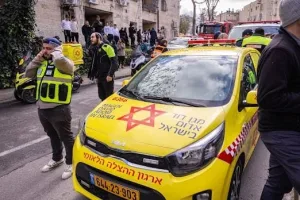
Israel Railways halted traffic between Tel Aviv HaHagana and Lod–Ben Gurion Airport stations after a man fell onto the tracks and was struck by a passing train near the Ganot junction. Magen David Adom emergency responders declared the man dead at the scene. Police are investigating.
Israel Railways said the individual had entered the track area in violation of safety regulations. Police allowed limited rail movement using a single track before giving approval for full service to resume at 09:50.
The shutdown, which began during the morning rush, triggered severe disruptions throughout the Tel Aviv metropolitan area and Dan region. Israel’s busiest north–south lines run through this corridor. Stations across Tel Aviv, including Savidor Center, saw large crowds of stranded passengers and soldiers waiting for updates as trains were rerouted or canceled.
The incident caused delays of more than 90 minutes on key commuter lines. Authorities said operations have now returned to normal.
Israel approves plan to reunite families of Indian Jewish community in Nof HaGalil, expanding northern Israeli communities and welcoming Bnei Menashe
By Pesach Benson and Omer Novoselsky • November 26, 2025
Jerusalem, 26 November, 2025 (TPS-IL) — Nof HaGalil Mayor Ronen Plot said his city is ready to welcome the next wave of Indian Jews, known as the Bnei Menashe, after the government approved a plan to reunite families and expand northern Israeli communities.
“Nof HaGalil has the ability to absorb everyone,” Plot told *The Press Service of Israel*. “The largest Bnei Menashe community in Israel lives here, about 1,500 people. They were absorbed in an amazing way—working, participating in the education system, running synagogues. They have become an inseparable part of our landscape, and the absorption was very successful.”
The Bnei Menashe, an ethnic group from northeast India’s Mizoram and Manipur regions, have preserved their Jewish identity over centuries despite isolation. Around 4,000 have already immigrated under previous government efforts, but many families remain divided between Israel and India. Rising ethnic tensions in their home region prompted Jerusalem’s new initiative.
Under the plan, 1,200 members of the community are expected to arrive by the end of 2026, with another 4,600 to follow by 2030. Nof HaGalil, located near Nazareth, currently has about 45,000 residents.
“This initiative is about completing that immigration and bringing families back together,” Plot told TPS-IL.
He added that Nof HaGalil’s absorption infrastructure is well-prepared. “We absorbed Ukrainian immigrants at the start of the war, including people who arrived without preparation. We have programs in kindergartens for children who speak Mizo and Kuki [the languages of Mizoram and Manipur], allowing them to maintain their language while integrating. Our absorption department works closely with the Jewish Agency and the Ministry of Aliyah and Absorption.”
The government said the plan would cost NIS 90 million ($27.4 million) in its first phase, covering housing, Hebrew instruction, employment guidance, conversion procedures, and social support. New arrivals will settle primarily in the Galilee region, including Nof HaGalil and other northern cities.
Prime Minister Benjamin Netanyahu called the plan “an important and Zionist decision that will strengthen the north and the Galilee.”
Minister of Aliyah and Absorption Ofir Sofer described it as “a blessing for the Galilee and for Israel as a whole,” while Finance Minister Bezalel Smotrich said it will reunite families who “have carried the longing for Zion for generations.”
A delegation will travel to India next week to assess community members’ eligibility for immigration.
Plot expressed confidence that newcomers would integrate quickly. “Many in the community already serve in elite army units and the Border Guard. Adults work in agriculture, industry, and education, while young people attend universities. Seeing this success will encourage newcomers to fully integrate into Israeli life,” he said.
The Bnei Menashe—literally “sons of Manasseh”—claim descent from one of the Ten Lost Tribes of Israel, exiled by the Assyrian Empire more than 2,700 years ago. Their ancestors wandered through Central Asia and the Far East for centuries before settling in what is now northeastern India, near the borders of Burma and Bangladesh.
Over the centuries, the Bnei Menashe maintained Jewish practices, including observing the Sabbath and holidays, keeping kosher, and following the laws of family purity.
Tradition holds that the Jews of India first arrived in the region during the holiday of Tu B’Shevat after surviving a shipwreck around 2,000 years ago. According to legend, the Prophet Elijah appeared to them, promising that they would prosper in India and that their descendants would eventually return to the Land of Israel.
New X transparency tool reveals fake Gaza eyewitnesses tweeting from abroad, exposing online deception and influence.
By Pesach Benson • November 23, 2025
Jerusalem, 23 november, 2025 (TPS-IL) — A new feature on X, Elon Musk’s social media platform formerly known as Twitter, has pulled back the curtain on a sprawling network of fake accounts posing as eyewitnesses from Gaza. Users claiming to report under bombardment were revealed to be posting from countries including Afghanistan, Pakistan, Russia, Indonesia, and the United Kingdom, exposing an online industry of deception and influence almost overnight.
The update, part of X’s broader transparency initiative, adds a small “About this Account” button to profiles, displaying the country of operation, app installation location, account creation date, and the number of username changes. Users discovered numerous fakes, often masquerading as Palestinian civilians or Israeli soldiers.
One account claiming to be a “Rafah resident living under bombardment” turned out to be tweeting from Afghanistan. A “sister from Khan Yunis” was actually in Pakistan, a “father of six in a displaced persons camp” lived in Bangladesh, and a “poet from Deir al-Balah” was operating from Russia. Similar deceptions extended to accounts presenting themselves as Israeli soldiers, some based comfortably in London.
Twitter user Motasem A. Dalloul, presented himself as a “Gaza-based journalist” with a blue checkmark signifying him as a verified X user and Paypal link to support his work. But a check showed that Dalloul, who has more than 197,000 followers, is based in Poland. He posted a video purported to show himself walking around ruined buildings, but did not explain why the platform identified him as Polish.
Explaining the new tool, Nikita Bier, X’s head of product, tweeted on Saturday night, “When you read content on X, you should be able to verify its authenticity. This is critical for staying informed about important issues happening in the world. Part of this is showing new information in accounts, including the country an account is located in, among other things.”
The revelation has sparked debate about the broader impact of fabricated accounts. Lt. Col. (res.) Dudi Siman Tov, a senior researcher at Tel Aviv University’s Institute for National Security Studies, told TPS-IL, “There is an impact when it comes to fake accounts that supposedly report from Gaza but are not really from there. It is a matter of principle… The motives are simple: to create a false representation, as if these are authentic reports. It is not only in the Gaza context, also regarding impersonating Israelis… malicious interference.”
Media researcher Noam Bannett told TPS-IL that the influence of such accounts is substantial. “The impact is very large… even if it is a complete lie, when you see something presented in black and white, it penetrates better. That was also the case in Syria, and now in Gaza. People just immediately explode,” he said.
On motivations, he added, “When you talk about Gaza, when you talk about war, there is a much bigger war of consciousness… some are official Hamas people; some are pretending to be civilians to raise funds and influence sentiment.”
Some accounts continue to insist they are genuinely on the ground, despite the location data indicating otherwise. Users have debated whether video content posted by these accounts might have artificially generated or reused backgrounds. X said it is testing a further update that could flag users employing VPNs to hide their location, making such manipulations increasingly difficult.
As news of the tool spread on X, some people tweeted instructions on how to change one’s operating country to their continent.
Bannett reflected on the broader implications: “This is not specifically related to Middle East affairs. Social networks have exploded over the last decade, and much content is consumed without verification. When people see familiar characters or videos, the instinct is to believe. Even with location transparency, the challenge is teaching users to critically assess what they see.”
Israeli security forces dismantle Hamas terror network in Bethlehem, preventing imminent attacks. 40 operatives arrested.
By Ehud Amiton/TPS • November 13, 2025
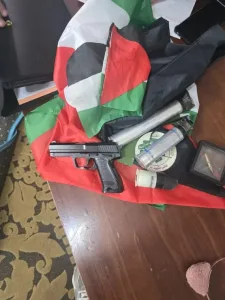
Jerusalem, 13 November, 2025 (TPS-IL) — israeli security forces have foiled a major Hamas terror network in the Bethlehem area, preventing planned attacks against civilians and soldiers, authorities said on Thursday.
“The thwarting of this infrastructure prevented significant bombing and shooting attacks,” the Israel Security Agency (Shin Bet) and Israel Police said.
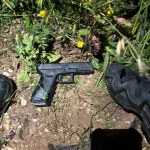
Over recent weeks, around 40 operatives were arrested in more than 15 coordinated operations. Weapons, including M16 rifles, were seized from the cells. Investigations revealed that senior Hamas operatives recruited the squads, acquired arms, and prepared attacks, with one team reportedly ready to strike imminently.