























Jerusalem, 5 March, 2026 (TPS-IL) — While Israel loosened restrictions on public gatherings on Thursday, police announced that Jerusalem’s holy sites will remain closed amid concerns about continued Iranian missile barrages.
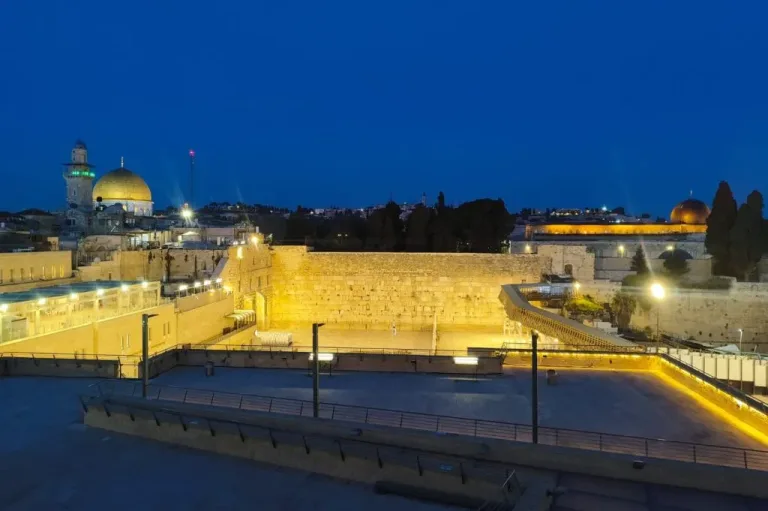
“In accordance with Home Front Command directives and in order to safeguard public safety and human life, all holy sites in the Old City will remain closed,” police said. “Entry will not be permitted to worshippers or visitors of any faith.” These sites include the Temple Mount, the Western Wall and the Church of the Holy Sepulchre.
On Sunday, an Iranian missile warhead landed in an open area just a few hundred meters away from the Temple Mount.
The restrictions come during the Muslim holy month of Ramadan. Friday prayers are traditionally the busiest of the week. They also cut in on the holiday of Purim, which commemorates the Jewish people’s survival from a plot to exterminate them in ancient Persia, as described in the Book of Esther.
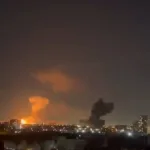
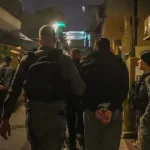
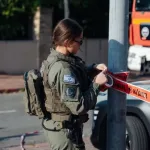
Security forces in the capital have been operating under an emergency deployment since Saturday, when Israel and the U.S. launched airstrikes on Iranian targets. The reinforced presence is intended to ensure rapid operational responses, particularly the ability to quickly reach missile impact sites and assist rescue and emergency teams, police said.
While security restrictions remain tight in Jerusalem’s Old City, the Home Front Command eased nationwide civilian restrictions on Thursday, allowing parts of the economy to reopen after nearly a week of near-total shutdown. Under updated guidelines that took effect at noon Thursday, all regions of the country shifted from a strict policy level to a “limited activity” level that will remain in effect until Saturday evening at 8 p.m.
The new rules permit gatherings of up to 50 people, provided participants can reach a standard protected space such as a bomb shelter within the required time if sirens sound. Workplaces are also allowed to resume in-person operations under the same condition. As a result, many Israelis returned to their workplaces Thursday afternoon for the first time since the conflict began.
However, schools remain closed nationwide, and students will continue remote learning until at least the end of the week. The decision drew criticism from some parents and lawmakers, who said the policy forces many parents to return to work while their children remain at home without supervision.
Opposition leader Yair Lapid said the government’s wartime policy was disorganized and poorly coordinated.
“The situation is particularly severe in special education, where there is no solution for children and young people with special needs,” Lapid tweeted, calling on the Prime Minister’s Office to coordinate with relevant ministries and local authorities.
Economic officials have also pressed for further easing of restrictions. In a letter sent Wednesday to Home Front Command Director-General Maj. Gen. Shai Klapper, Finance Ministry Director-General Ilan Rom warned that the broad shutdown of nonessential businesses is costing the Israeli economy an estimated NIS 9.5 billion ($3 billion) per week.
According to the Finance Ministry, operating under the current limited-activity framework could reduce those losses by more than half, to roughly NIS 4.5 billion ($1.4 billion) weekly.
“Opening the economy, even gradually, will reduce wartime economic costs and help preserve the financial strength needed to meet both civilian and security requirements,” the ministry wrote.
The Home Front Command is expected to conduct another assessment over the weekend to determine whether additional restrictions can be lifted, including the possible reopening of schools next week.
Related Topics