






















By Pesach Benson • January 13, 2026
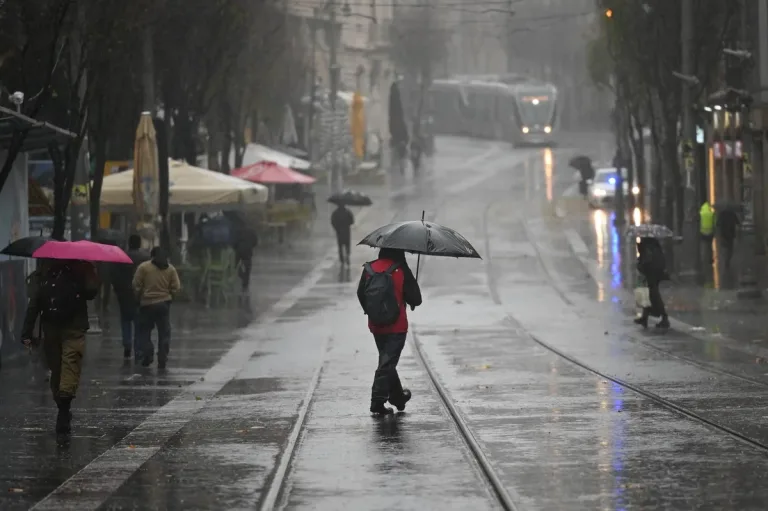
Jerusalem, 13 January, 2026 (TPS-IL) — A winter storm that swept across Israel overnight and into Tuesday killed a woman on Tuesday morning and caused widespread flooding and property damage.
A woman in her 50s was critically injured when a heavy object struck her as floodwaters rose in her home in the Shuafat refugee camp in eastern Jerusalem. Emergency medics from Magen David Adom found her unconscious at a nearby security checkpoint and rushed her to Hadassah Ein Kerem Medical Center, where she was later pronounced dead.
The storm brought heavy rain, strong winds, and localized flooding, with rainfall totals reaching as high as 60 millimeters in Majdal Shams in the northern Golan Heights. Jerusalem recorded 41 millimeters, Haifa 27, and Tel Aviv 22. Snow accumulated to roughly 15 centimeters on Mount Hermon, prompting authorities to keep the ski site closed until at least Thursday.
Wind gusts along the coast reached up to 103 kilometers per hour in Ashkelon, with 85 kilometers per hour in Tel Aviv and more than 80 in Hadera and Haifa Bay. Jerusalem recorded gusts of 65 kilometers per hour. The Israel Meteorological Service said the peak of the winds had passed but warned that additional heavy showers could hit the central highlands and the Judean Plain during the day, with ongoing flood risks in desert streams flowing toward the Dead Sea.
Fire and rescue crews worked throughout the country to assist those trapped by the storm. In Abu Ghosh, near Jerusalem, a man and a woman were rescued from a vehicle submerged in floodwaters. The woman briefly lost consciousness and was treated by medics before being evacuated to a hospital in stable condition. Similar rescues were reported in Mishmar David, Sha’ar Hagai, Kiryat Malachi, Nahal Anaba, and Tzomet Emunim, with emergency teams freeing trapped drivers and passengers from flooded cars and minibuses.
In Rishon LeZion, a wall of an ancient winery collapsed onto several parked vehicles. No one was injured, and Mayor Raz Kinstlich praised residents for avoiding the area. “Fortunately, no disaster occurred. I’m glad the residents are disciplined and not hanging around outside. This is an event that cannot be defined as anything other than a great miracle,” he said.
Elsewhere, falling trees and windblown debris caused several minor injuries. In Ramat Gan, a man sustained a head injury from a fallen tree, and a woman was lightly injured by a flying object. In Nahariya, part of a restaurant building collapsed, though no injuries were reported.
Meanwhile, police closed key routes, including Highway 90 south of Ein Gedi along the Dead Sea, after vehicles became trapped in floodwaters. Traffic was also halted at the Naomi Shemer Tunnel at Jerusalem’s eastern entrance.
Air travel was disrupted as well, with all flights from Haifa Airport canceled. Air Haifa said it is working to provide alternative arrangements for affected passengers.
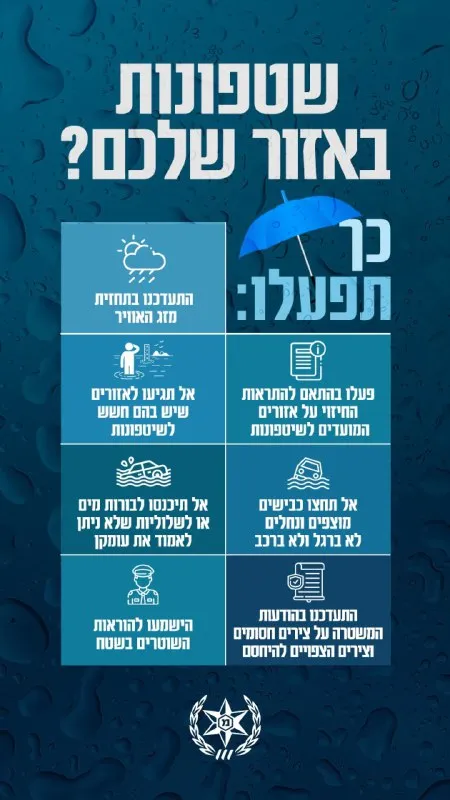
Forecasters said rainfall is expected to ease gradually on Tuesday, with lighter, more localized showers on Wednesday, mainly in central and northern areas. Temperatures are expected to rise slightly toward the end of the week as the storm system moves out of the region. Authorities continued to urge residents to avoid flooded roads and flowing water, warning that even shallow streams can pose serious risks to life.
Related Topics