






















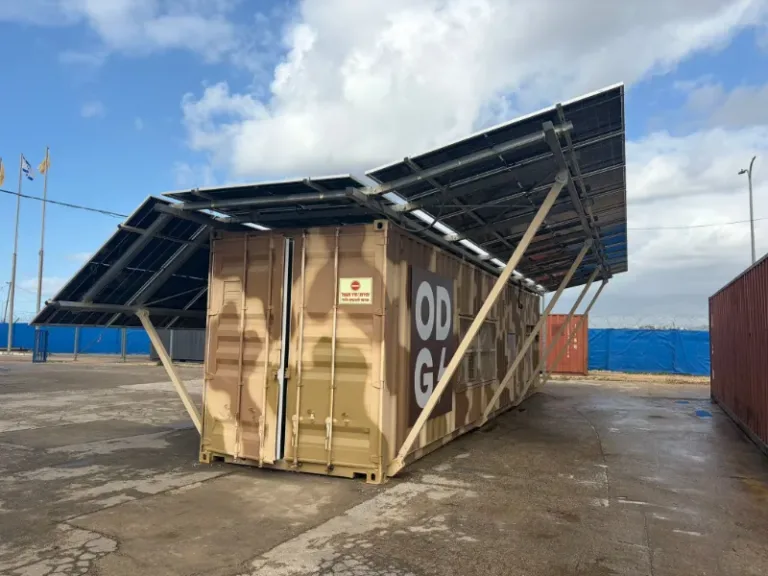
The system, based on a mobile microgrid, integrates Solar Generation, Energy Storage, backup, and smart energy management capabilities. It is designed to enable reliable and continuous power supply at sites of high functional importance, such as communication facilities, emergency infrastructure, security installations, and remote locations. The solution allows for rapid deployment and operation within hours, and represents an advanced alternative to polluting and expensive diesel-based solutions.
In 2024, the project received a grant of 558,000 shekels from the Ministry of Energy and Infrastructure as part of a call for proposals titled “Pioneer and Launch” by the Chief Scientist’s unit. It will be deployed at an operational unit of AMAN (Intelligence Directorate) as part of a collaboration with the Ministry of Defense and the IDF. The objective of the program is to promote innovation in the Israeli energy sector by developing new technologies and demonstrating technologies that have reached an applied stage, under the conditions of the local economy, with the aim of assisting in the implementation of advanced solutions and strengthening Israel’s energy security.
The solution to be inaugurated is based on an advanced concept of strengthening the “edge of the grid” as a central component of the stability of the entire electricity sector. While in the past energy systems focused mainly on large-scale generation and transmission, the new technology allows small but essential sites to ensure energy independence and continuous operation even in emergencies, regional failures, or complex terrain conditions. In doing so, the system contributes both to the operational reliability of the sites themselves and to reducing loads on the national electricity grid.
In addition to strengthening energy resilience, the system is expected to bring significant environmental and economic benefits by reducing the use of diesel-powered generators, lowering fuel consumption, and decreasing maintenance and operational costs over time. The integration of solar generation, Energy Storage, and smart energy management allows for more efficient use of clean energy sources and automatic activation of backup only when needed, supporting Israel’s national goals for emission reduction and the promotion of clean and innovative energy.
Technologies of this type are also important for responding to security needs and essential infrastructure, as the ability to provide independent, reliable, and rapidly deployable electricity is a key component of the functional continuity of security systems and emergency facilities. Mobile microgrid solutions enable continuous operation of sensitive facilities even in emergency scenarios, infrastructure damage, or operations in remote areas, thereby contributing to strengthening Israel’s national and operational resilience.
According to the company, it is precisely these “invisible” consumers that together create a systemic risk, as they rely on outdated, expensive, polluting, and logistics-dependent diesel solutions. In most cases, off-grid solutions are based on an improvised combination of panels, batteries, and generators: systems that work well on paper but struggle to provide long-term reliability in harsh field conditions. The result is high operating costs, dependence on fuel and supply chains, complex maintenance, noise and local pollution, and in times of crisis, functional vulnerability that permeates an entire chain.
“The energy world is accustomed to thinking in terms of megawatts and grids,” says Hagai Taich, founder and CEO of OffdeGrid, “but in reality, there are millions of small energy consumers who are critical: a single communication facility, a water pump, a military installation, or an emergency facility. The real challenge is not just to generate electricity, but to manage it reliably over time – without dependence on fuel and ongoing maintenance.”
The Ministry of Energy and Infrastructure systematically works to promote the Israeli energy industry and assist companies in overcoming major growth barriers, including through support for research and development, field demonstrations, and connecting technological innovation with the needs of the economy. These initiatives are intended to strengthen the local industry, encourage groundbreaking solutions, and position Israel as a global leader in innovation and startups, also in the energy sector.
Related Topics