


















By Pesach Benson • April 7, 2026
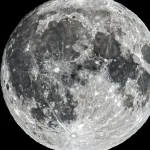
Jerusalem, 7 April, 2026 (TPS-IL) — Israeli scientists are helping guide NASA’s return to the Moon as the historic Artemis II mission marks a renewed push toward crewed lunar exploration. A new study identifies where astronauts are most likely to find usable ice at the Moon’s South Pole — a key target for future missions, the Weizmann Institute of Science announced on Tuesday.
The importance of lunar ice has long been recognized: it can be converted into drinking water, oxygen, and rocket fuel, while also preserving a record of the Moon’s geological history. What remained unclear was whether the ice arrived in rare catastrophic events or built up steadily over time.
The research, led by Prof. Oded Aharonson — in collaboration with researchers from th University of Colorado Boulder and the Planetary Science Institute in Honolulu –found evidence that ice has been accumulating at the lunar poles for at least 1.5 billion years, far longer and more gradually than previously understood, and provides a roadmap for locating it.
“We found that the earlier a region became shadowed, the larger the area that was able to accumulate ice,” Aharonson said. “This trend began at least 1.5 billion years ago and has continued even over the past 100 million years.”
The findings, published in the peer-reviewed Nature Astronomy, suggest a steady, long-term process rather than a single comet impact. Lunar ice behaves like “a leaking bucket being refilled,” with water continuously supplied and lost over time, Aharonson said.
The study also distinguishes between permanently shadowed regions and true “cold traps” — areas cold enough to retain ice year-round. While many craters at the poles are dark, some receive residual heat from surrounding terrain, preventing long-term ice accumulation.
“The longer a given region has been a cold trap, the more ice it has accumulated,” Aharonson explained. By mapping when craters became both shadowed and sufficiently cold, the team determined which sites are most likely to hold large ice deposits.
This analysis reshaped previous assumptions about key locations. Shackleton Crater, long considered a prime target, has been shadowed for billions of years but only became a true cold trap about 500 million years ago. In contrast, several older cold traps near the South Pole, including Haworth Crater, have remained stable for more than 3.3 billion years, making them more promising candidates.
These findings provide guidance for upcoming missions to land astronauts near the South Pole and eventually establish a permanent lunar base. “The gold-standard proof of the existence of ice on the Moon would be a sample of it,” Aharonson said. “It would allow us to compare the chemical composition of water on the Moon with that on Earth.”
The study also sheds light on potential sources of lunar water. Using a simplified model, researchers considered how water is delivered, lost, and redistributed across the surface. Results suggest supply and loss occur relatively quickly, indicating a dynamic system. Possible sources include volcanic outgassing, chemical reactions driven by solar wind, and repeated comet or asteroid impacts over millions of years. The evidence points to multiple ongoing contributors rather than a single origin.
“Finding water beyond Earth in liquid and usable form is one of the most important challenges in astronomy,” Aharonson said. “Planned lunar missions may help us determine the origin of water on the Moon, but they could also teach us much more.”
By pinpointing the oldest and most stable cold traps, the research helps mission planners select landing sites with the highest likelihood of ice, reducing costly trial-and-error exploration.
Related Topics