


























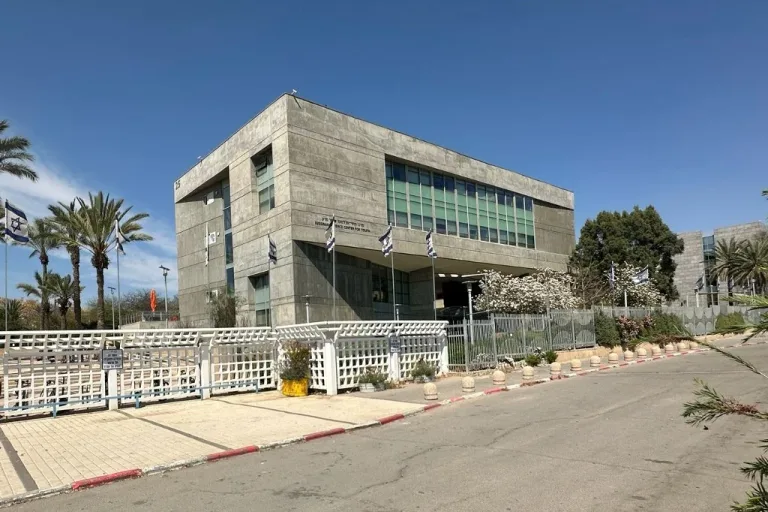
Jerusalem, 16 December, 2025 (TPS-IL) — Israeli startup nT-Tao and Ben-Gurion University of the Negev announced a breakthrough in controlling power delivery for fusion reactors, a key challenge in making fusion energy practical.
Their research, published in the peer-reviewed journal Actuators, introduces a new “nonlinear controller” that keeps power flowing smoothly even as the plasma inside the reactor changes rapidly. Fusion energy is the power released when atomic nuclei combine to form a heavier nucleus, producing large amounts of clean, safe energy, similar to the process that powers the Sun.
Fusion plasma behaves unpredictably, and traditional systems can struggle to maintain stable energy delivery. The new method lets nT-Tao’s system automatically adjust in real time, improving efficiency and reducing the number of experiments needed.
“Pulsed-power control is foundational to compact fusion,” said Natan Schecter, nT-Tao’s director of power electronics. “This work provides a way to stabilize and maximize power delivery under the highly dynamic conditions of plasma formation.”
The research was led by Ohad Akler, a nT-Tao engineer, and Prof. Alon Kuperman from Ben-Gurion University. Akler added, “As fusion moves toward rapid-pulse, high-density designs, these control capabilities become indispensable.”
nT-Tao is developing a compact reactor capable of producing 10–20 megawatts of clean, stable energy. This control method is a crucial step toward making the technology reliable and ready for real-world use in data centers, factories, ships, and even remote towns.
Compact fusion reactors with advanced pulsed-power control could transform remote and off-grid electricity supply. By automatically stabilizing energy delivery even as plasma loads change rapidly, these reactors could provide reliable power to isolated communities or regions with weak grids. Their self-calibrating capabilities also make them ideal for emergency or backup power, ensuring continuous electricity during outages or critical situations without the need for extensive human intervention.
In addition, this technology could significantly impact industrial, commercial, and marine applications. Factories and manufacturing plants could run high-energy processes with stable, carbon-free power, while data centers could benefit from reliable, scalable electricity that adapts to fluctuating computational demands. Similarly, ships and other marine vessels could use compact fusion reactors as a long-term, low-emission power source, reducing reliance on conventional fuels while maintaining operational efficiency at sea.
Related Topics