















By Pesach Benson • December 23, 2025
Jerusalem, 23 December, 2025 (TPS-IL) — Critical security failures in the barrier system surrounding Jerusalem have left significant gaps allowing unrestricted Palestinian access to Israeli territory, with key government decisions dating back nearly two decades still unimplemented, according to a damning watchdog report released on Tuesday.
“The audit revealed that there is insufficient learning in the audited bodies, and similar failures that arose in other sectors have not been corrected. This paints a worrying picture, according to which Palestinians can enter Israeli territory without any control or inspection, at the risk of Israeli residents,” said State Comptroller Matanyahu Englman.
Not taking action is “putting the citizens of Israel at risk of a terrorist attack in eastern Jerusalem consistent with October 7,” he added.
The Comptroller regularly reviews Israel’s preparedness and the effectiveness of government policies.
The audit, conducted between January 2024 and February 2025, found that only “61% of the route has a barrier, and in the rest of the route there is no barrier,” including an 11-kilometer gap, a 6-kilometer gap, and several other sections totaling dozens of kilometers.
According to the report, between 2,000 and 2,400 people illegally entered Israel through the Jerusalem area each quarter during 2022-2024. “This is a serious failure that enables the infiltration of hostile elements into Israel and endangers the residents of Israel,” the comptroller wrote, adding that “the risk in this state of affairs intensifies and is amplified in light of the events of October 7, 2023.”
Perhaps most striking is the revelation that a comprehensive plan to transfer management of the crossings from police to civilian authorities, approved by then-Prime Minister Ariel Sharon in 2005, has never been brought before the government for a vote despite twenty years passing.
“The State Comptroller’s Office views with severity the fact that the civilianization plan for the Jerusalem envelope crossings formulated by the National Security Council and already approved by the Prime Minister in 2005, whose importance was reaffirmed in the Prime Minister’s summary from 2014, was not brought over the years to discussion in the government,” the report states, noting that “even though two decades have passed since its approval.”
The report emphasized that “the failure to make a decision regarding the question of civilianizing the crossings is a severe and ongoing deficiency, which is liable to endanger the forces operating at the crossings, the Israeli population passing through them and the residents of Jerusalem and the State of Israel in general.”
The State Comptroller’s Office estimates that implementing the civilianization would require a one-time budget of approximately NIS 600 million ($187 million) and annual operating costs of NIS 500 million ($155 million), none of which has been allocated.
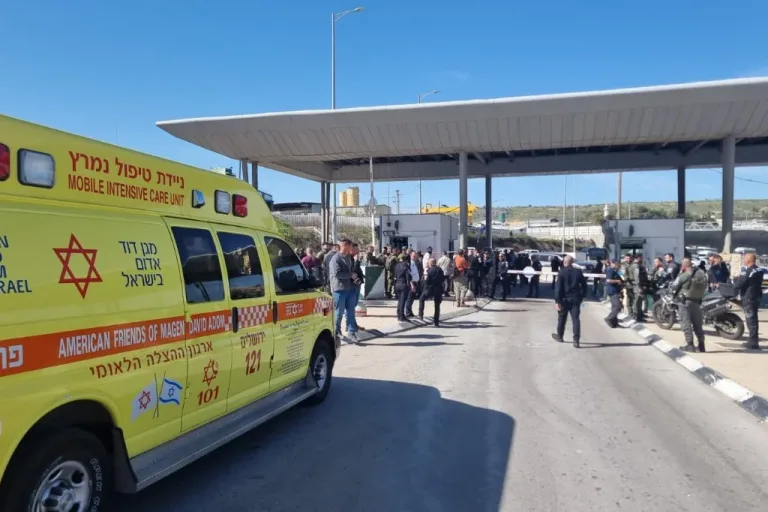
The 16 crossings in the Jerusalem sector, which saw 135,000 pedestrians pass through daily in 2022, suffer from multiple operational deficiencies. The report found that “for approximately 20 years, since the establishment of the Jerusalem envelope crossings in 2005, the Police have been managing the crossings without an operational concept.” The absence of such a framework “leads to a lack of direction regarding the manner of operating the crossings and regarding the resources required for the operational response at the barrier and at the crossings,” the comptroller warned.
The report detailed severe command and control problems, noting that multiple agencies operate at the crossings including regular police, Border Police, the Israel Defense Forces, and civilian security contractors. Most crossings lack permanent commanders, with only two of the 16 crossings having commanders authorized for their positions. “The command over the crossings is not permanent and is sometimes entrusted to a squad commander or a Border Police fighter,” the audit found, warning that “the absence of permanent crossing commanders and frequent turnover of the combat force commander at the crossing create difficulty in command continuity.”
Security gaps extend beyond physical infrastructure. The audit revealed that 31 percent of military police inspection missions went unperformed due to force reductions, and that civilian security guards, many of whom are IDF reservists, were severely depleted when they were called up during the current war. “The Police and the Ministry of National Security did not prepare for staffing the depleted array of civilian security guards at the Jerusalem envelope crossings,” the report states.
The report also found significant discrepancies between IDF observation post records and police records regarding infiltration attempts. In the period from January to May 2024, IDF records showed several hundred “Turkish Knight” alerts (the code name for infiltration events), while police records showed only dozens. “This recording gap may indicate a partial operational response of the arrival of routine security forces of the Jerusalem Envelope Border Police,” the comptroller concluded.
Multiple government decisions from 2006 regarding security responsibility and barrier routes also remain unimplemented. “The Political-Security Cabinet did not discuss the implementation status of these decisions, even though approximately two decades have passed since their approval,” the report found. The comptroller noted that “the deficiencies and gaps detailed in this report regarding the non-implementation of government decisions concerning the Jerusalem envelope have significant security implications, policy implications and even economic implications.”
The comptroller criticized the failure to prepare for mass infiltration scenarios before October 7, noting that “until October 7, 2023, the Jerusalem District did not have a reference threat and reference scenario according to which it would have been possible to prepare with appropriate force structure in the Jerusalem envelope sector to prevent a mass breakthrough into Israeli territory.”
The audit also noted the need for upgrades at the crossings. The report said only four of the 16 crossings have received improvements, while maintenance is hampered by budget disputes between the police and military.
Average wait times at the Qalandiya checkpoint north of the capital — one of the busiest — are 80 minutes for pedestrians and 56 minutes for vehicles. The infrastructure problems were tragically illustrated during Ramadan 2023, when dangerous overcrowding injured 280 people, including children. “This reality endangers the lives of those passing through the crossings,” the report states, warning it could lead to “a severe security incident, especially during the sensitive Ramadan period.”
The report concluded with a stark assessment of the current situation. “Given the long time that has passed since the establishment of the barrier and the gaps that remain in it, the barrier does not provide the required response regarding preventing the entry of illegal residents or hostile elements into Israel,” the comptroller wrote. “These deficiencies amplify the importance of discussion, examination and timely oversight at the level of the political-security echelon.”
Responsibility for correcting the deficiencies, the report states, lies primarily with the Prime Minister, Defense Minister, National Security Minister, and senior military and police commanders.
On September 8, 2025, shortly after the audit period ended, two Palestinian terrorists from villages near Ramallah managed to enter Jerusalem and carry out a shooting attack. Six people were killed and 10 more were injured.
Related Topics