


















By Pesach Benson • January 6, 2026
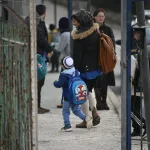
Jerusalem, 6 January, 2026 (TPS-IL) — Nearly 2 million Israeli students faced disrupted education after the October 7 Hamas attacks, with schools lacking basic technological infrastructure and safe spaces despite years of warnings, according to a damning government audit released by the State Comptroller’s Office on Tuesday. Israel’s education system failed to implement critical lessons from the COVID-19 pandemic, leaving students and teachers without adequate equipment, training, or protection when war forced schools to shift to remote learning or operate under rocket fire.
Hamas’ October 7, 2023 attack and Hezbollah’s subsequent daily rocket fire forced Israel’s 5,653 schools into prolonged emergency operations, exposing systemic failures in preparedness that had been identified but never addressed, according to State Comptroller Matanyahu Englman. The State Comptroller regularly reviews Israel’s preparedness and the effectiveness of government policies. Englman’s office also released an audit on vulnerability of Israeli hospitals to missile attacks.
“The effectiveness of digital learning did not improve significantly during the Iron Swords War,” the audit concluded, noting there was no “quantum leap” in remote learning quality despite the education system’s COVID experience. The report found that “substantial components for improving digital learning effectiveness were not implemented” despite the ministry recognizing their importance.
Englman’s audit revealed that 72 percent of schools lacked sufficient devices for students to participate in remote learning, while 48 percent lacked adequate equipment for teachers. These shortages persisted despite the Ministry of Education’s experience managing months of pandemic-related school closures just years earlier. The report noted that “this shortage affected the ability to conduct remote learning and its effectiveness.”
Perhaps most troubling, the Ministry of Education never completed a promised national strategic plan for digital learning, despite committing to one in 2021 following an earlier State Comptroller report on pandemic-era education failures. “The ministry did not complete the strategic process it began in 2021, process outputs were not brought for discussion and examination before the ministry’s management, and no decision was made whether to advance the process, make changes and completions, or not continue with it,” the audit stated.
Physical safety concerns compounded the educational challenges. The audit found that 39 percent of schools reported that not all students could reach protected spaces within the warning time when rockets were fired. In 186 schools, protected spaces had defective doors or windows, while 257 schools operated without a designated security coordinator.
Essential safety equipment was missing in shocking numbers: 55 percent of schools lacked toilets in their protected spaces, 69 percent had no air filtration systems, and 87 percent had no communication systems. The report warned that “the absence or defectiveness of essential components in protected spaces could harm student safety and wellbeing during their stay in these spaces.”
Teacher preparedness also lagged dramatically. Only 12 to 15 percent of teaching staff received training in digital instruction in the years immediately preceding the war. When surveyed in April 2024, between 36 and 40 percent of teachers reported they did not consider themselves proficient in the skills required for remote teaching.
Remote learning drills saw minimal participation. In the 2023 academic year, approximately 350,000 students—about one-quarter of all Israeli students—did not participate in remote learning exercises. In the Haredi educational sector, only 16 percent of schools participated in the drill, representing “a significant gap from the ministry’s goal of 100 percent participation.”
The audit also found that the ministry’s matriculation exam accommodations, while preventing score declines, “may have led to overshoot in scores, and could damage the status of matriculation exams as reflecting, among other things, students’ academic ability.”
Englman emphasized that “integration of digital learning in regular-time studies is the basis for effective emergency remote learning,” urging immediate reforms as regional tensions remain high.
Related Topics