













By Pesach Benson • February 11, 2026
Jerusalem, 11 February, 2026 (TPS-IL) — Israel’s david’s sling air defense system successfully completed a series of “complex tests,” the Defense Ministry announced Wednesday as Prime Minister Benjamin Netanyahu visited Washington to discuss escalating tensions with Iran with U.S President Donald Trump.
The ministry said that during the June 2025 war with Iran, adjustments made to air defense systems “dramatically affected” their capabilities.
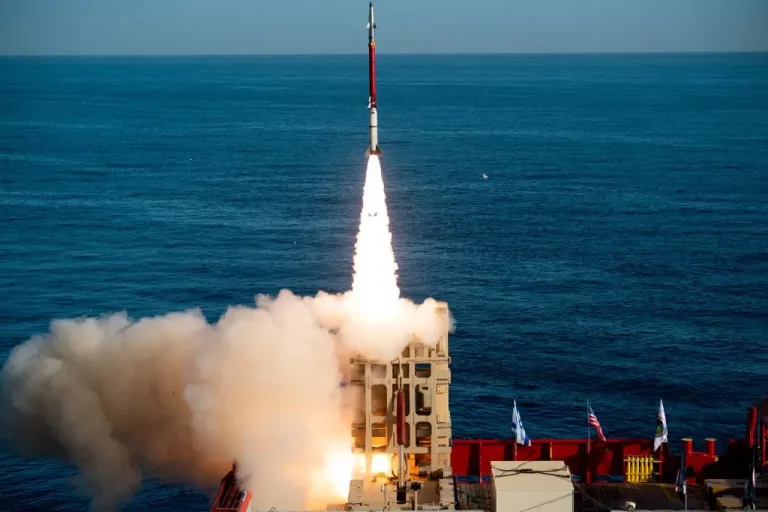
“As part of the planned development programs, we conducted a broad series of tests that examined future capabilities and the ability to deal with multiple and diverse threats. The series was completed with complete success and enables a significant upgrade to the air defense system of the State of Israel,” said Moshe Fattal, head of the ministry’s Missile Defense Organization.
The series of trials, which drew on operational lessons from recent combat, subjected the system to a range of scenarios, including interceptions of rockets, missiles, cruise missiles, aircraft, and drones. The ministry said the tests mark a “technological and operational leap forward” for the system, which has already demonstrated its capabilities in combat by saving lives and preventing significant damage.
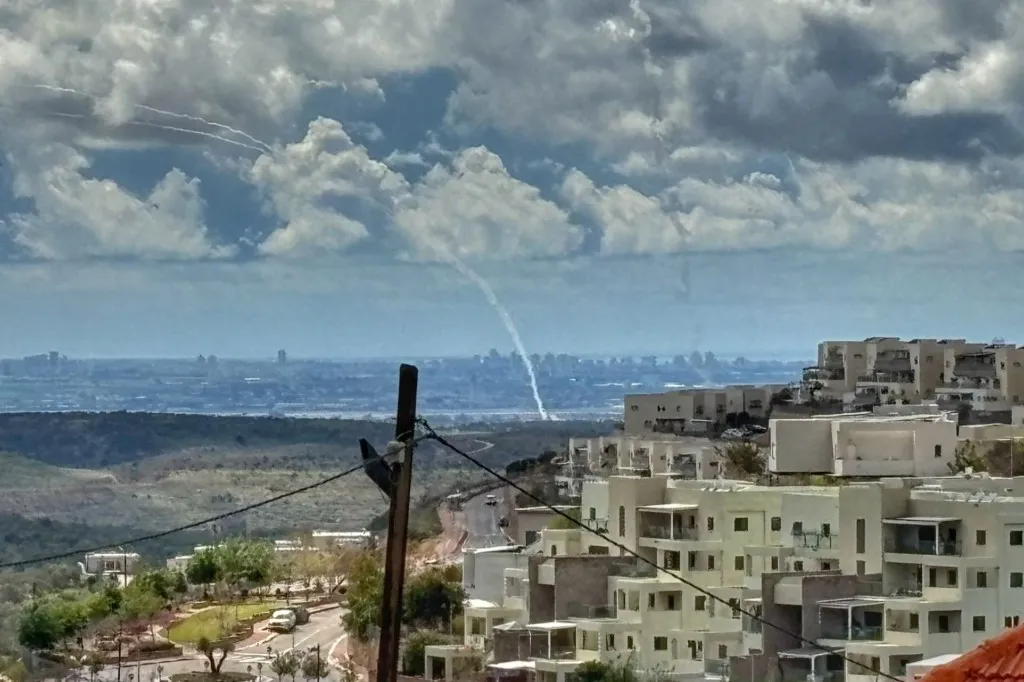
In June, David’s Sling intercepted an Iranian ballistic missile for the system’s first long-range kill.
David’s Sling was jointly developed by Israel’s government-owned Rafael Advanced Defense Systems and the U.S. defense contractor Raytheon. The system was first used operationally in 2018.
In Washington, Netanyahu met the US President’s special envoys, Steve Witkoff and Jared Kushner. The Prime Minister is due to meet with Trump on Wednesday afternoon to brief the president on Israel’s latest intelligence on Iran.
According to the Prime Minister’s Office, Netanyahu believes any agreement with Iran must address more than its nuclear capabilities and should also include limits on missile development and an end to Tehran’s support for regional proxy groups.
Israel launched preemptive strikes against Iranian nuclear sites on June 13, citing intelligence that Tehran had reached “a point of no return” in its pursuit of nuclear weapons. According to Israeli defense officials, Iran has developed the capacity to rapidly enrich uranium and assemble nuclear bombs, with sufficient fissile material for up to 15 weapons.
During 12 days of fighting in June 2025, the IDF said it struck hundreds of Iranian targets and killed dozens of senior regime figures, including top commanders of the Islamic Revolutionary Guards Corps (IRGC) and the armed forces, as well as 11 Iranian nuclear scientists.
Iran launched roughly 550 ballistic missiles and 1,000 drones at Israel, most of which were intercepted. However, at least 31 missiles struck populated areas, and one drone hit a home. The attacks killed 28 Israelis and injured more than 3,000.
Related Topics