
















By Pesach Benson • February 5, 2026
Jerusalem, 5 February, 2026 (TPS-IL) — Israeli prosecutors on Thursday filed indictments against Bezalel Zini, the brother of Israel’s domestic security chief, and two other men accused of running a sophisticated smuggling operation that funneled cigarettes and other prohibited goods into the Gaza Strip during the war.
Zini, a reservist in the Israel Defense Forces, is charged with assisting the enemy during wartime, bribery, fraud and multiple offenses under Israel’s counterterrorism laws. He was indicted in the Beer-Sheva District Court alongside Aviel Ben-David, another reservist, and Amir Dov Halperin, a civilian alleged to have played a central logistical role in the scheme. Prosecutors said indictments against at least 13 additional suspects are expected in the coming days.
The case has drawn particular attention because Zini is the brother of David Zini, the head of the Israel Security Agency (Shin Bet). Authorities stressed that David Zini is not suspected of any wrongdoing. Because of the family connection, the investigation was handled by the Israel Police rather than the Shin Bet to avoid a conflict of interest.
According to the indictment, Bezalel Zini exploited his position as a reservist assigned to logistics duties in Gaza to smuggle cigarettes from Israel into the territory on three occasions. Prosecutors allege he helped move 14 crates of cigarettes through the Sufa crossing, earning a total of NIS 365,000 shekels ($117,000). Ben-David and Halperin are accused of carrying out five additional smuggling runs, generating far larger sums.
“The defendants and their accomplices knew that the smuggled goods could reach terrorist elements, including Hamas or someone acting on its behalf,” prosecutors wrote. “They understood that these goods could be used to strengthen terrorist organizations and to finance their operations.”
Twelve other suspects, including reservists, were indicted on Wednesday.
Israeli authorities have banned cigarettes and other tobacco products from entering Gaza during the war, citing high black-market prices and heavy taxation by Hamas. Prosecutors said tobacco smuggling has generated enormous revenue for the terror group.
The indictment describes a broad and organized network involving dozens of people, including reservists, civilians and business owners, who allegedly coordinated the purchase, transport and concealment of goods. In addition to cigarettes, prosecutors said the smugglers moved mobile phones, batteries, communication cables, auto parts and equipment for solar energy systems, with shipments worth millions of shekels.
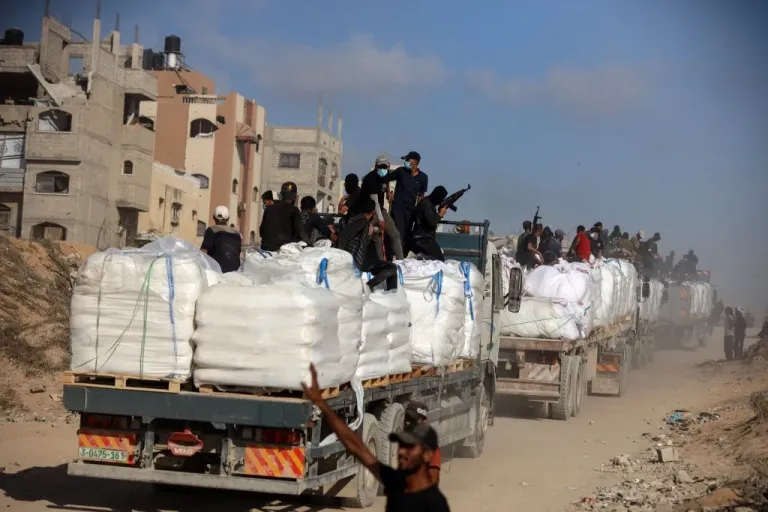
Investigators allege the operation relied on disguising smuggling runs as legitimate military or humanitarian activity. Goods were repackaged and camouflaged, transported along prearranged routes and, in some cases, carried into Gaza using military convoys authorized to cross the border for operational purposes.
During the period covered by the indictment, Gaza was declared a closed military zone, with entry permitted only for approved security or humanitarian needs. Prosecutors said the defendants took advantage of ceasefire periods and the flow of aid to bypass inspections.
In one alleged incident, Zini asked a fellow participant not to carry a mobile phone and requested a bribe of NIS 100,000 ($32,000) in exchange for providing military equipment and preventing the smuggling activity from being detected, according to court filings. Zini has denied any involvement in the smuggling operation.
In a joint statement, police and security officials said the investigation revealed “a significant phenomenon of Israelis and others who knowingly take part in smuggling operations while turning a blind eye to their direct contribution to strengthening terrorist organizations.”
“The smuggling of goods into the Gaza Strip constitutes a serious threat to Israel’s security and directly aids the survival and continued rule of Hamas,” the statement said.
Prosecutors alleged that the illicit trade has generated millions of shekels for Hamas since the start of the war, helping sustain the group financially despite Israel’s restrictions. If convicted, the defendants face lengthy prison sentences under Israel’s wartime and counterterrorism laws.
As The Press Service of Israel has previously reported, Hamas has managed to maintain its grip on Gaza by stealing and taxing humanitarian aid.
Israel and Egypt have maintained restrictions on Gaza to prevent weapons smuggling since Hamas seized control of the territory in 2007.
Around 1,200 people were killed, and 252 Israelis and foreigners were taken captive by Hamas during the October 7, 2023, attack on southern Israel.
Related Topics