























By Pesach Benson and Omer Novoselsky • December 8, 2025
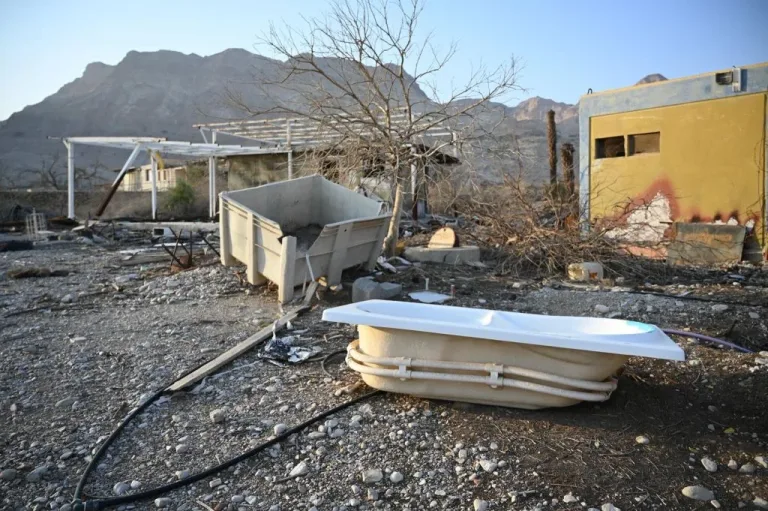
Jerusalem, 8 December, 2025 (TPS-IL) — For more than two decades, plastic waste carried from urban areas has quietly accumulated along the Dead Sea’s shrinking coastline, forming a striking visual and environmental record at the lowest point on Earth. A new study released Monday by the University of Haifa, in collaboration with Italian scientists, shows that flash floods, extreme salinity, and retreating water levels have combined to create a natural archive where plastic debris — including bags, toys, bottles, and even military equipment — remains trapped year after year, preserving a record of human activity in one of the world’s most extreme environments.
Dr. Akos Kalman, Prof. Beverly Goodman Tchernov, and Prof. Michael Lazar told The Press Service of Israel, “The Dead Sea is not only a geoheritage site under threat, but it also functions as an accelerated natural laboratory for the rest of the world. Because it is a closed basin, everything that enters stays, which lets us follow the entire pathway of plastic pollution: from large pieces to fragments and finally to microplastics that become part of the geological record. What we see happening here now is likely to occur in many other water bodies in the future.”
The Dead Sea, the world’s deepest hypersaline lake, has been losing water rapidly over recent decades. During winter, the Kidron Stream, which drains extensive urban areas in Jerusalem, carries sediments, debris, and plastics into the lake in short but powerful flash floods. Because of the water’s high salinity and density, most plastic materials float and collect along the shoreline, creating a series of coastal terraces that document the type and quantity of waste reaching the basin each year. Researchers have referred to these formations as “plastic rings,” highlighting both their striking visual impact and growing scientific value.
The study — published in the peer-reviewed Journal of Hazardous Materials — systematically examined terraces formed between 2000 and 2021 at the junction of the Kidron Stream and the Dead Sea. The team collected all visible plastic items on each terrace and recorded their weights, types, abrasion levels, and spatial distribution. Sediment samples were analyzed for microplastics, which were separated, filtered, photographed under a microscope, and chemically examined to determine polymer types and the effects of prolonged exposure to sun, heat, and erosion. Historical aerial photographs and satellite images were also reviewed to track changes in coastal geomorphology and the stream’s flow over time.
The analysis revealed a sharp increase in plastic input after 2000, with younger terraces containing hundreds of kilograms of waste. Projections indicate that by 2030, a single terrace could accumulate more than a ton of plastic. Exposure to intense sunlight and heat accelerates fragmentation, producing thousands of microplastic particles per kilogram of sediment each year. Researchers estimate that one kilogram of large visible plastic can generate roughly four thousand microplastic particles annually, many of which remain in the sediment and gradually integrate into the geological record.
Some waste becomes trapped in sinkholes and cracks forming along the retreating coastline, embedding plastic in sediment layers and potentially creating a permanent archive of human activity. “When we arrived at the site, we saw not only a dramatic retreat of the coastline but also enormous amounts of plastic floating on the water’s surface. It was a jarring moment that made it clear how deep and severe the phenomenon is,” the scientists said.
“Distinct plastic rings started forming around the Kidron outlet only about 25 years ago, after being completely absent before, and their growth since then is clear and steady. The amount of macroplastic entering the basin is so large that it provides the raw material for microplastic breakdown at a scale not documented elsewhere. What also surprised us is the sheer volume now accumulating and the fact that, despite growing public awareness, the problem continues to intensify rather than improve,” they told TPS-IL.
“Plastic pollution in the Dead Sea had not been fully recognized until now, and bringing attention to it is an essential first step. The most effective approach is prevention. This means identifying the exact sources and channels through which plastics enter the basin, increasing monitoring, and strengthening municipal waste collection, recycling, and public education. Regular surveys upstream can quickly reveal where the main leaks occur, and consistent enforcement of existing waste disposal laws would significantly reduce the flow of plastic before it reaches the Dead Sea,” they said.
Inaction, they stressed, is not an option. “Without responsible management and guardianship, it will be lost. If nothing is done, plastic will continue to build up across the channels that feed the basin, just as we have already seen at the Kidron and other outlets. It will keep breaking into microplastics and spreading along the shoreline and coastal zone. In the worst case, the Dead Sea could become a polluted and hazardous environment that is difficult to access and may even affect products derived from it,” the scientists warned TPS-IL.
The Dead Sea, one of the saltiest bodies of water in the world, is a popular tourist destination. The water is about 9.6 times saltier than the ocean, creating its famous buoyancy, which allows people to float easily. The Dead Sea lies about 430 meters below sea level, making it the lowest point on Earth.
Related Topics