



















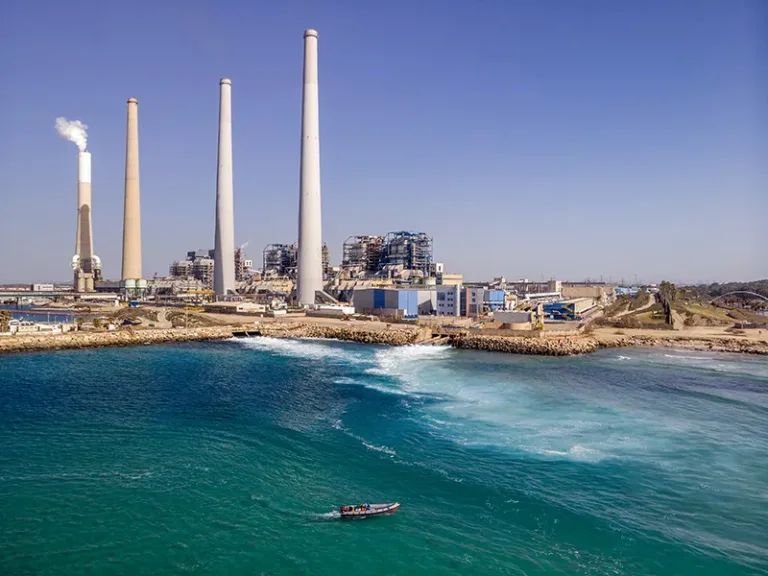
The Ministry of Environmental Protection is publishing today, February 19, 2026, the amended emission permit for the Orot Rabin power station. The permit was formulated after a broad public participation process and in-depth professional discussion with the Ministry of Energy and Infrastructure. According to the permit, the units will be allowed to operate for operational readiness tests for no more than 350 hours per unit per year. Additionally, their operation will be permitted at the request of Noga company for an additional 150 hours. These hours will be used for the necessary backup to complete environmental projects in the electricity sector that will lead to an improvement in air quality, including the conversion of coal units to gas and increasing energy storage capacities, which will enable the integration of renewable energies at increasing rates.
According to government policy in recent years, steps have been taken to cease the routine use of coal and reduce air pollution from energy production – all within the framework of the commitment to meet the national target for greenhouse gas emission reduction.
Idit Silman, Minister of Environmental Protection: “The amended emission permit for the Orot Rabin power station is the product of professional and in-depth work, aimed at minimizing the environmental impact of the coal units in routine and emergency situations to the necessary minimum. We have set clear operating limitations and implemented control mechanisms that will ensure environmental considerations are maintained at the core of every decision on operating the units. This is a move that reflects a responsible balance for the benefit of public health and the environment.”
According to a binding work procedure of the Ministry of Energy and Infrastructure, the operation of the units, including for the purpose of maintaining operational readiness, requires Noga to obtain prior approval from the Director General of the Ministry of Energy, in consultation with the Ministry of Environmental Protection. Furthermore, according to the published draft, the units will be allowed to operate in an emergency situation for a limited period, as is customary in the relevant European directive.
The Ministry of Environmental Protection will continue to act responsibly and with balance between emission reduction and air pollution reduction targets and the energy sector’s needs during emergencies.
Related Topics