
















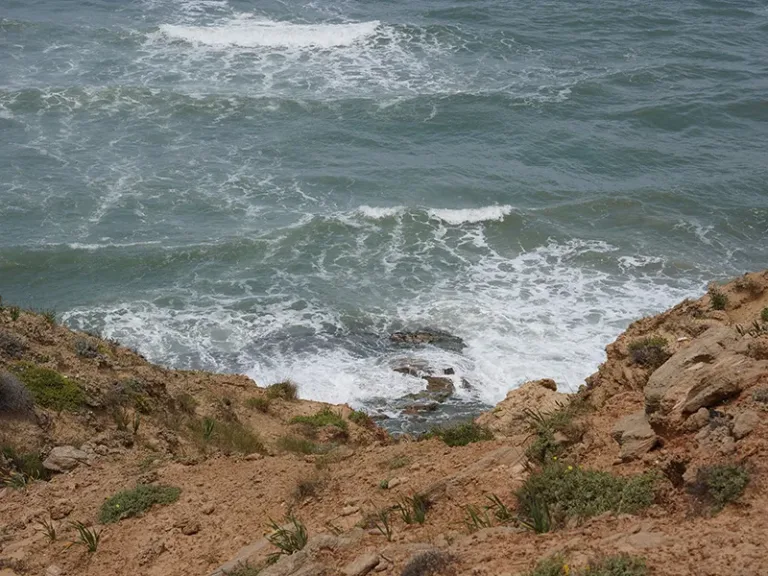
In light of the collapse of the kurkar cliff at Sidna Ali Beach in Herzliya on Saturday, February 21, 2026 –
Idit Silman, Minister of Environmental Protection: “The collapse of the cliff is not a surprising event. This is a process we have warned about for a long time, and there are already plans ready for execution. Now, a budgetary decision is required to enable the continuation of the works and the protection of the public. We cannot leave the cliff without a response and wait for a more severe incident.”
Cliffs, in general, are protected by land-based and marine defenses. The first stage of marine defenses was launched several years ago according to government decisions, within which the Israel Land Authority allocated approximately 360 million ₪. The works are in full swing and are expected to be completed by June 2026. Toward this date, the ministry of Environmental Protection requested, within the framework of budget discussions, to promote a follow-up stage of a similar scope, which will allow for the expansion of defenses to additional hotspots along the coast, primarily the Herzliya project alongside Ashkelon, Bat Yam, Emek Hefer, and other areas. So far, only a partial allocation of approximately 150 million ₪ has been proposed, subject to the approval of the state budget. The Ministry demands full and immediate budgeting of 360 million ₪ for marine defenses to allow for continuity in the works and to prevent a dangerous gap in the treatment of coastal cliffs.
The Ministry emphasizes that stabilizing the cliff requires a combination of marine defenses alongside land-based defenses. However, the land-based defenses – which are the responsibility of the local authorities and under the guidance of the Ministry of Interior – have not yet been budgeted to the required extent and have not been promoted at the expected pace. Several months ago, findings indicating approximately 12 km of beaches at risk of collapse were transferred to the authorities, along with inquiries on the matter to relevant government entities.
The Ministry and the Government Company are prepared to lead the continued execution and to take full responsibility for expanding the works if the required budget is allocated. If a budgetary decision is not made in the near future, additional steps will be required to reduce the risk to the public, including the publication of severe risk areas and recommendations to restrict the use of certain beaches.
Regarding immediate safety aspects, the responsibility for taking measures on the ground – such as fencing, closing passages, and signage according to circumstances – lies with the local authorities in whose jurisdiction the cliffs are located, based on a risk assessment for each area.
Related Topics