
The Ministry of Environmental Protection recently circulated a draft government resolution proposal to adopt the recommendations of a strategic plan for addressing environmental hazards in the Judea and Samaria area and cross-border hazards. This is a preliminary stage in the government process, and after receiving comments from government ministries and formulating a final version, it is expected to be brought for government approval.
Idit Silman, Minister of Environmental Protection: “The time has come to put an end to environmental pollution in Judea and Samaria. Judea and Samaria will not be the backyard on Israel’s environmental map. Pollution does not stop at map lines, and waste fires and hazards in the area cause real harm to air quality and public health in Israel. Although the authority to handle environmental hazards in Judea and Samaria lies with the Civil Administration, I am fighting to establish full environmental governance – The Ministry of Environmental Protection led extensive and determined staff work to promote in-depth solutions, one that connects authority, legislation, budget, and enforcement into a clear policy. To create lasting change, a dedicated budgetary response is also required alongside the expansion of powers and the establishment of treatment and monitoring infrastructures. The resolution proposal we are circulating is intended to ensure the necessary governmental framework for promoting these steps, based on a concept of long-term responsibility that protects public health and the environment in Israel”.
For the first time, the plan presents a comprehensive governmental response to treating cross-border pollution – from integrating enforcement and legislative tools, through expanding the air monitoring array, to promoting waste treatment infrastructures. The staff work on the matter points to a multi-year move with a total scope estimated at 5-6 billion ₪ in the long term, alongside an initial implementation phase currently presented within the framework of the resolution proposal.
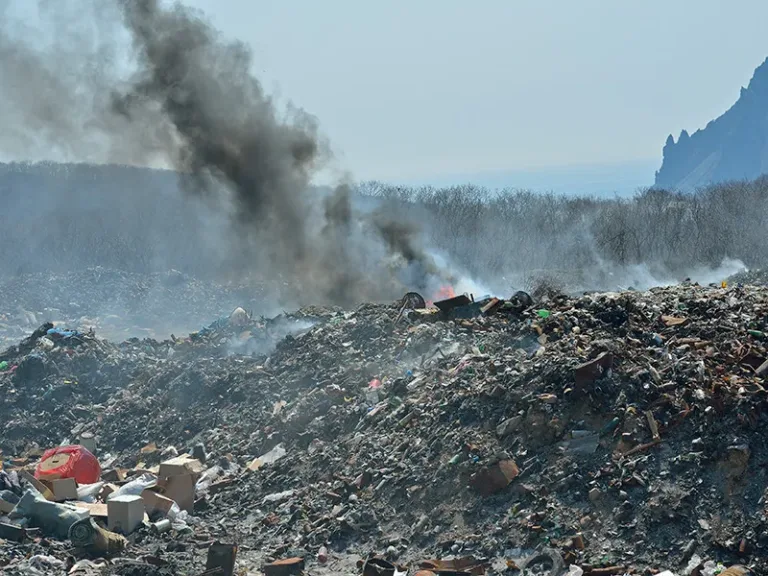
The plan was formulated following Government Resolution 592 dated June 04, based on the work of a broad inter-ministerial team led by The Ministry of Environmental Protection. The work was intended to provide a response to one of the central environmental challenges in the area – waste hazards and waste fires that cause cross-border air pollution and damage to natural resources and public health.
The policy highlights include strengthening enforcement and supervision tools, transitioning from reactive policy to proactive enforcement policy in the field, promoting end-solutions for waste treatment, establishing sorting and recovery infrastructures, expanding air quality monitoring, and collaborations with security entities and the international community – with the goal of reducing the scope of fires and the pollution resulting from them.
Within the framework of the draft resolution proposal, the budgetary needs for implementing this stage were also presented, standing at approximately 134 million ₪. The amounts are intended for the implementation of the plan’s components, including strengthening enforcement and supervision arrays, expanding monitoring, promoting environmental legislation and legal powers, and developing waste treatment infrastructures.
This stage is intended to lay the foundation for a broad and multi-year move. Full implementation of the plan is subject to the allocation of a dedicated budget within the framework of the state budget. It should be emphasized that the distribution of the document at this stage is intended for receiving comments from government ministries, and that it is a professional draft within the framework of ongoing staff work.
Alongside the promotion of the strategic response, and although most regulatory powers in the field lie with the Civil Administration, The Ministry of Environmental Protection has already budgeted through the Maintenance of Cleanliness Fund immediate steps in the scope of approximately 25 million ₪ for the year 2026. These steps include strengthening enforcement in the field, activities to prevent illegal waste transfer, monitoring and extinguishing actions of waste fires, and operating coordinated enforcement mechanisms with security and enforcement entities – steps that have already contributed to reducing pollution in the seam zone settlements area.
The Ministry of Environmental Protection will continue to act with determination to promote a long-term solution for cross-border hazards, through a combination of broad governmental work, tightening enforcement and prosecution of polluters, and immediate steps to reduce air pollution and protect public health. As stated, after completing the staff work and receiving comments from the ministries, the Minister intends to bring the resolution proposal for government approval.
Key Term Notes