












Knesset Press Release • September 4, 2025
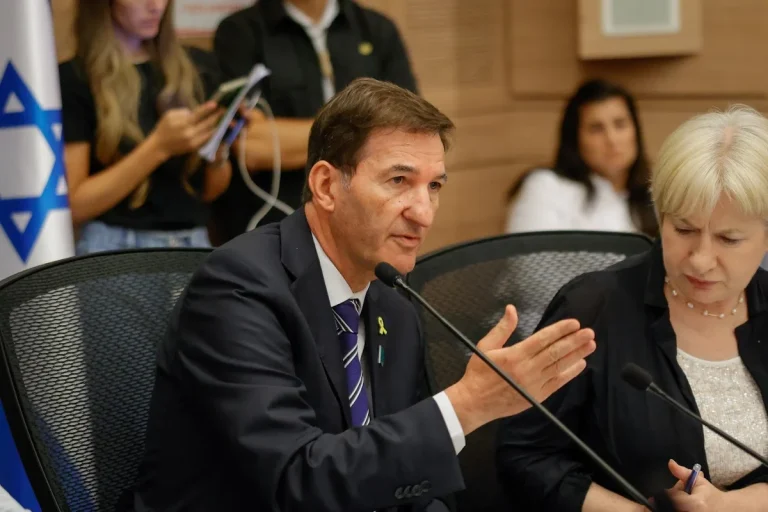
The foreign affairs and Defense Committee, chaired by MK Boaz Bismuth (Likud), convened on Wednesday for another debate on the Defense Service Bill (Amendment No. 26) (Integration of Yeshiva Students), 2022.
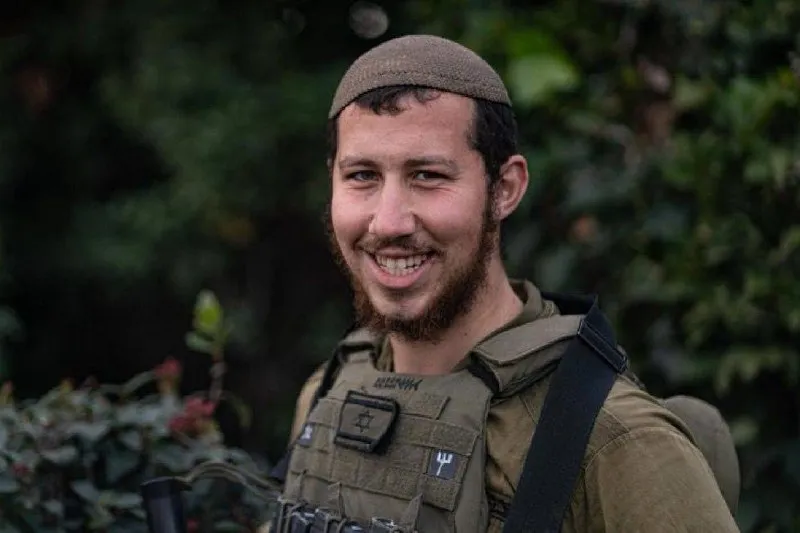
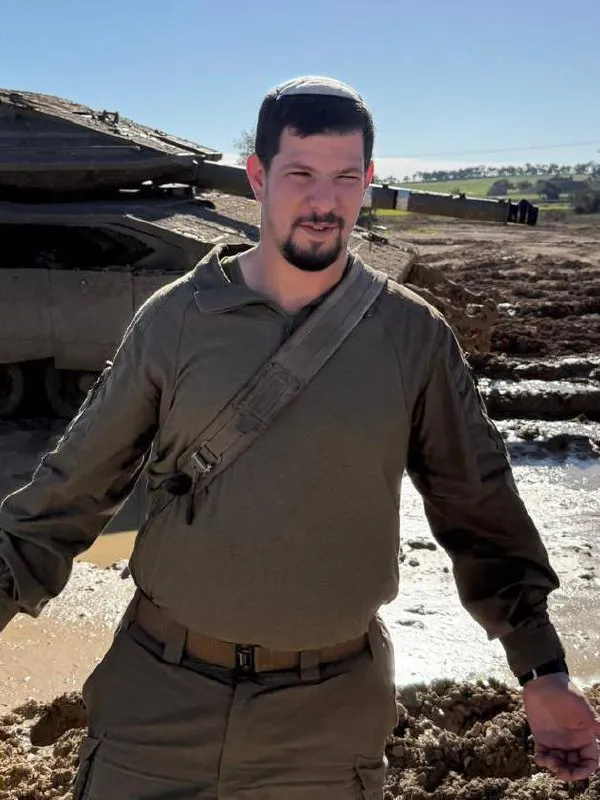
At the opening of the discussion, a combat soldier from the Golani Brigade, who fought in the Swords of Iron war and suffers from PTSD, addressed the committee members and said emotionally: “We are dealing with all sorts of things here, but ultimately we are not dealing with what’s really important. I am a 21-year-old kid, and my [biggest] dream, if you ask me, is to take a bullet between the eyes. I am a walking corpse, I am a person who doesn’t live. Do you know what it’s like to lift the bodies of your friends who you [shared a sleeping space] with and did basic training with, and a moment later they explode before your eyes? I lost 23 friends, three days ago one of our soldiers committed suicide.
“A few months ago, I injected three grams of fentanyl into my vein because I couldn’t bear it anymore. I see corpses before my eyes. And I don’t want to live, I can’t live. It’s impossible to continue this situation, and if we are here to save lives, and if we don’t wake up, after this cursed war there will be a wave of suicides here. We’ll see bodies in the streets. Take care of me. Why should I have to shout this? Suffer this? Try to commit suicide every day? I tried to commit suicide, to cut myself, all my hands are cuts. We are invisible,” he said.
The debate focused on sections 26(c) through 26(j) of the bill, which deal with definitions, deferment of service for yeshiva students, conditions for deferring service for yeshiva students, issuing service deferment orders, exemption from regular service for those who reached exemption age, and temporary provisions.
committee chair MK Bismuth said, “I want the Haredim to be drafted into the army in accordance with the IDF’s preparations [for this].” He added: “It’s important for me to clarify that the committee discussions are the official platform to stay updated, this is where decisions are made. Since I entered the position, I have held many meetings, heard diverse solutions and proposals, and I am open to hearing all opinions. One thing is clear in all solutions being examined: the need to increase the number of Haredi draftees to the IDF as part of coping with the army’s personnel needs in the current security reality. There is an understanding that in the midst of war, the need for soldiers is urgent and essential. We will continue to work toward a comprehensive and stable arrangement of the draft law, with responsibility, cooperation, and a genuine desire to reach a solution that will strengthen the IDF and benefit all of Israeli society.”
MK Yuli Yoel Edelstein (Likud) said, “I wish to draw attention – according to the wording of the section as it appears here, the defense minister cannot grant an exemption to even one person. The section says this can be done while ‘taking into account security needs and the scope of regular (army) forces.’ We had a classified meeting here, professional elements told us what the situation is with regular forces, so in the current wording of the section, a reasonable defense minister cannot exempt even one person.
“Indeed, the chairperson has the authority to determine what comes up for discussion. I am asking about the reasons for the process. If the goal is to reach a draft law, there were many discussions here, we reached some version that was a very deep compromise, so if the intention is to reach something less than this after another series of discussions, then certainly there will not be anything that drafts Haredim. If the intention is to reach a draft law, then it’s a shame to start the same process now until we reach the same point,” he said.
MK Benny Gantz (Blue and White – National Unity Party) said, “For ten years I’ve been talking about the need to update the service framework. What we did in the first 70 years won’t be suitable for the next 70 years. The challenges have changed, society has changed, it’s impossible to leave it in the same model. Service is not a constraint; it is a right that must be realized. We tried to advance a service framework, and then the Corona pandemic came, and then the government of change didn’t want to advance the service framework, so they placed here a proposal that is essentially a mediation law, until we can advance the service framework.
“Unfortunately, October 7th happened to us, and what we need now is, first of all, to reach a service framework, and secondly, to increase the numbers, because the needs have only become greater. The law I proposed then is not relevant today. To my Haredi brothers, the truth is, it pains me. There should have been a rallying of leaders, rabbis and the public at such a fateful hour for the State of Israel. And if we want there to be a state here in 50 years, when the demographic composition will be 60 percent Haredi, everyone needs to take part in the mission of [military] service.”
MK Efrat Rayten Marom (Labor) said, “I accept this old version that passed in our government, and equally I hold the version you worked on for a year and a half, and it is the one that is supposed to give expression to all the discussions we have held here. There’s a world of difference between the versions, and it’s unacceptable that we are returning to the old version, which is futile and doesn’t take into account everything that came up here in the discussions.”