












Knesset Press Release • August 6, 2025
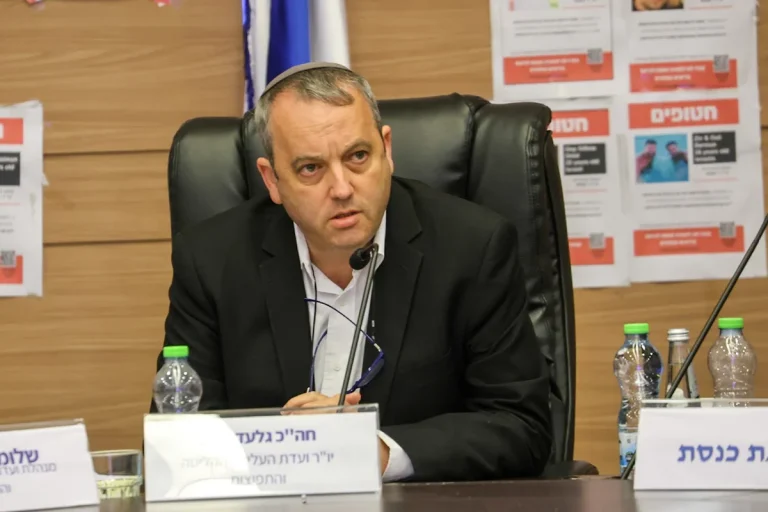
The committee for Immigration, Absorption and Diaspora Affairs, chaired by MK Gilad Kariv (Labor), convened on Wednesday for a debate on the education system’s preparedness for the absorption of new immigrant children in the 2025-2036 school year.
According to data provided by the Ministry of Education, since the outbreak of the Swords of Iron war, 3,779 new immigrant pupils have been absorbed into Israel‘s education system. Of these, 1,605 were placed in elementary schools, 840 in middle schools, 540 in high schools, and 830 in kindergartens. In addition, 504 children and teenagers aged 3–17 are expected to arrive in Israel over the summer and will enter the education system during the upcoming school year.
The city of Haifa has absorbed the most new immigrant pupils since the start of the war – 293. Beit Shemesh absorbed 267, Jerusalem – 259, Netanya – 258, Ra’anana – 168, Tel Aviv–Jaffa – 131, Rishon LeZion – 123, and Hadera – 103.
In the past school year, there were 3,132 students in the education system who were defined as returning residents. Of these, 2,270 were in high school, 645 in middle school, and 217 in elementary school.
committee chair MK Kariv said, “There is a group of pupils defined as new immigrant pupils in the education system, and another group that is very important to the committee — returning resident pupils. The entire approach to returning residents, especially pupils, must be upgraded and improved. The issue of education for immigrant pupils is a critical factor for families considering Aliyah, and the message of pupil absorption must be spread across all frameworks. In the coming year, we will focus heavily on the integration of both immigrant and returning pupils into educational frameworks. There must be a differential model of additional instructional hours for immigrant pupils, particularly in the second year.”
Tira Glinoier, Director of the Ministry of Education’s Immigration Absorption Division, said “Close to 4,000 new immigrant pupils have been absorbed into the education system since the war began. This is a low number compared to a regular year, but impressive given the current circumstances. Since the start of summer, we have opened 179 special summer ulpanim (Hebrew learning programs) in 34 municipalities, attended by 2,297 pupils. These ulpanim sharpen Hebrew learning and provide relevant knowledge for immigrants, and they are offered free of charge, fully funded by the Ministry of Education. We are transitioning to a model of personal integration within the education system. If we see a larger wave of Aliyah, we will know how to adjust. Currently, across all grades, there are about 50,000 new immigrant pupils in the education system, and we strive to give proper attention to each one of them. There is a very significant difference between new immigrants and returning residents — the latter usually already speak fluent Hebrew and arrive with an existing social network.”
A Ministry of Immigration and Absorption official said, “The Minister of Immigration and Absorption instructed us to emphasize the integration of new immigrant pupils into the various educational frameworks. We provide two supplementary programs in non-formal education for both elementary and secondary school pupils. Despite the difficult wartime period, we are pleasantly surprised by the continued arrival of new immigrants. According to our data, 2,121 immigrant children of all ages – including those below the age of compulsory education – are expected to enroll in the various educational frameworks during the upcoming school year. We are, of course, constantly updating our data based on Aliyah projections.”